Fixtures
Explore what fixtures are in Canadian real estate, how they differ from chattels, and why clarity about inclusions is essential in a property sale.

May 30, 2025
What are Fixtures?
Fixtures are items of personal property that have been permanently attached to real estate and are legally considered part of the property.
Why Fixtures Matter in Real Estate
In Canadian real estate, fixtures are typically included in the sale unless specifically excluded in the Agreement of Purchase and Sale.
Common fixtures include:
- Built-in appliances
- Light fixtures and ceiling fans
- Mounted shelving and cabinets
- Attached mirrors and window blinds
The legal test for a fixture looks at the method of attachment and whether the item was intended to be a permanent improvement.
Understanding fixtures helps buyers and sellers clearly identify what stays with the property and avoid disputes after closing.
Example of a Fixture
The seller removed a wall-mounted TV bracket after closing. The buyer claimed it was a fixture, and the dispute required mediation.
Key Takeaways
- Permanently attached items treated as part of the property.
- Included in a sale unless excluded.
- Legal test based on attachment and intent.
- Can lead to disputes if unclear.
- Must be disclosed in agreements.
Related Terms
- Chattel
- Inclusions
- Exclusions
- Agreement of Purchase and Sale
- Closing Process

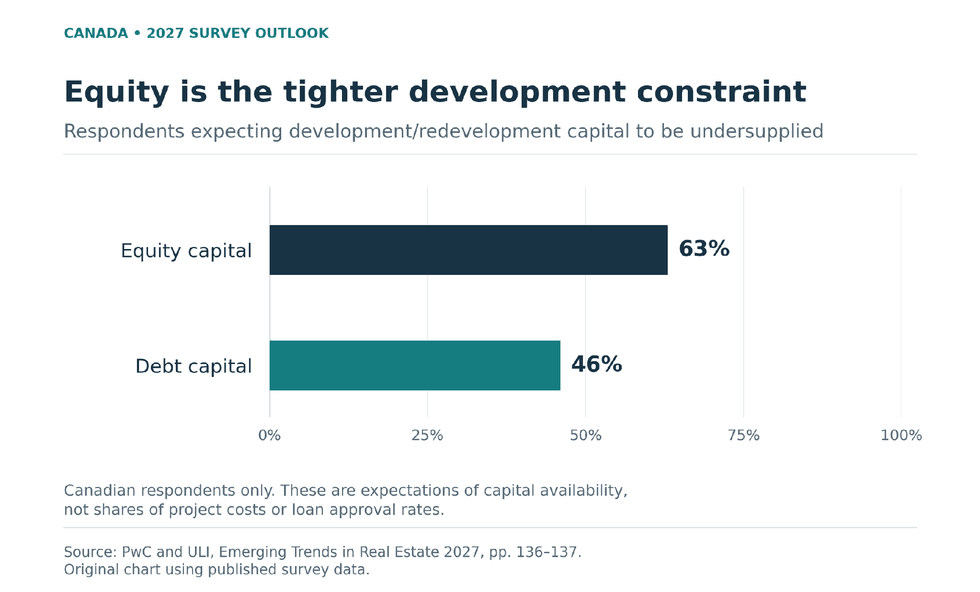 Canadian respondents were more likely to expect an undersupply of development/redevelopment equity capital (63%) than debt capital (46%) in 2027. These are survey expectations, not measured financing volumes. Source: PwC and ULI, Emerging Trends in Real Estate 2027, pp. 136–137. Original chart.
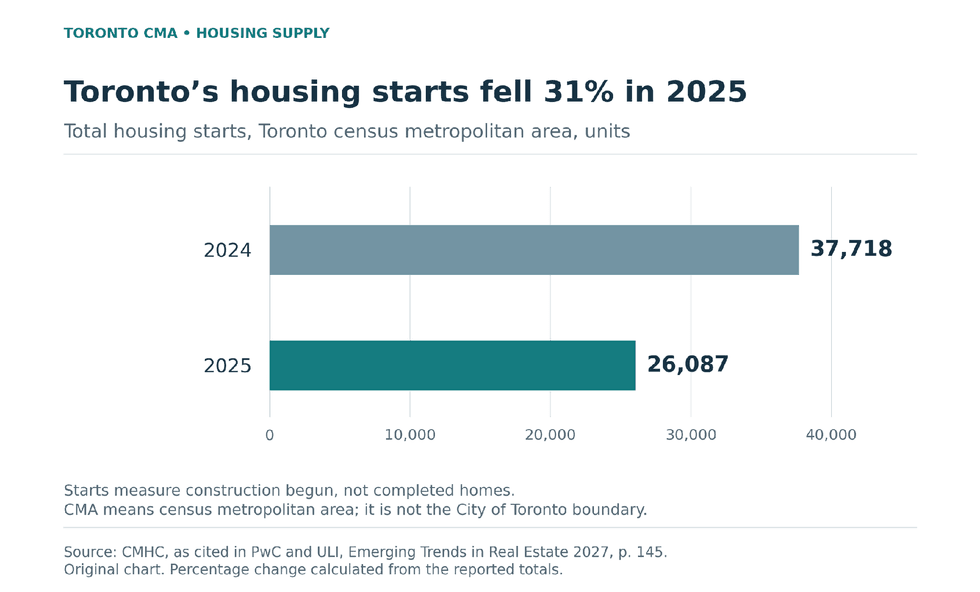 Toronto census metropolitan area housing starts fell from 37,718 units in 2024 to 26,087 in 2025, a 30.8% decline (rounded to 31%). Starts measure construction begun, not completed homes. Source: CMHC, as cited in PwC and ULI, Emerging Trends in Real Estate 2027, p. 145. Original chart.





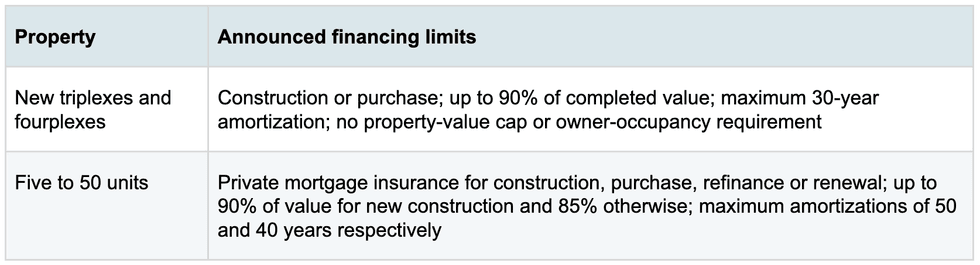
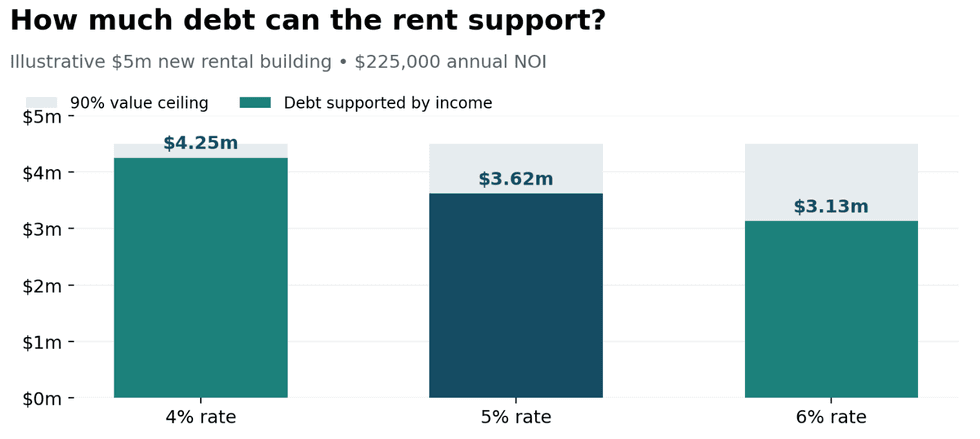 Illustrative calculation: a $4.5-million value ceiling versus income-based capacity of about $4.25 million at 4%, $3.62 million at 5% and $3.13 million at 6%. Assumes 50-year amortization and 1.15 debt coverage.
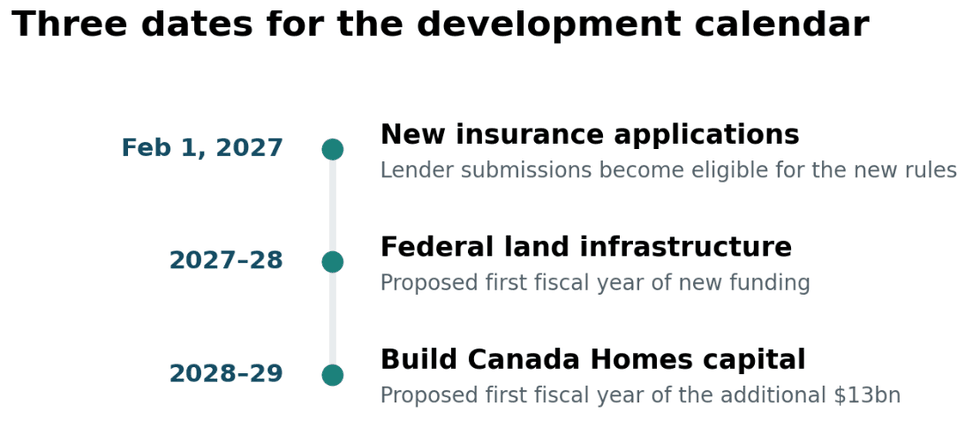 Source: Department of Finance missing-middle backgrounder and Budget 2026 Chapter 3, November 5, 2026. Fiscal-year funding starts are not home-completion dates.