Mortgage
Explore how mortgages work in Canadian real estate, what terms they include, and how buyers qualify, repay, and manage home loans.

May 22, 2025
What is a Mortgage?
A mortgage is a loan used to finance the purchase of real estate, where the property serves as collateral for the debt.
Why Mortgages Matter in Real Estate
In Canadian real estate, mortgages allow buyers to purchase homes without paying the full price upfront. The buyer repays the loan over time, with interest, according to the mortgage’s terms.Key mortgage components include:
- Principal: the loan amount
- Interest: cost of borrowing
- Term: the length of the contract (e.g., 5 years)
- Amortization: the full repayment timeline (e.g., 25 years)
- Payment frequency and type (fixed or variable rate)
Understanding mortgages helps buyers navigate borrowing decisions, budgeting, and repayment planning.
Example of a Mortgage in Action
A buyer borrows $450,000 at a fixed rate of 4.9% for a 25-year amortization, with a 5-year term and monthly payments.
Key Takeaways
- Primary loan for purchasing property.
- Repaid with interest over time.
- Includes term, amortization, and rate type.
- Must meet lender criteria.
- Registered on property title.
Related Terms
- Interest Rate
- Mortgage Term
- Amortization
- Mortgage Pre-Approval
- Refinance









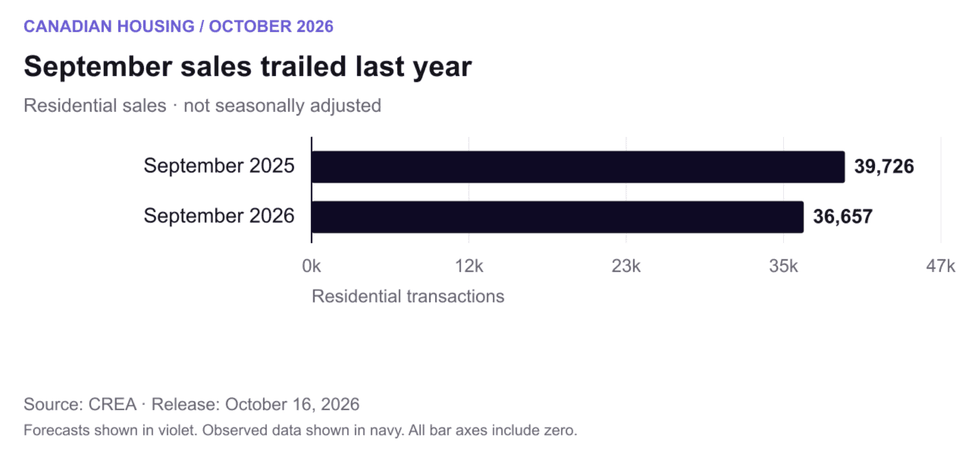 September residential sales, not seasonally adjusted; the annual comparison uses CREA’s revised figures. Chart:
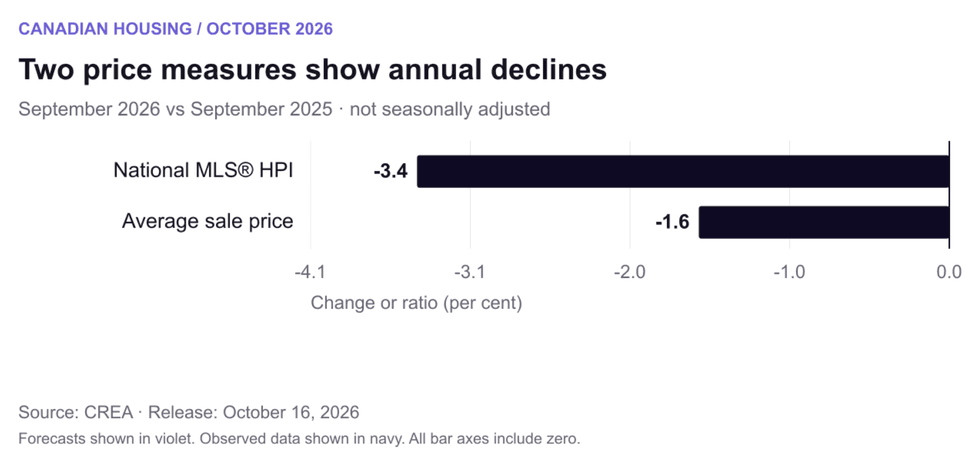 Annual changes in the unadjusted national MLS® HPI and average sale price. The average is affected by the mix of transactions. Chart:
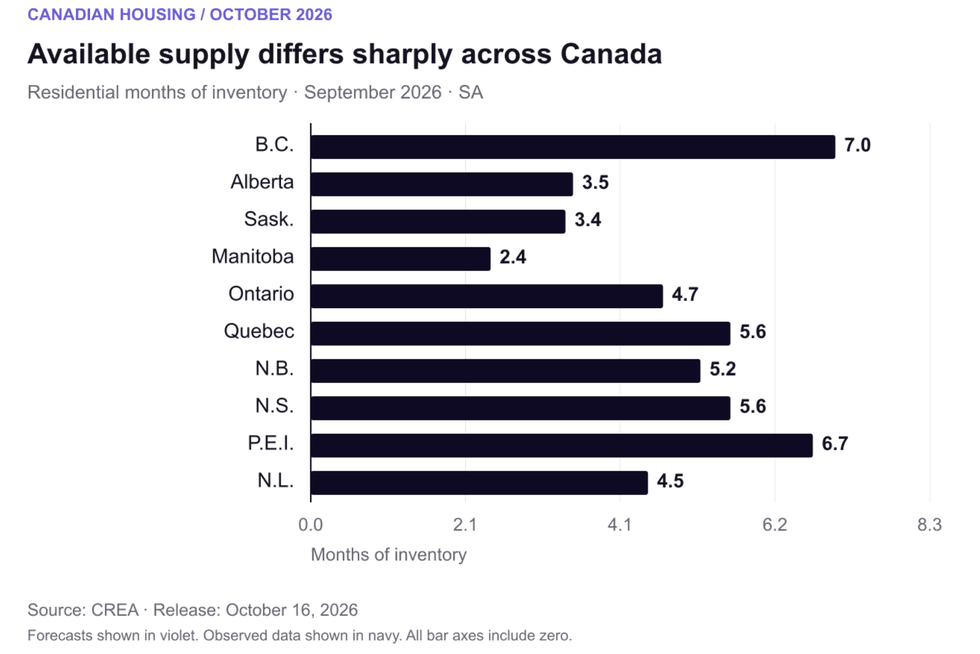 Seasonally adjusted residential months of inventory by province. Local property types can differ substantially. Chart:
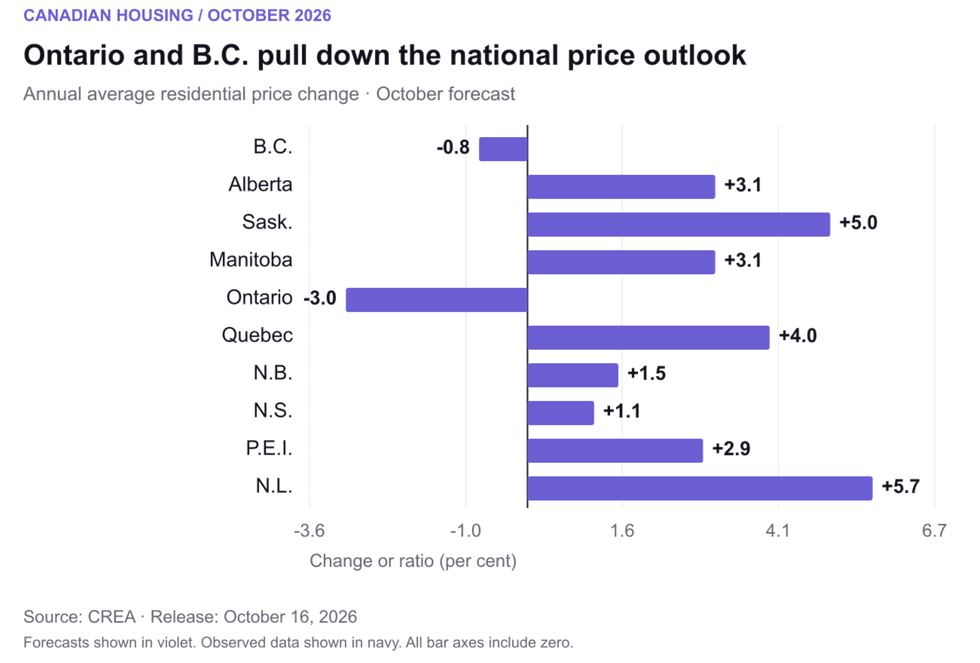 Ontario and B.C. are the two provinces with forecast annual average-price declines in 2026. Chart:
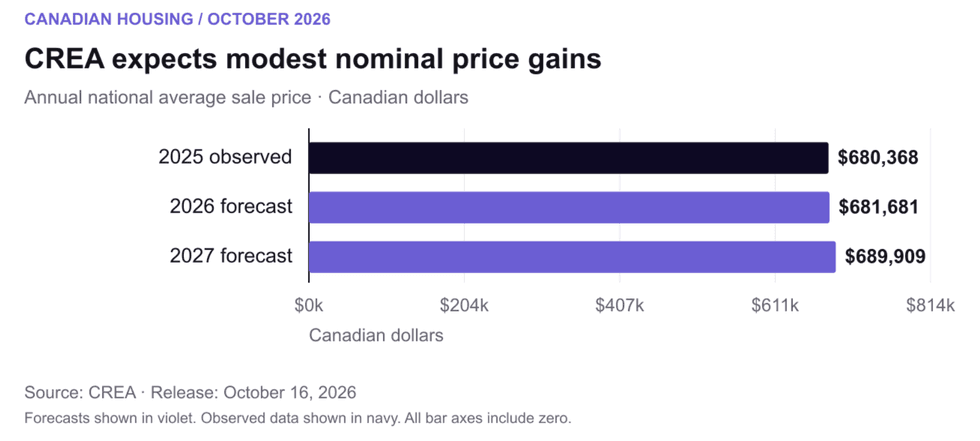 Annual average transaction prices in Canadian dollars. Forecast values are not December price targets. Chart:
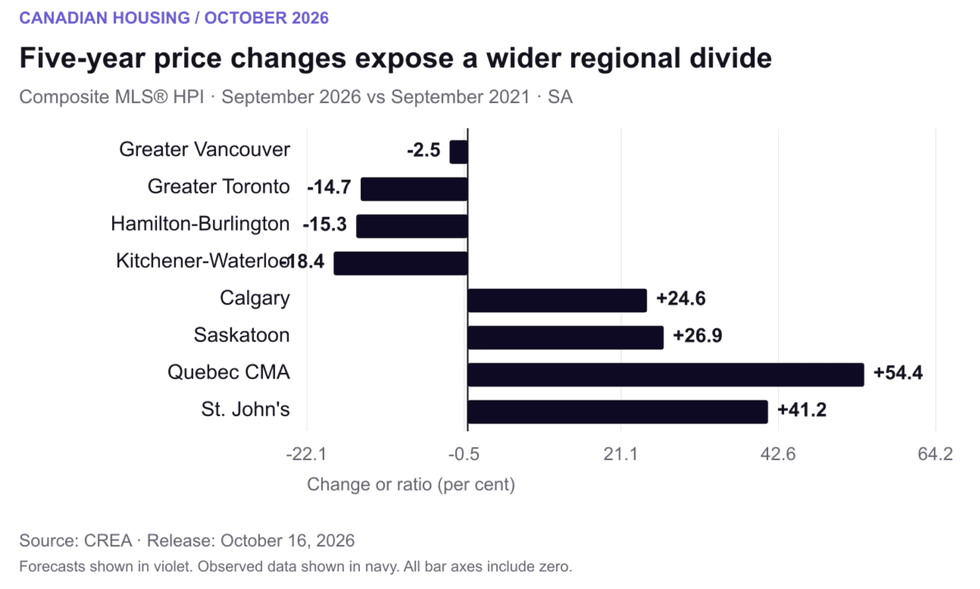 Five-year changes in seasonally adjusted composite MLS® HPI benchmarks, September 2021 to September 2026. Chart: