Receivership
Understand receivership in Canadian real estate: when it’s used, how it works, and what it means for borrowers, lenders, and distressed assets.

June 16, 2025
What is Receivership?
Receivership is a legal process where a court or secured creditor appoints a receiver to take control of a borrower’s assets, such as property or businesses, when the borrower defaults on their obligations.
Why Receivership Matters in Real Estate
In Canadian real estate and finance, receivership is commonly used when lenders seek to recover debt by managing or selling assets, especially during insolvency or foreclosure scenarios.
A receiver may:
- Operate, lease, or sell the property
- Collect rental income and pay operating expenses
- Protect asset value while enforcing creditor rights
- Report to the court or creditor on asset disposition
Receivers are usually court-appointed professionals (often accountants or legal trustees).
Understanding receivership helps investors and creditors navigate distressed property scenarios and asset recovery.
Example of Receivership in Action
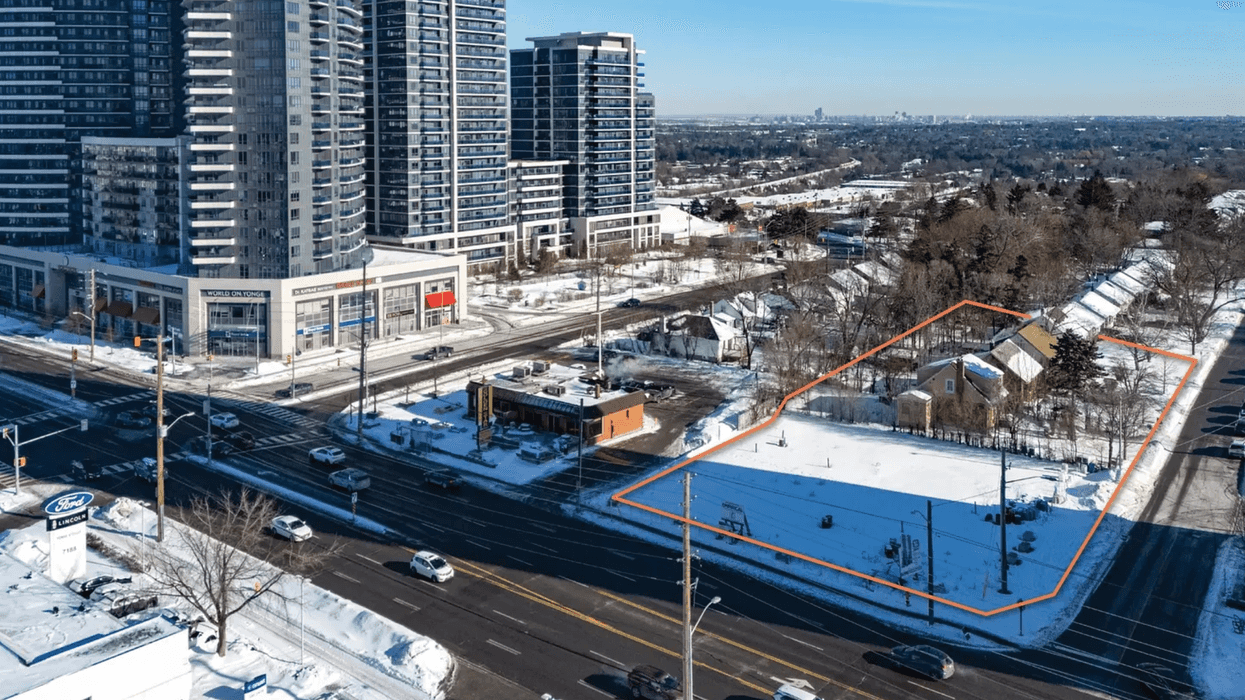
After the borrower defaulted on their commercial mortgage, the lender obtained a court order to place the property into receivership for sale.
Key Takeaways
- Occurs when an asset is controlled by a receiver
- Used to recover debt during default or insolvency
- May involve court oversight
- Receiver manages or sells the property
- Protects lender interests and asset value
Related Terms
- Bankruptcy and Insolvency Act
- CCAA
- Foreclosure
- Insolvency
- SISP










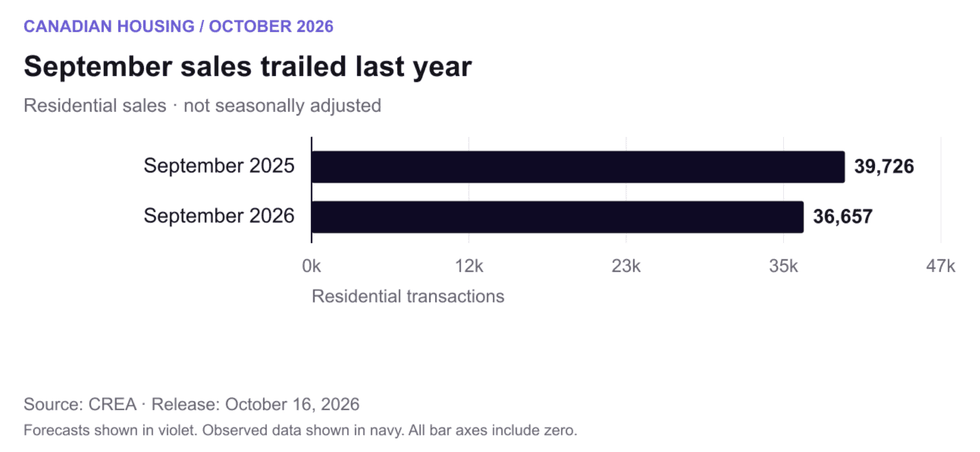 September residential sales, not seasonally adjusted; the annual comparison uses CREA’s revised figures. Chart:
 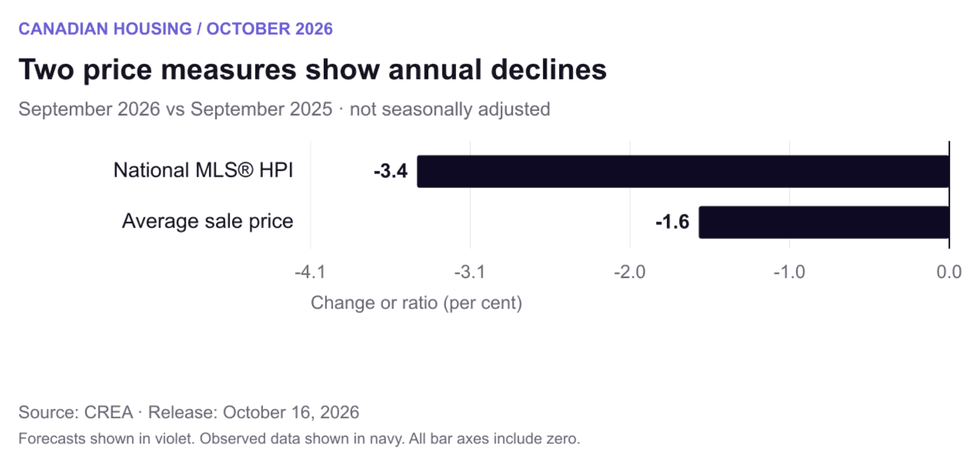 Annual changes in the unadjusted national MLS® HPI and average sale price. The average is affected by the mix of transactions. Chart:
 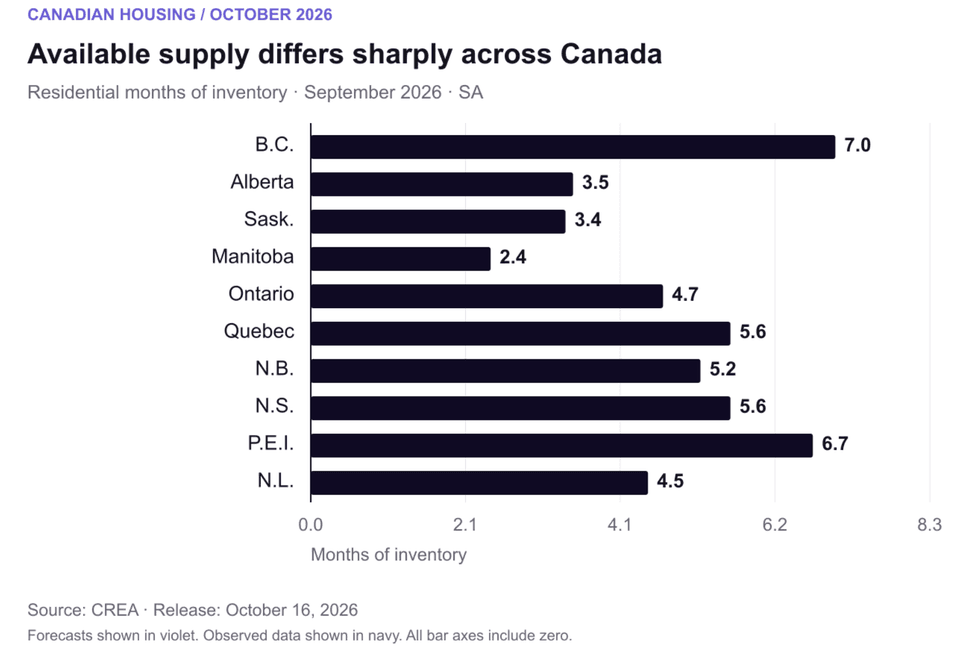 Seasonally adjusted residential months of inventory by province. Local property types can differ substantially. Chart:
 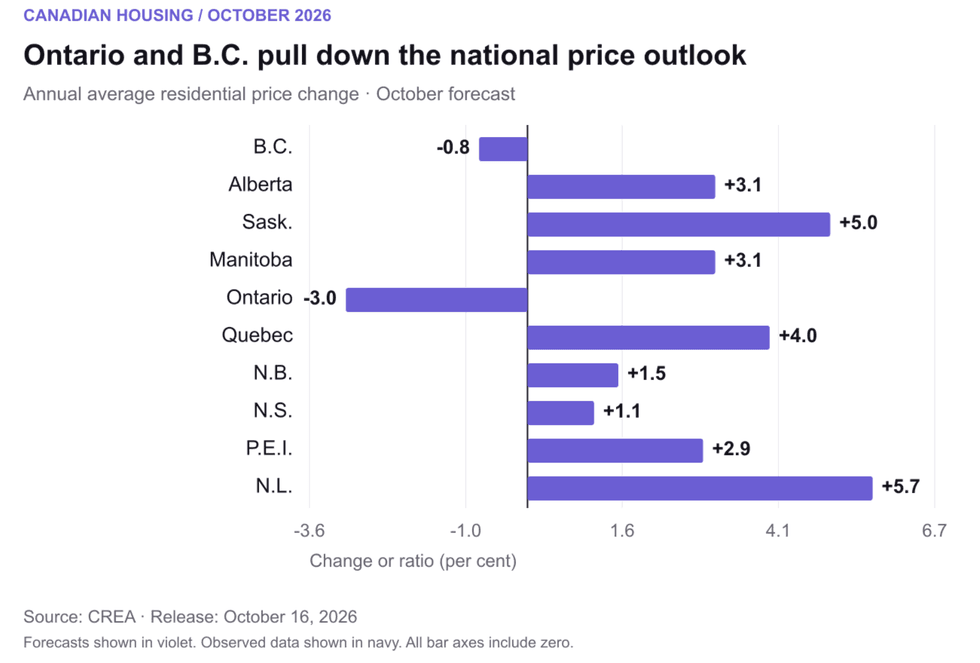 Ontario and B.C. are the two provinces with forecast annual average-price declines in 2026. Chart:
 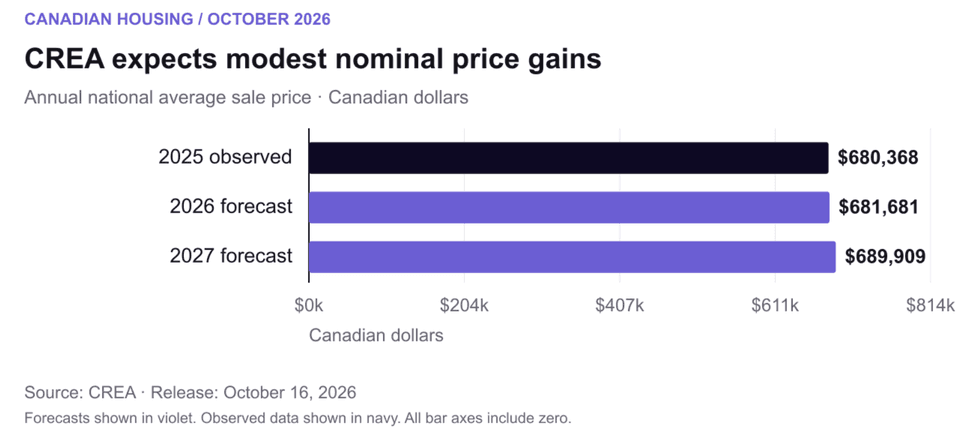 Annual average transaction prices in Canadian dollars. Forecast values are not December price targets. Chart:
 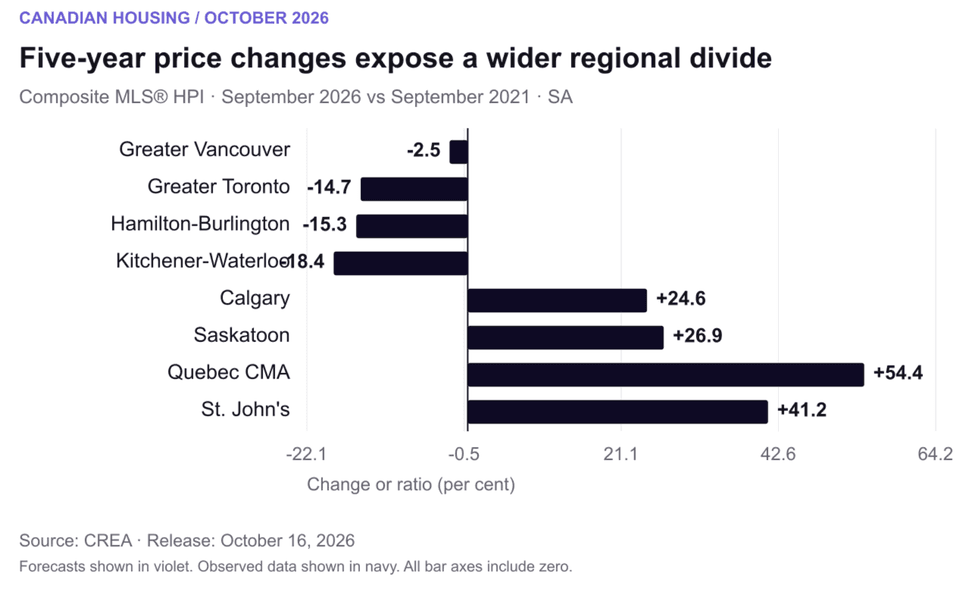 Five-year changes in seasonally adjusted composite MLS® HPI benchmarks, September 2021 to September 2026. Chart:




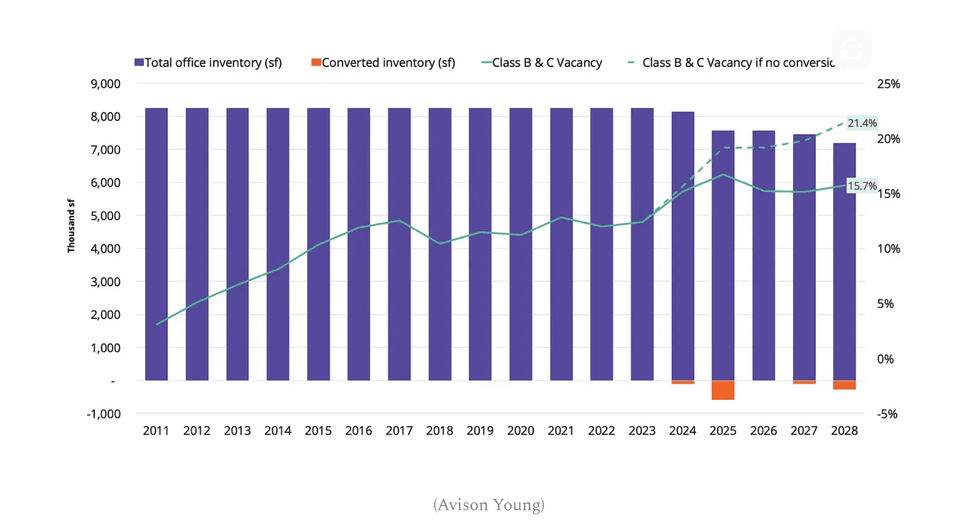 (Avison Young)
 The Mason Suite Interior (Infinity Properties)
 The Mason Suite Interior (Infinity Properties)
 Rail District aerial (Infinity Properties)
 Versant (Infinity Properties)