As of June 1, municipalities across Ontario can now apply for funding through the Government of Canada’s new Development Charge Reduction Program (DCRP), which was first announced on March 30.
The program “will deliver federal and provincial funding over 10 years for housing-enabling infrastructure projects, with funding prioritized for municipalities that reduce development charges for all residential types by 30 per cent to 50 per cent or greater and maintain the reductions for at least three years.”
In an announcement published on Monday, the Government of Canada said applications will be assessed based on:
- the percentage of committed DC rate reduction (minimum 30-50% reduction)
- the number of homes projected to build as a result of proposed DC relief; and
- the municipality’s financial contribution
Municipalities levy development charges on new construction to fund infrastructure, and this program will see the federal government fund that infrastructure, allowing municipalities to lower the levies.
The footnotes of the announcement state that municipal contributions are set at a minimum of 10% of project costs, and that funding to Ontario for the DCRP will be provided through the federal Build Communities Strong Fund and a bilateral funding agreement between the two governments.
“Housing-enabling projects would be prioritized with consideration for the number of homes enabled by the project,” said Housing, Infrastructure and Communities Canada. “Municipalities are strongly encouraged to be as ambitious as possible in their DC rate reductions to secure as much funding as possible for their communities.”
The Government of Ontario has also published their own webpage for the Development Charges Reduction Program, noting that housing-enabling infrastructure projects include roads, water systems, wastewater systems, and transit.
Notably, the application period is just three weeks, with a deadline set for Friday, June 19. The federal government said “Timelines for the DCRP are intended to coincide with the enhanced HST rebate in order to maximize relief for home builders and home buyers.”
The Development Charge Reduction Program is part of the “Canada-Ontario Partnership to Build” that was announced on March 30, which also included the announcement of the Harmonized Sales Tax (HST) Rebate on New Homes. Ontario is removing its 8% portion of the HST on new homes and the federal government is providing $875 million to Ontario to remove the federal 5% portion, which will together eliminate the full 13% HST.
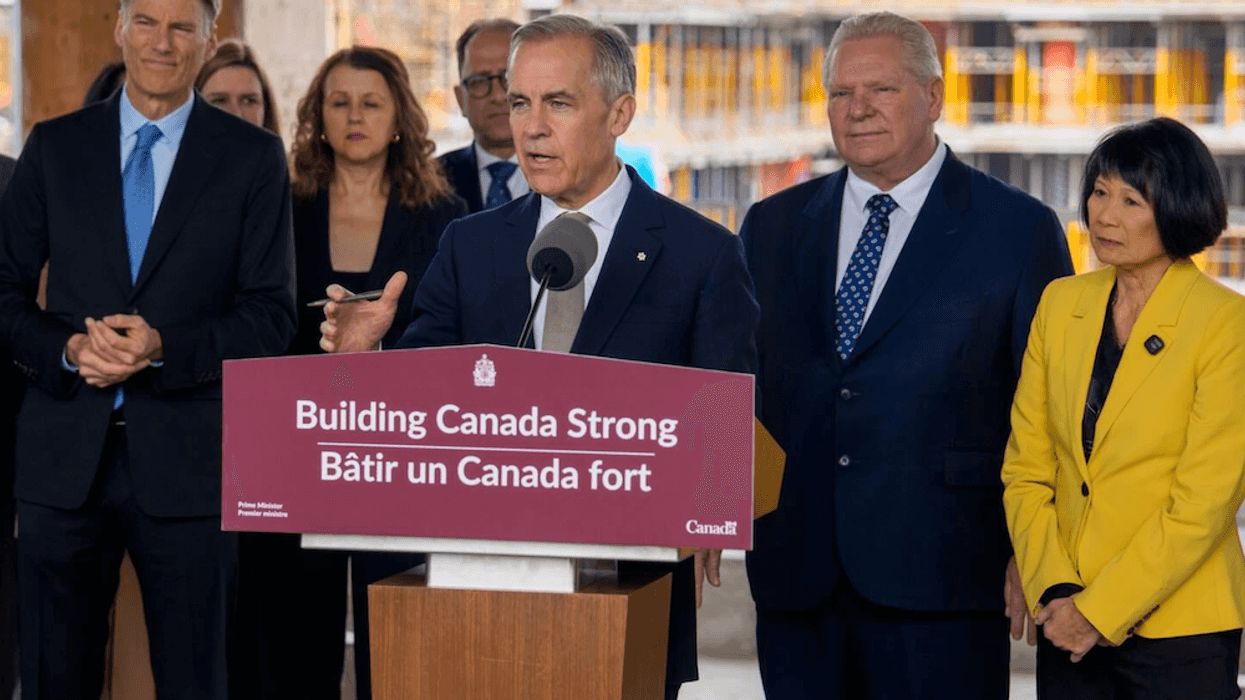
“Together, we’re building Ontario and Canada strong,” said Minister of Housing and Infrastructure Gregor Robertson. “This joint partnership with Ontario will speed up housing construction by lowering up front costs and investing in housing-enabling infrastructure projects — building strong, resilient communities that boost housing supply and drive economic opportunities.”
“This historic initiative provides municipalities with the opportunity to rapidly increase housing supply by aligning development charge relief, infrastructure investment, and government partnership,” added BILD President & CEO Dave Wilkes. “Lowering development charges will help address the economic viability challenges that has stalled housing development across the GTA in recent years. Through this initiative, municipalities and industry working in partnership, can accelerate shovel-ready communities while ensuring that the building and development industry continues to provide well-paying jobs and is an engine of economic growth.”
A similar agreement has been strongly desired in British Columbia, but has yet to come to fruition. Speaking at a Greater Vancouver Board of Trade event last month, however, Prime Minister Mark Carney said that an agreement for BC was “in early stages of discussion.”