Clawback Provision
Understand clawback provisions in Canadian real estate — what they are, how they work, and their role in protecting parties in agreements.

August 07, 2025
What is a Clawback Provision?
A clawback provision is a contractual clause that allows a party to recover previously granted money, benefits, or rights under certain conditions.
Why Clawback Provisions Matter in Real Estate
In Canadian real estate and development agreements, clawback provisions protect parties if expectations or obligations are not met.
Examples:
- Recovering development incentives if performance targets aren’t met
- Reclaiming funds from a partner in breach of contract
- Adjusting land purchase prices based on future rezoning
Understanding clawback provisions helps developers and investors mitigate risk.
Example of a Clawback Provision in Action
The municipality included a clawback provision to recover tax incentives if the developer did not complete the project by the deadline.
Key Takeaways
- Allows recovery of money or benefits under conditions
- Protects parties in development and financial agreements
- Common in incentive and partnership deals
- Helps manage performance and compliance risk
- Should be clearly defined in contracts

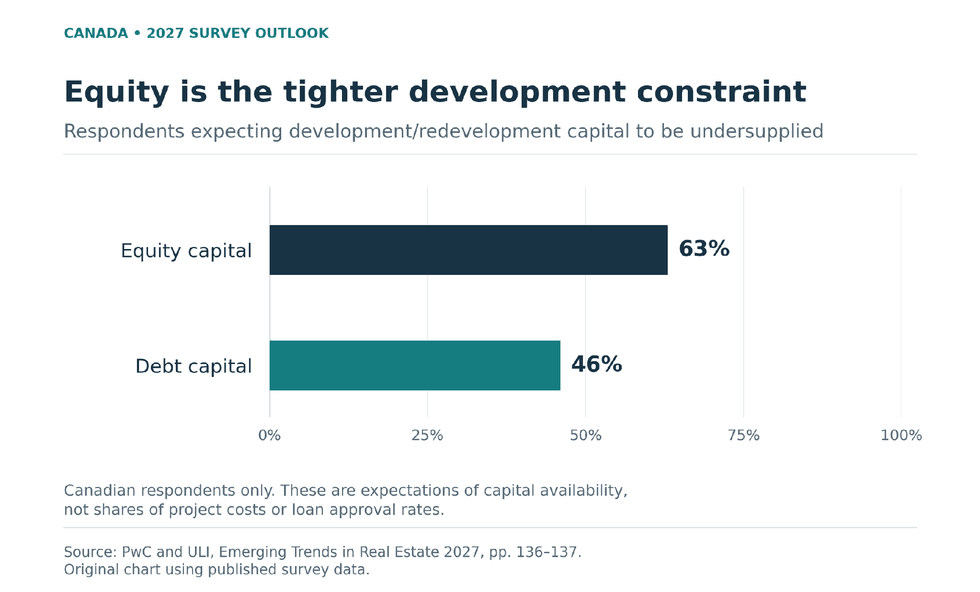 Canadian respondents were more likely to expect an undersupply of development/redevelopment equity capital (63%) than debt capital (46%) in 2027. These are survey expectations, not measured financing volumes. Source: PwC and ULI, Emerging Trends in Real Estate 2027, pp. 136–137. Original chart.
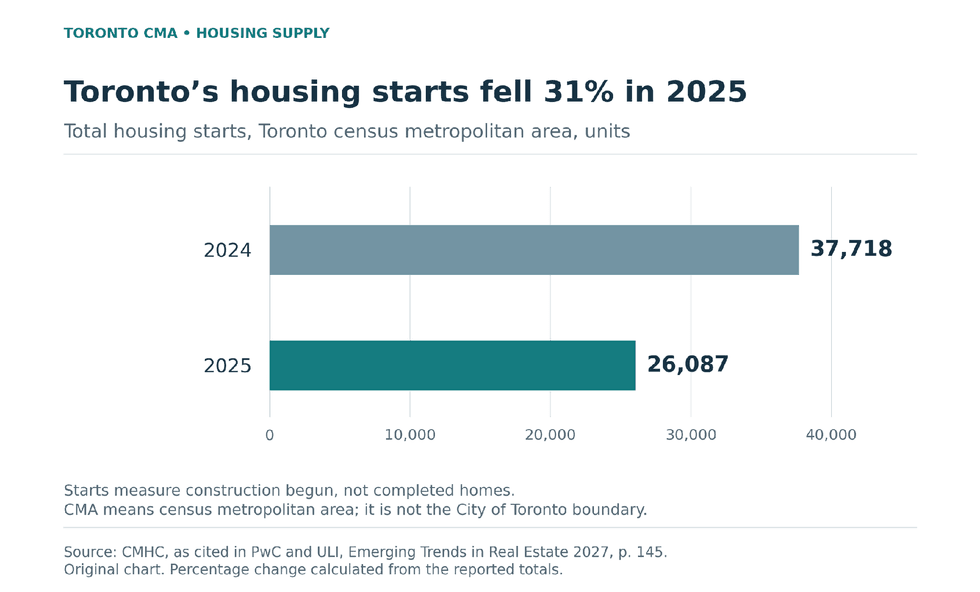 Toronto census metropolitan area housing starts fell from 37,718 units in 2024 to 26,087 in 2025, a 30.8% decline (rounded to 31%). Starts measure construction begun, not completed homes. Source: CMHC, as cited in PwC and ULI, Emerging Trends in Real Estate 2027, p. 145. Original chart.





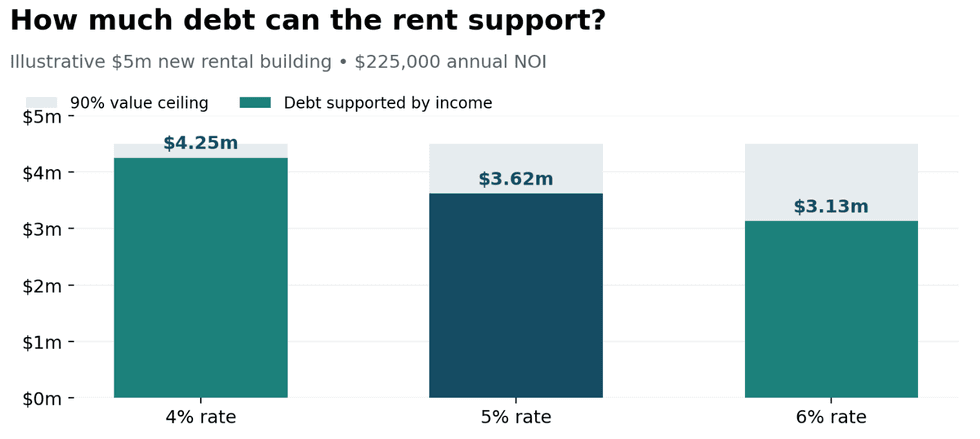 Illustrative calculation: a $4.5-million value ceiling versus income-based capacity of about $4.25 million at 4%, $3.62 million at 5% and $3.13 million at 6%. Assumes 50-year amortization and 1.15 debt coverage.
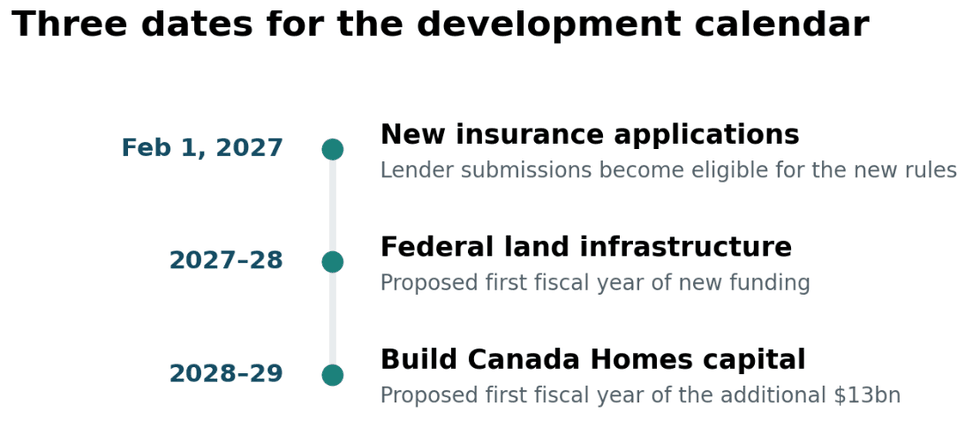 Source: Department of Finance missing-middle backgrounder and Budget 2026 Chapter 3, November 5, 2026. Fiscal-year funding starts are not home-completion dates.