Short-Term Financing
Explore short-term financing in Canadian real estate, how it works, who uses it, and why it's critical for bridging timing or funding gaps.

May 22, 2025
What is Short-Term Financing?
Short-term financing refers to temporary loans or credit with repayment periods under 12 months, used to address immediate real estate funding needs.
Why does Short-Term Financing Matter in Real Estate?
In Canadian real estate, short-term financing is used when buyers face timing gaps — such as needing a down payment before selling a current home, or funding renovations prior to refinancing.Common types include:
- Bridge loans
- Private lending arrangements
- Construction loans
Short-term financing is useful in competitive markets and for investors or developers who need flexibility and speed to close deals.
Understanding this tool helps buyers take advantage of time-sensitive opportunities without long-term financial commitment.
Example of Short-Term Financing in Action
A developer uses a six-month private loan to fund renovations before applying for a mortgage refinance.
Key Takeaways
- Loans repaid in less than 12 months.
- Used for bridging, renovations, or fast closes.
- Higher cost, faster access.
- Often repaid after sale or refinance.
- Valuable in competitive or time-sensitive situations.
Related Terms
- Bridge Financing
- Bridge Loan
- Private Lending
- Down Payment
- Refinance

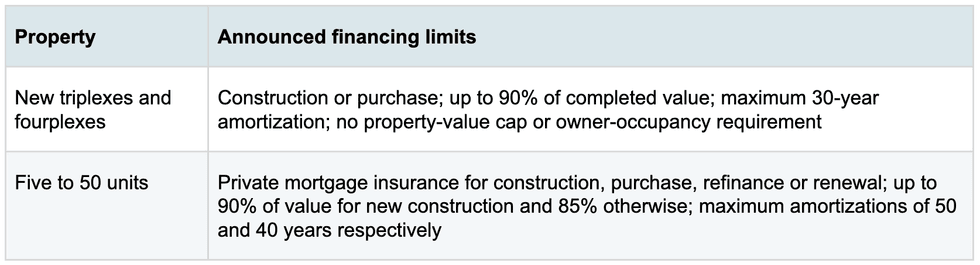
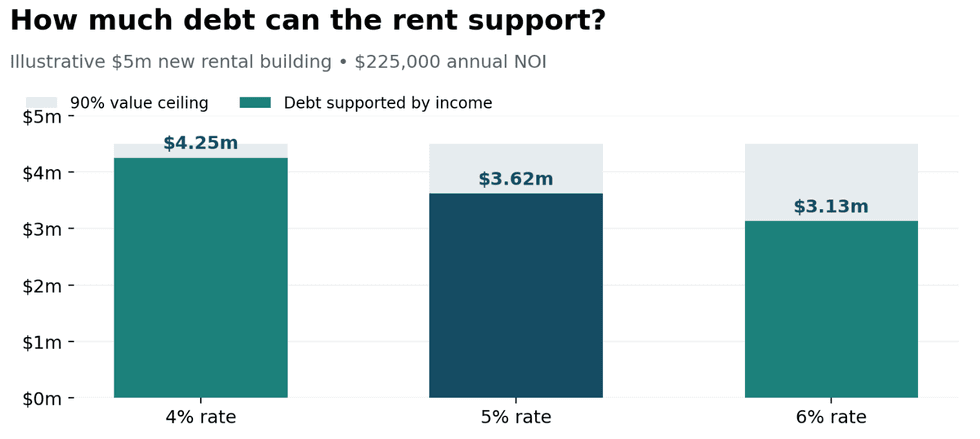 Illustrative calculation: a $4.5-million value ceiling versus income-based capacity of about $4.25 million at 4%, $3.62 million at 5% and $3.13 million at 6%. Assumes 50-year amortization and 1.15 debt coverage.
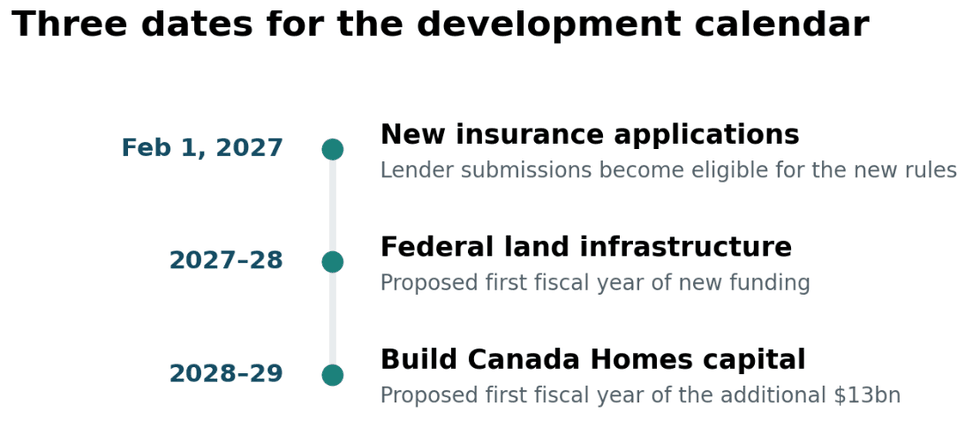 Source: Department of Finance missing-middle backgrounder and Budget 2026 Chapter 3, November 5, 2026. Fiscal-year funding starts are not home-completion dates.

 A rendering of Fraser Academy’s new campus. (Fraser Academy)











 Richard Wengle Architect Inc.



 e-lofts exterior
 e-lofts fitness centre
 e-lofts coworking space