By: Harjaap Singh Makkar, Colliers
For the better part of two years, the smartest move for a tenant with an industrial lease coming due in the GTA was to do nothing. Every quarter brought more space, softer rents, and a landlord more willing to deal than the one before. That calculus has broken.
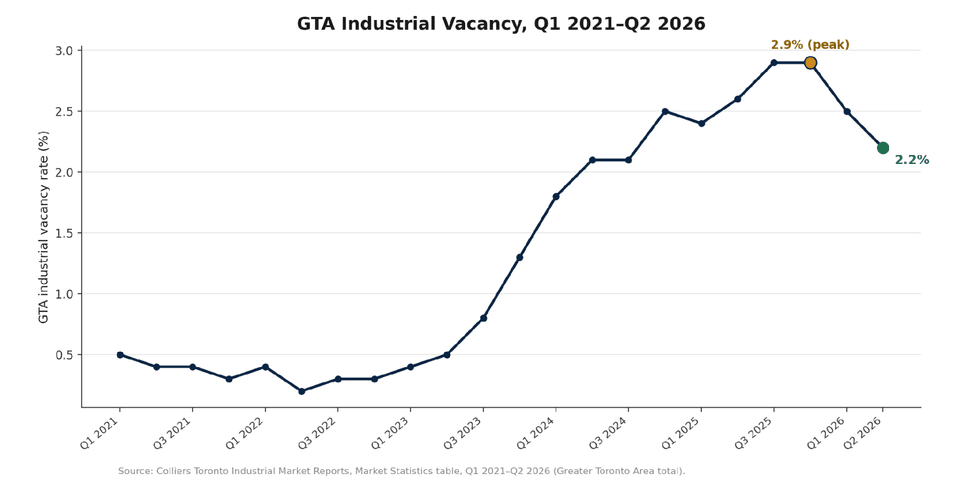
Colliers' market research shows GTA industrial vacancy falling in back-to-back quarters for the first time since this correction began. The data indicates that the era of waiting for it to get cheaper is over.
I sat down and went through every quarterly market report Colliers' Toronto industrial research team has published over the last five years — all 22 of them, Q1 2021 through Q2 2026 — to map the full arc: how vacancy got this tight, how it corrected, and exactly where it turned.
The reversal, in Colliers' own numbers
GTA industrial vacancy bottomed out near 0.2% in mid-2022, then climbed, almost without interruption, for the next three years, cresting at 2.9% across Q3 and Q4 2025. Since then it has fallen in back-to-back quarters: 2.5% in Q1 2026, 2.2% by Q2 2026.
How we got here
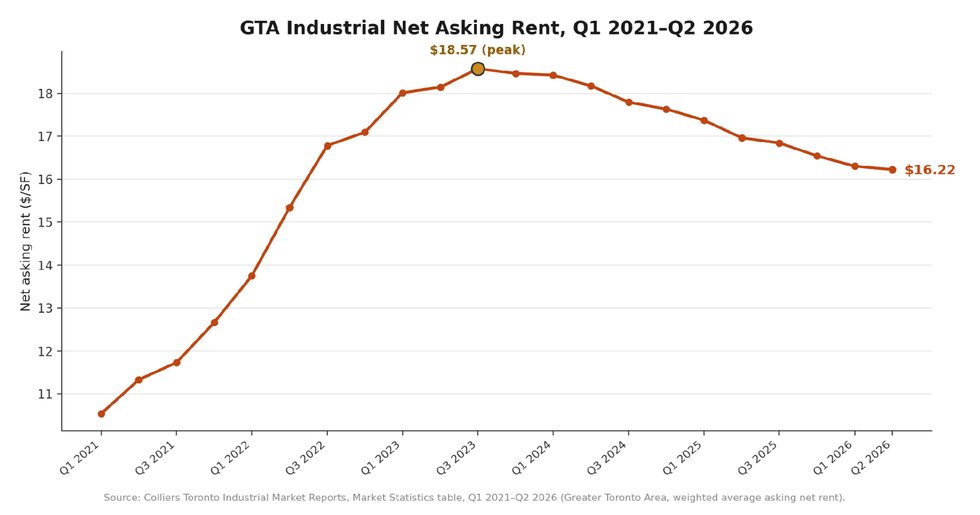
Rents tell the same story from the other side. Net asking rents in the GTA started 2021 at $10.54 per square foot and roughly doubled by Q3 2023, when they hit $18.57 — the entire boom compressed into about two-and-a-half years. From there, the wave of new supply that had broken ground during that run finally caught up with the market, and rents have given ground in nearly every quarter since, down to $16.22 by Q2 2026, a correction of about 13% off the peak.
What it looks like in Peel
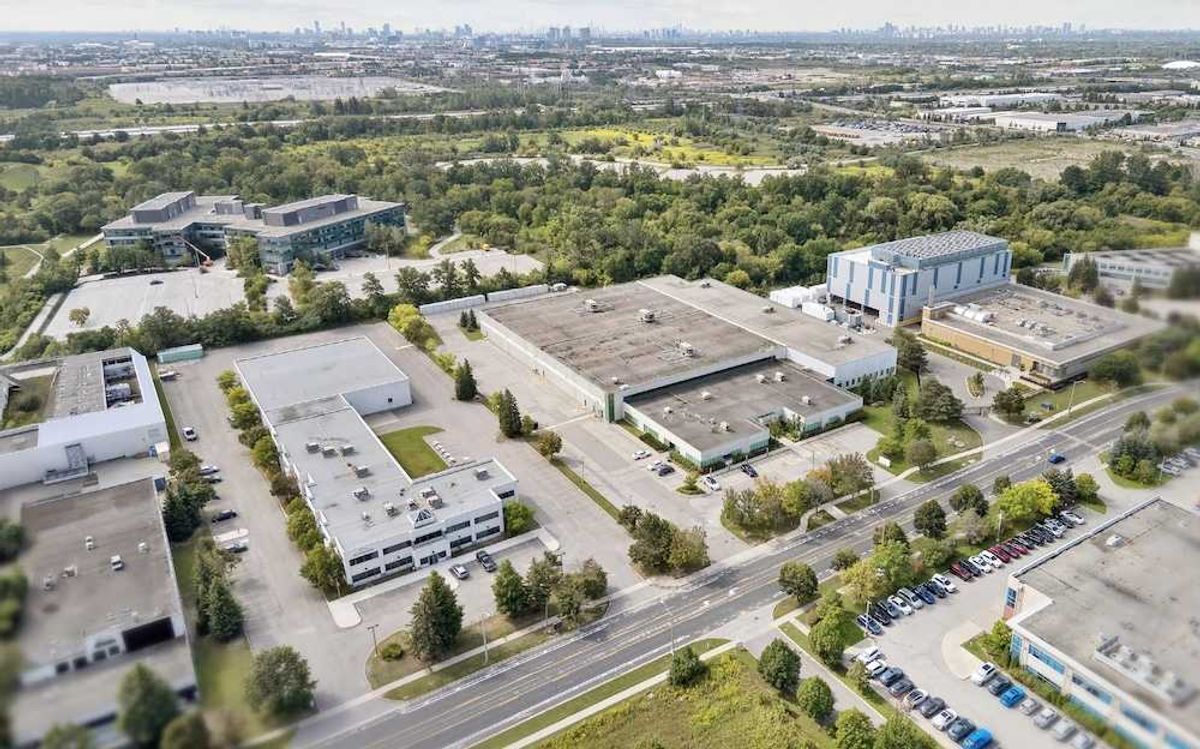
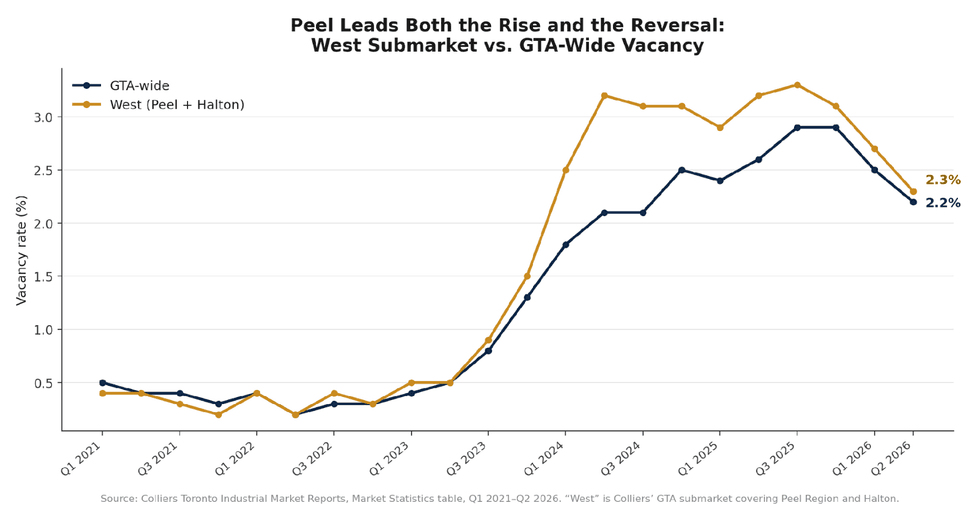
Colliers breaks the GTA into four submarkets — Central, East, North, and West — and West is the one that covers Peel Region along with Halton. It's also the largest by inventory, and it moved further and faster than the GTA average in both directions: vacancy in the West market peaked at 3.3% in Q3 2025, four-tenths of a point above the GTA-wide peak, and has since fallen for three straight quarters to 2.3%. Colliers' Q2 2026 report points to the West market specifically as the largest contributor to that quarter's strength, with close to 2 million square feet of absorption there alone, and vacant space in the submarket falling to its lowest level since Q3 2024.
What it means if you were waiting
If you've been sitting on a lease expiry hoping for one more quarter of softening before you commit, here's the uncomfortable part: the conditions that produced two years of tenant leverage are unwinding, and Peel is leading that shift, rather than lagging it.
Every Wednesday morning, Colliers' Toronto industrial brokers meet at 8 am to walk through the week's completed deals and share what we're seeing in the market. For the first time in three years, I'm hearing deals get done with as little as half a month to a full month of free rent before full rent payments begin. That little free rent would have confused people in the room as recently as 2024 or 2025 — landlords would not get away with offering that little with so much competing space still on the market. Say it today, and the reaction is closer to a shrug: makes sense.
However, none of this means the leverage is flipping overnight. Rents are still down double digits from peak, and a couple of quarters of improvement doesn't erase a three-year correction. But for a tenant weighing whether to lock in now or hold out for a better print next quarter, the math has changed. The best window in five years for GTA industrial tenants was very likely the twelve months just ending.
Data compiled directly from Colliers' Toronto Industrial Market Reports.
Harjaap Singh Makkar is a senior industrial real estate salesperson with Colliers, focused on the GTA market. He has transacted over 500,000 square feet of industrial space so far in 2026.