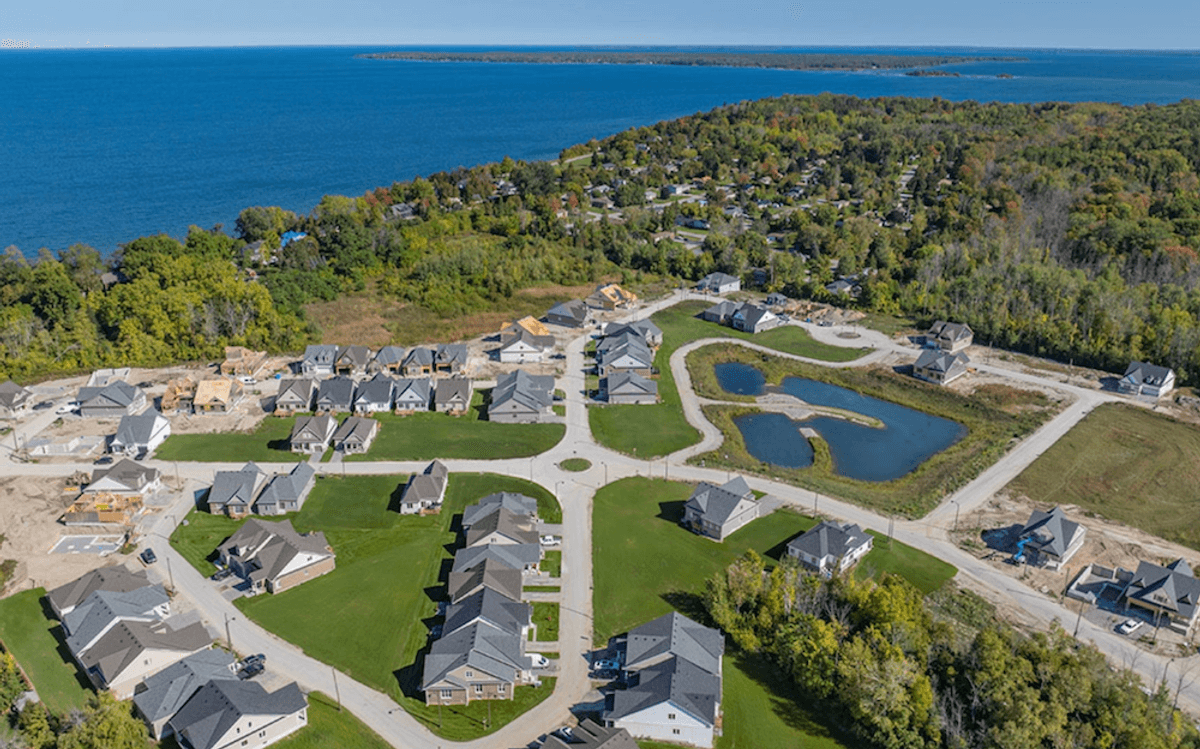
Prince Edward County — land of wineries, farms, and quaint storefronts — will soon be home to one of Ontario’s largest residential developments: a 7,500-unit master-planned community located on the site of a WWII military air field. Dubbed Base31, the lands have undergone significant transformation since being purchased by developers in late 2021. But last Friday marked the biggest milestone yet, with the groundbreaking of the development’s first residential projects.
The 750-acre site is located two kilometres south of the rural town of Picton, roughly 160 km east of Toronto and just 14 minutes from the sloping dunes of Sandbanks Provincial Park. It’s a quiet place, but one with a rich history the developers are tapping into.
A rich history
In 1940, The Canadian Government built a 70-acre military training base on the site called No.31 Bombing and Gunnery School. It was operated by the British Royal Airforce, who trained young men that had travelled from the United Kingdom, Canada, Australia, and New Zealand to become army airmen. After the war, the base served as a technical training and support hub for the Royal Canadian Air Force and Canadian Army until 1970, when it was bought by former Picton mayor H.J. McFarland and repurposed for light industrial use. But by the 2000s, the site’s barracks, mess halls, hangars, and administrative buildings had started being co-opted by local artisans and small businesses.
In 2021, PEC Community Partners Inc., purchased the site with the goal of leaning into this art- and community-focused revitalization of the former military lands, and began restoring the site’s aging concrete and cedar shake buildings. This led to the creation of B31 District — a central cultural hub hosting music concerts in the old drill hall, art exhibitions, and open-air food markets.
The master plan
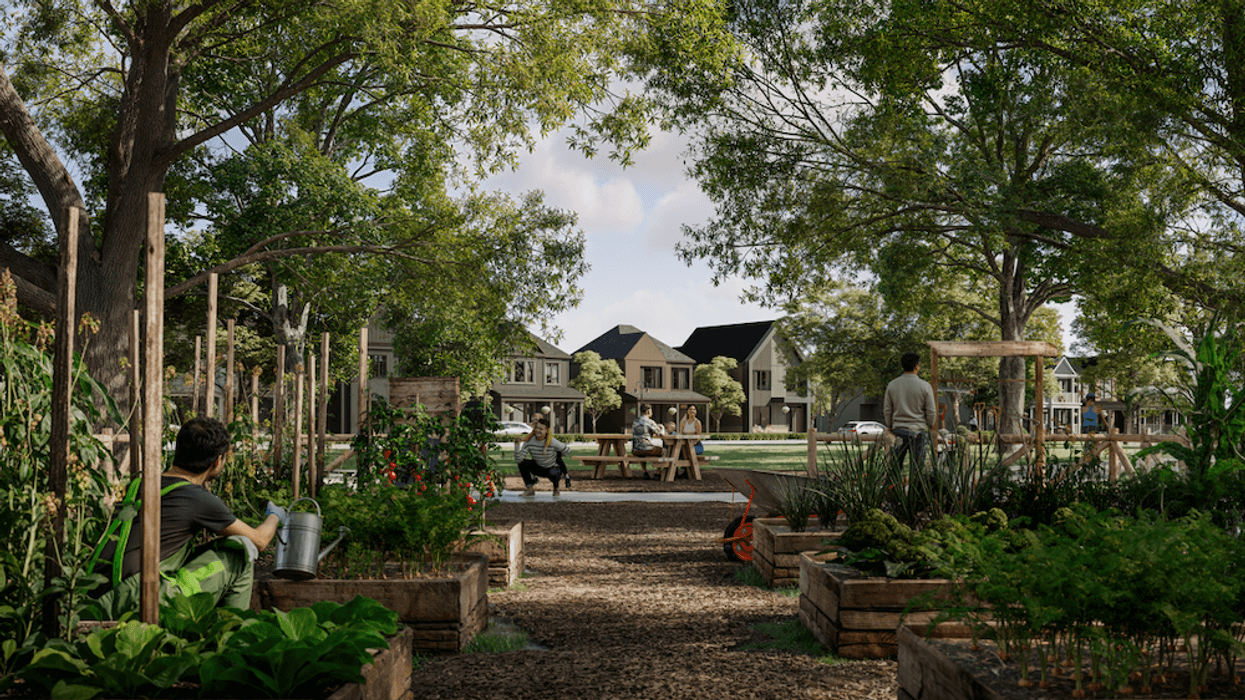
B31 District serves as the heart of the forthcoming master-planned community, which will consist of residential villages, an extensive system of open space ‘green fingers,’ and natural areas, including 270 acres of protected green space and 10.5 km of trails. The development is projected to take around 20 to 25 years to complete, and will be carried out in several phases. On Friday, phase one broke ground with Hilltop Village, the first residential village at Base31, and The Landing, its first purpose-built rental building.
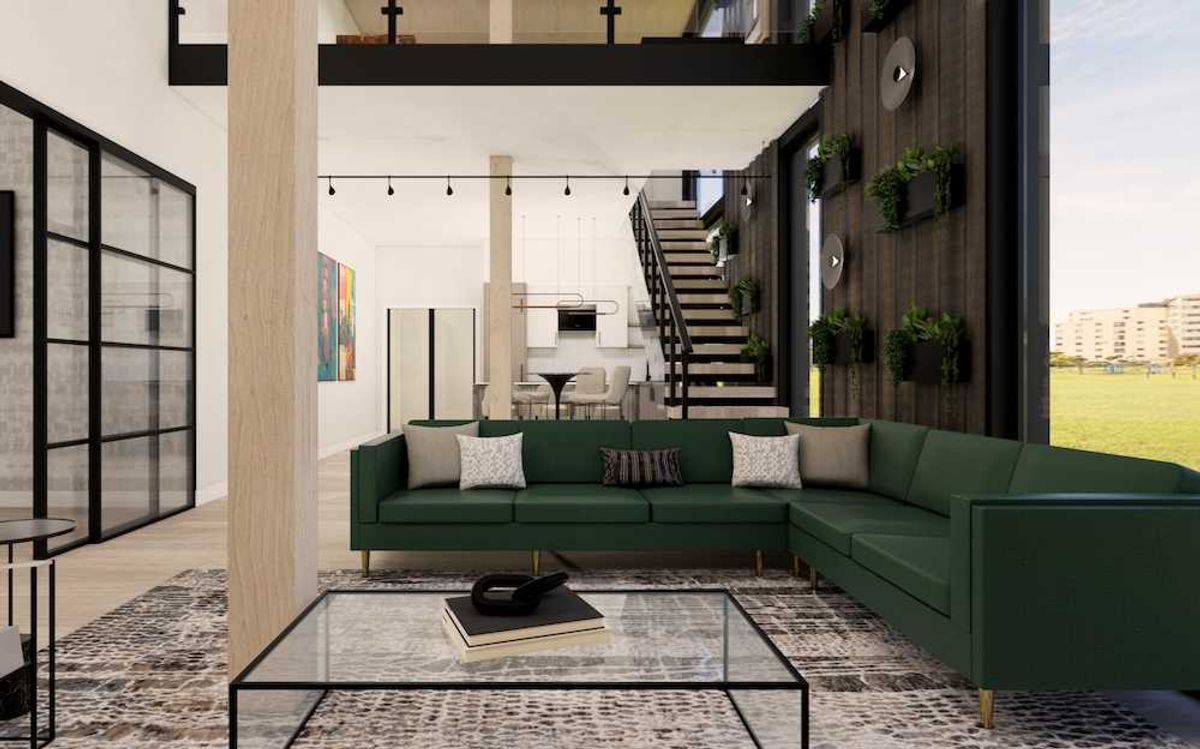
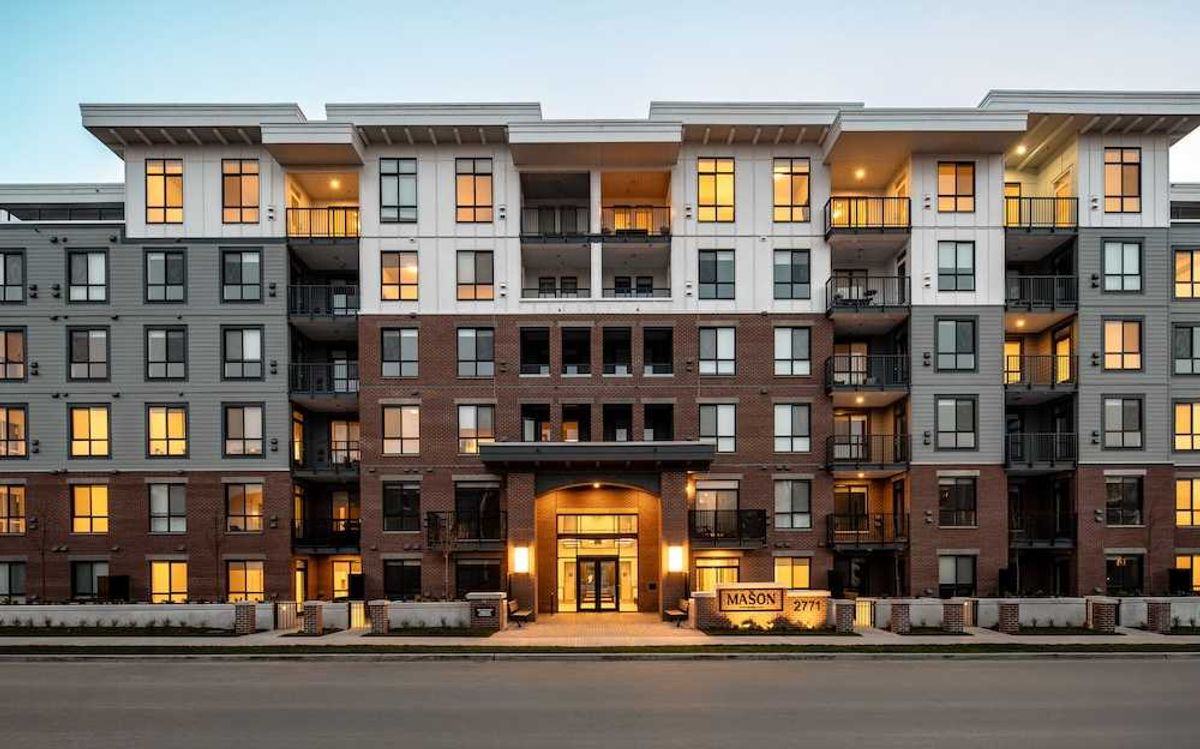
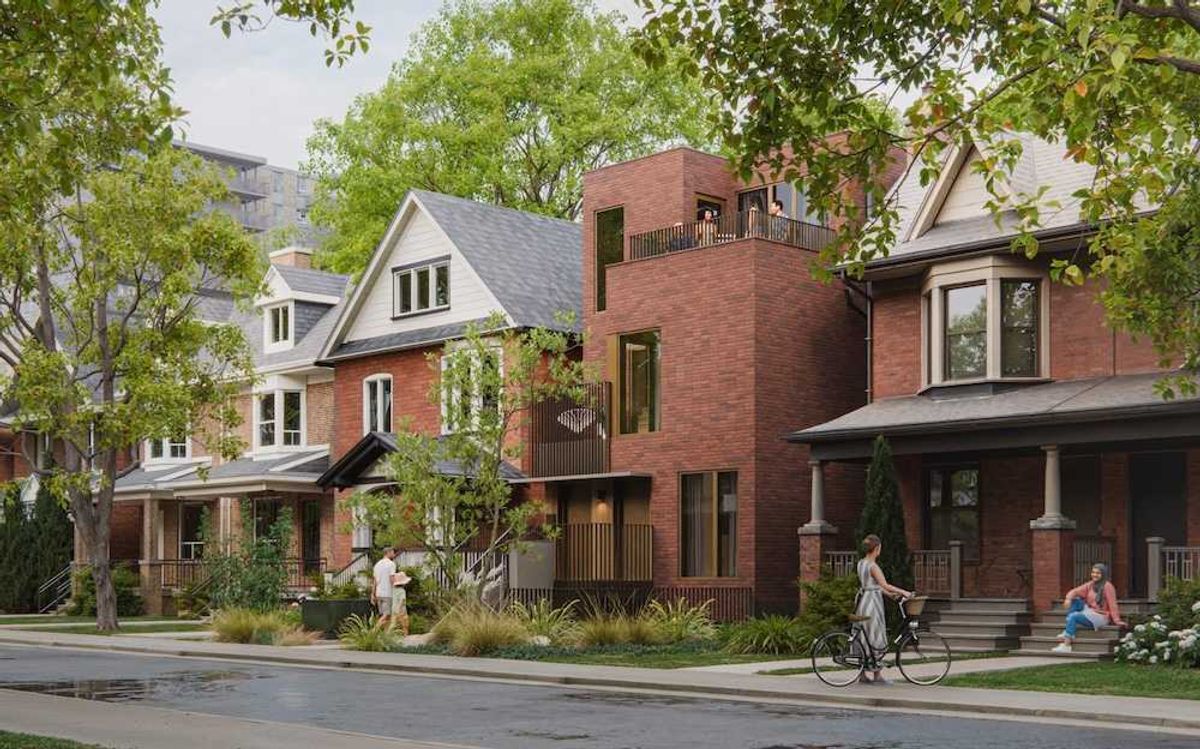
The Landing will provide 120 units, and Hilltop’s Village A will deliver 458 homes, including two-storey detached homes, bungalows, twin-entry townhomes, mews townhomes, and more starting at $299,900. “One concept that is embedded in the entire project is housing for all,” says Alexandra De Gasperis, Vice-President of DECO Communities, the principal development partner and community builder for Base 31. “So there is something for everyone at every stage of their life.”
In terms of design, the homes will reflect existing styles in the community. “The county has beautiful Victorian-era homes and farmhouses,” says De Gasperis. “We went around and took a significant amount of photos for inspiration, and Hunt Design reimagined it in a more modern form for us.”
Affordability is another key aspect of the development. In total, 5% of the roughly 7,500 homes will be affordable and, earlier this month, Base 31 and Habitat for Humanity Prince Edward-Hastings announced a partnership to deliver affordable townhouses within Hilltop. As well, 10% of The Landing units will be affordable, with rents expected to start around $1,000 per month for the affordable units and $1,450 per month for market rate studio units.
By providing a range of housing types at more attainable price points, De Gasperis says she hopes the development will attract a diverse community of future Pictonians. Two of the main groups she expects to move in are seniors who have sold their properties and city and want to retire in an amenity-rich community, young people priced out of city centres, and locals who grew up in the county but can’t afford PEC’s $700,000 average price point. Amenities planned for the community reflect that diverse customer base. Already available at the B31 District are amenities like public sports courts, a sensory garden for kids, a daycare, art galleries, and restaurants.
The first village is expected to be completed within 10 years, with the first phase finished in just over two years.
Big changes
Once occupied, the expansive development could more than quadruple the population of Picton, which currently sits around 4,500 people. Many are excited about the opportunities that growth would bring and the substantial addition to the region’s housing supply, but others have pushed back on the unprecedented development. According to the Toronto Star, some residents are concerned the development won’t deliver enough affordable housing and that it will ruin Picton’s small-town charm.
De Gasperis pushes back on this narrative. “This is a long-term plan. We're not in a rush to get there. We've consulted significantly with the community and we faced very little opposition throughout our entire planning process,” she says. “We don't want to change the context of this place. We don't want to change it from being this rural community. We're very mindful about doing this at a pace and in a way that is complimentary of the things that are already happening here.”
There’s also been significant concern that Picton will get stuck with a $255.5 million bill for new water and wastewater infrastructure needed to sustain the 7,500 additional homes. The worry is that if the market remains soft, development at Base31 could stall and the development charges needed to cover these infrastructure costs would remain unpaid, leaving the city millions in debt. But De Gasperis says those water infrastructure updates are unavoidable if Picton wants to see any future development, not just the realization of Base31.
“The water treatment plant in Picton is 99 years old, and it is reaching the end of its useful life. Then there is a water and wastewater treatment plant in Wellington that are at full capacity. You cannot flush a single additional toilet without building upon those facilities,” she says. “The county recognizes that the Provincial Policy Statement requires municipalities to have capacity for future development, but there's a significant quantum that is involved in that. [...] People in the county look at that number and think that is a really high number. But what I don’t think they recognize is that most of that number needs to be paid whether or not new housing comes on.”
In reality, Base31 will only owe a fraction of the $255.5 million sum, though De Gasperis says they don’t know what the exact number will be.