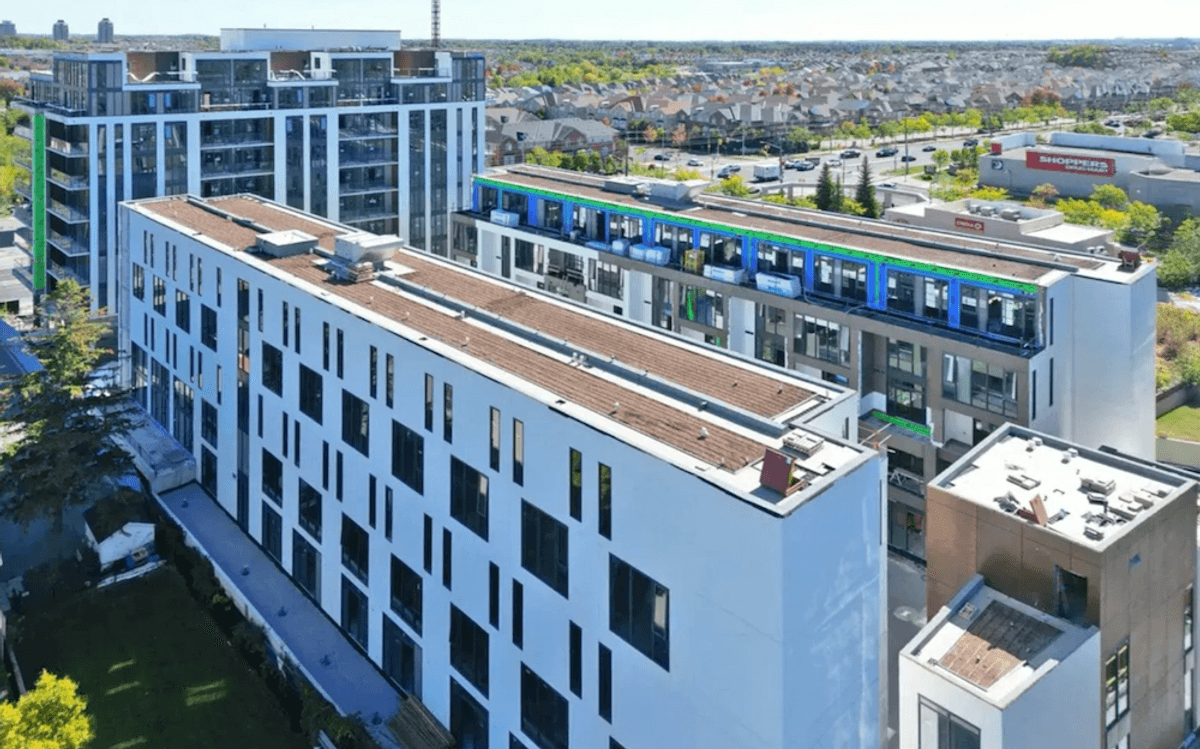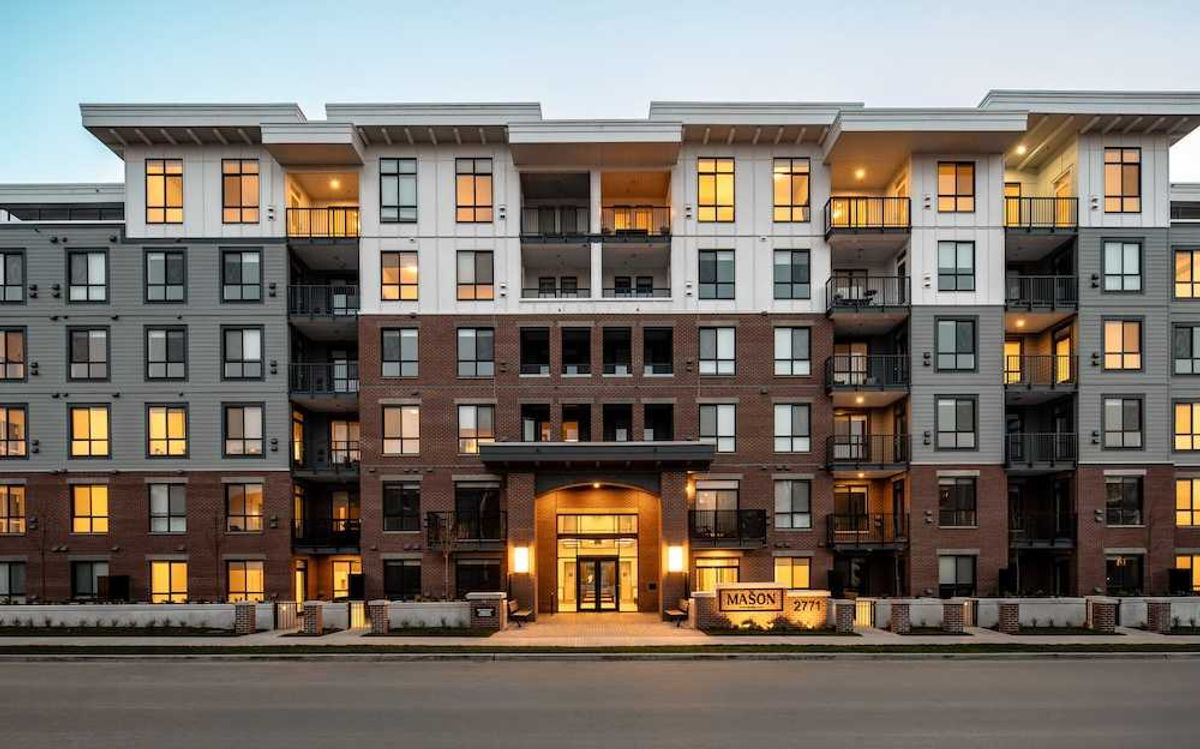
Every residential tower gives up part of itself to equipment. From early plans, mechanical systems typically claim a room in the basement and a penthouse on the roof (the latter being prime real estate, mind you). This approach means that square footage is spoken for before the first suite is laid out.
Developers pay to build that space, but can’t sell or rent it. And today, with construction costs high and interest rate hikes back on the table, that cost is increasingly difficult to absorb.
“For developers building today, trying to make their projects pencil, taking capital off of traditional real estate development is a major factor,” said Diego Mandelbaum, Chief Development Officer at Corix, which builds and runs district energy systems as a utility across North America. “Reducing square footage for inefficient, building-scale mechanical space is a major piece of that, because doing so translates into both more usable area, and cost savings for developers.”
District energy moves thermal equipment out of individual buildings. In short: a central plant, usually located somewhere on, near, or below a project site, produces heat and chilled water for cooling and sends it through a network of pipes to every building connected to it, so the buildings themselves don’t need their own boilers. And because all of that energy is made in one place, the plant can switch to cleaner sources over time, like waste heat captured from a nearby power plant or wood waste that would otherwise go to landfill. This type of system has been around for well over a century — Corix’s district energy network at Ohio’s Cleveland Thermal dates back to 1894, for example — and now, the same central-plant model is helping today’s developers get space and capital back.
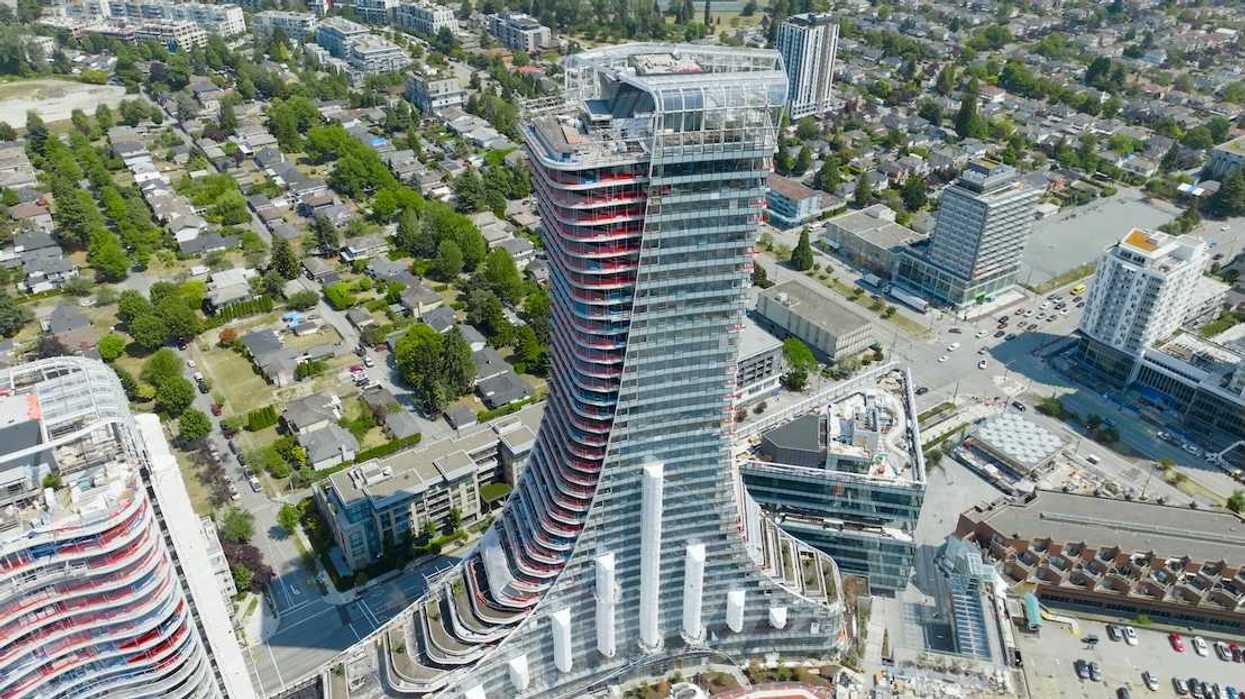
And those capital gains aren’t only about reclaimed square footage. Sometimes, they’re connected to meeting standards that are as well-meaning as they are costly. The starting point for the district energy system co-developed by Corix at Oakridge Park in Vancouver was a municipal low-carbon building policy. Meeting it tower by tower would have been an expensive effort — both in space and in capital. But that wasn’t the only way.
“At Oakridge Park, our solution was to rip out the mechanical equipment from each individual tower and centralize it. That allowed the development to meet the City’s green zoning requirements while saving a tremendous amount of capital and space,” Mandelbaum explained. At buildout, Oakridge Park will reach about 5 million square feet.
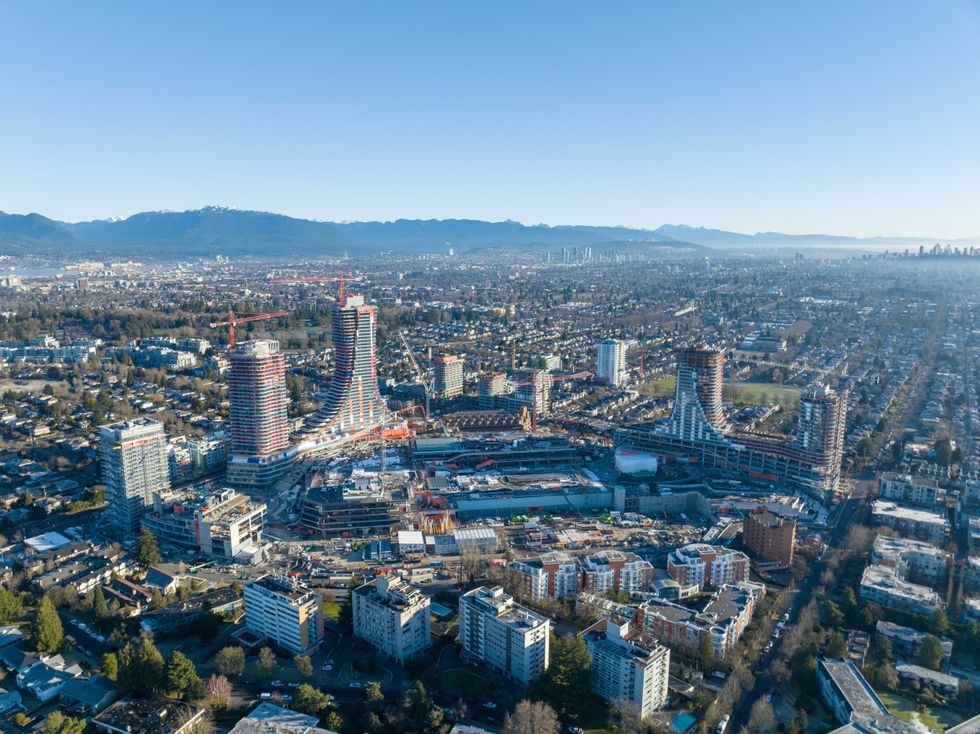 Oakridge Park (via Corix)
The savings can reach a project’s financing, too. CMHC is the only provider of mortgage loan insurance for multi-unit residential properties in Canada, and much of the country’s new rental housing is financed through it. And, CMHC-insured loans carry efficiency and sustainability requirements that are expensive to meet when approached one building at a time.
“We’re able to help developers meet these standards,” Mandelbaum says. In so many words, Corix can unlock financing solutions on a developer’s behalf, clearing a path to the CMHC-insured loans a project needs.
The earlier Corix is brought into a project, the more of those savings there are to find, since the team can help shape a master plan’s massing before plant spaces and penthouses get locked in. But no matter when the partnership is formed, the developer doesn’t carry the cost of the plant and pipes; Corix does, recovering that investment over the long term through the rates its customers pay for energy.
That means keeping those rates competitive comes first, and building too much, too soon would push them up. Which puts the pressure on timing.
“District energy doesn’t really work by just looking at an engineering study and asking, 'Can we make it work?' It’s about figuring out how to phase in your generation, and your capital, lock-in-step with the development," Mandelbaum said. "It's also about understanding that a developer will never give you certainty on how long it’ll take to build things out, because the market will never give you certainty."
So Corix builds in phases, leaning on modular construction and prefabrication to add capacity as buildings come online. At UniverCity, the residential community beside Simon Fraser University (SFU), work started with modular natural gas boilers while the community grew. Once the system had enough load, made possible by connecting SFU’s Burnaby campus, Corix invested in a much larger biomass plant, which burns wood waste otherwise bound for landfill. Today, the system heats the university and its neighbours, spanning nearly 5 million square feet in total.
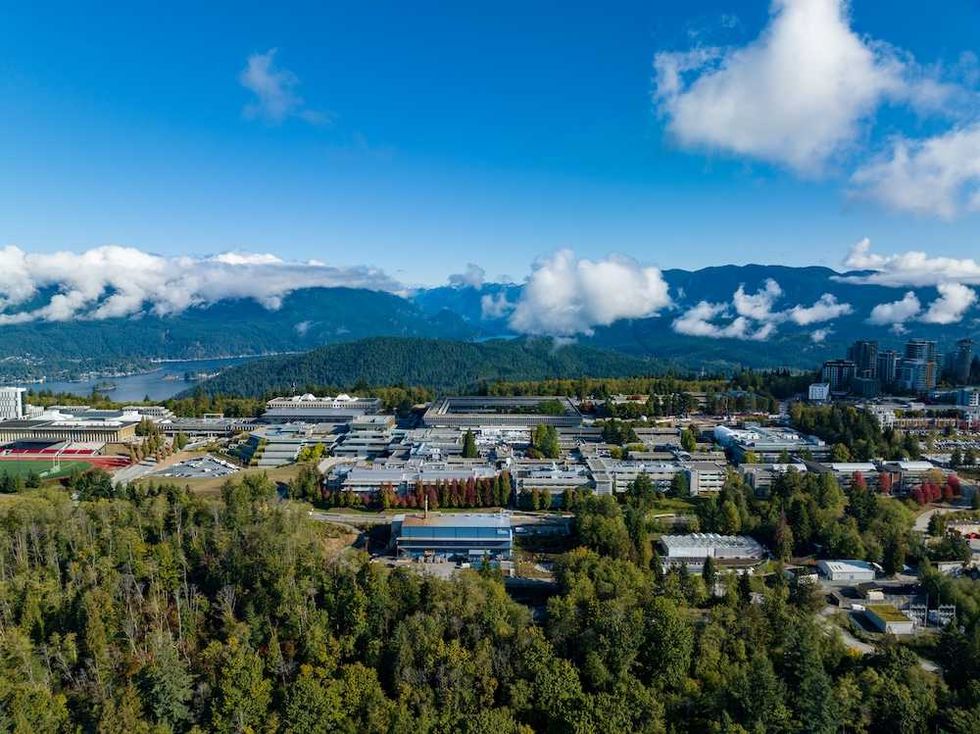 Burnaby Mountain District Energy Utility near Simon Fraser University (via Corix)
Utah City, a sprawling master plan south of the border, is following the same path. There, Corix came into the picture after the first building was already up. Waiting on the grid wasn’t really an option: the development would have needed about 70 megawatts of power for its thermal systems, Mandelbaum explained, and the local utility would have needed 10 years to supply it.
Understandably, the developer had some questions about implementing district energy. But with construction in progress, the development team had tangible, tendered prices for mechanical equipment in hand, and could check Corix’s numbers against them directly. Spoiler: they held up.
“We built a modular plant in Washington state, we put it on a truck bed, we got it to site as soon as possible, and we got things energized within two years of the handshake,” Mandelbaum said.
Today, about 20 million square feet of real estate is set to be served by the system. Once enough of it is connected, Utah will see its own version of SFU’s switch: Corix will capture waste heat from a ~1.3-gigawatt gas-fired power plant about a mile away, which currently vents that heat into the atmosphere.
“What we're doing is closing the loop on what’s otherwise a wasted resource,” Mandelbaum explained.
Developments like these can take decades to build out, but Corix can handle a waiting game, thanks in large part to its ownership structure. The company is wholly owned by British Columbia Investment Management Corporation, which manages public pensions in British Columbia.
“We’re able to take a very long-term view," Mandelbaum said. "We have patient capital."
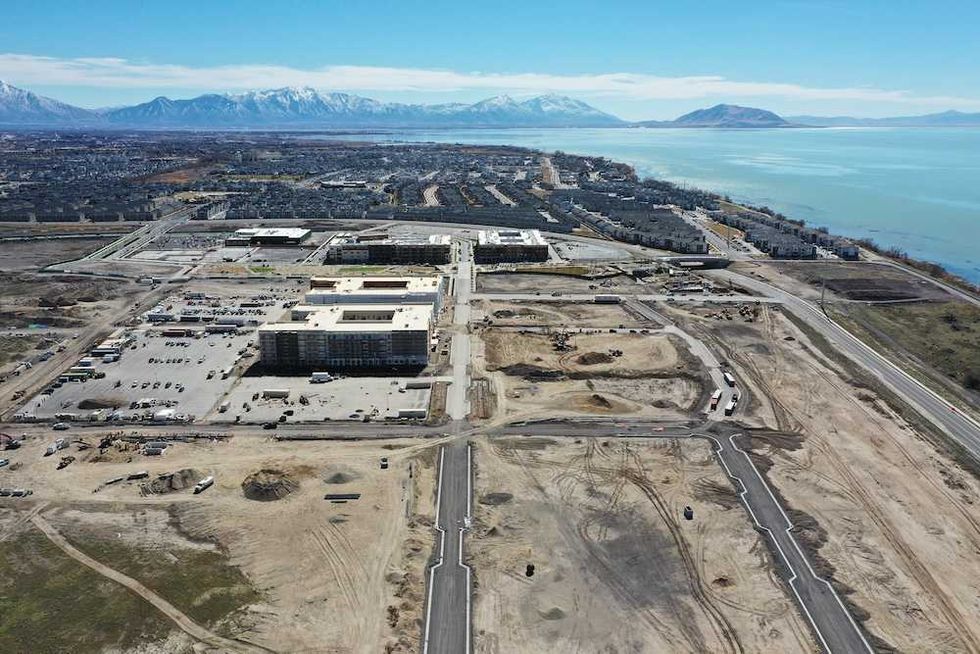 Utah City (via Corix)
That long view extends to everyone a system touches. Before a shovel goes in the ground, Corix looks at each project from every stakeholder’s side: the developer, the regulator, the municipality and, ultimately, the customer.
For Mandelbaum, the approach comes down to one question: “How’s a customer going to feel and experience this?”
And for the people who’ll call these communities home, the payoff lives in space reclaimed at the lower level, or on the sun-soaked rooftop.
“Just imagine," Mandelbaum said, "if every single rooftop was able to be used for amenity space. Or for recreation. Or for a garden."
______________________________________________________________________________________________________________________________
This article was produced in partnership with the SiteMedia Content Studio.