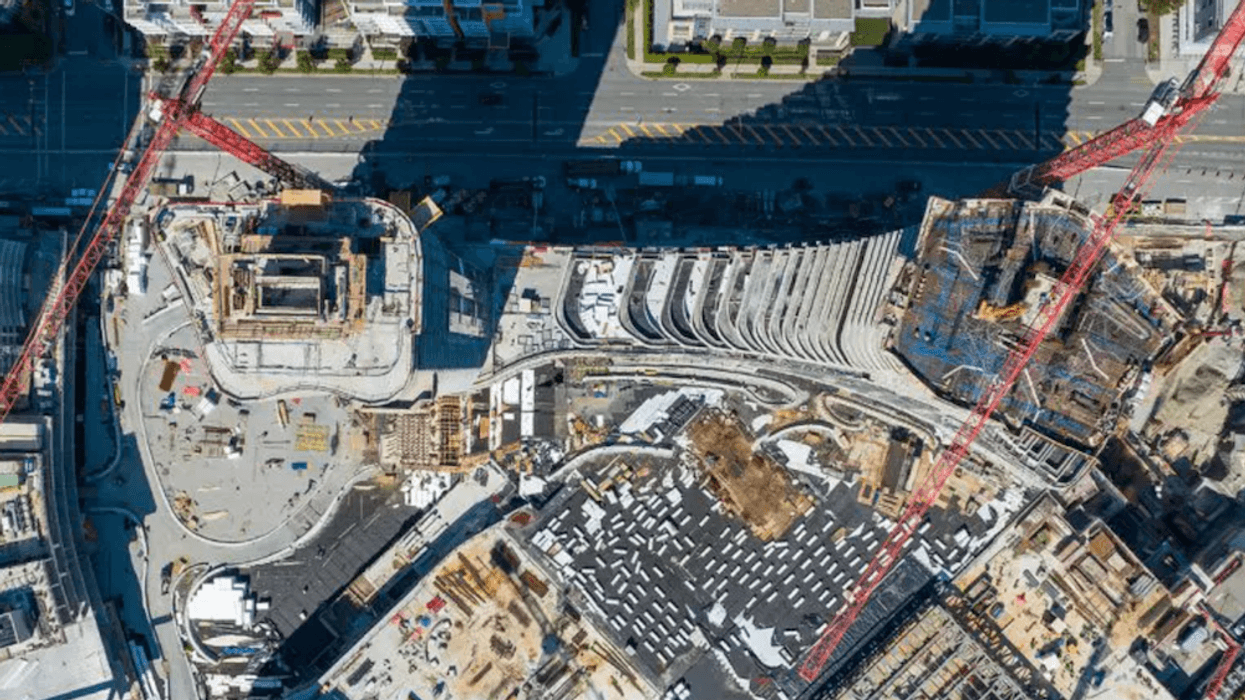
What’s old is new on the modern building front. At least, that's the case for Canada’s most strategic developers.
Today’s construction challenges range from sky-high costs and supply shortages to perpetual economic uncertainty. This is a relatively new reality. For years, a surging real estate market meant Canada’s developers had little reason to consider alternative pathways to project delivery. But times have changed.
Developers are now making a new set of infrastructure decisions early on. And getting them right has long-term consequences on project economics, density, and operational complexity. Savvy developers are turning to methods like mass timber, modular construction, and district energy in large-scale building.
These solutions meet important sustainability requirements – but that's increasingly the baseline. Strategic master-planning relies on understanding how these methods intersect. For forward-thinking builders, mass timber and modular are high-speed structural solutions for the above-ground envelope, while district energy is a below-ground economic engine that makes an entire capital layout work.
Mass Timber: Accelerating the Envelope
Wood is no longer just for framing single-family homes; it’s actively rewriting the rules of large-scale construction. Mass timber re-engineers wood into a structural powerhouse, matching the fire, seismic, and load-bearing performance of concrete and steel.
For developers building at scale, the edge is operational. Because the system is entirely prefabricated off-site, it turns the job site into a fast, quiet assembly line that slashes delivery timelines. Think of it like a massive LEGO set: the pieces are shipped to the site, ready to go. Once received, you crane them into place, making construction much faster (and quieter) than pouring concrete.
By leveraging a renewable, regionally sourced material that actively sequesters carbon, mass timber offers a rare double win: It satisfies aggressive ESG targets while accelerating project economics.
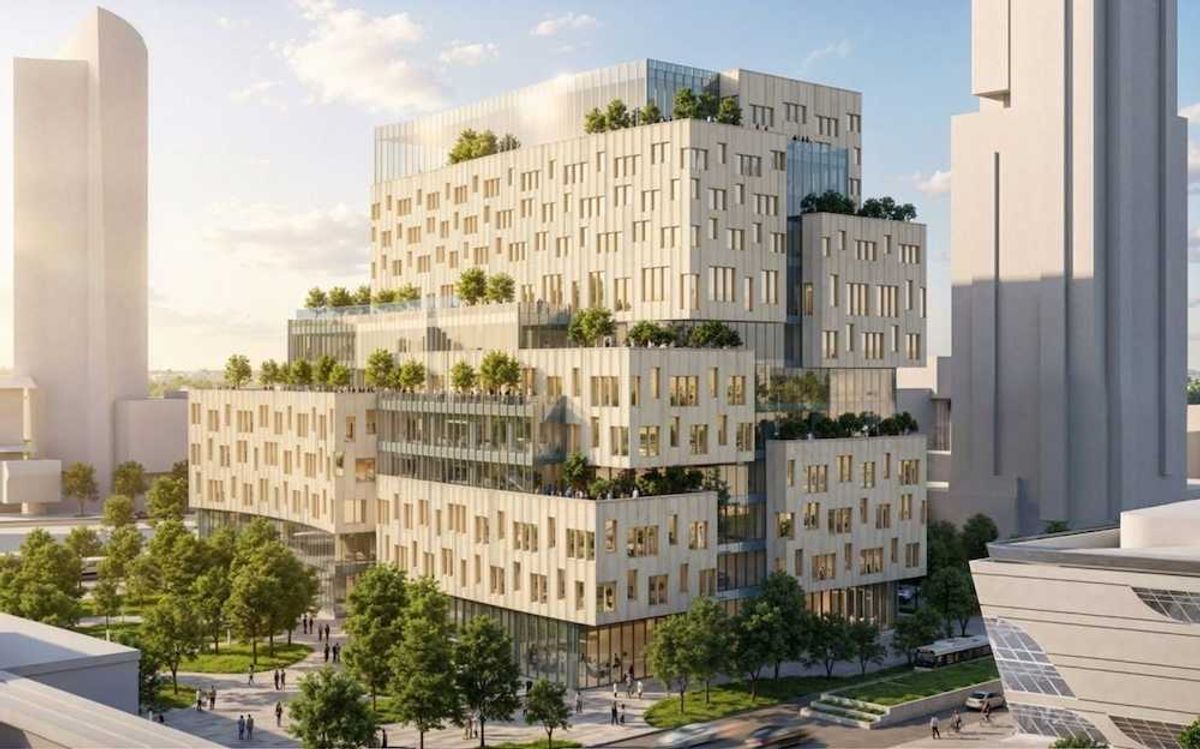
Canada’s impressive mass timber buildings include George Brown College’s Limberlost Place in Toronto, University of Toronto’s 14-storey Academic Wood Tower (the tallest academic timber structure in Canada), and The Hive, an innovative Vancouver office building.
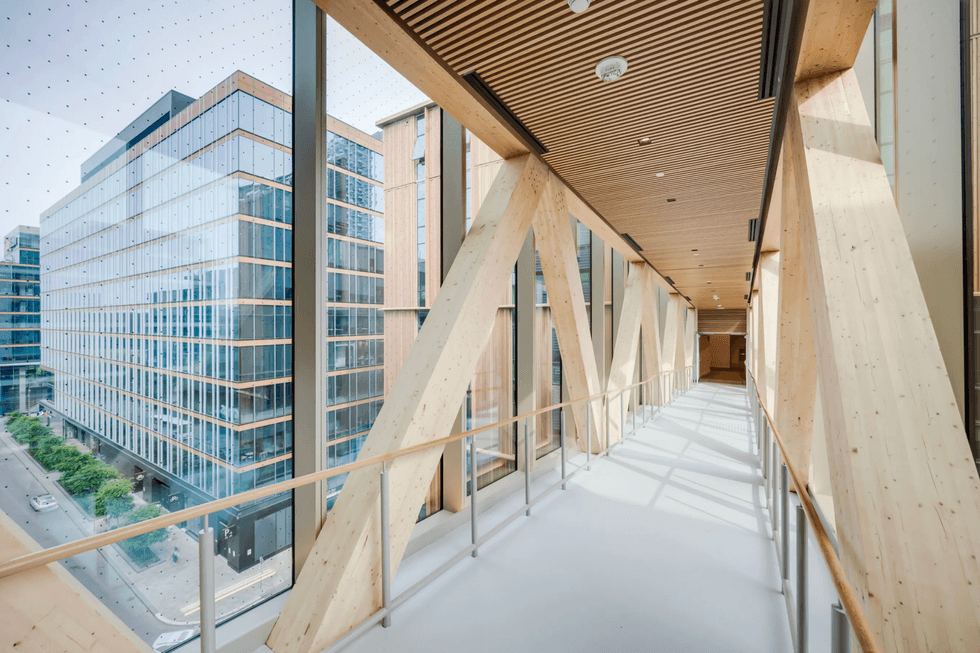 Limberlost Place (georgebrown.ca)
In early 2025, Ontario amended its Building Code to allow mass timber buildings of up to 18 storeys. Previously capped at 12 storeys, stretching the code upwards allows mass timber to compete directly with traditional concrete and steel in the mid-to-high-rise residential market.
Modular: Redefining Site Assembly
Modular construction isn’t what it used to be.
Modular housing involves building sections of a structure off-site in a controlled factory environment, trucking them to the site, and craning them onto a foundation.
Prefabrication goes back centuries. In the 1830s, London carpenter John Manning created the "Manning Portable Cottage" for British emigrants moving to Australia. More famously, from 1908 to 1940, Sears, Roebuck and Co. sold over 70,000 prefabricated mail-order kit homes across North America.
Today, contemporary modules are precision-engineered building blocks designed to lock together seamlessly. This controlled factory setting eliminates weather delays, reduces material waste, and allows indoor trades to work simultaneously while the on-site foundation is being poured.
We’re now seeing a shift from simple, single-family kit homes to complex, multi-storey mid-rise and high-rise modular developments. Advanced Building Information Modelling (BIM) software is allowing factories to manufacture modules with precise electrical, plumbing, and finishes pre-installed, slashing on-site construction timelines.
Canada is already home to major trailblazers in this space. Notable examples include the West 8th and Arbutus development in Vancouver – a massive multi-storey supportive housing project built using modular sections – and several mid-rise student residences and hotels across Ontario and Alberta.
District Energy: The Foundation of Master-Planned Economics
For decades, the path to a successful master-planned community or high-density infill project was linear: Secure the land, navigate approvals, design a beautiful shell, and treat the core infrastructure as a late-stage engineering decision. Now, infrastructure considerations come first – and the most significant shift in infrastructure planning occurs below the street level.
Developers realize that, while choices like mass timber and modular optimize how you build, the choice of energy infrastructure dictates the ultimate financial viability of the asset.
Master-plan developers are moving away from the "one building, one boiler" mentality and investing heavily in decentralized, fifth-generation district energy networks.
"Most people that have interacted with district energy might know of it as a big steam system, like in an old downtown core or a university campus," says Samson Tam, VP of Development at Corix. Modern systems have completely evolved past this legacy framework.
Instead of every individual building maintaining its own independent mechanical system – boilers, chillers, and cooling towers perched on every roof – a district energy system uses an interconnected underground thermal loop – low-temperature hot and chilled water running through highly efficient underground piping. This shares heating and cooling across an entire neighbourhood. If a commercial building sheds excess heat from its server rooms, that energy isn't wasted, but captured and piped to warm the residential tower next door.
Because this infrastructure technology-agnostic, a master-planned community isn't locked into a single fuel source for the next fifty years. Developers can seamlessly swap out or add clean technologies – whether geoexchange, sewer heat recovery, or industrial waste heat – as they mature and become economically viable.
When developers bring in a specialized utility operator like Corix early, the infrastructure shifts from an engineering line-item to an economic lever — one that Corix says addresses three of modern development's most pressing challenges.
The first is upfront capital. Traditional decentralized mechanical systems demand significant early-stage investment: sourcing, engineering, and installing individual chiller plants eats into cash flow before a project generates returns. Under a utility partnership model, Corix designs, finances, builds, and operates the centralized system. According to the company, this can reduce a developer's upfront capital for thermal generation by 60% to 100%, removing onsite mechanical complexity and freeing capital to accelerate subsequent phases. "We would invest alongside a real estate developer and take that accountable requirement off their hands," says Tam. Modern systems are also designed to scale with the real estate itself, deploying node-by-node and phase-by-phase as a development grows.
The second is usable space. Every square metre dedicated to a mechanical penthouse or basement boiler room costs money to build and generates no revenue. Centralizing that infrastructure, Corix says, can reduce a building's onsite mechanical footprint by 30% to 40%. Basements become parking or commercial storage. Rooftops, stripped of cooling towers (and their associated noise), become patios, amenities, or penthouses. Tam also notes that unexpected mechanical replacements — which typically flow down as capital strain to renters or condo owners — are eliminated under the utility model, since Corix retains full long-term ownership and operational risk.
And the third is energy cost stability. Municipal electrical grids are under capacity strain, leaving developers vulnerable to connection delays or forced density reductions. Centralized thermal networks function as a localized buffer, drawing on diverse sources — geoexchange, wastewater heat recovery, and others — to reduce a development's peak grid demand. Corix points to its relationship with BC Hydro as an example of how utilities and district energy operators can work together: centralized systems, the company explains, are among the most efficient ways to manage electrical heating and cooling at scale, and that efficiency case has historically unlocked grant funding that flows back to end-users. The result is stable long-term energy rates, reduced exposure to carbon penalties, and project density that might otherwise be rejected due to grid constraints.
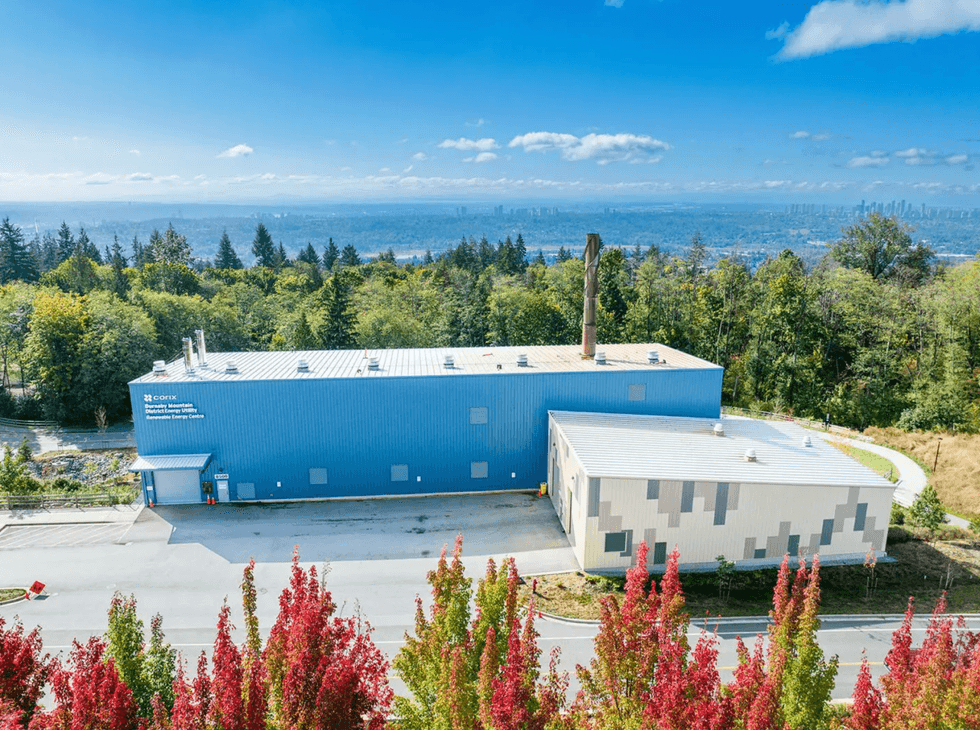 Burnaby Mountain District Energy Utility (corix.com)
The financial case is already proving out in Canada. At Simon Fraser University on Burnaby Mountain, Corix services the campus and the adjacent UniverCity neighbourhood via a high-efficiency plant fuelled by local wood waste and broken shipping pallets — operating as Canada's largest privately owned biomass source, and one of the more effectively decarbonized communities in the country.
It's just one example of what's possible when infrastructure planning leads rather than follows.
For developers building at scale today, the decisions happening both above ground and below it are increasingly part of the same conversation.