Another development project that’s nearing completion has become insolvent, according to filings in Ontario Superior Court — the latest in an extensive list of projects that are struggling to cross the finish line.
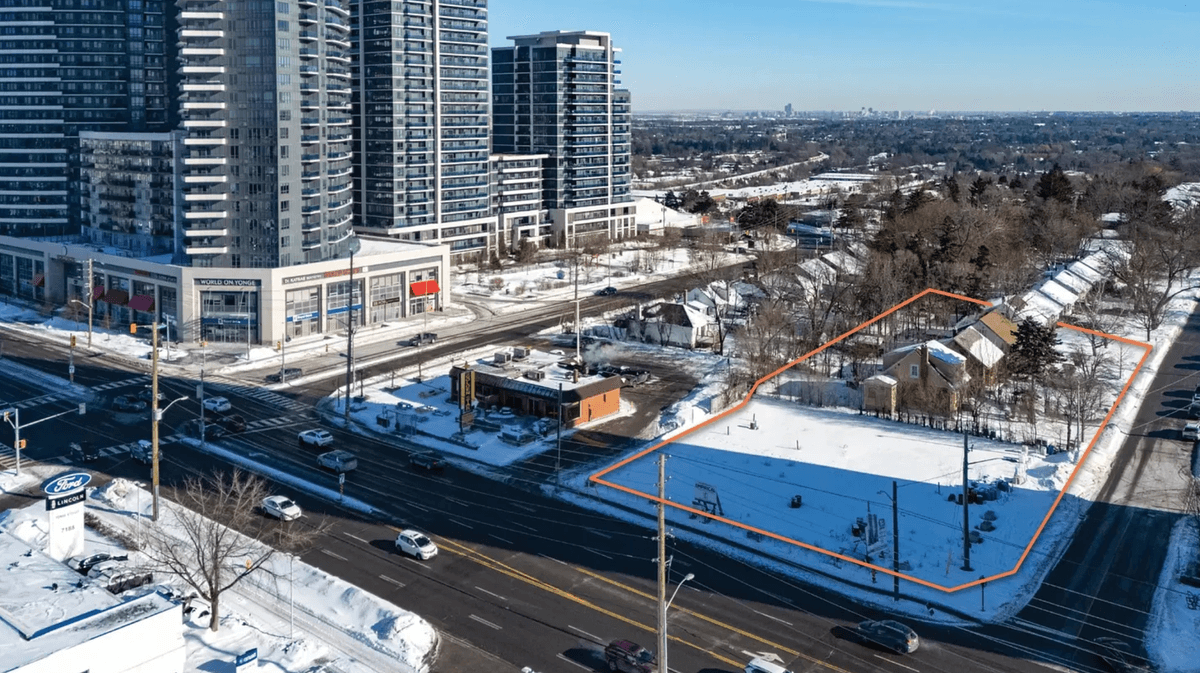
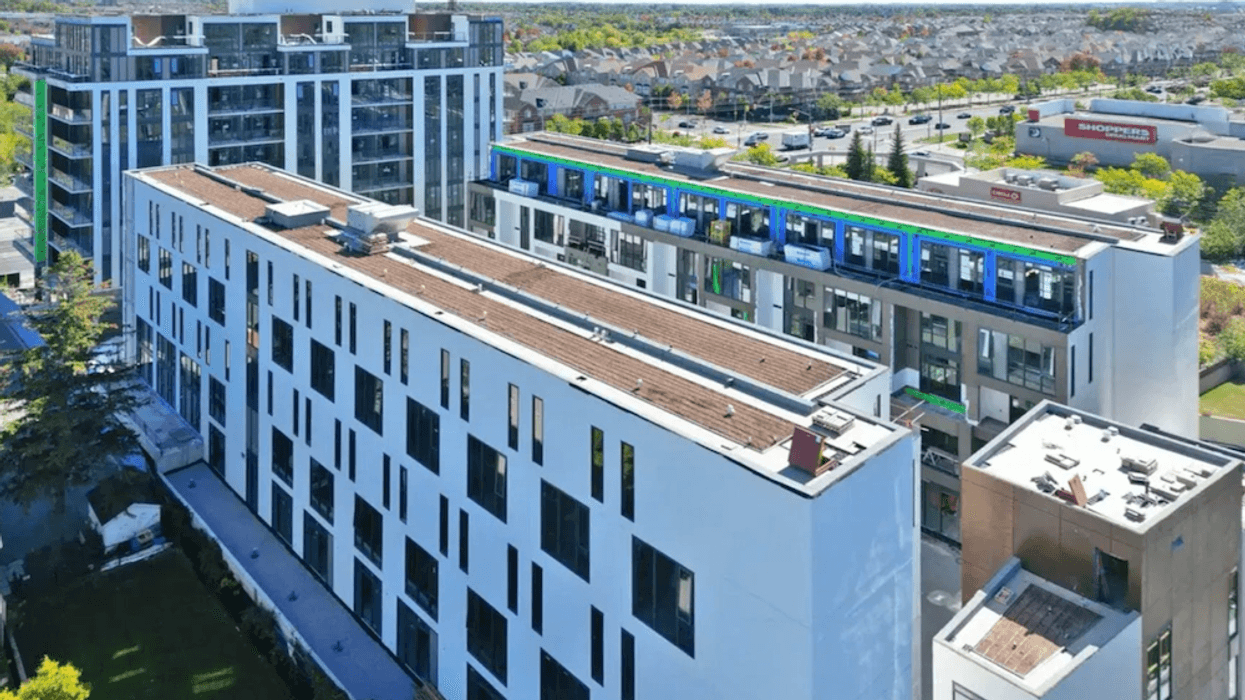
The project is EverHome, by Toronto-based developer The Sher Corporation, and is located at 9704 McCowan Road in Markham near the intersection with Bur Oak Avenue, just north of the Williamstown Plaza shopping centre.
For the site, The Sher Corporation is developing a mid-rise condo project with 131 units across three buildings, plus an amenity building.
For the project, The Sher Corporation — through Sher Markham Inc. and Sher Holdings Inc. — secured financing from Meridian Credit Union in July 2022 for a construction demand facility in the amount of $57,251,849.81, with interest accruing at Meridian’s Prime Rate + 1.75% per annum (with an all-in floor rate of 4.20%), plus a letters of credit facility in the amount of $1,100,590.40.
According to court filings, 103 of the 131 units — 78.6% — had been pre-sold as of July 2026. Construction was approximately 86% complete before halting in May 2026.
Construction Halts
“Construction on the Project halted in or around mid May 2026 due to reported safety concerns identified by the safety consultant, resignation of the construction manager, compounded by a funding gap and associated cost overruns,” said Meridian in an October 7 application seeking to place the project under receivership. “As at that date, the Project’s structures were substantially completed, building envelopes were near completion, and the interior works were incomplete and behind schedule.”
According to Meridian, the construction manager raised several safety issues in May 2026 to Shakeel Walji — the President and corporate director of The Sher Corporation, as well as the guarantor of the loan — including “numerous serious safety deficiencies and non-compliance items onsite, including hazards, fire safety concerns and unsafe stair access conditions, noting many of the items required immediate corrective action.”
The construction manager, Grove Inc., then terminated all work in light of the safety concerns.
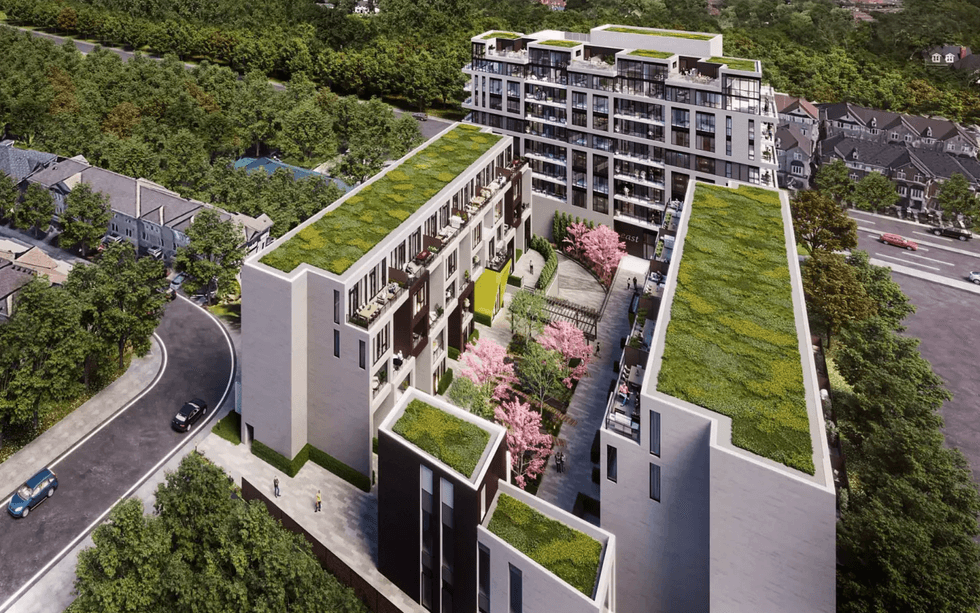 A rendering of the EverHome project. (The Sher Corporation)
Eastpointe Corp. was retained as the new construction manager in July 2026, and worked with the project cost consultant, CB Ross Partners, to conduct an assessment and prepare an updated construction budget. They concluded that, as of July, the cost to complete the project was around $17.3 million, a dated number that is now expected to be larger.
According to Meridian Credit Union, The Sher Corporation has defaulted on the loan agreement on several occasions, including by failing to provide financial statements, failing to repay the loan by September 2025, failing to repay the loan by March 2026, and failing to fund cost overruns.
The Receivership
Meridian said it issued a formal demand for payment in August 2026 and gave the developer until August 17 to repay the loan. The Sher Corporation was unable to do so, and Meridian subsequently also learned that the developer had $58,650.48 in insurance premiums that were past due, which Meridian then paid in September.
Meridian says it was owed $57,731,133.87 as of September 15, 2026, with interest continuing to accrue. The lender also says that the developer has not provided a solution to address the outstanding debt and has also allowed 21 liens totalling to $11,422,954.19 to be registered against the property.
According to the lender, Walji reached out in July 2026 to explore the possibility of seeking out creditor protection under the federal Companies’ Creditors Arrangement Act (CCAA).
According to an affidavit sworn by Walji on October 13, The Sher Corporation secured $21,150,000 in debtor-in-possession (DIP) financing from Safe Harbour Global Capital to fund the potential CCAA proceeding. Walji said the financing “provides a proposed means of addressing the immediate funding shortfall that has prevented the Sher Project from being completed” and “this new new capital would preserve the value of the substantial work already completed and avoid the value destruction and additional cost that could result if construction remains incomplete or is interrupted for an extended period through a receivership proceeding.”
Meridian’s receivership application was scheduled to be heard by the court on October 14, and Walji asked for an adjournment of 30 days so they can finalize the CCAA application and DIP financing. However, the judge presiding over the case ultimately sided with Meridian.
“There is no viable CCAA option, there is real risk to the security of Meridian in waiting further and nothing but speculative chances of delay producing more than a deeper hole to dig out of,” said Judge Sean Dunphy, who added that “the very fact that Meridian prefers to take its chances in a receivership now rather than later speaks volumes as to how viable that particular DIP proposal is.”
Meridian’s receivership application was then granted, and the project is now under receivership as of October 14.