Deposit

Explore what a deposit means in Canadian real estate transactions, how much is typical, and why it’s a vital part of making a serious offer on a home.

Deposit
Escrow – Definition, Meaning, and Examples in Canadian Real Estate


What is a Deposit?

A deposit is an upfront payment made by a homebuyer to show their good faith and commitment when submitting an offer on a property. It forms part of the total purchase price.

Why Deposits Matters in Real Estate

In Canadian real estate, the deposit is a critical part of any offer to purchase. It demonstrates the buyer’s seriousness and is held in trust – typically by the seller’s brokerage – until closing.

If the transaction goes through, the deposit is applied toward the purchase price. If the buyer backs out without a valid reason under the contract, the seller may be entitled to keep the deposit as compensation. Conversely, if the seller defaults, the buyer may be entitled to a refund.

The amount of the deposit is negotiable but usually ranges from 1% to 5% of the purchase price, depending on market conditions. In competitive or high-value markets, larger deposits can strengthen an offer and signal financial readiness.

Buyers should ensure the deposit funds are readily available, as delays can breach the terms of the Agreement of Purchase and Sale. Legal and real estate professionals help structure deposits to protect both parties and reduce transaction risk.

Example of a Deposit

A buyer submits a $30,000 deposit along with their offer on a $750,000 home in Calgary. The deposit is held in trust and later applied to the purchase price on closing day.

Key Takeaways

  • An upfront payment showing a buyer’s commitment to a property purchase.
  • Held in trust and applied toward the final sale price.
  • Helps protect sellers from buyer default.
  • Amount varies but often ranges from 1% to 5% of the purchase price.
  • Must be submitted promptly as per contract terms.

Related Terms

  • Agreement of Purchase and Sale
  • Conditional Offer
  • Firm Offer
  • Closing Date
  • Good Faith

Additional Terms

Public Realm Improvements

Public realm improvements are enhancements to public spaces such as sidewalks, parks, plazas, and streetscapes, often funded or contributed by. more

Mortgagee in Possession

A mortgagee in possession is a lender who takes control of a property after borrower default, but before foreclosure or power of sale. The lender. more

Lease Surrender Agreement

A lease surrender agreement is a negotiated contract between a landlord and tenant that ends a lease before its scheduled expiration. Terms may. more

Green Infrastructure

Green infrastructure refers to natural or engineered systems that manage stormwater, reduce heat, and improve sustainability in developments.. more

Escrow Holdback

An escrow holdback is a portion of funds withheld at closing and held in escrow until specific conditions are met, such as completion of repairs,. more

Underused Housing Tax

The Underused Housing Tax (UHT) is a federal annual 1% tax on the value of vacant or underused residential property owned by non-resident,. more

More For You

No Motor, No Traffic, No Problem: Floating Cottage 'Ursula' For Sale In Port Dover

Ursula/Facebook Marketplace

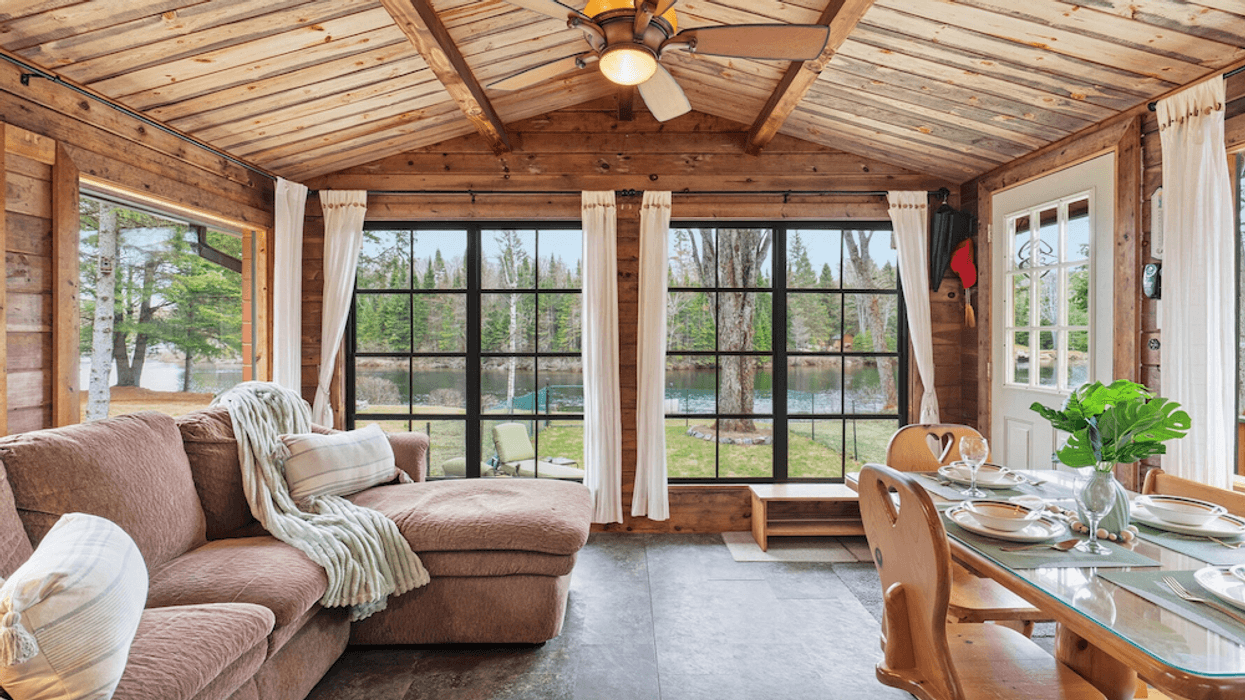
And if you've ever sat in gridlock on the way to a cottage and wondered why the whole system couldn't just be different, meet Ursula.

This 14.5' x 45' floating cottage is currently moored at Port Dover marina, and is listed on Facebook Marketplace for $39,000. In the listing, the seller describes Ursula as "a sturdy girl."

Keep ReadingShow less
When Low-End Rents Get Harder To Afford, Homelessness Climbs: Study

Hamilton, Ontario. (Destination Ontario)

It may not be shocking to hear that cities with high rents and low vacancy rates are also seeing an increase in homelessness, but correlation is not causation. But now, a recent study is pointing to causation.

The research was conducted by the Canadian Alliance to End Homelessness (CAEH), who said it was the first study of its kind in Canada, and that their research “demonstrates a clear link between housing affordability, vacancy rates, and increasing homelessness.”

Keep ReadingShow less
Forest Hill South $23.5M Sale Is Toronto's Priciest In Nearly 5 Years

211 Dunvegan Road (Sotheby's International Realty Canada)

Persistent economic uncertainty has had a cooling effect on Toronto real estate over the last year. This is true among everyday properties, but also within the luxury brackets where even homes priced in the millions — typically catering to a less price-sensitive crowd — saw a notable decrease in activity.

Cutting through the slush, however, is the recent sale of a $22-million home that sold over asking in Forest Hill South last week. Ultimately selling for $23.5 million after garnering three competing offers, it’s the highest-value sale in the neighbourhood’s history, and the most expensive in Toronto in nearly five years.

Keep ReadingShow less
BILD: Single-Family Homes Lead GTA New Home Sales In July
Toronto at dusk with city light and urban skyline with skyscrapers

There are two wolves inside the GTA's new home market, and for now, it's single-family homes that are being fed.

According to the latest from BILD, single-family sales just posted their fourth consecutive month above the 10-year average. Condos, meanwhile, are still locked out of most of the benefit.

Keep ReadingShow less
The 18 Toronto Developments Supported By $2.7B Federal-City Partnership

The 37-storey tower set for 150 Queens Wharf Road in Toronto. (Toronto Community Housing Corporation)

Earlier this month, the Government of Canada and City of Toronto announced a $2.7 billion partnership that will advance 18 housing projects, which will together deliver over 5,600 new rental homes. Construction is set to begin on approximately 4,500 of those units by year’s end.

“In Toronto, thousands of new homes have already been planned, permitted, and approved, but lack the financing to begin construction,” said Prime Minister Mark Carney in a press release on August 5.

Keep ReadingShow less
Downtown Eastside Project Breaks Ground With Funding From Feds, BC Builds, UBC

The 11-storey building set for 315 Main Street (172 E Cordova Street) in the Downtown Eastside of Vancouver.

A new mixed-use development is now under construction in Vancouver’s Downtown Eastside, thanks in large part to funding and contributions from four different governments in conjunction with those from several other parties.

The project is set for 315 Main Street (also known as 172 East Cordova Street), a corner lot located at the southwest corner of the intersection of Main Street and East Cordova Street.

Keep ReadingShow less
City Of Toronto Breaks Ground On Dundas And Ossington Mass-Timber Rentals

1113–1125 Dundas St W at Dundas and Ossington, prior to construction (Google Maps)

A surface parking lot at Dundas Street West and Ossington Avenue is officially a construction site.

The City of Toronto, CreateTO and the federal government marked the start of construction at 1113–1125 Dundas Street West on Monday; the rent-controlled rental building rising at the intersection will bring 74 new homes to Trinity-Bellwoods.

Keep ReadingShow less
Medallion Breaks Ground On Oshawa's $188M-Backed Foundry District

A rendering of the Foundry District masterplan community on the 23-acre former Fittings Factory site. (Courtesy of Medallion Corporation)

Medallion Corporation has broken ground on The Foundry District, a mixed-use rental community planned for a 23-acre former industrial site in downtown Oshawa.

For 85 years, the land was home to the Fittings Factory, a cast-iron works that employed hundreds of Oshawa residents. The plant closed in 1987, and the site has sat vacant for nearly four decades since.

Keep ReadingShow less