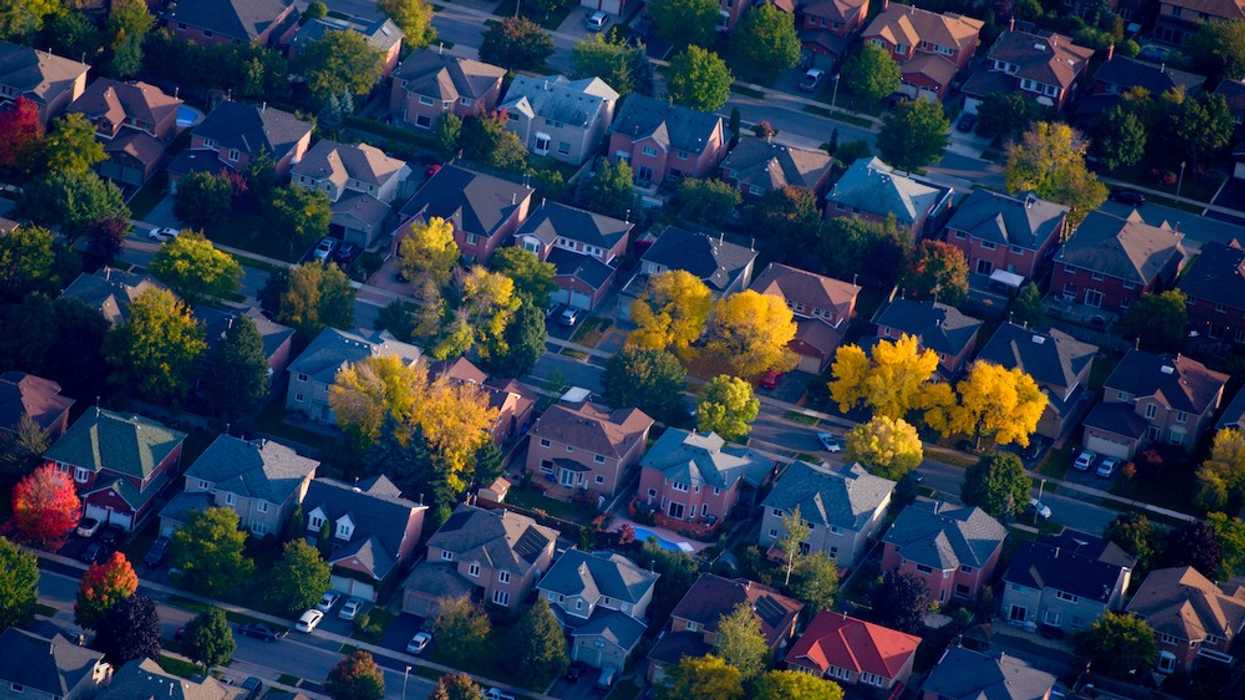
Bylaw Variance
Understand bylaw variances in Canadian real estate — what they are, how they work, and when they’re used in property development.

July 11, 2025
What is Bylaw Variance?
A bylaw variance is official permission granted by a municipal authority allowing a property owner to deviate from local zoning or building bylaw requirements under specific conditions.
Why Bylaw Variance Matters in Real Estate
In Canadian real estate development, variances provide flexibility for unique property constraints or design goals.
Common variance requests:
- Reduced setback requirements
- Height or lot coverage adjustments
- Parking space modifications
Variances require public notice and municipal approval, balancing individual needs with community planning objectives.
Example of Bylaw Variance in Action
The homeowner applied for a bylaw variance to build a garage closer to the lot line than the zoning bylaw allows.
Key Takeaways
- Allows deviation from bylaw standards
- Granted by municipal authority
- Requires formal application and approval
- Balances property flexibility with planning goals
- Common in redevelopment and custom builds
Related Terms
- Zoning
- Official Plan
- Urban Planning
- Land Use Bylaws
- Building Permit

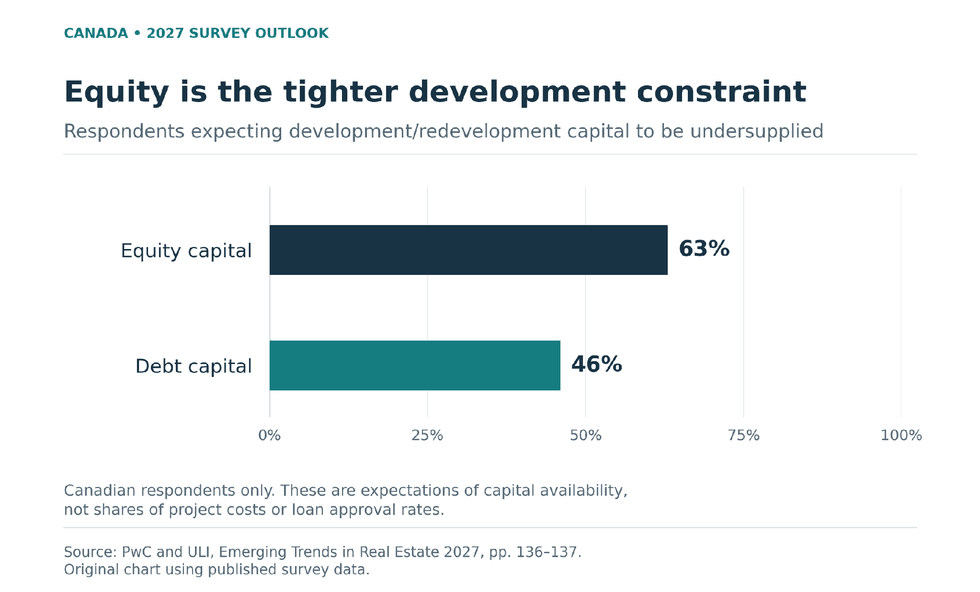 Canadian respondents were more likely to expect an undersupply of development/redevelopment equity capital (63%) than debt capital (46%) in 2027. These are survey expectations, not measured financing volumes. Source: PwC and ULI, Emerging Trends in Real Estate 2027, pp. 136–137. Original chart.
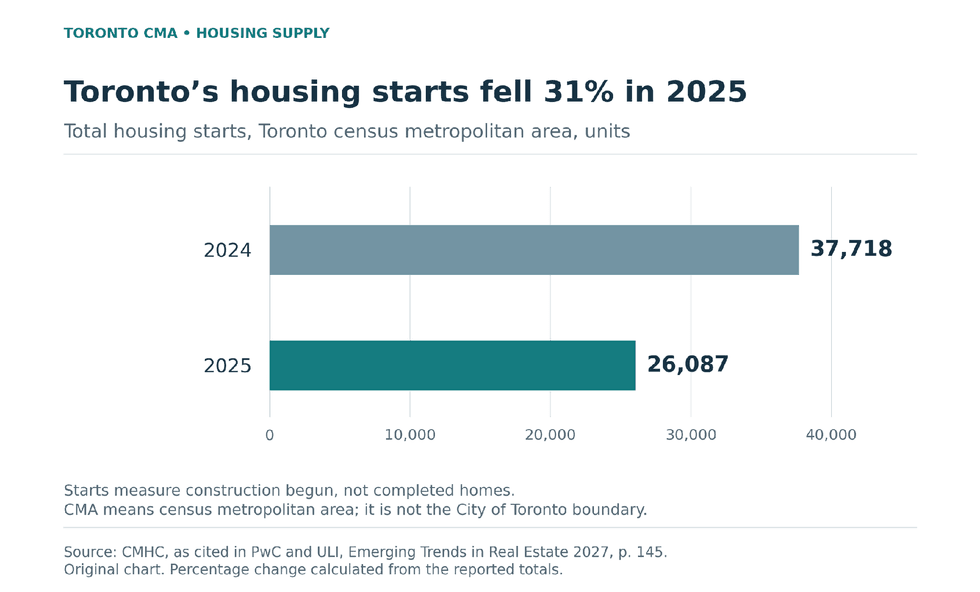 Toronto census metropolitan area housing starts fell from 37,718 units in 2024 to 26,087 in 2025, a 30.8% decline (rounded to 31%). Starts measure construction begun, not completed homes. Source: CMHC, as cited in PwC and ULI, Emerging Trends in Real Estate 2027, p. 145. Original chart.









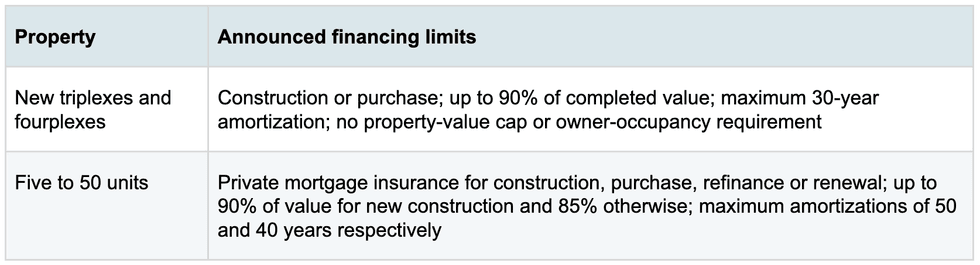
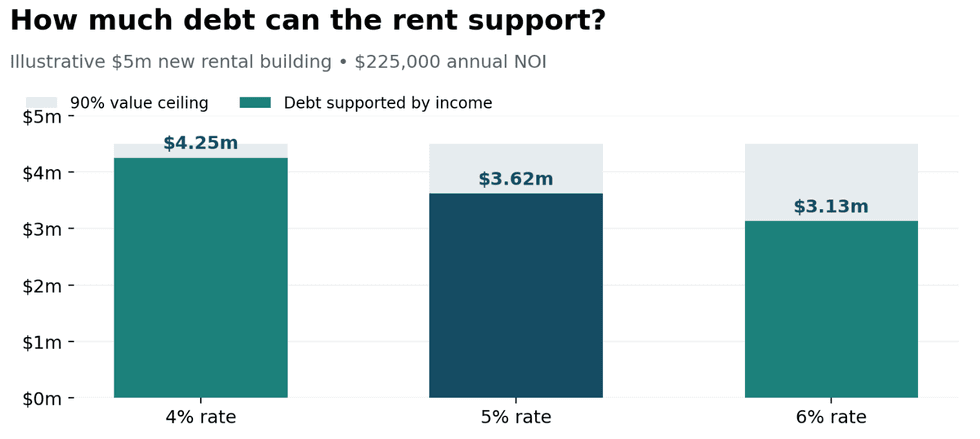 Illustrative calculation: a $4.5-million value ceiling versus income-based capacity of about $4.25 million at 4%, $3.62 million at 5% and $3.13 million at 6%. Assumes 50-year amortization and 1.15 debt coverage.
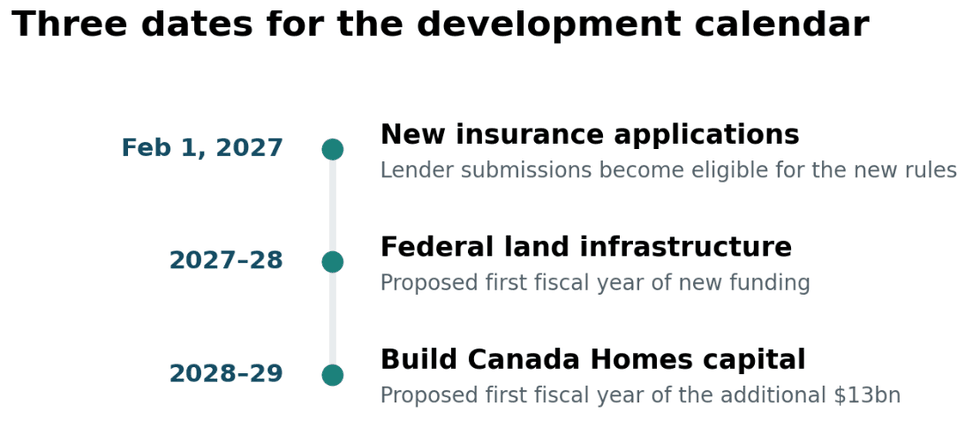 Source: Department of Finance missing-middle backgrounder and Budget 2026 Chapter 3, November 5, 2026. Fiscal-year funding starts are not home-completion dates.