Variance
Explore how zoning variances work in Canadian real estate, why they're needed, and how to apply for one when planning property improvements.

May 22, 2025
What is a Variance?
A variance is a formal exemption granted by a municipality allowing a property owner to deviate from local zoning bylaws under specific circumstances.
Why Do Variances Matter in Real Estate
In Canadian real estate, zoning bylaws govern property use, setbacks, height restrictions, and lot coverage. When a proposed construction project or renovation does not comply, the owner may apply for a variance.
Common reasons for variances include:
- Building closer to a property line than permitted
- Adding a structure taller than zoning allows
- Expanding a non-conforming building
Municipalities evaluate variance applications based on:
- Whether the change is minor
- Whether it meets the general intent of the bylaw
- Whether it will negatively impact neighbours or the community
Public notice and hearings are typically required. Approval is granted by a committee of adjustment or zoning board. Denied variances may require project redesign or appeal.
Understanding variances allows homeowners and developers to navigate zoning restrictions and explore site-specific flexibility.
Example of a Variance
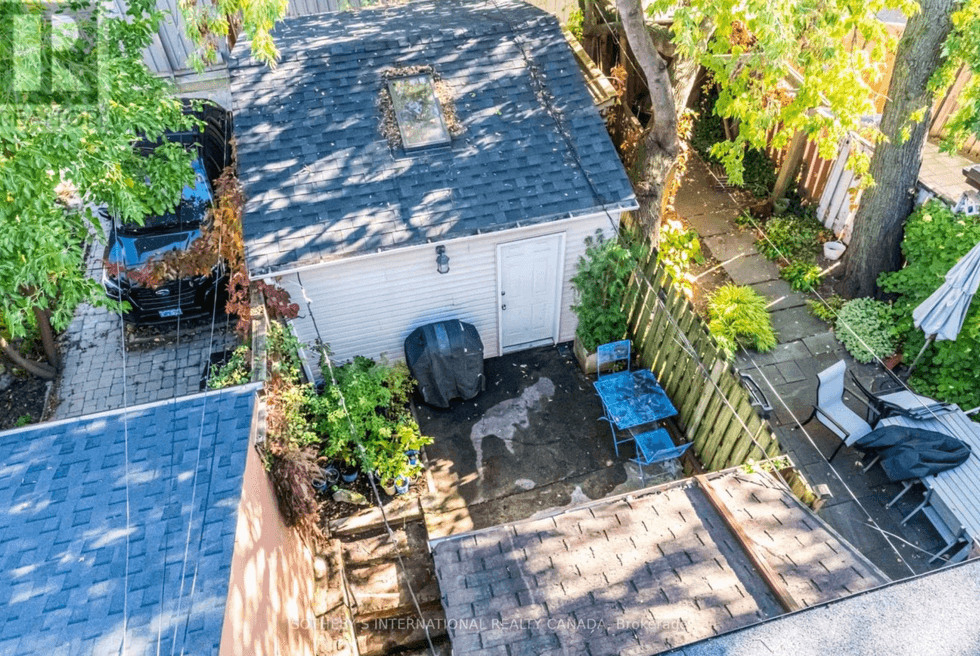
A homeowner applies for a variance to build a two-storey garage that slightly exceeds the height limit in their zoning district.
Key Takeaways
- Allows minor exceptions to zoning rules.
- Requires municipal application and review.
- Common for additions or non-standard builds.
- Public input and hearings may apply.
- Must show no major adverse impact.
Related Terms
- Zoning
- Land Use Bylaws
- Setback
- Building Permit
- Official Plan




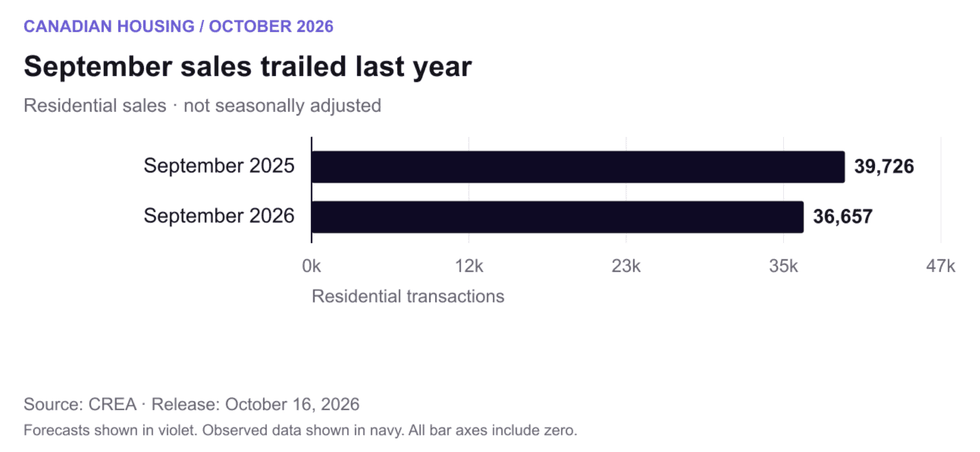 September residential sales, not seasonally adjusted; the annual comparison uses CREA’s revised figures. Chart:
 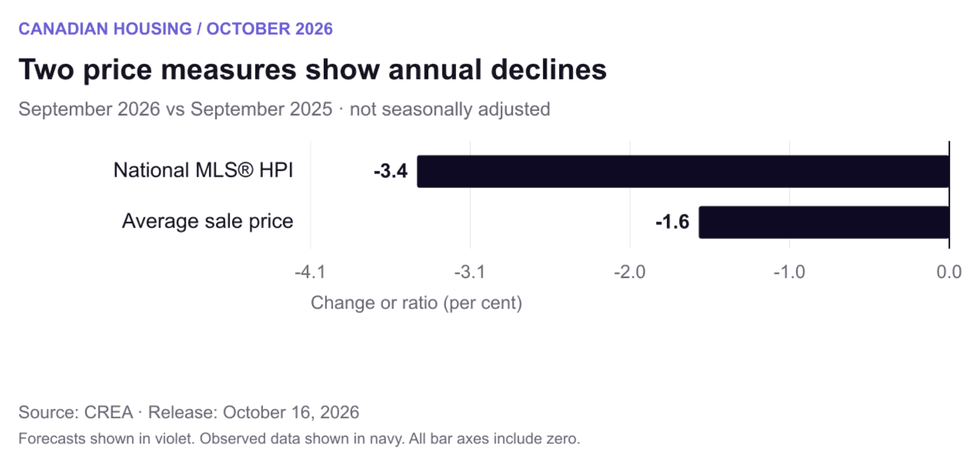 Annual changes in the unadjusted national MLS® HPI and average sale price. The average is affected by the mix of transactions. Chart:
 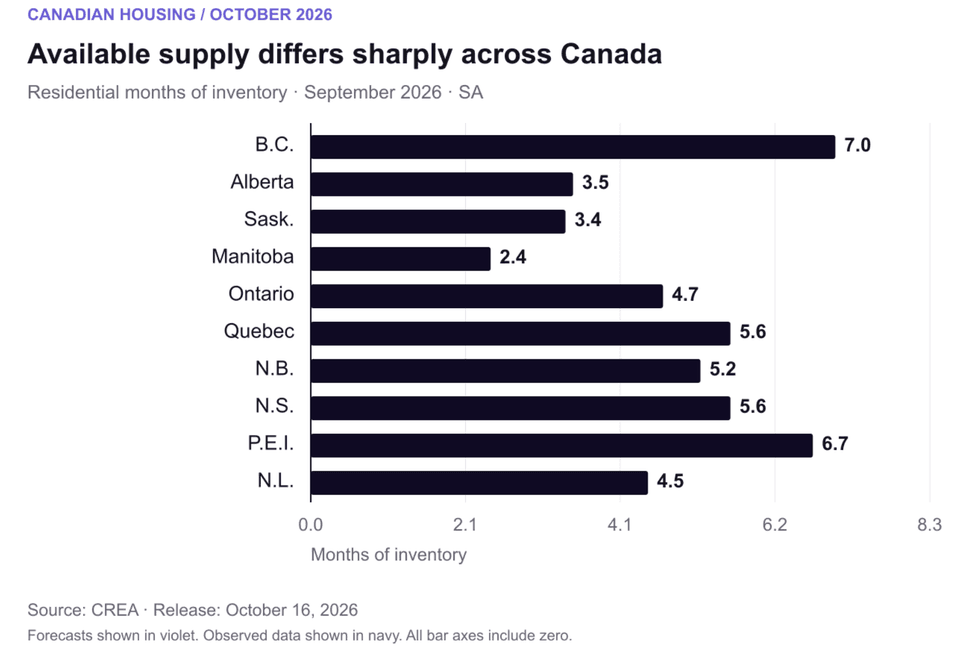 Seasonally adjusted residential months of inventory by province. Local property types can differ substantially. Chart:
 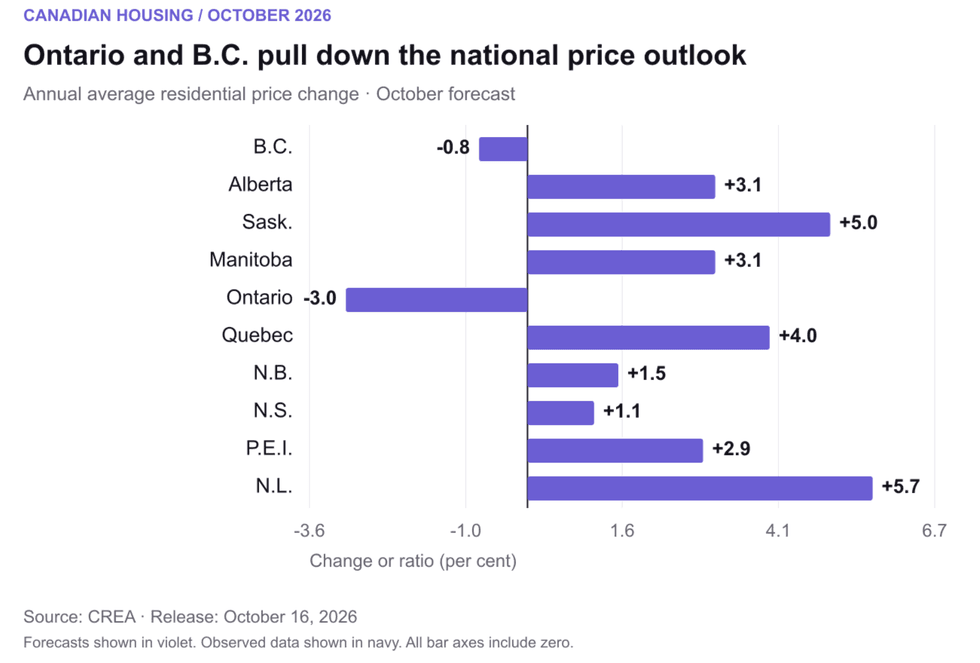 Ontario and B.C. are the two provinces with forecast annual average-price declines in 2026. Chart:
 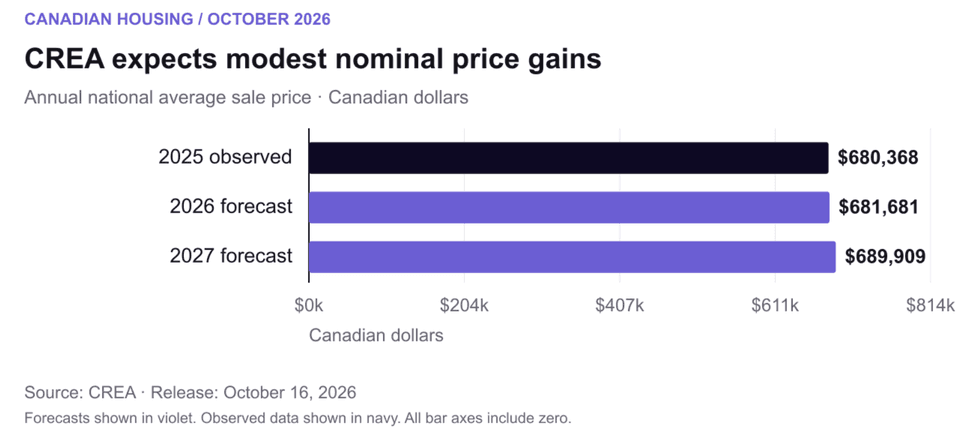 Annual average transaction prices in Canadian dollars. Forecast values are not December price targets. Chart:
 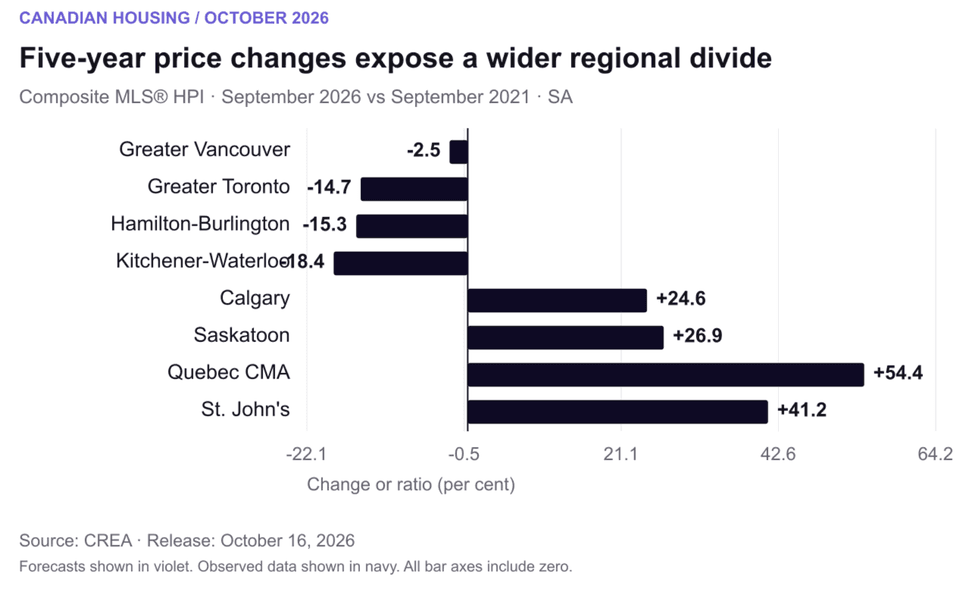 Five-year changes in seasonally adjusted composite MLS® HPI benchmarks, September 2021 to September 2026. Chart: