Mortgage Requirements
Explore mortgage requirements in Canada, what lenders look for, how to qualify, and how buyers can prepare to meet approval criteria.

May 22, 2025
What are Mortgage Requirements?
Mortgage requirements are the set of financial and legal criteria that borrowers must meet to qualify for and maintain a mortgage loan in Canada.
Why Mortgage Requirements Matter in Real Estate
Lenders assess mortgage applications using strict guidelines to evaluate a borrower's ability to repay. Requirements vary by lender but typically include:
- Minimum credit score (often 600–680)
- Stable employment and proof of income
- Acceptable debt service ratios (GDS and TDS)
- Down payment (minimum 5% for insured mortgages)
- Passing the federal mortgage stress test
Additional requirements may involve property appraisals, documentation of savings, and proof of closing costs. Lenders may also consider the property type, location, and occupancy use.
Understanding mortgage requirements allows buyers to prepare their finances, increase approval chances, and secure more favourable terms.
Example of Mortgage Requirements
A buyer provides employment letters, credit reports, and savings statements to meet mortgage requirements for a $650,000 loan.
Key Takeaways
- Sets eligibility standards for mortgage approval.
- Includes credit, income, and down payment.
- Enforced by lenders and regulatory bodies.
- Determines borrowing power and terms.
- Preparation increases approval chances.
Related Terms
- Mortgage Qualification
- Pre-Approval
- Debt Service Ratios
- Credit Score
- Down Payment

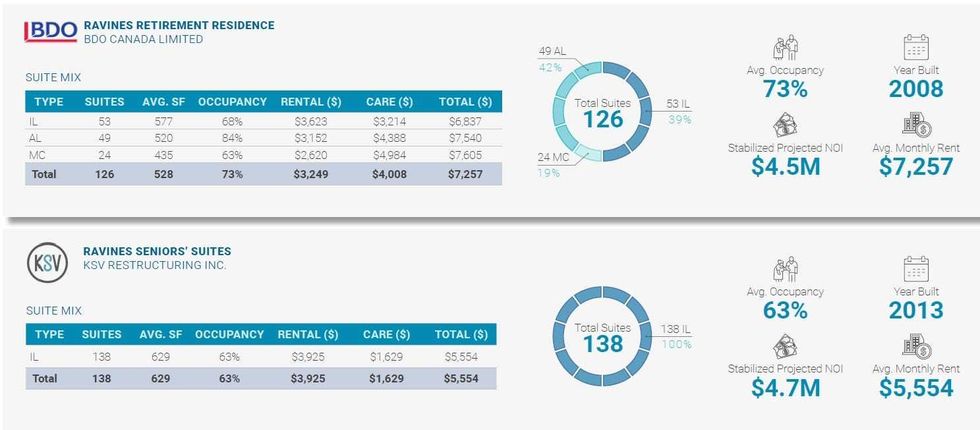 An overview of the two Ravine buildings. (Newmark)

 95 Clegg Road in Markham, Ontario. (Colliers)
 95 Clegg Road (centre) in Markham, Ontario. (Colliers)








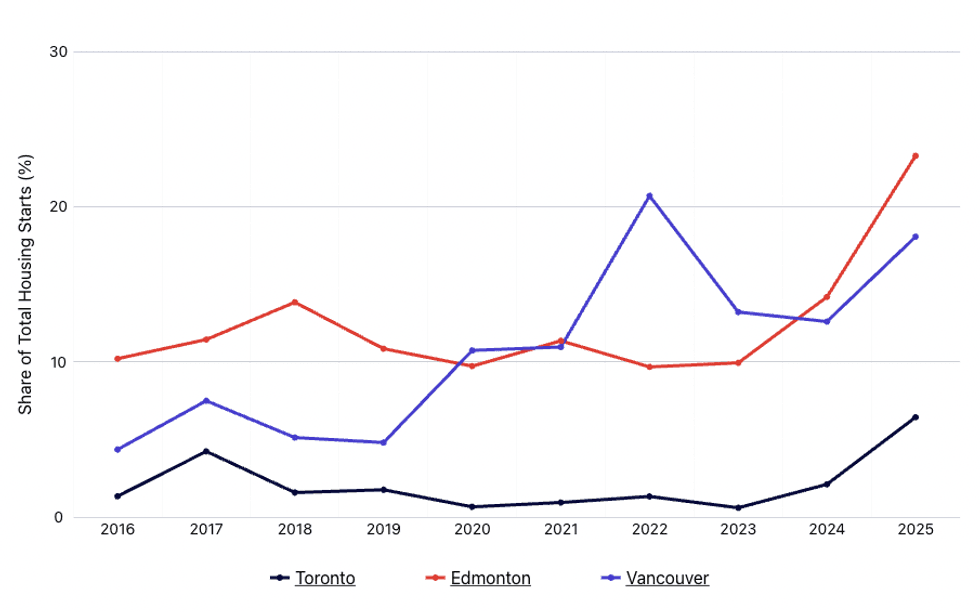 Small-scale infill share of housing starts in Toronto, Vancouver, and Edmonton/CMHC
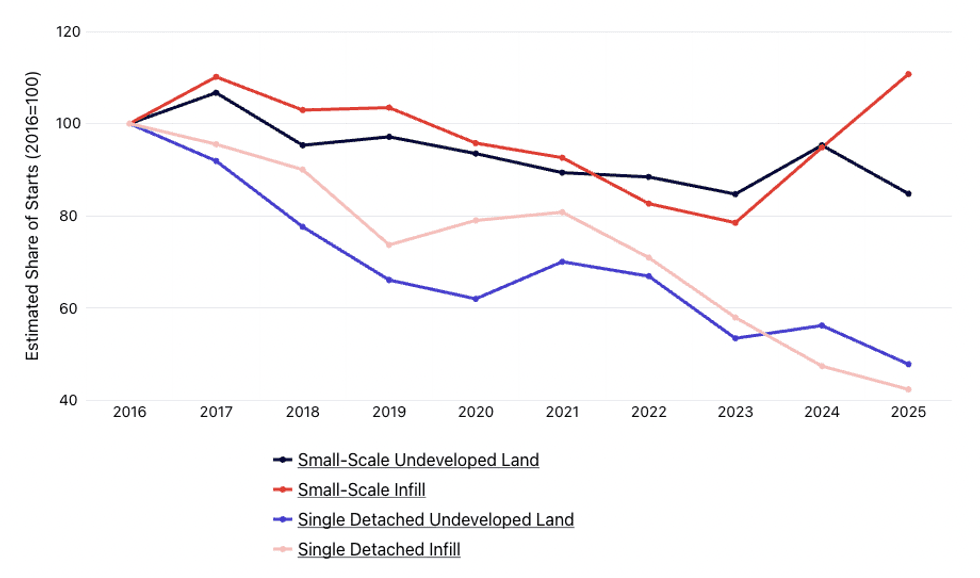 Housing starts for one to eight unit developments/CMHC

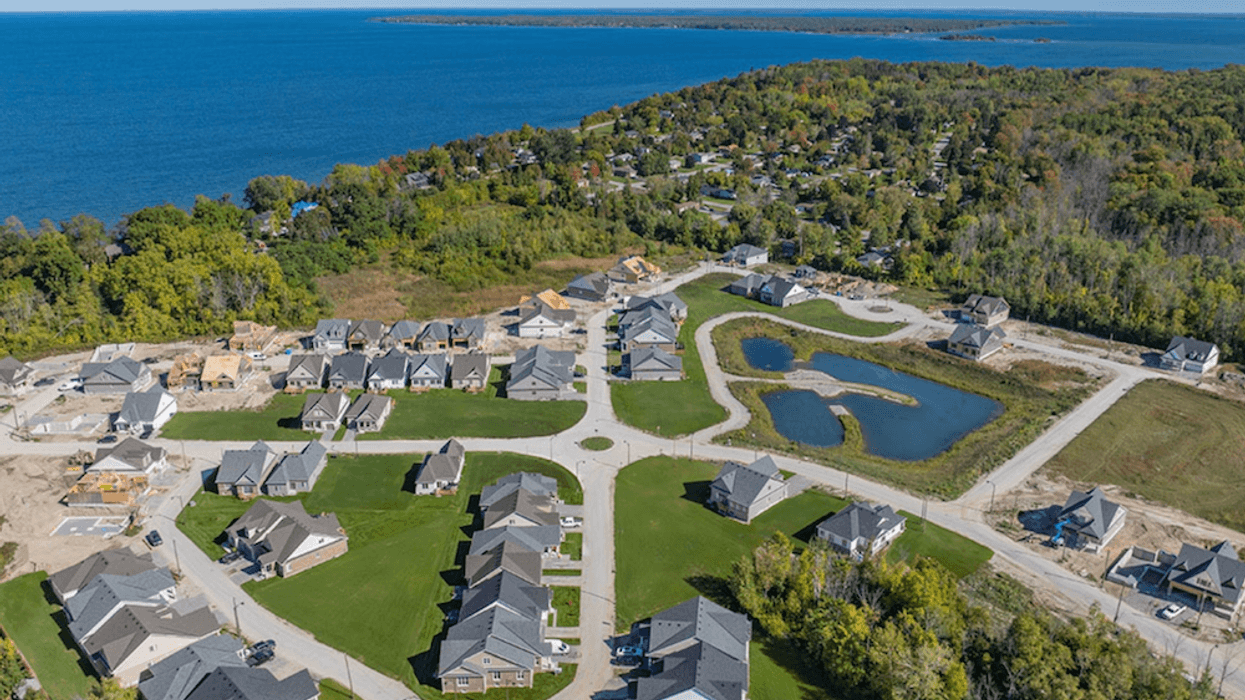
 An overview of Hedge Road Landing. (Alliance Homes)

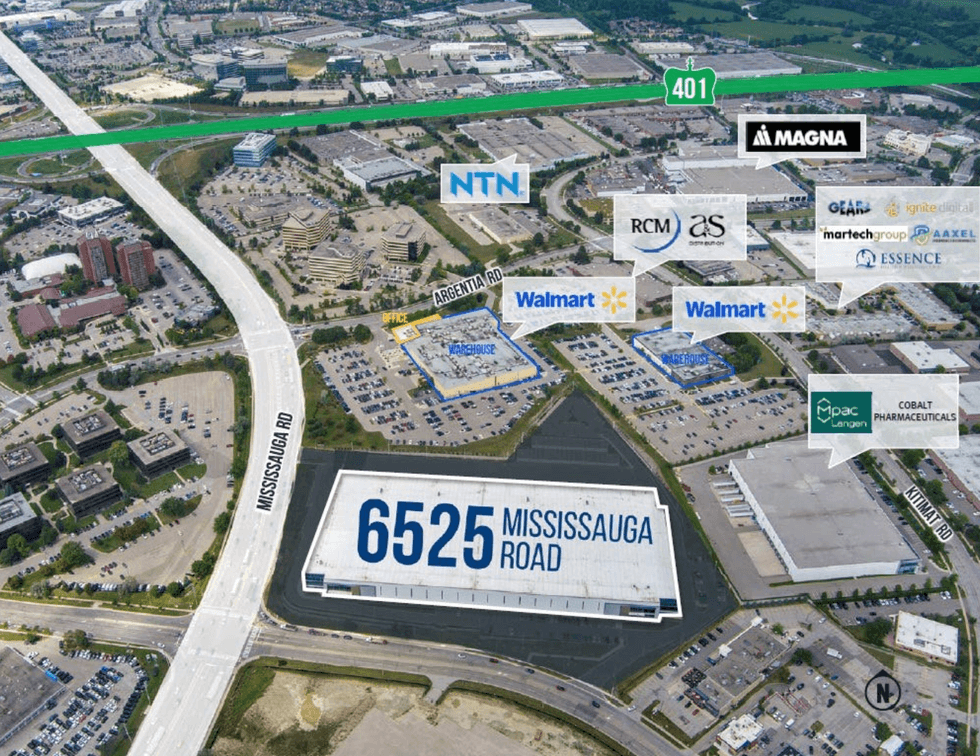 6525 Mississauga Road and its surrounding context. (RBC Capital Markets & CBRE)
 Property details for 6525 Mississauga Road. (RBC Capital Markets & CBRE)

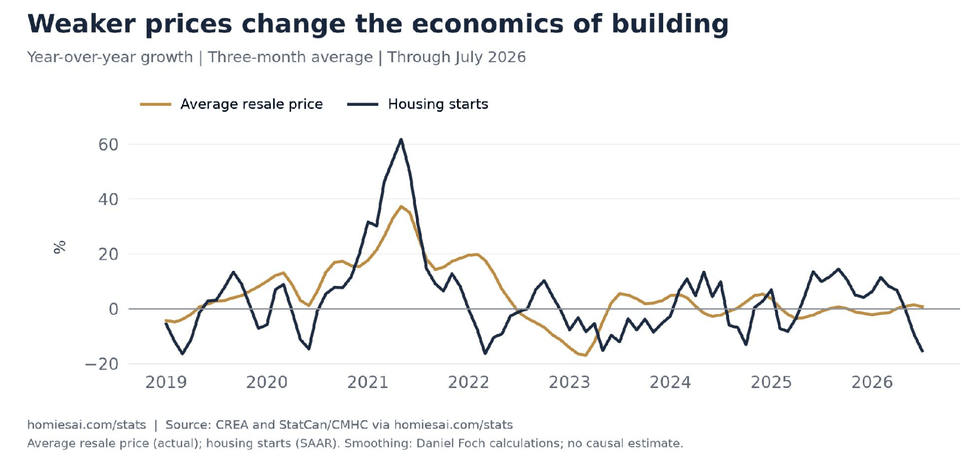 National average resale-price growth and housing-starts growth, smoothed over three months. The comparison illustrates the cycle; it does not establish how much a price change causes construction to change.
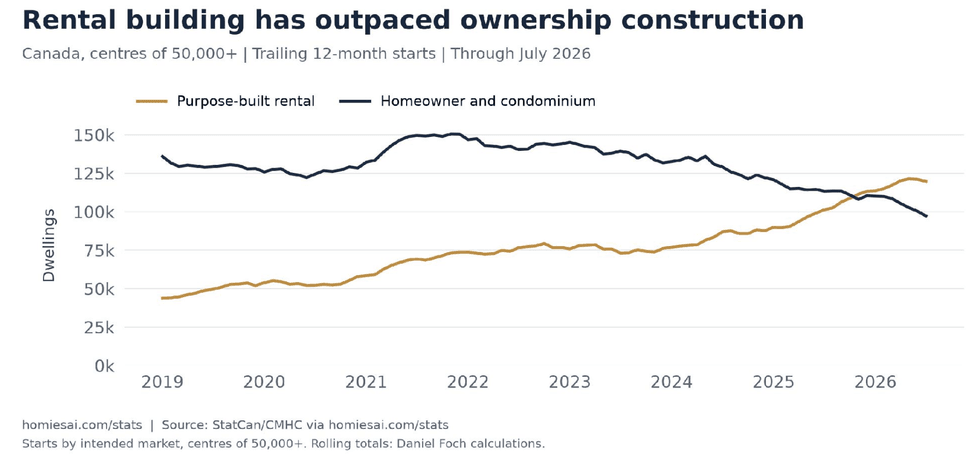 Trailing 12-month starts in centres of 50,000 or more remove the usual monthly seasonality. Ownership combines the homeowner and condominium categories; rental is shown separately.
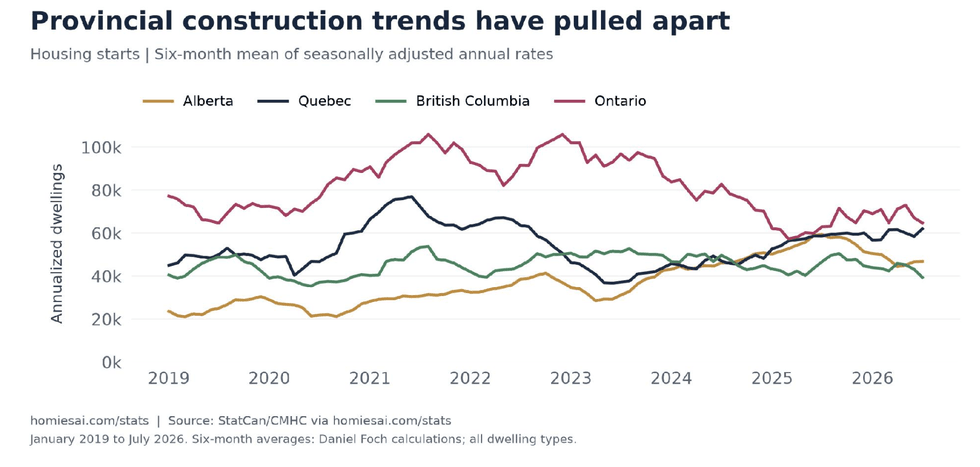 Six-month averages of provincial starts, expressed at annual rates. The smoothing reduces the influence of individual apartment projects.
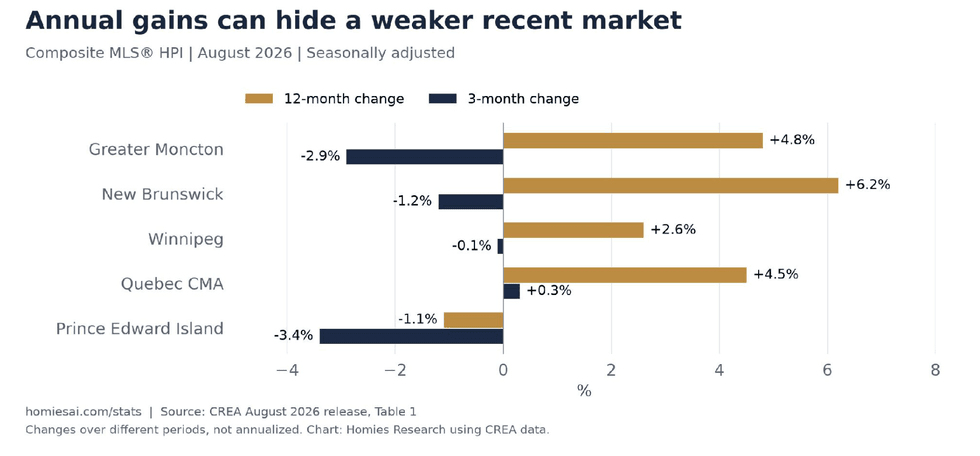 The same August benchmark compared with two different starting points. Three-month changes are not annualized.
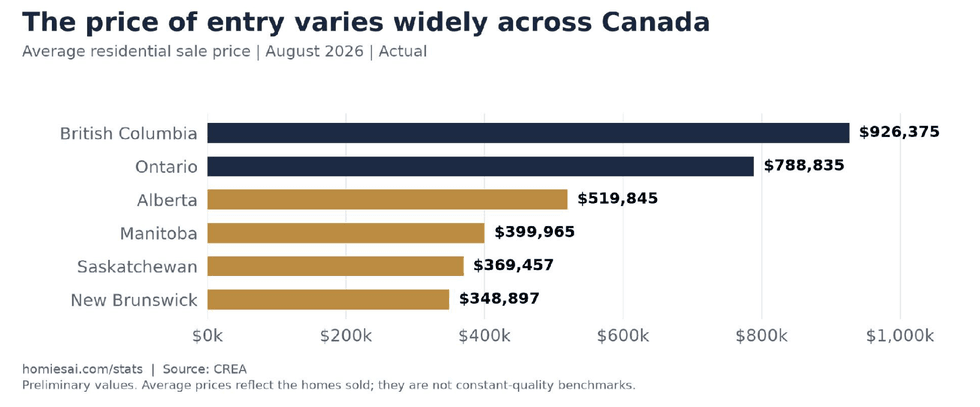 Average sale prices show the difference in purchase costs across markets. They do not measure affordability relative to local incomes or construction costs.
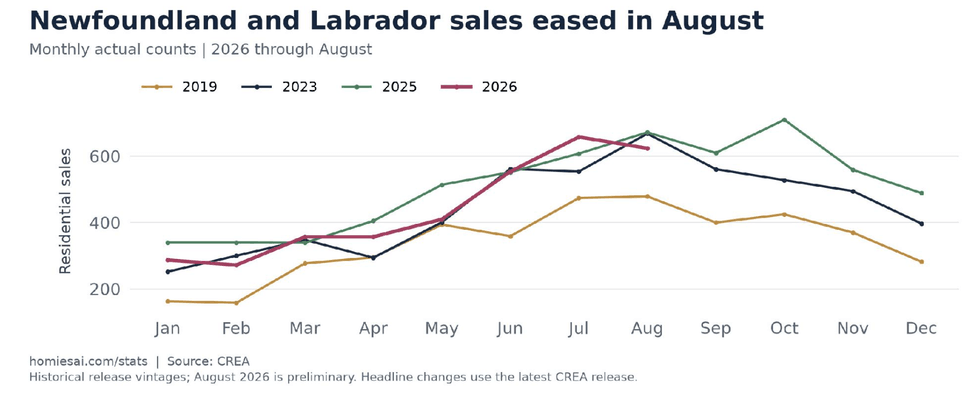 Newfoundland and Labrador remains above its pre-pandemic sales pattern, but August activity was below last year. Historical lines retain their original release vintages.