Form B Information Certificate
A Form B Information Certificate discloses fees, levies, and financial details of a BC strata lot, essential for buyers and lenders.

September 30, 2025
What is a Form B Information Certificate?
A Form B Information Certificate is a standardized document issued by a strata corporation in British Columbia. It provides essential details about a specific strata lot, including monthly strata fees, special levies, insurance coverage, and the financial health of the corporation.
Why Form B Information Certificates Matter in Real Estate
Form B matters in real estate because it gives buyers and lenders transparency into the financial obligations and risks associated with purchasing a strata property. It is often a required disclosure document in BC strata transactions.
Example of a Form B Information Certificate in Action
Before finalizing the purchase of a condo in Vancouver, a buyer’s lawyer reviews the Form B certificate to confirm the strata fees, pending special assessments, and insurance coverage.
Key Takeaways
- Provides key financial and insurance details for a strata lot.
- Discloses monthly fees, levies, and reserve balances.
- Mandatory disclosure document in BC condo sales.
- Helps buyers and lenders assess risks.
- Issued by the strata corporation on request.
Related Terms
- Strata Property Act
- Status Certificate
- Condominium Corporation
- Special Assessment
- Reserve Fund Study

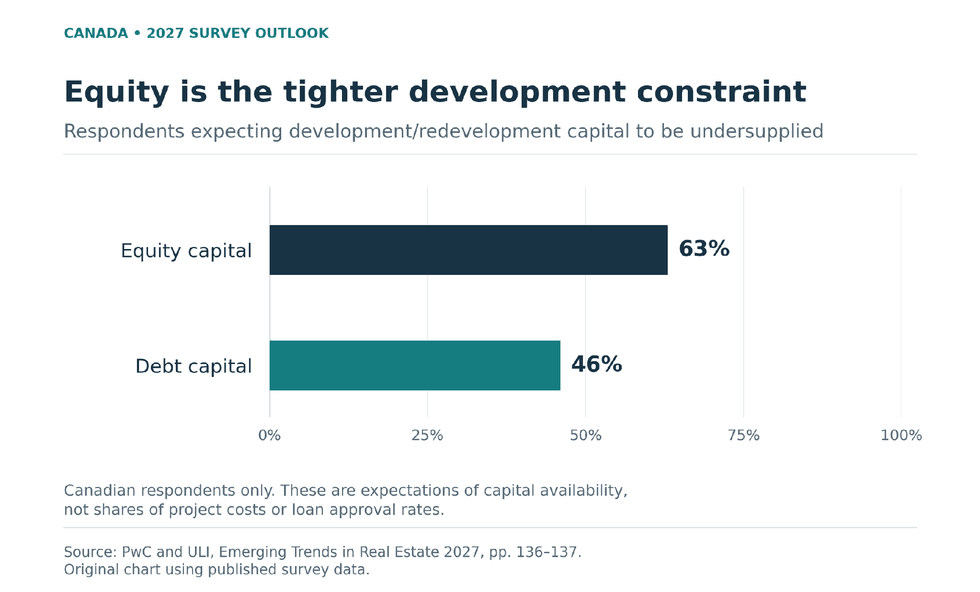 Canadian respondents were more likely to expect an undersupply of development/redevelopment equity capital (63%) than debt capital (46%) in 2027. These are survey expectations, not measured financing volumes. Source: PwC and ULI, Emerging Trends in Real Estate 2027, pp. 136–137. Original chart.
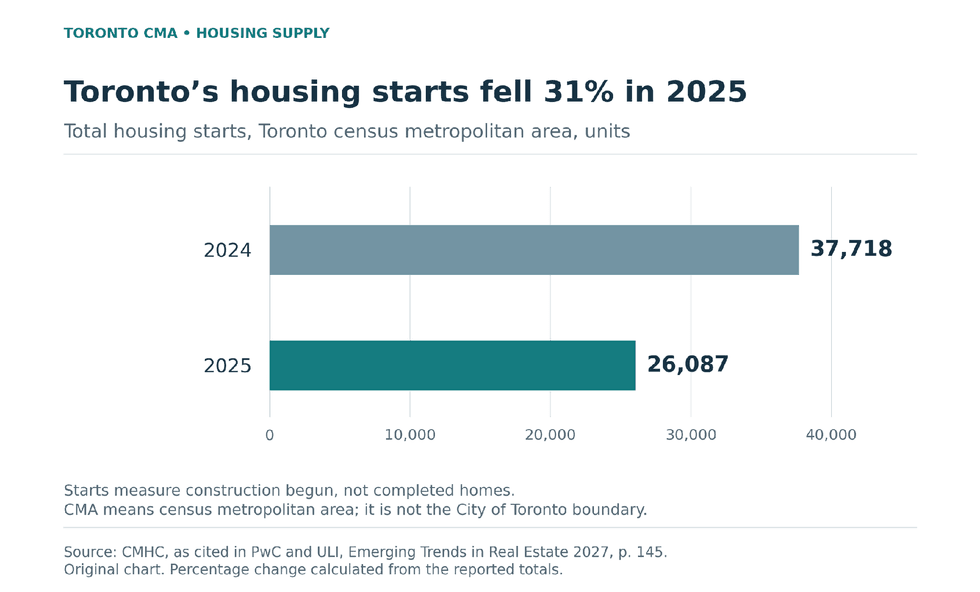 Toronto census metropolitan area housing starts fell from 37,718 units in 2024 to 26,087 in 2025, a 30.8% decline (rounded to 31%). Starts measure construction begun, not completed homes. Source: CMHC, as cited in PwC and ULI, Emerging Trends in Real Estate 2027, p. 145. Original chart.









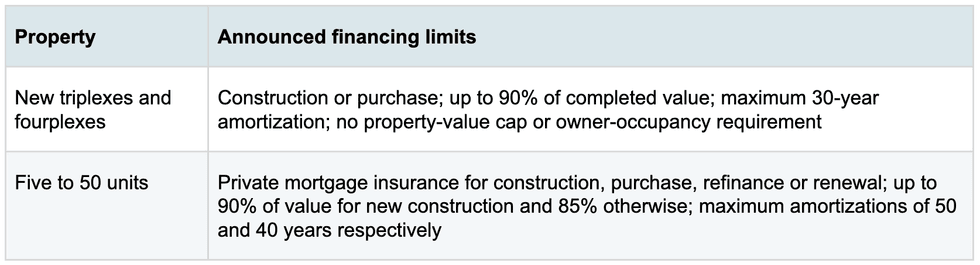
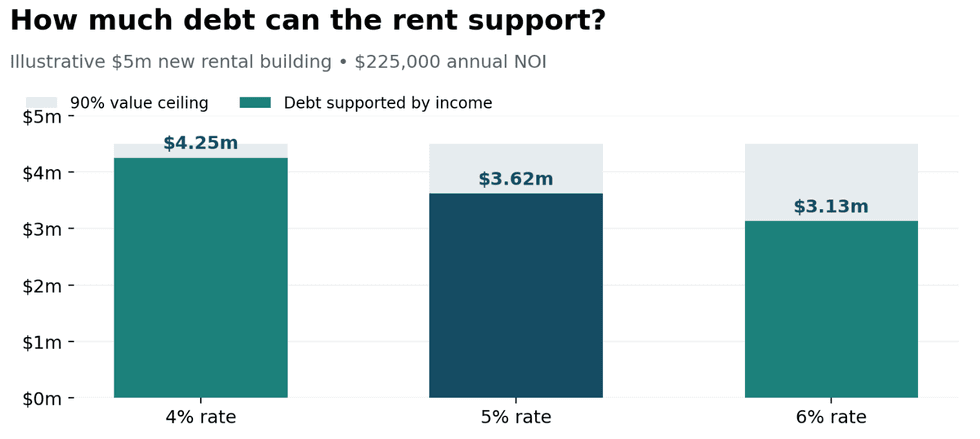 Illustrative calculation: a $4.5-million value ceiling versus income-based capacity of about $4.25 million at 4%, $3.62 million at 5% and $3.13 million at 6%. Assumes 50-year amortization and 1.15 debt coverage.
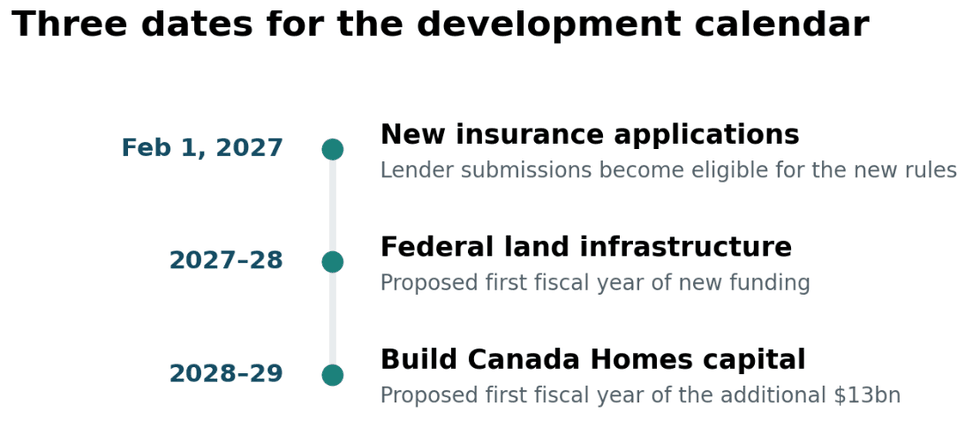 Source: Department of Finance missing-middle backgrounder and Budget 2026 Chapter 3, November 5, 2026. Fiscal-year funding starts are not home-completion dates.