The Labatt Village project by Toronto-based developer TAS is changing hands following a relatively quick receivership proceeding, according to filings in Ontario Superior Court.
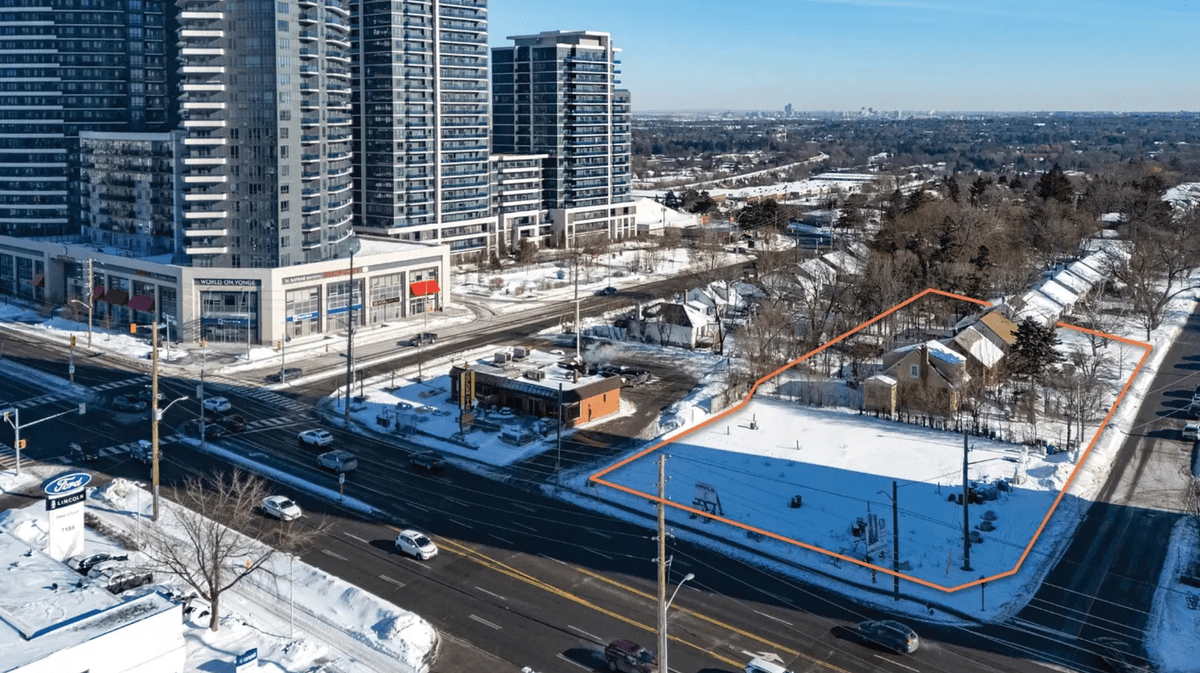
At 7 Labatt Avenue and 77 River Street in Toronto, a 1.34-acre property located between Dundas Street East and Queen Street East near the Don River, TAS was planing to redevelop the two existing commercial buildings into a two-tower mixed-use community.
In 2014, TAS submitted a rezoning application for a 38-storey tower with 584 residential units, 34,000 sq. ft. of office space, and 17,000 sq. ft of retail space. A site plan approval application was then submitted in 2019, but did not progress. Court documents state that TAS had been planning a revised project with 1,240 condos across a 48-storey and 44-storey tower that would also house 12,000 sq. ft. of office space and 4,500 sq. ft. of retail space, although no application was submitted.
Originally, developer Tricon was a partner on the project, announcing in 2014 that they had bought into the project, which had a total equity commitment of $60 million, split between Tricon (30%), an unnamed institutional investor (50%), and TAS (20%). By 2021, however, Tricon said that it and the institutional investor had sold their combined 80% stake to TAS — “as a result of a change in the project’s business plan” — for $15.1 million. Tricon was acquired by Blackstone in 2024.
The Receivership
TAS beneficially owned the properties under Labatt Village LP, Labatt Village GP Inc., and Labatt Village Holdings Inc., which were placed under receivership by Toronto-based private equity real estate investment firm KingSett Capital on February 10, 2026, as first reported by RENX.
The proceedings were pertaining to a loan agreement the two sides entered into in November 2021 for the principal amount of $25.5 million, with interest accruing at RBC Prime Rate + 8.55% per annum. TAS defaulted and KingSett ultimately issued a formal demand for payment on July 17, 2025. TAS was unable to repay the debt and KingSett issued a second demand letter on January 30 before initiating receivership.
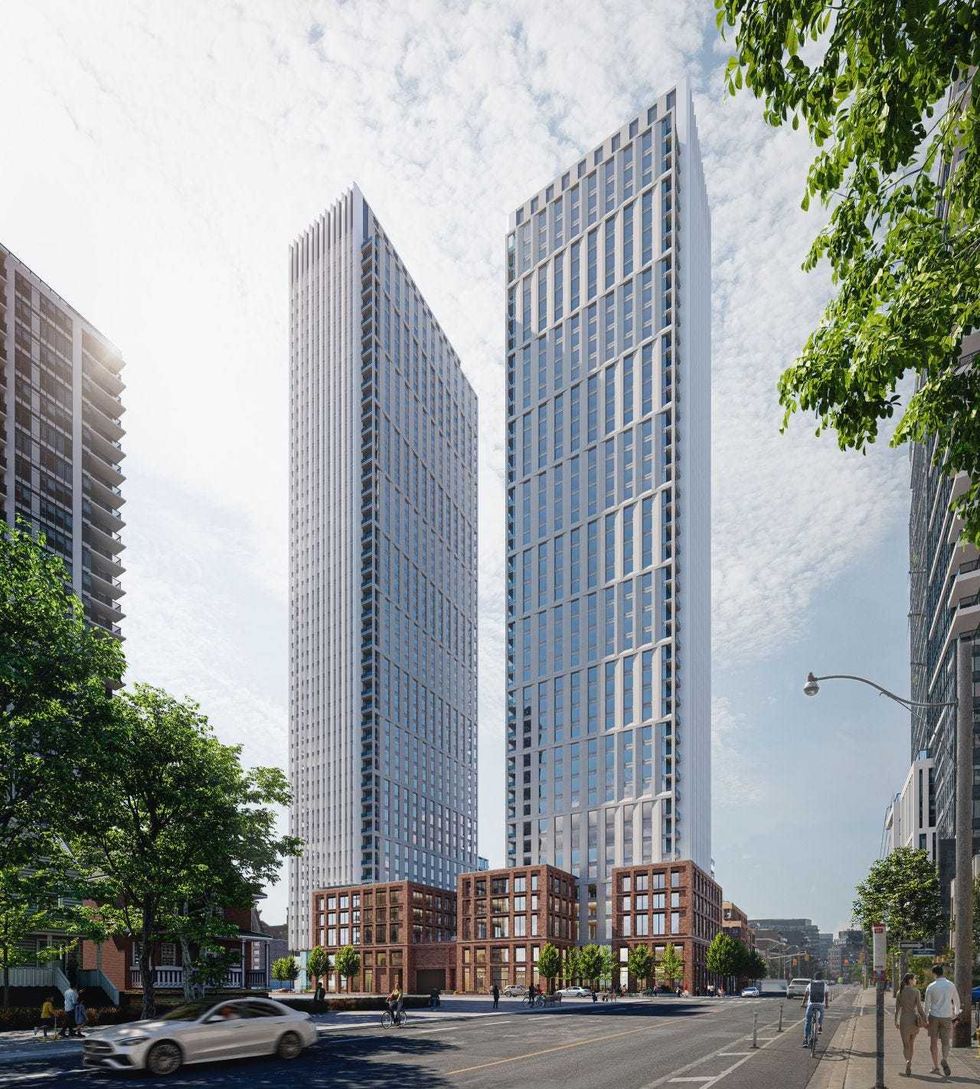 The Labatt Village project proposed for 7 Labatt Ave. and 77 River St. in Toronto. (Sweeny&Co Architects, TAS)
“Unfortunately, the development of the project has not materially advanced since the initial advance under the loan facility in 2021,” said KingSett. “Due to, among other factors, falling real estate prices and depressed market conditions, the respondents do not have access to adequate liquidity to complete the re-zoning process for the project or to make payments in connection with the loan facility.”
KingSett was owed $23,446,623.06 as of January 30, with interest continuing to accrue.
However, KingSett was the second-ranking charge holder and it was Scotiabank that held the first-ranking mortgage, which was for the principal amount of $75 million. In its application, KingSett noted that Scotiabank had told them that TAS owed $60 million as of January 27.
The Credit Bid
The Ontario Superior Court granted the receivership application on February 10 and simultaneously approved the court-ordered sales process, which would be backed by a stalking horse bid submitted by KingSett using the debt it is owed — also known as a credit bid.
A stalking horse bid serves as a “floor” transaction contingent on no better offer turning up during the sales process. KingSett says the purchase price is equal to the sum of the amounts owed to Scotiabank and KingSett, plus other charges such as property taxes and fees to the receiver. The amounts are variable, but KingSett says the total purchase price will be no less than $84,150,000.
Credit bids have become increasingly common over the past year as the real estate market downturn has made it hard for projects to move forward, thus there are few buyers of development sites. To protect their positions, many lenders that have initiated insolvency proceedings against projects have been semi-forced into buying the project themselves through credit bids.
This has been especially common for second-ranking lenders because of how debt recovery works. In this case, with Scotiabank being owed $60 million as the first-ranking charge holder, they would get paid out first in the event of a sale. If the sale price was $70 million, however, Scotiabank would see full recovery and KingSett would take a loss. By submitting a credit bid, KingSett avoids this and can potentially resell the property — or a stake in the project — in the future, after the market recovers.
According to the court-appointed Receiver, the lenders surveyed 77 potential buyers, but just three progressed to the point of signing a confidentiality agreement and none reached the point of submitting a letter of intent, leaving KingSett’s credit bid as the best and only offer.