Bridge Loan Insurance
Learn how bridge loan insurance works in Canadian real estate, when it’s used, what it covers, and how it protects borrowers and lenders during transitional financing.

May 22, 2025
What is Bridge Loan Insurance?
Bridge loan insurance is a type of financial protection that supports short-term real estate loans used between selling one property and buying another.
Why Bridge Loan Insurance Matters in Real Estate
In Canadian real estate, bridge loans are used when a homebuyer needs to close on a new property before the sale of their current home. Bridge loan insurance can protect either the lender or borrower from losses due to unexpected delays or default.
Key points:
- May cover default or delay in property sale
- Useful in fast-moving or uncertain markets
- Not always required, but provides security for all parties
This type of insurance may be offered by lenders or private insurers and helps ensure financing continuity during transitional transactions.
Understanding bridge loan insurance can help buyers manage risk and maintain financial flexibility during complex closings.
Example of Bridge Loan Insurance
A buyer uses a bridge loan to purchase a new home and adds insurance to protect against a delayed sale of their existing property.
Key Takeaways
- Protects against bridge loan default risks.
- Helps manage financial uncertainty during transitions.
- May cover lender or borrower.
- Adds security to short-term loans.
- Valuable in competitive markets.
Related Terms
- Bridge Financing
- Short-Term Loan
- Private Lending
- Mortgage Insurance
- Down Payment

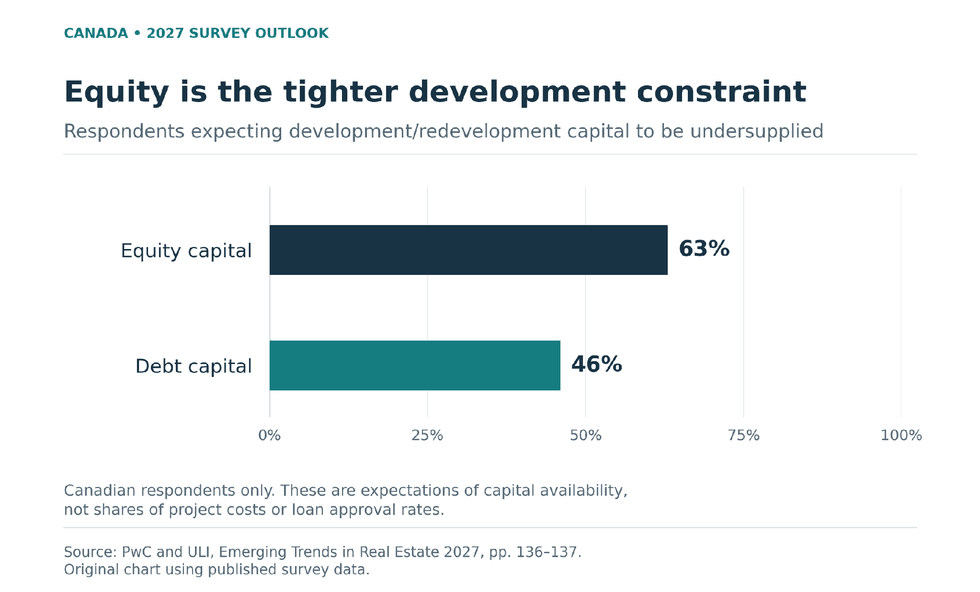 Canadian respondents were more likely to expect an undersupply of development/redevelopment equity capital (63%) than debt capital (46%) in 2027. These are survey expectations, not measured financing volumes. Source: PwC and ULI, Emerging Trends in Real Estate 2027, pp. 136–137. Original chart.
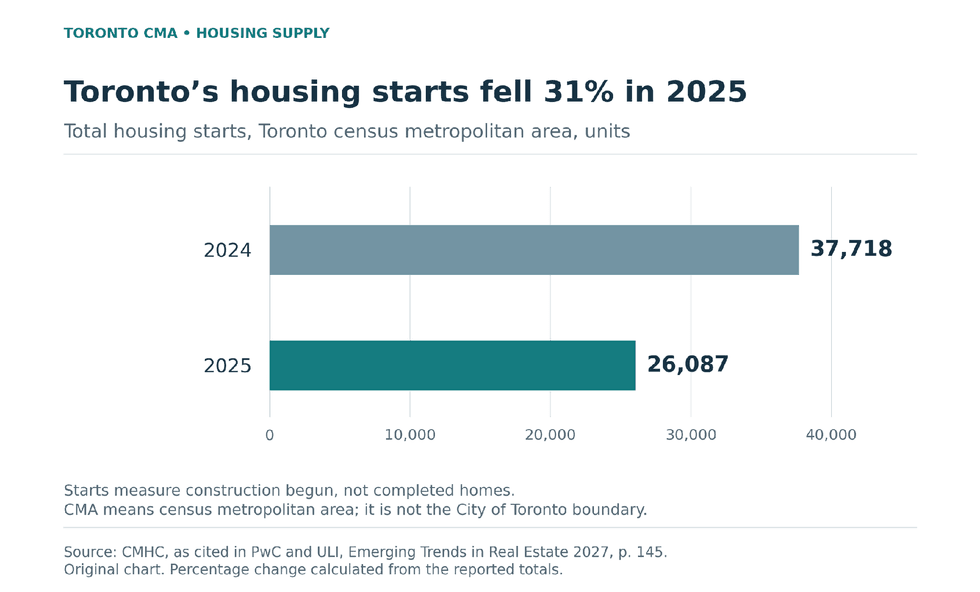 Toronto census metropolitan area housing starts fell from 37,718 units in 2024 to 26,087 in 2025, a 30.8% decline (rounded to 31%). Starts measure construction begun, not completed homes. Source: CMHC, as cited in PwC and ULI, Emerging Trends in Real Estate 2027, p. 145. Original chart.










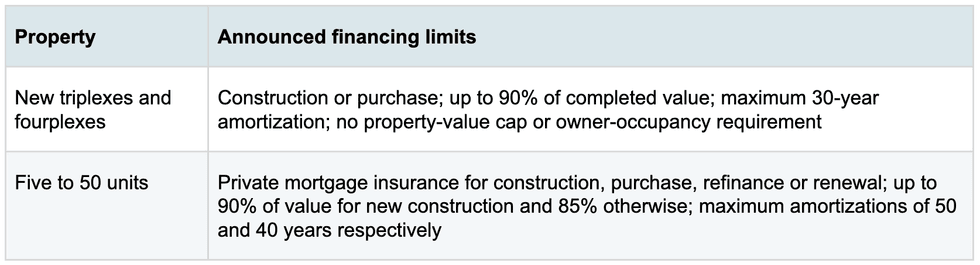
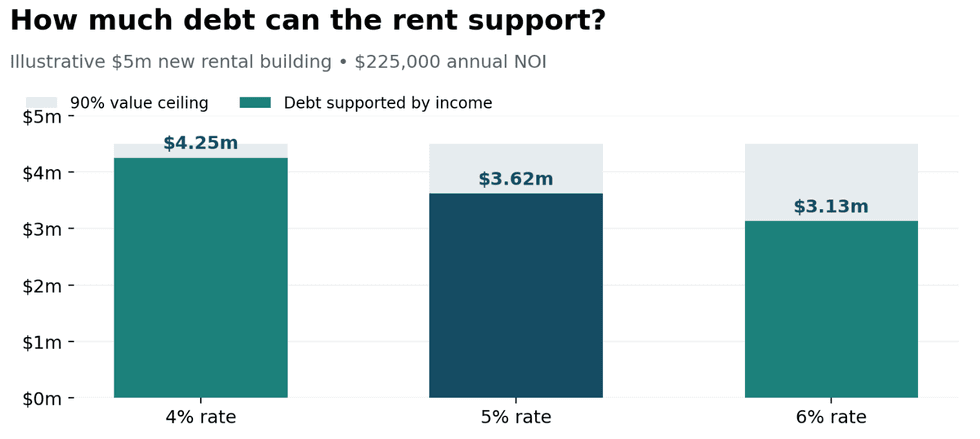 Illustrative calculation: a $4.5-million value ceiling versus income-based capacity of about $4.25 million at 4%, $3.62 million at 5% and $3.13 million at 6%. Assumes 50-year amortization and 1.15 debt coverage.
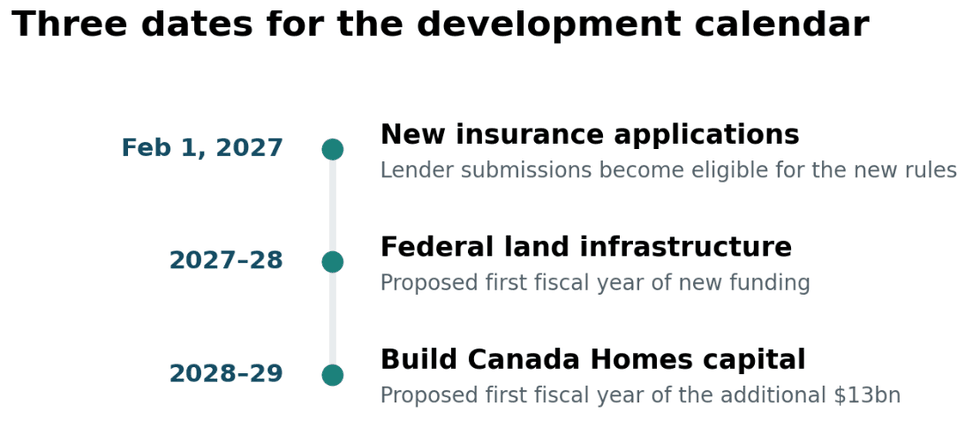 Source: Department of Finance missing-middle backgrounder and Budget 2026 Chapter 3, November 5, 2026. Fiscal-year funding starts are not home-completion dates.