Multiple Offers
Learn how multiple offers affect Canadian real estate: what they are, why they happen, and how buyers and sellers respond in a hot market.

June 16, 2025
What are Multiple Offers?
Multiple offers occur when more than one buyer submits a purchase offer on a property at the same time, often resulting in competition and bidding strategies.
Why Multiple Offers Matter in Real Estate
In Canadian real estate, multiple offer situations are common in sellers’ markets with low inventory and high demand.
Key characteristics:
- Often leads to bidding wars
- May include bully offers or escalation clauses
- Sellers may set an offer review date
- Buyers may submit firm offers with no conditions
Multiple offers can drive up sale prices but also raise transparency and fairness concerns, leading to debates around blind bidding regulations.
Understanding how multiple offers work helps buyers, sellers, and agents develop sound negotiation strategies.
Example of Multiple Offers in Action
After just three days on the market, the property received five competing offers, pushing the final sale price well over asking.
Key Takeaways
- Arises when several buyers bid simultaneously
- Can lead to bidding wars and higher prices
- Common in competitive sellers’ markets
- Encourages firm, condition-free offers
- Influences offer strategy and pricing

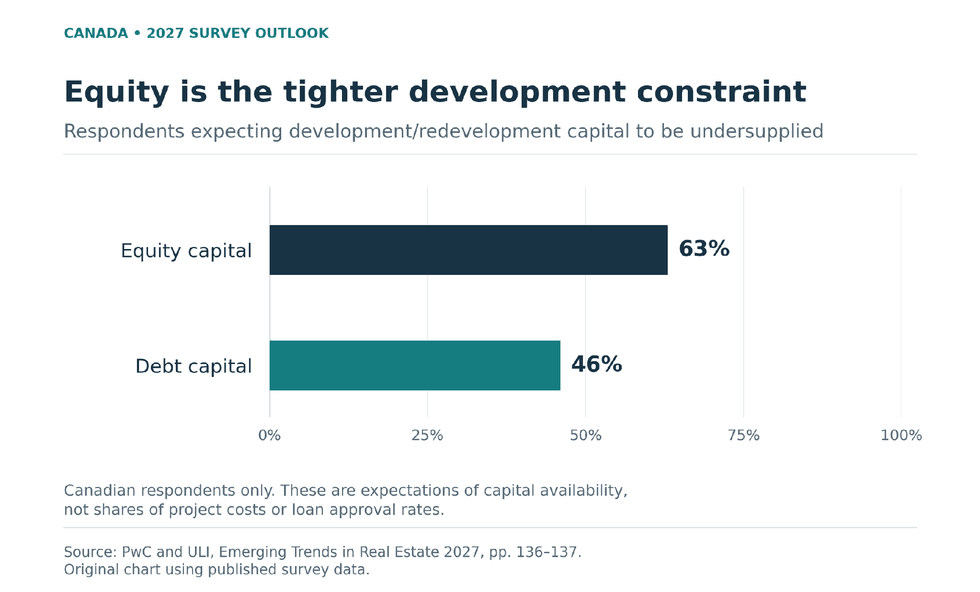 Canadian respondents were more likely to expect an undersupply of development/redevelopment equity capital (63%) than debt capital (46%) in 2027. These are survey expectations, not measured financing volumes. Source: PwC and ULI, Emerging Trends in Real Estate 2027, pp. 136–137. Original chart.
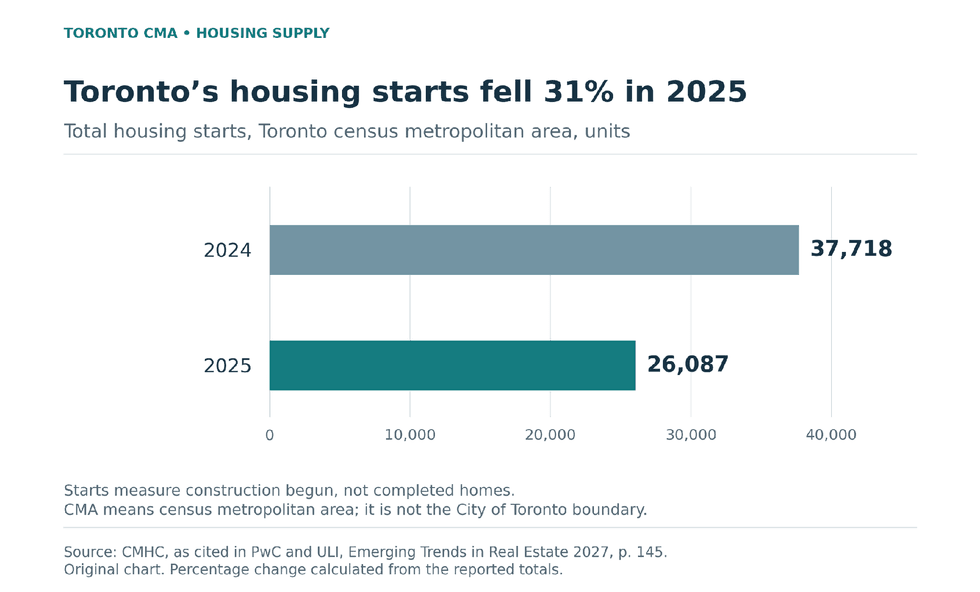 Toronto census metropolitan area housing starts fell from 37,718 units in 2024 to 26,087 in 2025, a 30.8% decline (rounded to 31%). Starts measure construction begun, not completed homes. Source: CMHC, as cited in PwC and ULI, Emerging Trends in Real Estate 2027, p. 145. Original chart.


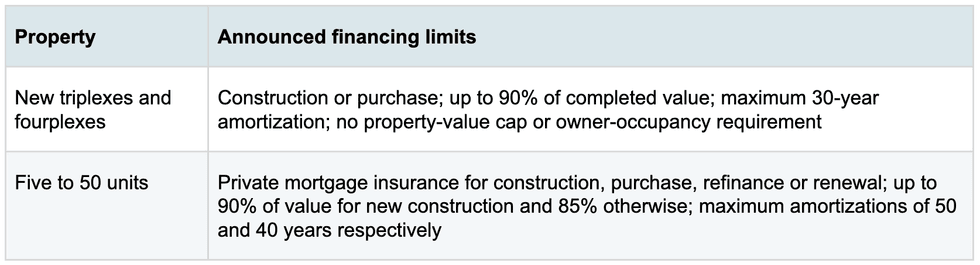
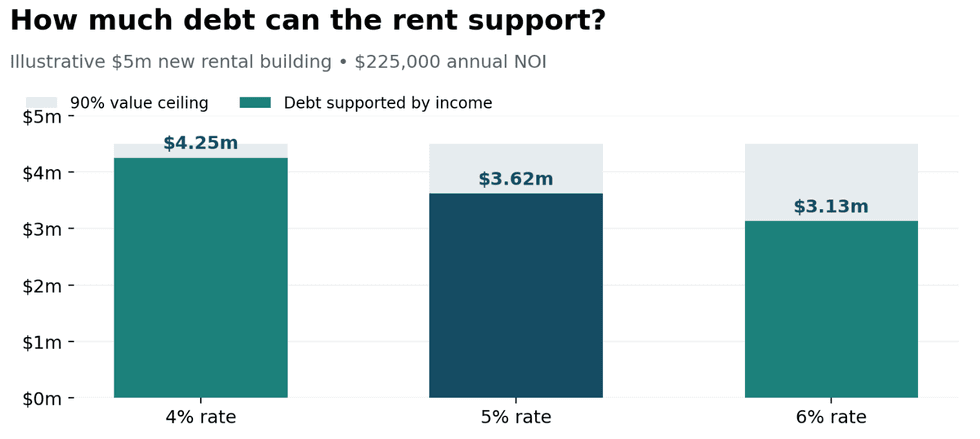 Illustrative calculation: a $4.5-million value ceiling versus income-based capacity of about $4.25 million at 4%, $3.62 million at 5% and $3.13 million at 6%. Assumes 50-year amortization and 1.15 debt coverage.
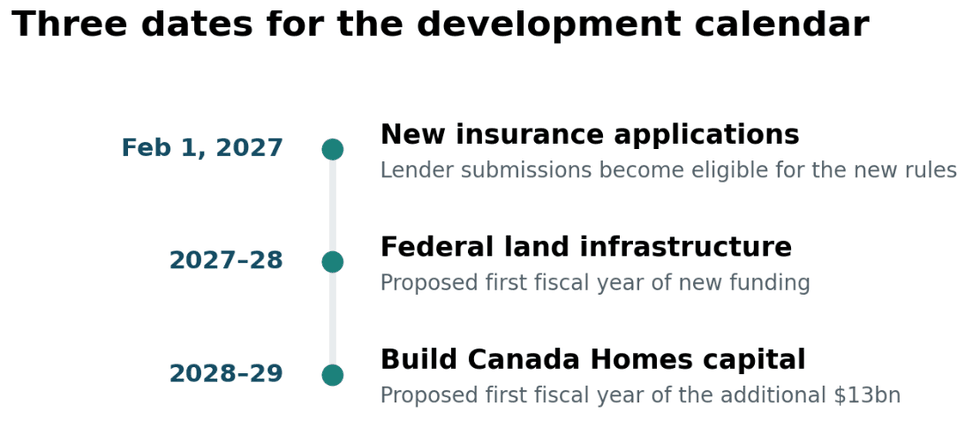 Source: Department of Finance missing-middle backgrounder and Budget 2026 Chapter 3, November 5, 2026. Fiscal-year funding starts are not home-completion dates.