Broker Disclosure
Explore broker disclosure in Canadian real estate—what brokers must share, how it protects clients, and why transparency is legally required.

May 29, 2025
What is Broker Disclosure?
Broker disclosure is the legal obligation of a real estate or mortgage broker to fully inform clients of key details about fees, relationships, and potential conflicts of interest.
Why Broker Disclosure Matters in Real Estate
In Canadian real estate, licensed brokers must disclose their role in a transaction, any compensation they receive, and whether they represent the buyer, seller, or both.
Disclosure may include:
Commission rates or broker fees
Dual agency situations
Referrals to affiliated services
Mortgage brokers must also disclose any fees paid by the lender or borrower in writing before finalizing financing. Provincial regulators enforce these rules to ensure transparency.
Understanding broker disclosure protects clients from hidden costs and ensures fair dealings in all real estate transactions.
Example of Broker Disclosure
The broker informs the buyer that they will receive a commission from the lender and provides a written broker disclosure form before proceeding.
Key Takeaways
- Required in real estate and mortgage deals.
- Includes fee, role, and relationship transparency.
- Regulated by provincial licensing bodies.
- Helps clients make informed decisions.
- Must be presented in writing.
Related Terms
- Mortgage Broker Fee
- Origination Fee
- Co-Signer
- Lender Guidelines
- Mortgage Application

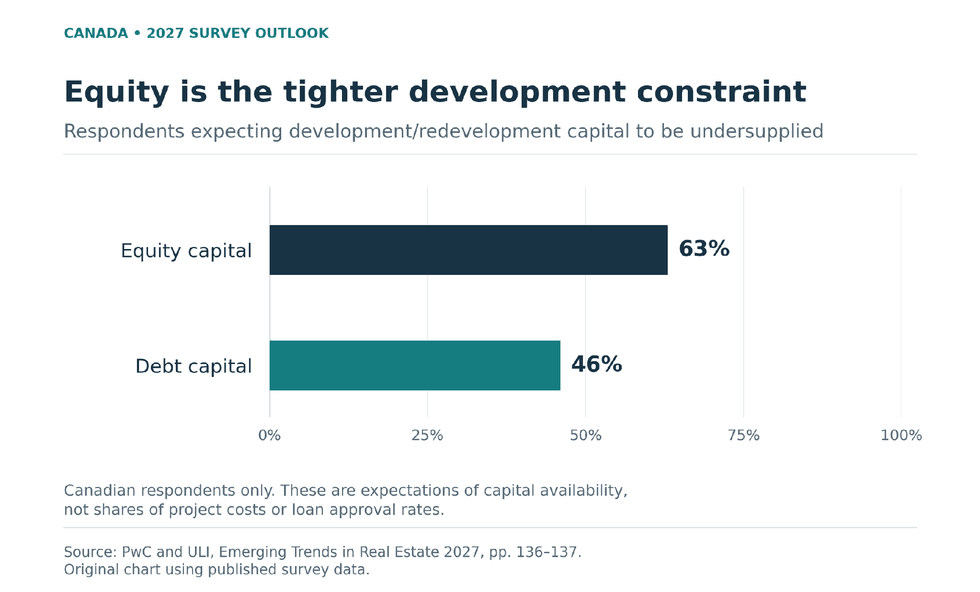 Canadian respondents were more likely to expect an undersupply of development/redevelopment equity capital (63%) than debt capital (46%) in 2027. These are survey expectations, not measured financing volumes. Source: PwC and ULI, Emerging Trends in Real Estate 2027, pp. 136–137. Original chart.
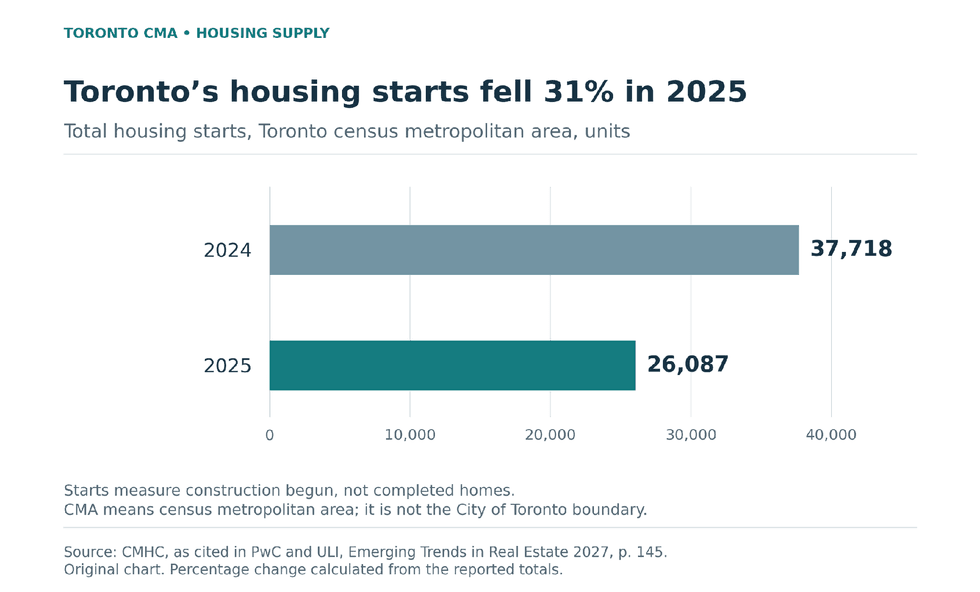 Toronto census metropolitan area housing starts fell from 37,718 units in 2024 to 26,087 in 2025, a 30.8% decline (rounded to 31%). Starts measure construction begun, not completed homes. Source: CMHC, as cited in PwC and ULI, Emerging Trends in Real Estate 2027, p. 145. Original chart.










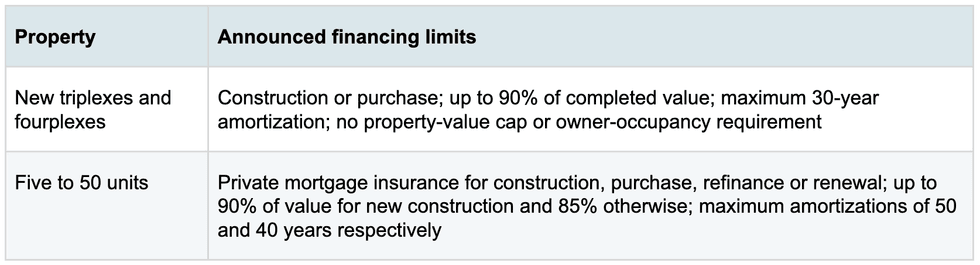
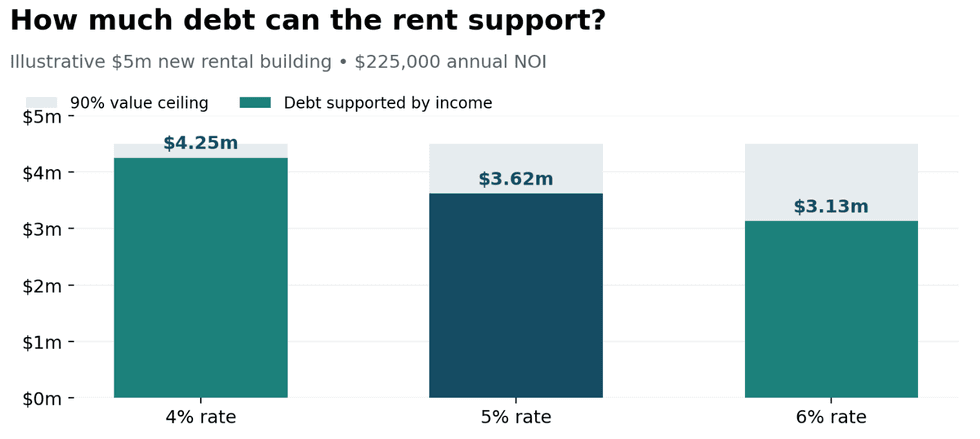 Illustrative calculation: a $4.5-million value ceiling versus income-based capacity of about $4.25 million at 4%, $3.62 million at 5% and $3.13 million at 6%. Assumes 50-year amortization and 1.15 debt coverage.
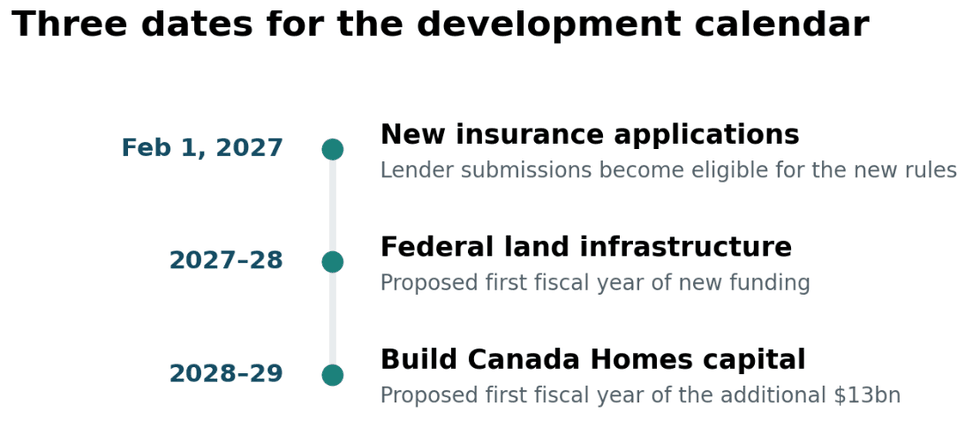 Source: Department of Finance missing-middle backgrounder and Budget 2026 Chapter 3, November 5, 2026. Fiscal-year funding starts are not home-completion dates.