Lender Guidelines
Explore lender guidelines in Canadian real estate, how they shape mortgage approvals, what rules apply, and how buyers can meet them.

May 22, 2025
What are Lender Guidelines?
Lender guidelines are the rules and criteria that financial institutions follow when assessing mortgage applications and approving borrowers.
Why Lender Guidelines Matter in Real Estate
In Canadian real estate, every lender—whether a bank, credit union, or private firm—follows internal and regulatory standards when issuing mortgages.
Typical lender guidelines include:- Credit score minimums
- Debt service ratio limits (GDS/TDS)
- Minimum down payment
- Income verification and employment stability
- Stress test compliance
Example of Lender Guidelines in Action
A buyer with a 42% TDS is denied a mortgage by one lender but approved by another with more flexible guidelines for self-employed applicants.
Key Takeaways
- Defines criteria for mortgage approval.
- Includes income, credit, and debt requirements.
- Varies by lender and mortgage type.
- Helps ensure responsible borrowing.
- Key for preparation and application success.
Related Terms
- Debt Service Ratios
- Pre-Approval
- Mortgage Qualification
- Stress Test
- Down Payment


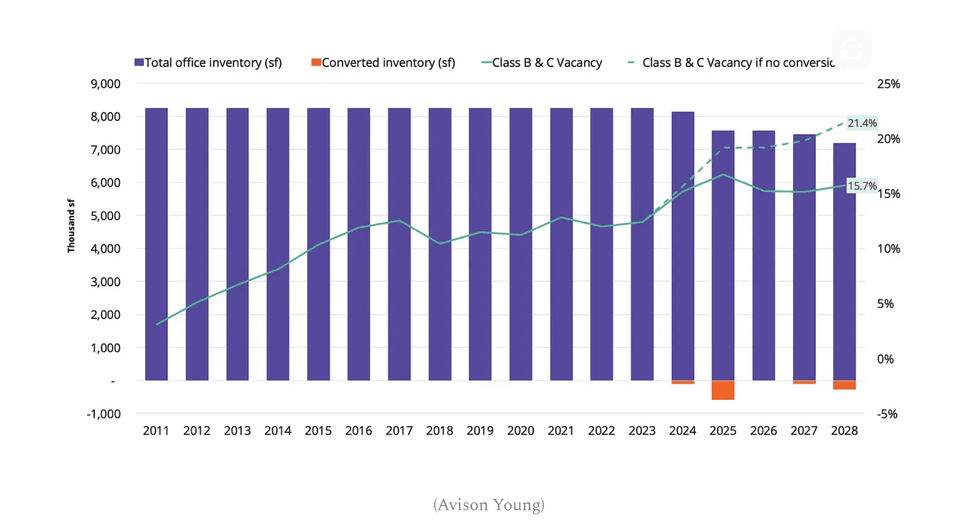 (Avison Young)






 The Mason Suite Interior (Infinity Properties)
 The Mason Suite Interior (Infinity Properties)
 Rail District aerial (Infinity Properties)
 Versant (Infinity Properties)


 Narrow Fourplex (City of Toronto)
 Wide Sixplex - Side View (City of Toronto)
 Centre Block and its surrounding context. (Stantec-Revery, SCDC)
 The 12-storey Phase One of Centre Block. (Stantec-Revery, SCDC)
 The 12-storey Phase One of Centre Block. (Stantec-Revery, SCDC)
 Mondria One, set for 1607 King Street East in Clarington, Ontario. (ICON Architects Inc., Monde Development Group)