Adjustable-Rate Mortgage (ARM)
Learn what an adjustable-rate mortgage (ARM) is and how it works in Canadian real estate. Understand the benefits and risks of ARMs and how they affect home financing.

May 22, 2025
What is an Adjustable-Rate Mortgage (ARM)?
An adjustable-rate mortgage (ARM) is a type of home loan where the interest rate changes periodically based on a benchmark index. Unlike fixed-rate mortgages, ARMs begin with a fixed interest rate for an initial period, after which the rate may increase or decrease at set intervals.
Why Adjustable-Rate Mortgages (ARM) Matter in Real Estate
ARMs are a flexible financing option that can offer lower initial interest rates than fixed-rate mortgages, making them appealing to borrowers seeking short-term affordability or expecting future income growth. In Canadian real estate, ARMs (often referred to as variable-rate or hybrid mortgages) are commonly tied to the prime rate or Bank of Canada rate, meaning borrowers’ payments can fluctuate based on market conditions.
The structure of an ARM typically includes an introductory fixed-rate period—often 3, 5, or 7 years—followed by an adjustment schedule (e.g., annually). After the initial term, the rate resets according to the lender’s formula (usually the index plus a margin), which impacts both the interest rate and monthly payments.
For buyers, ARMs can lower upfront housing costs and improve borrowing capacity, especially in high-priced markets. However, the risk lies in the unpredictability of future rate hikes, which can significantly raise monthly payments over time. This variability can be particularly important in Canada’s tightly regulated mortgage environment, where stress testing requires borrowers to qualify based on higher potential future rates.
Understanding how ARMs function is essential for buyers comparing financing options, investors managing cash flow, or homeowners considering refinancing. It also plays a role in broader affordability discussions, especially during periods of rising or falling interest rates.
Example of an Adjustable-Rate Mortgage (ARM)
A Toronto homebuyer takes out a 5-year ARM at 3.25% interest. After five years, the rate adjusts annually based on the Bank of Canada’s prime rate. If the prime rate increases, the buyer’s mortgage payments rise accordingly.
Key Takeaways
- ARMs offer a lower starting interest rate than fixed-rate mortgages.
- Rates adjust after a set period, which can increase monthly payments.
- They're ideal for short-term ownership or buyers expecting income growth.
- Risk increases in volatile interest rate environments.
- Commonly tied to Canada’s prime or benchmark rates.
Related Terms
- Fixed Rate Mortgage
- Mortgage Pre-Approval
- Mortgage Term
- Mortgage Stress Test
- Bank of Canada Rate


























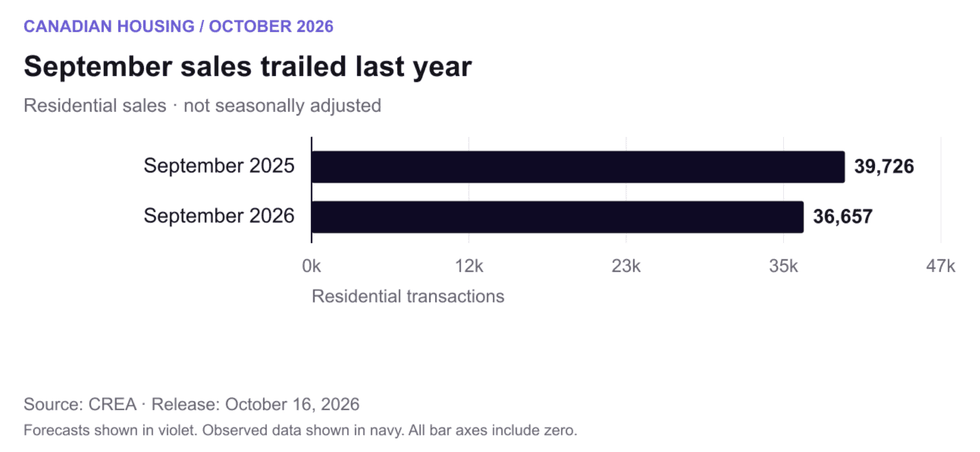 September residential sales, not seasonally adjusted; the annual comparison uses CREA’s revised figures. Chart:
 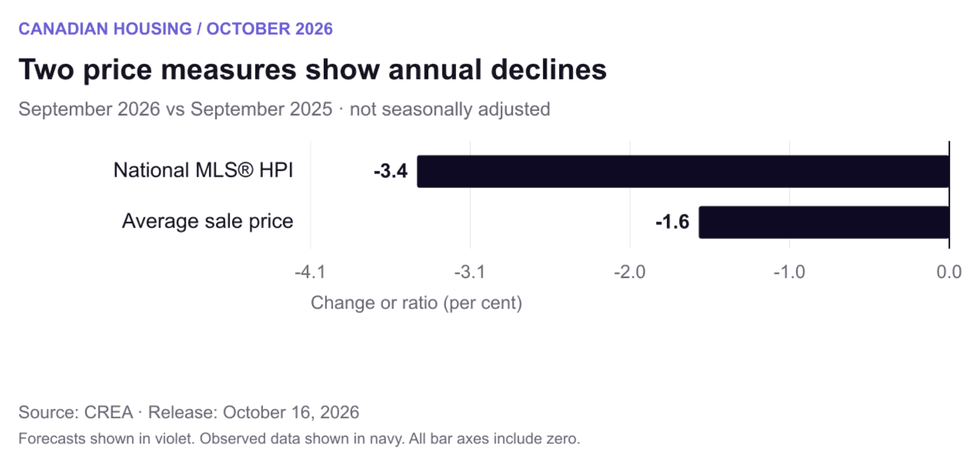 Annual changes in the unadjusted national MLS® HPI and average sale price. The average is affected by the mix of transactions. Chart:
 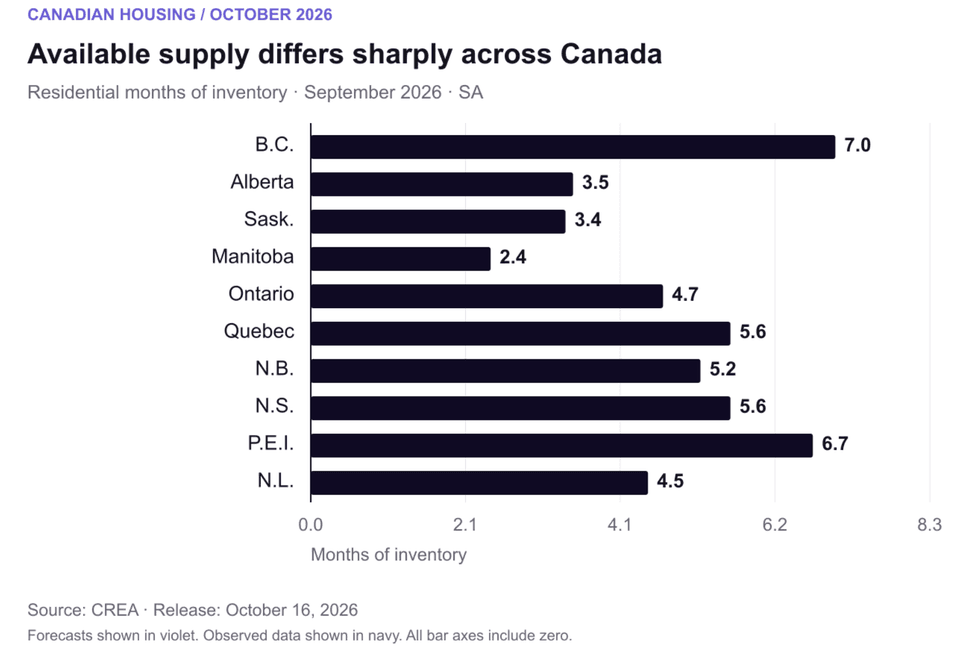 Seasonally adjusted residential months of inventory by province. Local property types can differ substantially. Chart:
 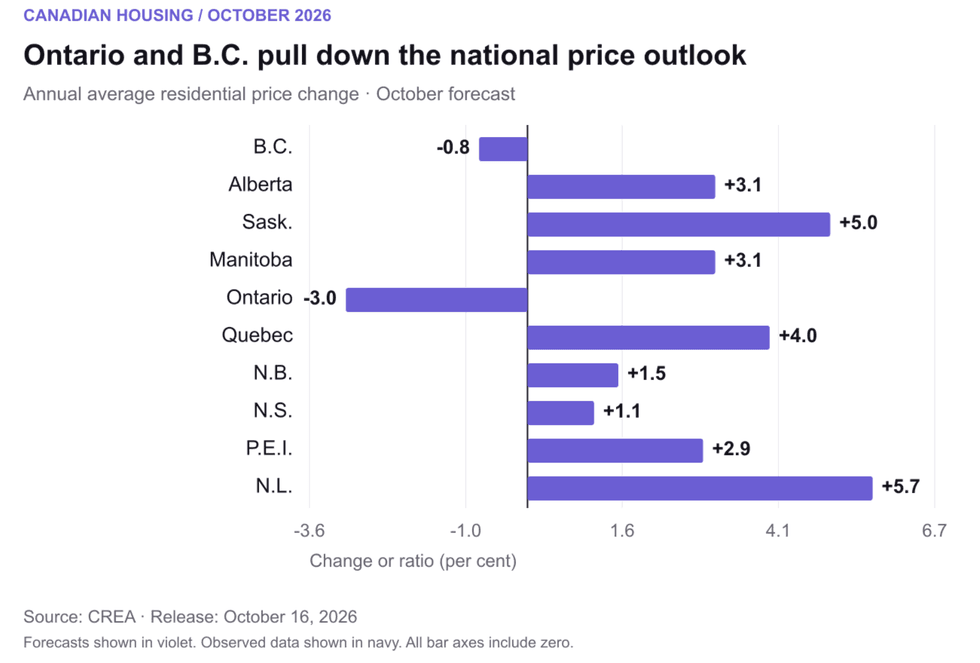 Ontario and B.C. are the two provinces with forecast annual average-price declines in 2026. Chart:
 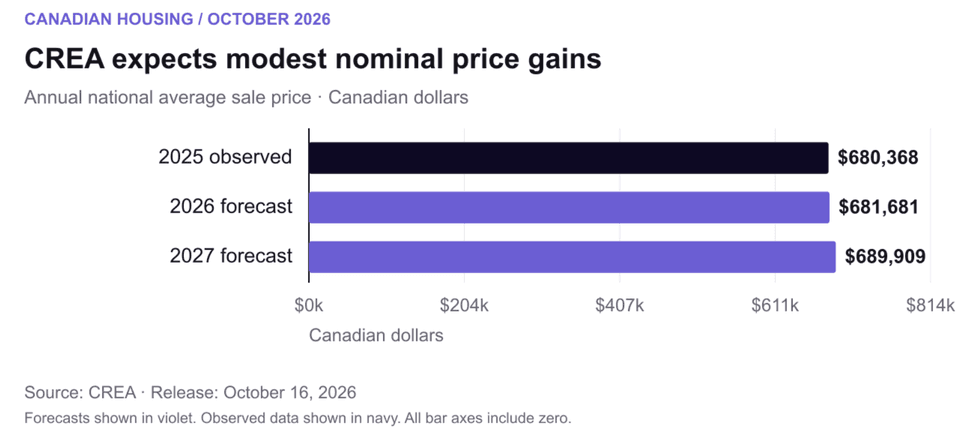 Annual average transaction prices in Canadian dollars. Forecast values are not December price targets. Chart:
 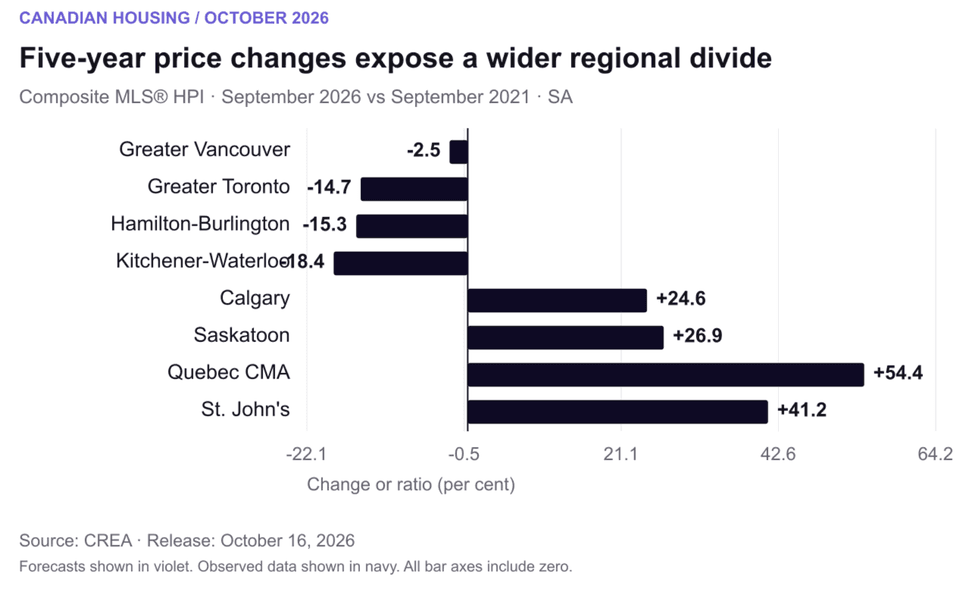 Five-year changes in seasonally adjusted composite MLS® HPI benchmarks, September 2021 to September 2026. Chart: