Fixed Rate Mortgage
Learn how fixed rate mortgages work in Canadian real estate, their pros and cons, and why they offer payment stability for homebuyers.

May 22, 2025
What is a Fixed Rate Mortgage?
A fixed rate mortgage is a home loan with an interest rate that remains unchanged for the entire term of the mortgage agreement.
Why Fixed Rate Mortgages Matter in Real Estate
Fixed rate mortgages offer stability and predictability in monthly payments, which makes them a popular choice for homebuyers in Canada. Because the interest rate doesn’t change during the term—commonly 1, 3, or 5 years—borrowers are shielded from fluctuations in the market.
This predictability can be especially valuable in rising interest rate environments, allowing homeowners to budget with confidence. However, fixed rate mortgages often come with slightly higher initial rates compared to variable options, and borrowers may pay more in interest if rates decline.
At the end of the fixed term, the borrower must renew their mortgage at current market rates, potentially under new terms. Early termination of a fixed rate mortgage can also result in higher prepayment penalties, usually based on an interest rate differential (IRD).
Understanding how fixed rate mortgages work helps buyers choose the right product for their financial goals, risk tolerance, and future plans.
Example of a Fixed Rate Mortgage in Action
A buyer secures a 5-year fixed rate mortgage at 4.5%. Their monthly mortgage payment remains constant over the 5-year term, regardless of changes in the prime rate or market conditions.
Key Takeaways
- Interest rate stays the same throughout the mortgage term.
- Provides stable and predictable monthly payments.
- Ideal for buyers who value certainty and risk protection.
- May have higher prepayment penalties than variable mortgages.
- Requires renewal at the end of each term.
Related Terms
- Variable Rate Mortgage
- Mortgage Term
- Mortgage Pre-Approval
- Interest Rate
- Prepayment Penalty















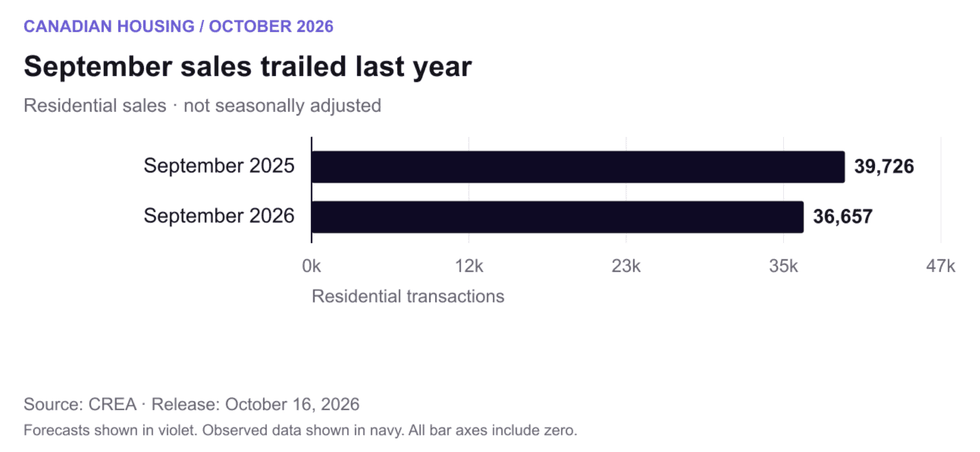 September residential sales, not seasonally adjusted; the annual comparison uses CREA’s revised figures. Chart:
 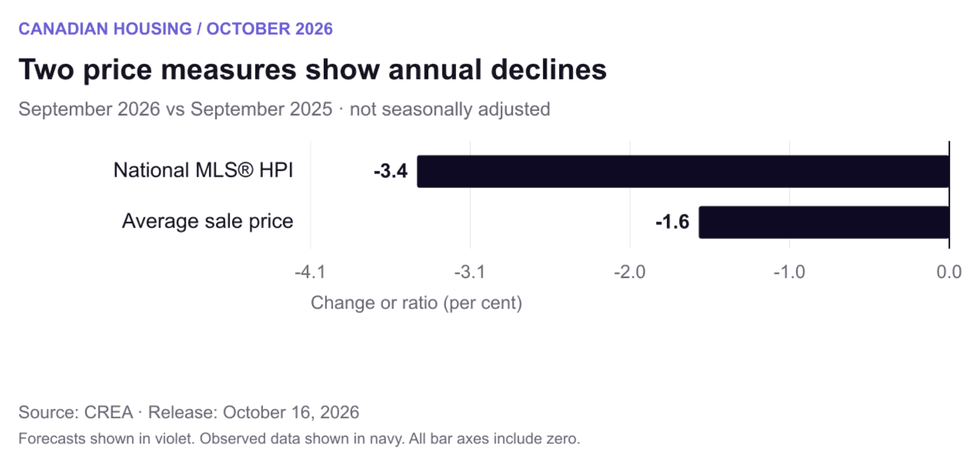 Annual changes in the unadjusted national MLS® HPI and average sale price. The average is affected by the mix of transactions. Chart:
 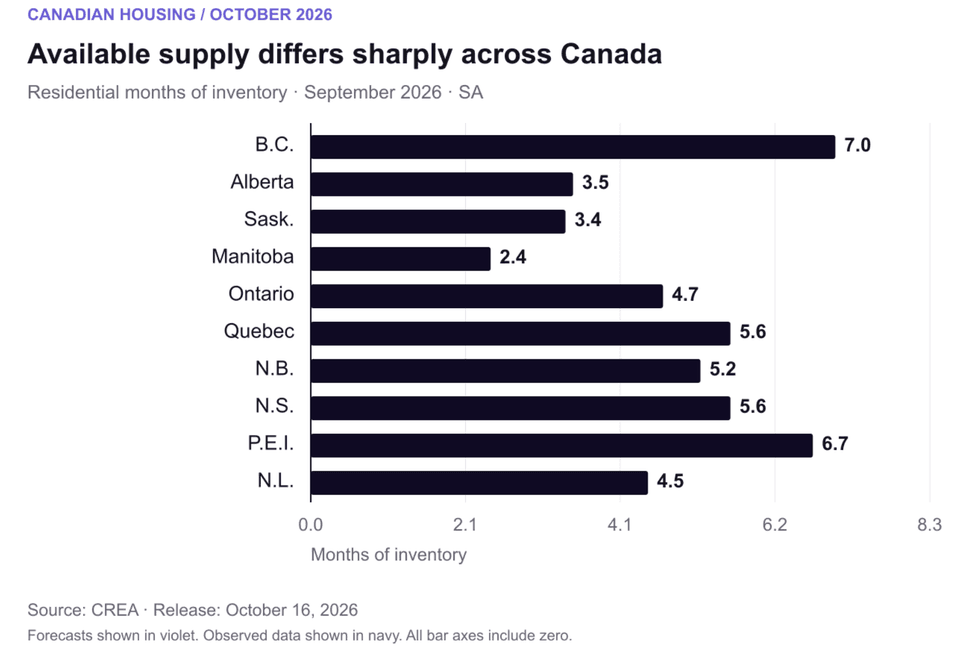 Seasonally adjusted residential months of inventory by province. Local property types can differ substantially. Chart:
 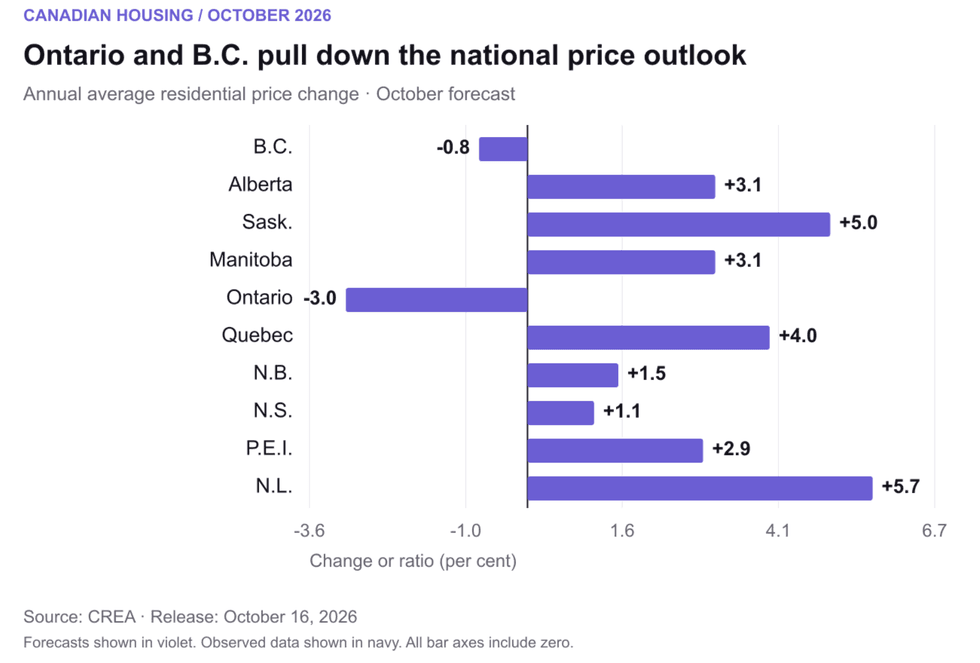 Ontario and B.C. are the two provinces with forecast annual average-price declines in 2026. Chart:
 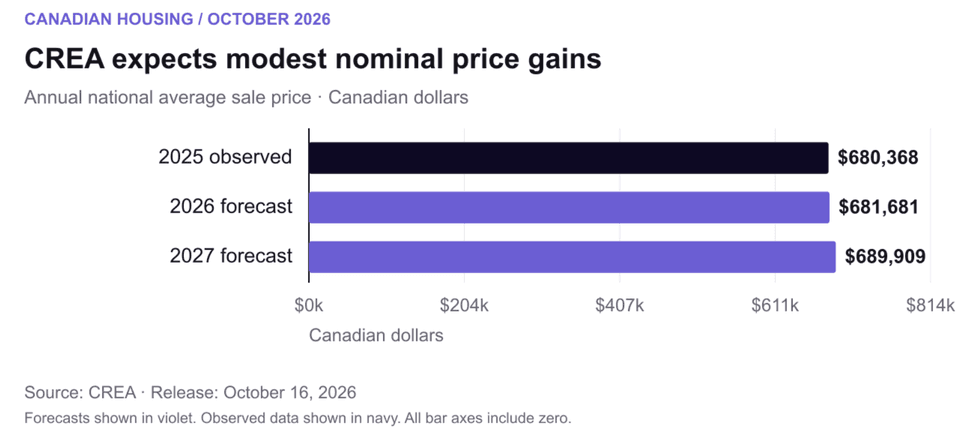 Annual average transaction prices in Canadian dollars. Forecast values are not December price targets. Chart:
 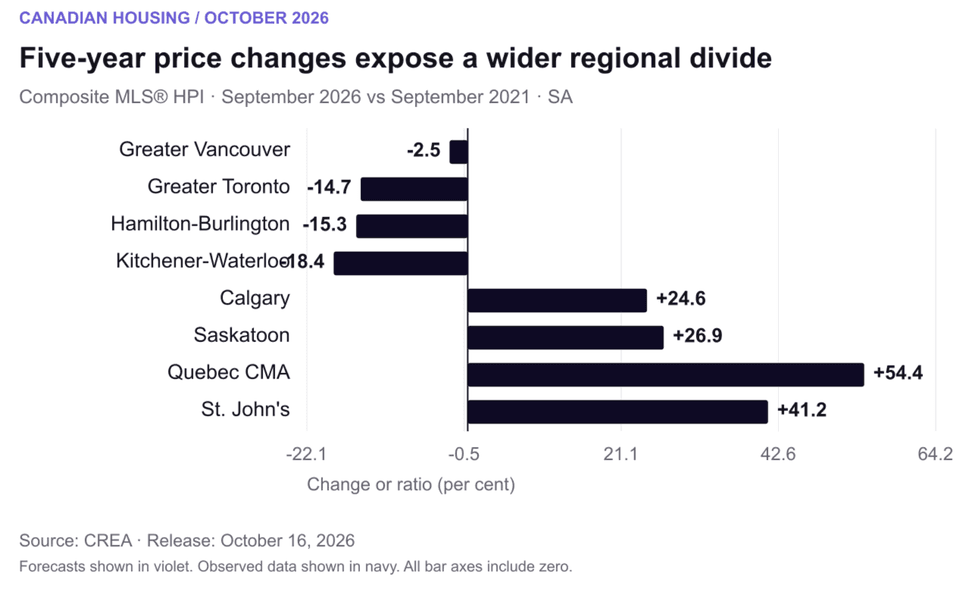 Five-year changes in seasonally adjusted composite MLS® HPI benchmarks, September 2021 to September 2026. Chart:





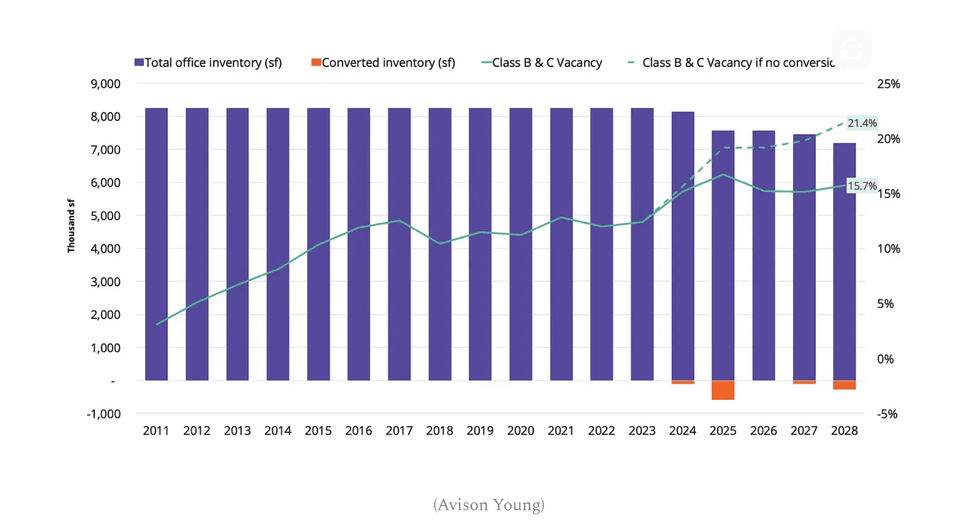 (Avison Young)
 The Mason Suite Interior (Infinity Properties)
 The Mason Suite Interior (Infinity Properties)
 Rail District aerial (Infinity Properties)
 Versant (Infinity Properties)