Tenant Improvements
Explore tenant improvements in Canadian commercial real estate — what they include, how they're funded, and their role in lease agreements.

June 27, 2025
What are Tenant Improvements?
Tenant improvements refer to custom modifications or build-outs made to a leased space to suit the tenant’s operational needs, often negotiated as part of a commercial lease agreement.
Why Tenant Improvements Matter in Real Estate
In Canadian commercial real estate, tenant improvements impact lease negotiations, costs, and occupancy timelines.
Typical improvements include:
- Partition walls and interior finishes
- Electrical, plumbing, and HVAC alterations
- Specialized fixtures or signage
Landlords may provide a tenant improvement allowance (TIA) to cover part of the costs. Clear terms help avoid disputes and align expectations.
Understanding tenant improvements helps both tenants and landlords plan financially and logistically.
Example of Tenant Improvements in Action
The landlord offered a tenant improvement allowance to help build out the retail space’s customized display area and lighting.
Key Takeaways
- Modifications to leased space for tenant use
- Negotiated in lease agreements
- May involve landlord allowances
- Impacts costs and timelines
- Requires clear documentation
Related Terms
- Commercial Lease
- Triple Net Lease
- Net Lease
- Property Management
- Tenant Mix
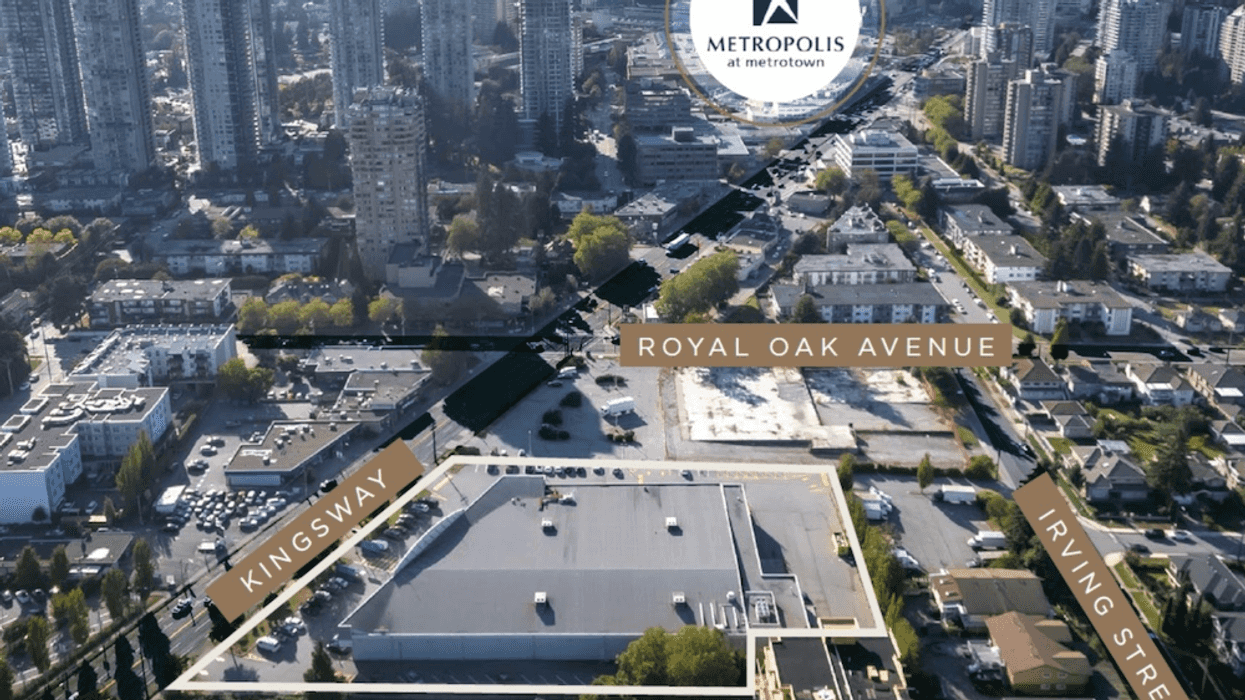
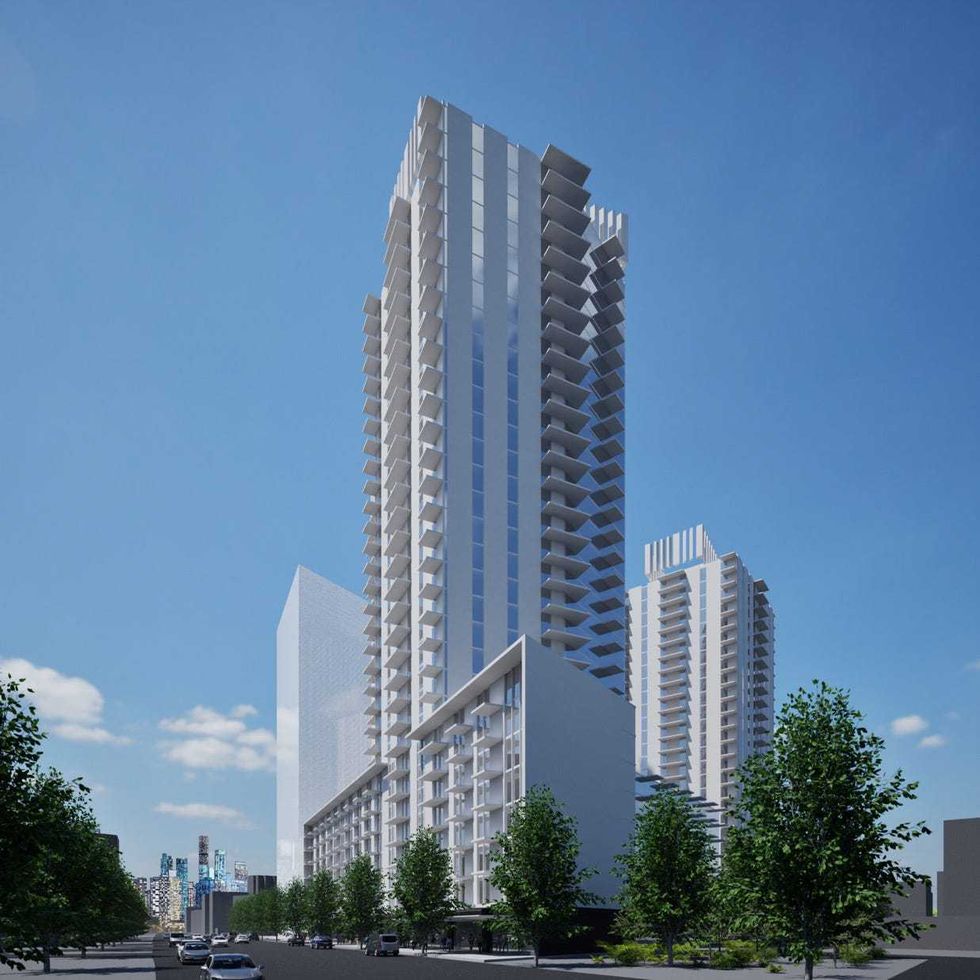 A preliminary conceptual development for 5335 Kingsway in Burnaby. (Arcadis, JLL)






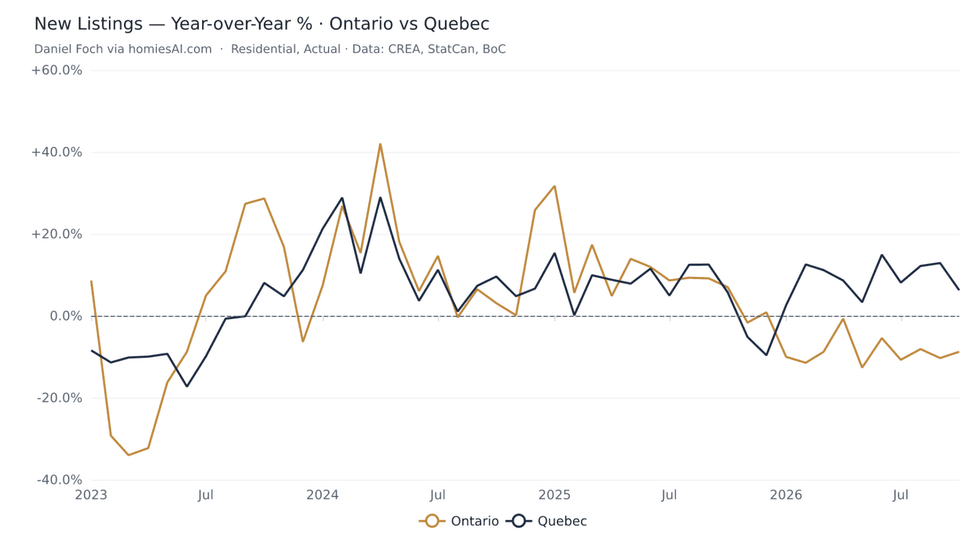 Chart: New listings, year-over-year %, Ontario vs Quebec. Daniel Foch via homiesai.com/stats. Data:
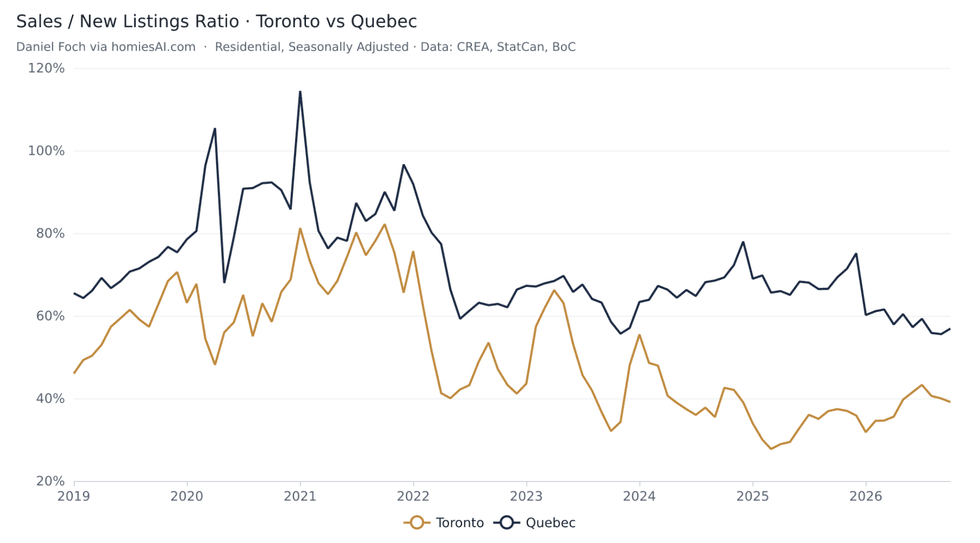 Chart: Sales-to-new-listings ratio, seasonally adjusted. Toronto vs Quebec. Daniel Foch via homiesai.com/stats. Data: CREA.
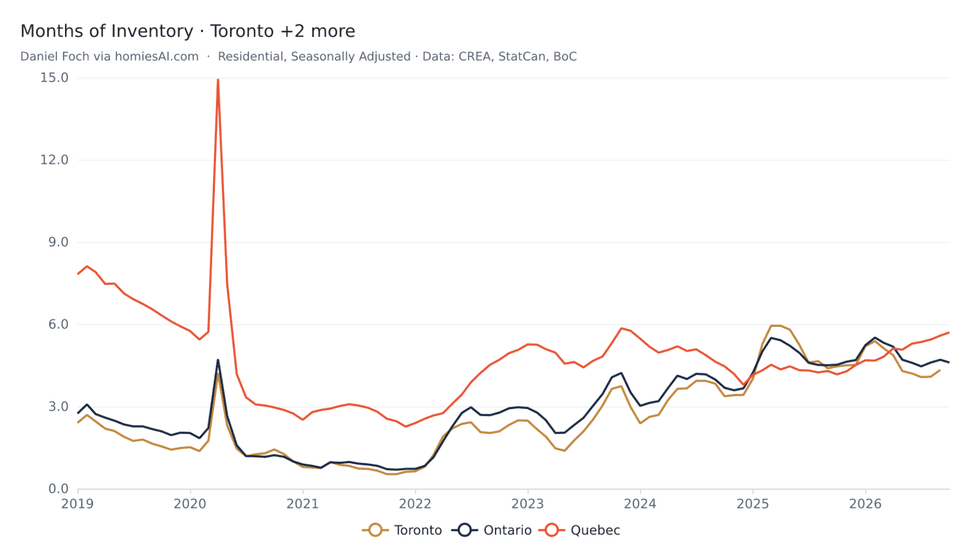 Chart: Months of inventory, seasonally adjusted. Daniel Foch via homiesai.com/stats. Data: CREA.
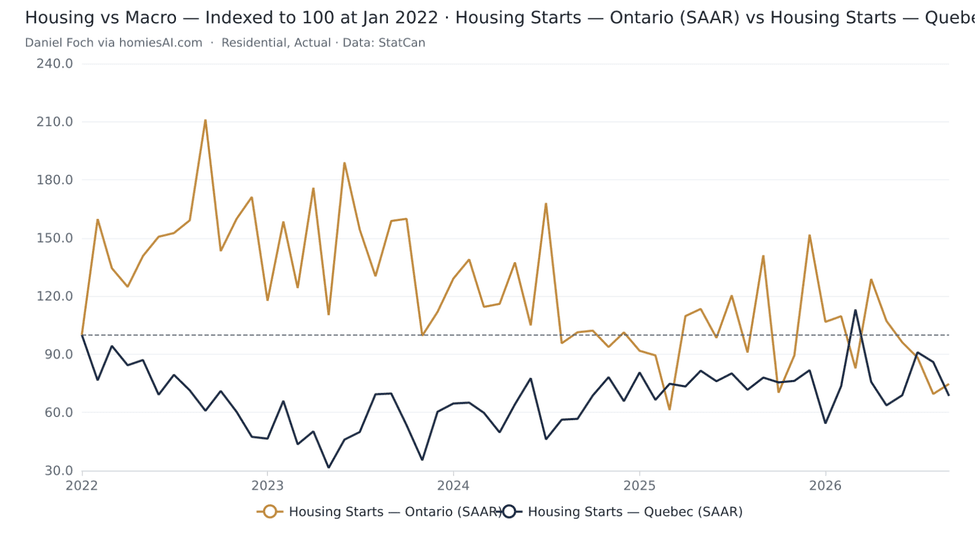 Chart: Housing starts, seasonally adjusted annual rate, Ontario vs Quebec, indexed to January 2022. Daniel Foch via homiesai.com/stats. Data: CMHC via Statistics Canada.
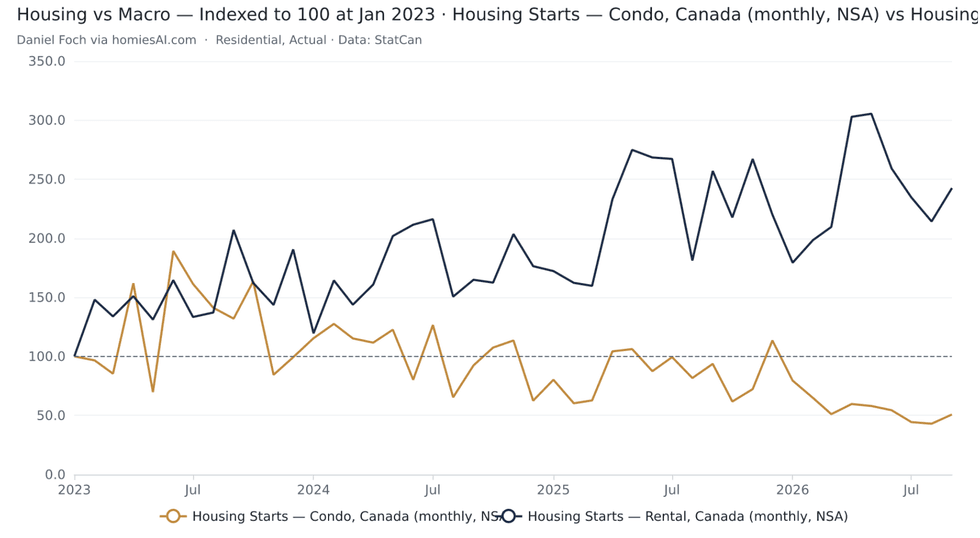 Chart: Condo vs rental housing starts, Canada, indexed to January 2023. Daniel Foch via homiesai.com/stats. Data: CMHC via Statistics Canada.
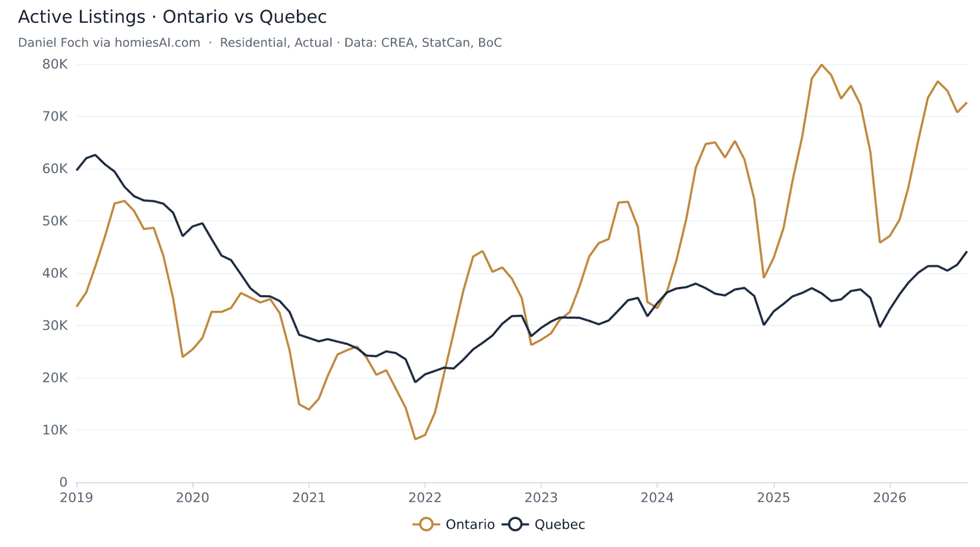 Chart: Active residential listings, Ontario vs Quebec. Daniel Foch via homiesai.com/stats. Data: CREA.

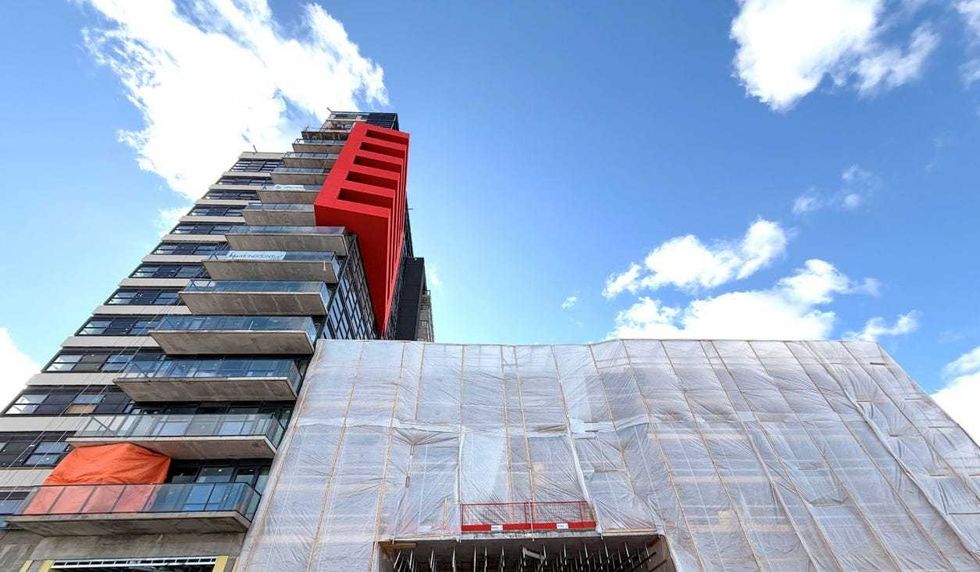 The Highlight of Mississauga as of March 2026. (Grant Thornton)

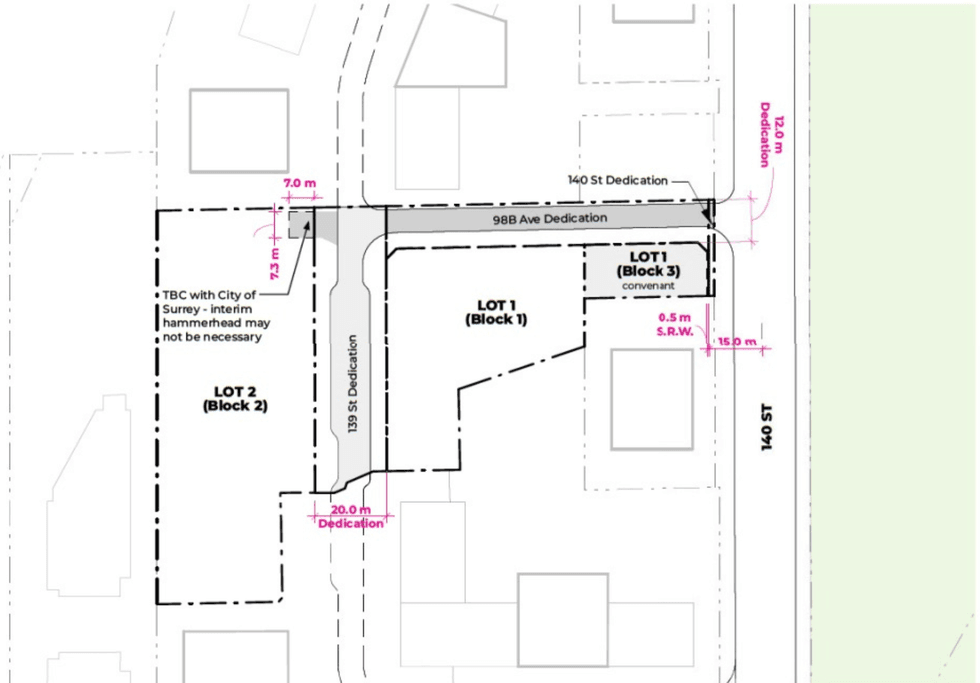 9883 140 Street and the proposed road dedications. (WW+P Architects, Entre Nous Femmes Housing Society)
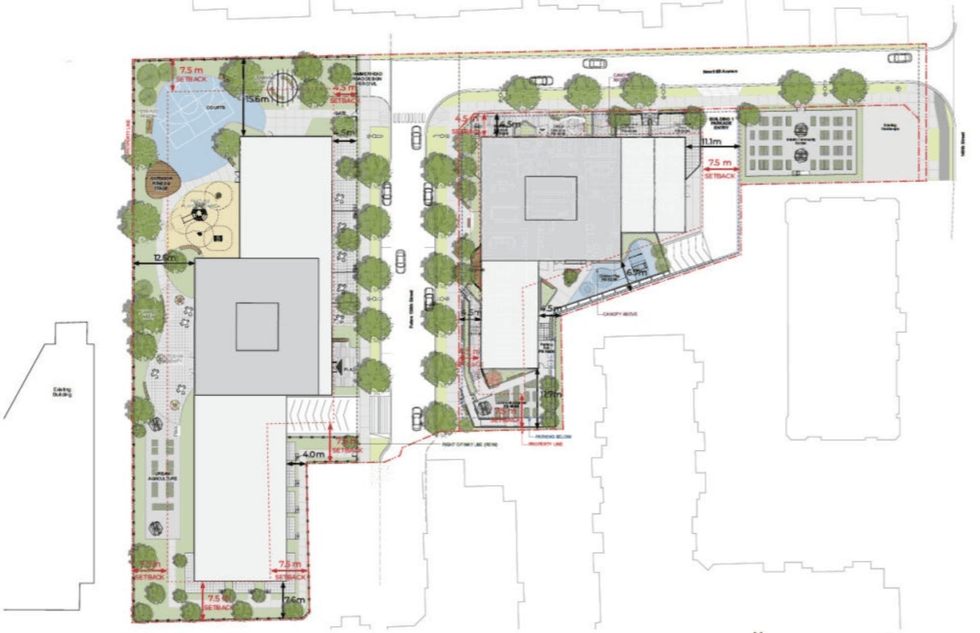 The
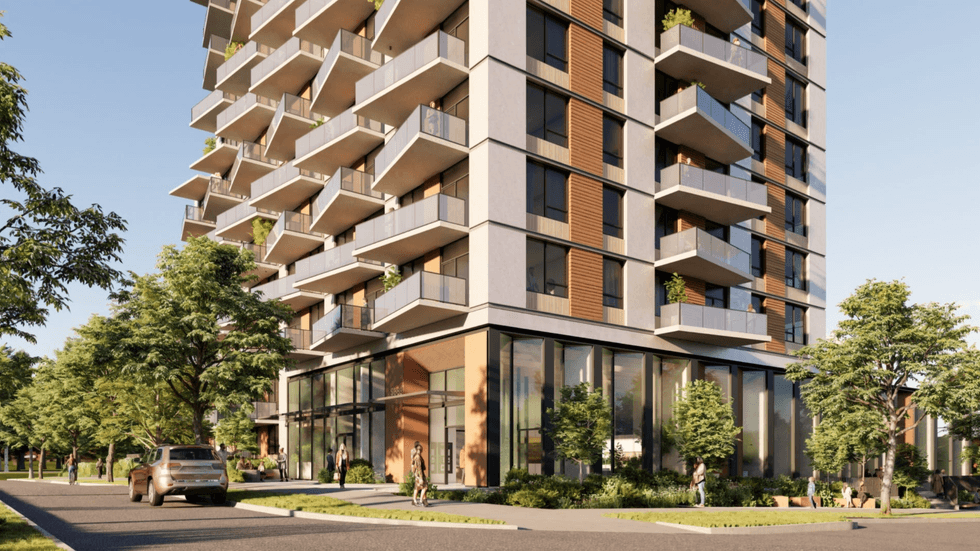 One of the towers proposed for 9883 140 Street. (Entres Nous Femmes Housing Society)

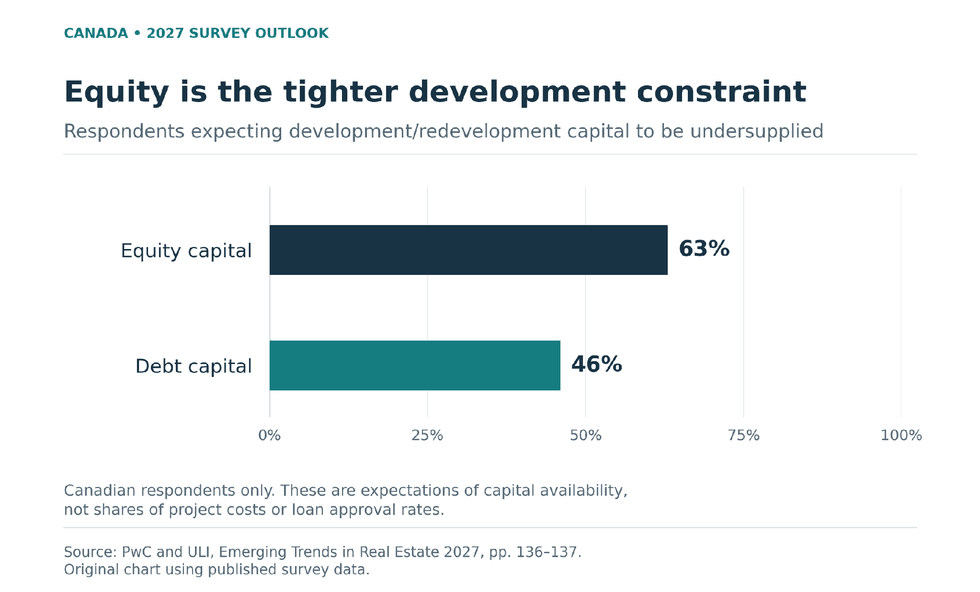 Canadian respondents were more likely to expect an undersupply of development/redevelopment equity capital (63%) than debt capital (46%) in 2027. These are survey expectations, not measured financing volumes. Source: PwC and ULI, Emerging Trends in Real Estate 2027, pp. 136–137. Original chart.
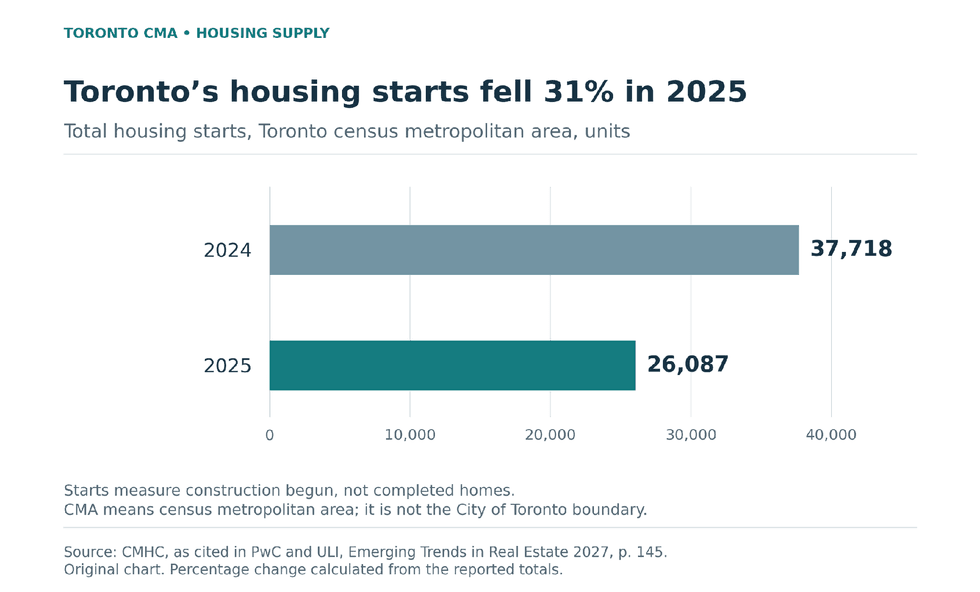 Toronto census metropolitan area housing starts fell from 37,718 units in 2024 to 26,087 in 2025, a 30.8% decline (rounded to 31%). Starts measure construction begun, not completed homes. Source: CMHC, as cited in PwC and ULI, Emerging Trends in Real Estate 2027, p. 145. Original chart.



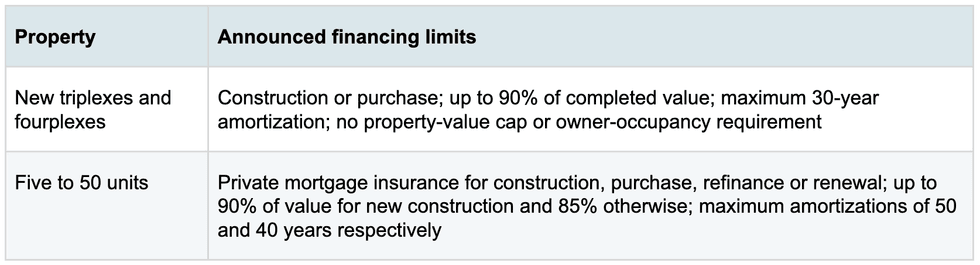
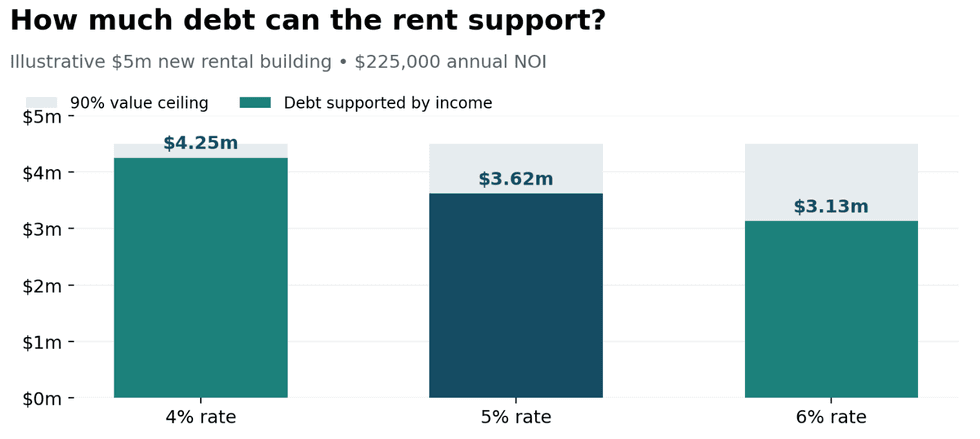 Illustrative calculation: a $4.5-million value ceiling versus income-based capacity of about $4.25 million at 4%, $3.62 million at 5% and $3.13 million at 6%. Assumes 50-year amortization and 1.15 debt coverage.
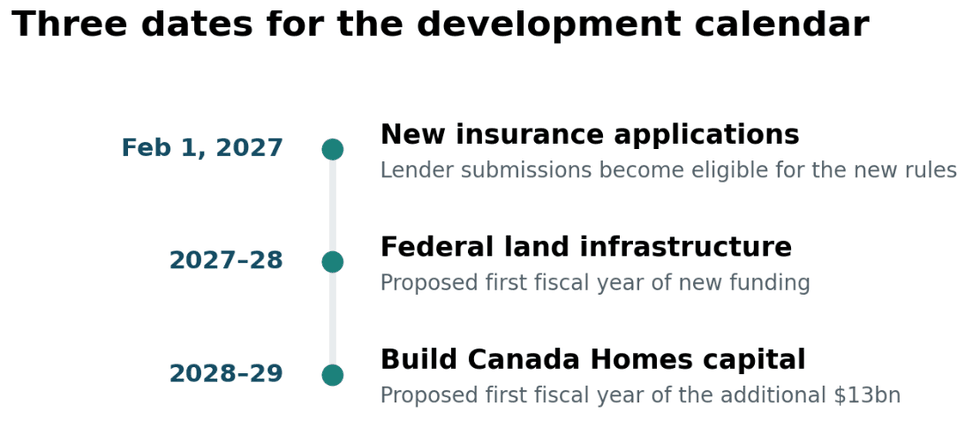 Source: Department of Finance missing-middle backgrounder and Budget 2026 Chapter 3, November 5, 2026. Fiscal-year funding starts are not home-completion dates.