Rent Cap
Understand rent caps in Canadian rental markets — what they are, how they work, and how they help protect tenants.

August 01, 2025
What is a Rent Cap?
A rent cap is a government-imposed limit on the amount landlords can increase rent for existing tenants within a specific period, typically one year.
Why Rent Caps Matter in Real Estate
In Canadian rental markets, rent caps help protect tenants from large rent hikes and provide predictability for budgeting.
Key details:
- Usually set annually by provincial or territorial governments
- Often linked to inflation or consumer price indexes
- May exclude new builds or vacant units
Understanding rent caps is important for landlords and tenants to comply with rental regulations and avoid disputes.
Example of a Rent Cap in Action
Ontario’s rent cap for 2024 was 2.5%, limiting the increase landlords could charge existing tenants.
Key Takeaways
- Limits rent increases for current tenants
- Set by provincial or territorial law
- May not apply to all types of housing
- Protects tenants from sudden cost increases
- Ensures stable rental markets

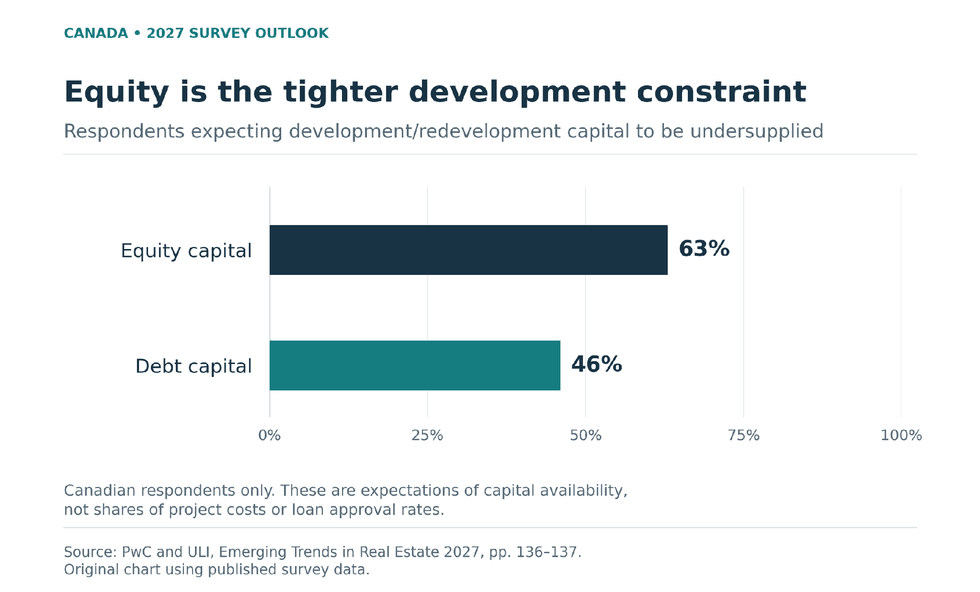 Canadian respondents were more likely to expect an undersupply of development/redevelopment equity capital (63%) than debt capital (46%) in 2027. These are survey expectations, not measured financing volumes. Source: PwC and ULI, Emerging Trends in Real Estate 2027, pp. 136–137. Original chart.
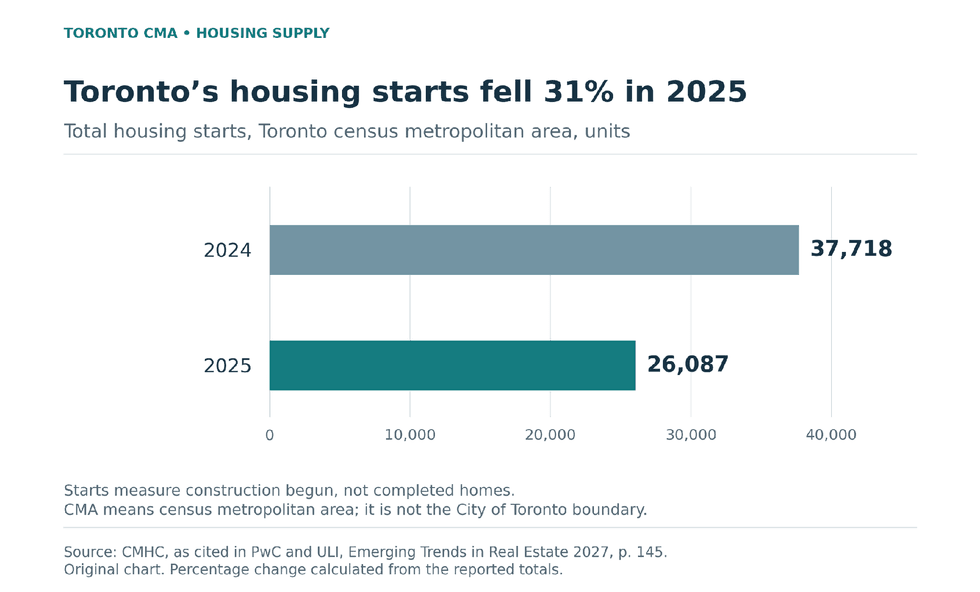 Toronto census metropolitan area housing starts fell from 37,718 units in 2024 to 26,087 in 2025, a 30.8% decline (rounded to 31%). Starts measure construction begun, not completed homes. Source: CMHC, as cited in PwC and ULI, Emerging Trends in Real Estate 2027, p. 145. Original chart.





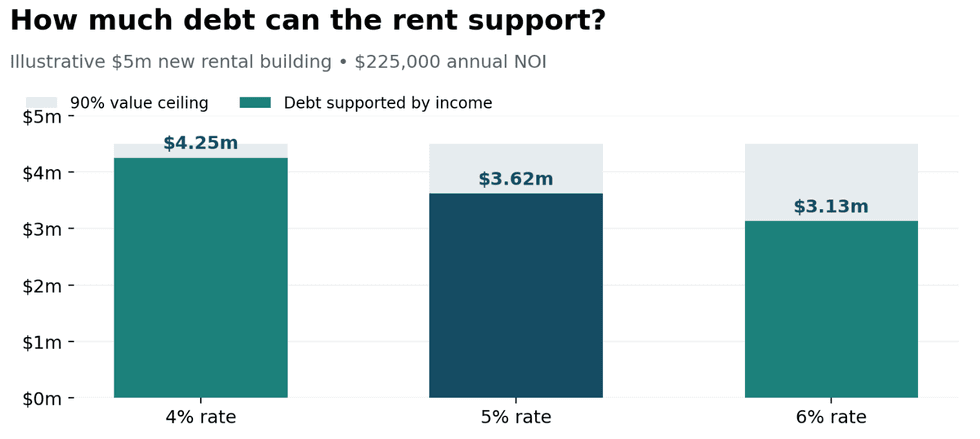 Illustrative calculation: a $4.5-million value ceiling versus income-based capacity of about $4.25 million at 4%, $3.62 million at 5% and $3.13 million at 6%. Assumes 50-year amortization and 1.15 debt coverage.
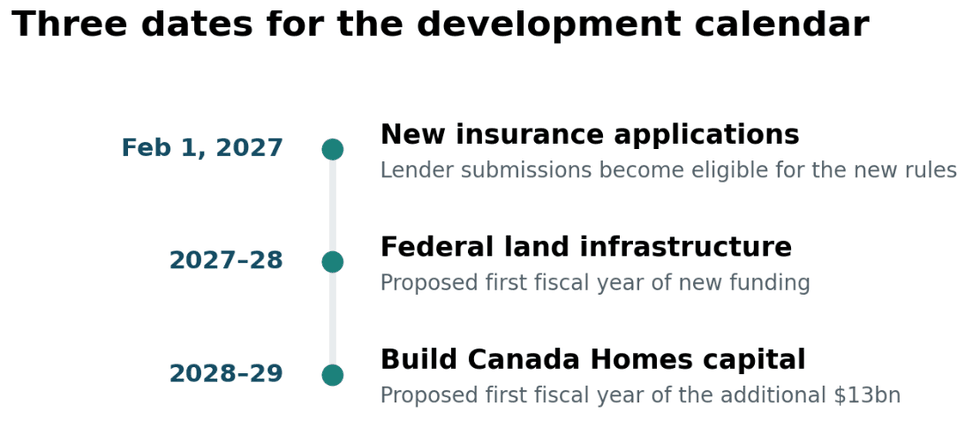 Source: Department of Finance missing-middle backgrounder and Budget 2026 Chapter 3, November 5, 2026. Fiscal-year funding starts are not home-completion dates.