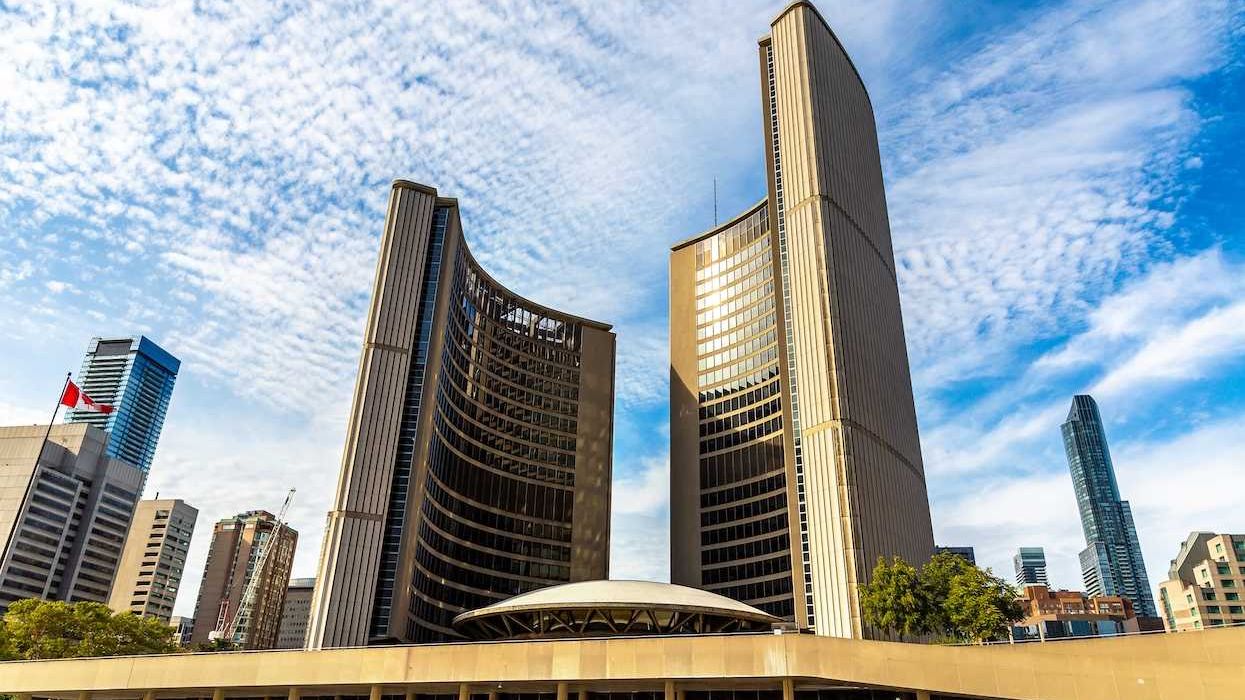
The first-ever annual report from Toronto’s Housing Development Office passed through City Council last week, offering one of the clearest looks yet at how the municipality is establishing itself as an active player in housing development.
This is also the first major publication from the Housing Development Office (HDO) since it was launched in 2025 to create a “singular focus” for all of the City’s public development efforts, including those led by CreateTO, Toronto Community Housing Corporation (TCHC), the City’s Corporate Real Estate Management (CREM) arm, and non-profit, Indigenous, and private housing development partners.
The 24-page document lays out a housing strategy that’s focused on execution, from prioritizing projects that can be fast-tracked, to leveraging public land, to potentially clawing back incentives from developers that have stalled. It also offers new insight into the financial realities of affordable housing delivery in Toronto, with major projects now relying on hundreds of millions of dollars in public subsidies, waived fees, and land contributions.
Here are some of the main takeaways from the report, and what it all means for affordable housing delivery in Toronto.
Toronto is cementing its role as a housing developer
When Toronto Mayor Olivia Chow floated the idea of a public developer model in 2023, it was met with skepticism, however, the HDO’s report suggests the City is now moving beyond simply regulating housing and increasingly acting like a developer, land manager, and project coordinator simultaneously.
The HDO now oversees 83 development sites in the City’s portfolio, and its Three-Year Work Plan details exactly where each project currently stands. It shows that 13 projects are already under construction, nine are slated for construction in 2026, 10 are expected to begin construction in 2027, and the remainder (51 projects) are expected to enter construction in and after 2028.
Where possible, the plan also includes project-by-project information on anticipated occupancy and the number of net new rental, affordable or RGI, and rent-controlled units in each project.
“Projects within the City-led portfolio, including those on TCHC-owned land, are prioritized for due diligence and pre-development activities through the Three-Year Work Plan, which will be updated annually on a rolling basis,” the report says.
The City is cracking down on stalled projects
One of the most striking revelations in the report is that the City has now formally assessed which affordable housing projects in its pipeline are actually moving toward construction — and which ones may be stalled.
As part of the review, City staff contacted the providers behind 74 projects approved for incentives through the Open Door Affordable Housing Program and Rental Housing Supply Program, requesting updated pro formas, cost estimates, and architectural drawings. Only 54 projects submitted the requested materials.
Using that information, staff determined that six projects are either more than 12 months away from construction, or are no longer proceeding altogether. The status of another 20 projects remains uncertain because updated materials were never submitted. All 26 of those projects are now at risk of losing previously-approved City incentives.
On the flip side of that, the report specifies $34.6 million in capital funding that will be used to advance projects set to begin construction in the next 12 months.
“This process enabled the City to ensure ongoing value for money, as well as provide appropriate oversight of its limited resources,” the report says. The language signals a more execution-focused approach to affordable housing delivery, with the City appearing increasingly unwilling to leave subsidies and incentives tied up in projects that are stalled indefinitely.
Affordable housing projects are increasingly reliant on subsidy
The report also provides a stark look at the economics of affordable housing delivery in Toronto, and how dependent projects have become on public funding as construction and other costs soar.
“To date, the City has secured $21.6 million from Build Canada Homes (BCH) for the Dunn House Phase 2 project within this portfolio and continues intergovernmental discussions to advance its remaining request for $557.5 million in capital funding to support the remaining projects,” the report says.
The requested funds from BCH would be used to support the delivery of roughly 4,000 rental homes over the next 12 to 18 months, and are proposed to be matched by municipal capital funding, waived fees and charges, and tax exemptions. Toronto’s BCH submission estimates approximately $625.3 million tied to waived fees, development charges, and property tax exemptions, and another $245 million associated with land value contributions and foregone revenue associated with public land.
That comes out to almost $900 million in municipal contributions supporting affordable housing delivery, on top of the requested federal funding.