HELOC
Explore how a HELOC works in Canadian real estate, who it benefits, and why it's a flexible but powerful tool for accessing home equity.

May 22, 2025
What is a HELOC?
A Home Equity Line of Credit (HELOC) is a revolving credit line secured against the equity in a homeowner’s property, allowing them to borrow funds as needed up to a set limit.
Why HELOCs Matter in Real Estate
HELOCs are a flexible borrowing tool in Canadian real estate, enabling homeowners to access their home equity without refinancing or selling the property. Because the loan is secured by the property, interest rates are typically lower than unsecured credit options.
Borrowers can draw funds at any time up to the approved credit limit and repay only the interest (or more) on the amount used. As funds are repaid, the available credit replenishes, making it a convenient option for:
- Home renovations
- Emergency expenses
- Debt consolidation
- Investment opportunities
The credit limit is generally based on up to 65% of the home’s appraised value, minus any existing mortgage balance. Combined with a mortgage, a HELOC can form part of a readvanceable mortgage product.
HELOCs are best suited for disciplined borrowers, as the ease of access can lead to overspending or higher debt loads. They are often offered with variable interest rates and may be subject to lender review or cancellation based on market conditions.
Example of a HELOC
A homeowner with $400,000 in equity receives a $150,000 HELOC. They use $30,000 to renovate their kitchen, repaying interest monthly and principal on their own schedule.
Key Takeaways
- Revolving credit line secured by home equity.
- Use funds when needed, repay at your own pace.
- Typically lower interest than unsecured credit.
- Great for renovations, emergencies, or investment.
- Must be used responsibly to avoid financial strain.
Related Terms
- Equity
- Home Equity Loan
- Appraisal
- Refinance
- Variable Rate Mortgage

 A preliminary conceptual development for 5335 Kingsway in Burnaby. (Arcadis, JLL)







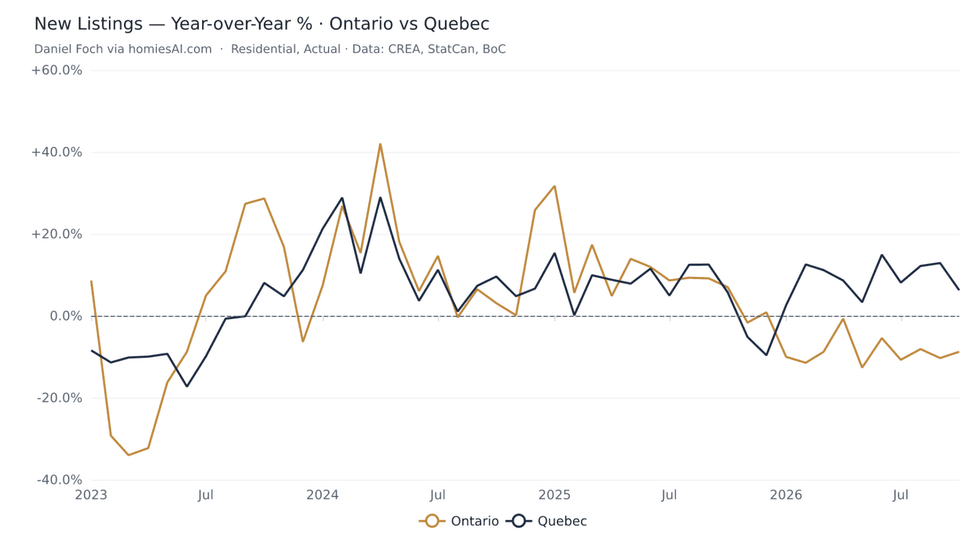 Chart: New listings, year-over-year %, Ontario vs Quebec. Daniel Foch via homiesai.com/stats. Data:
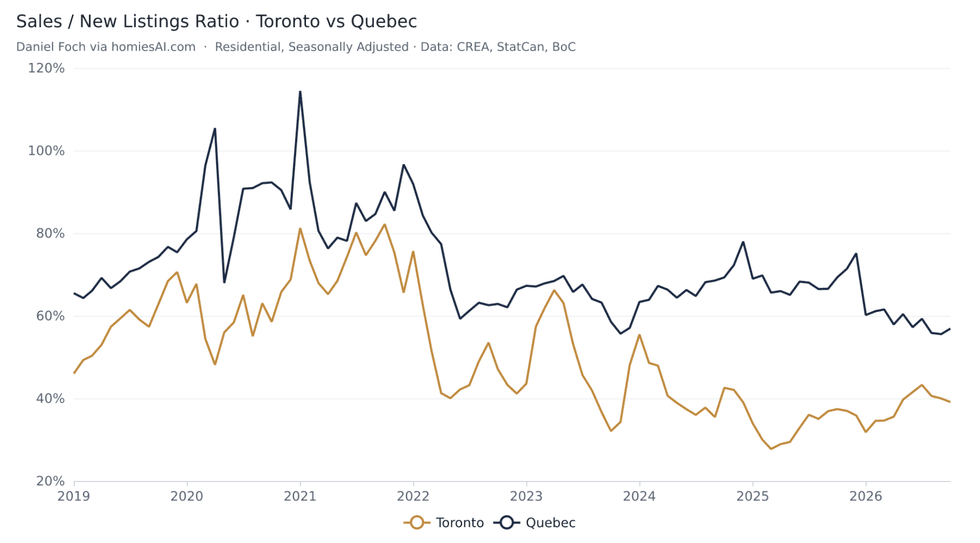 Chart: Sales-to-new-listings ratio, seasonally adjusted. Toronto vs Quebec. Daniel Foch via homiesai.com/stats. Data: CREA.
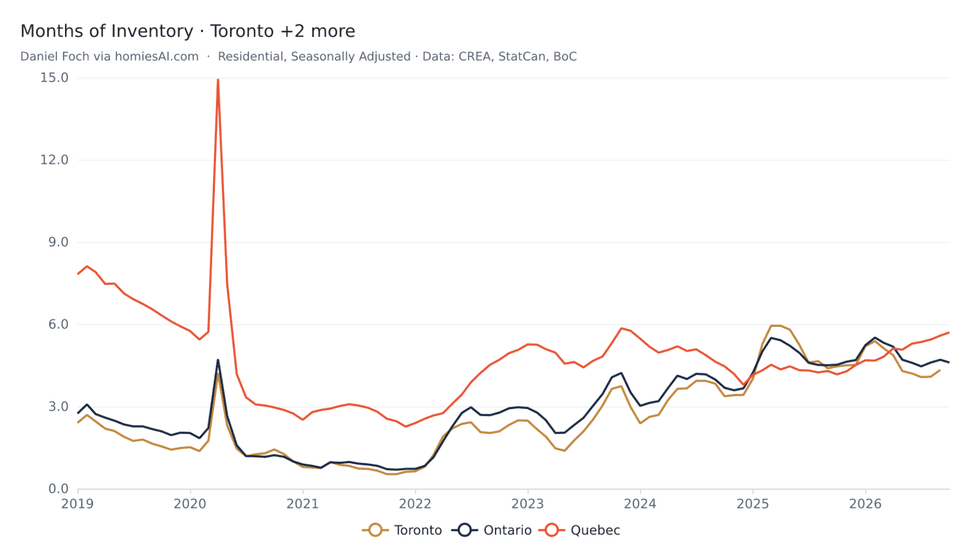 Chart: Months of inventory, seasonally adjusted. Daniel Foch via homiesai.com/stats. Data: CREA.
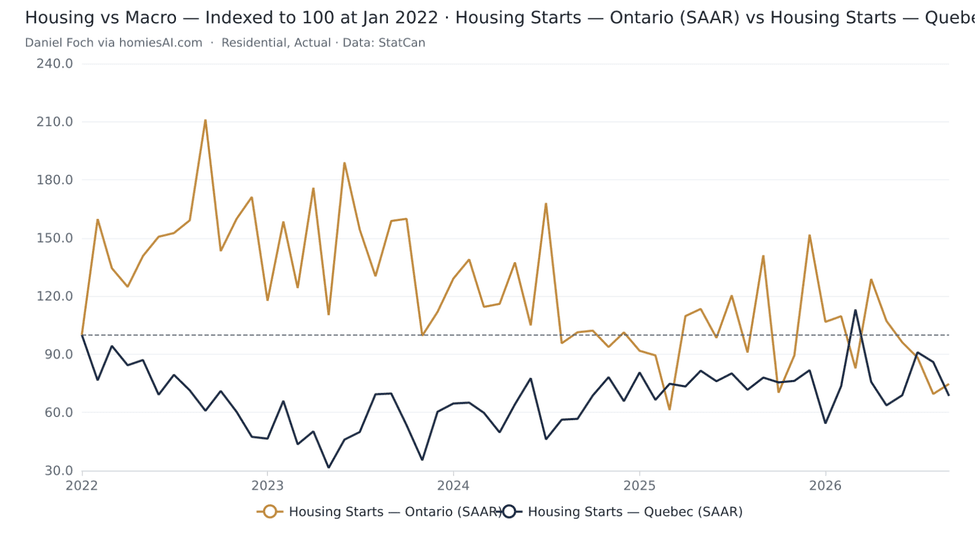 Chart: Housing starts, seasonally adjusted annual rate, Ontario vs Quebec, indexed to January 2022. Daniel Foch via homiesai.com/stats. Data: CMHC via Statistics Canada.
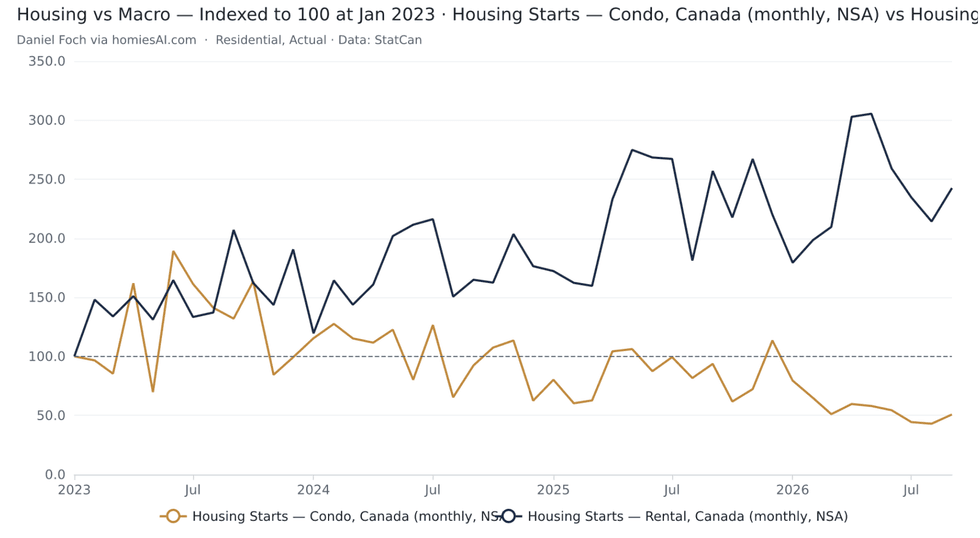 Chart: Condo vs rental housing starts, Canada, indexed to January 2023. Daniel Foch via homiesai.com/stats. Data: CMHC via Statistics Canada.
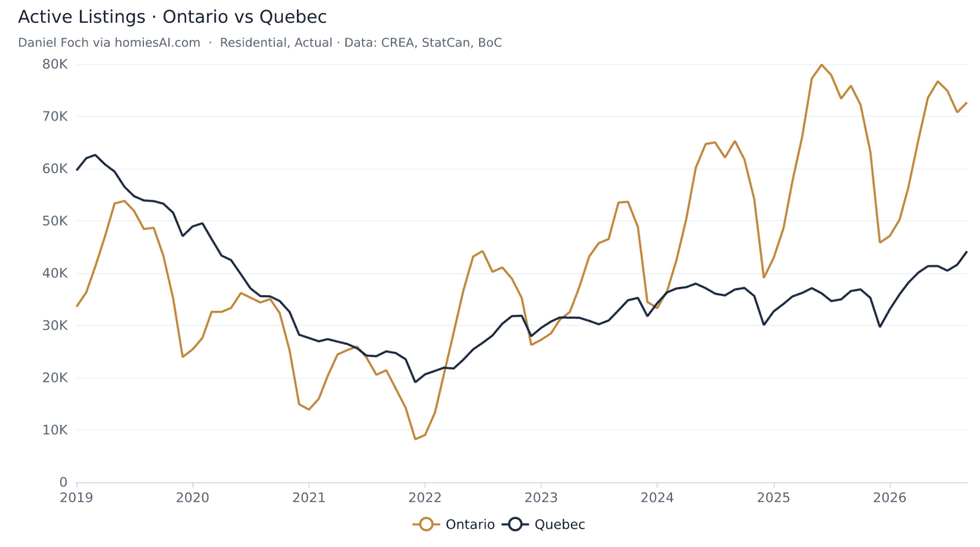 Chart: Active residential listings, Ontario vs Quebec. Daniel Foch via homiesai.com/stats. Data: CREA.

 The Highlight of Mississauga as of March 2026. (Grant Thornton)

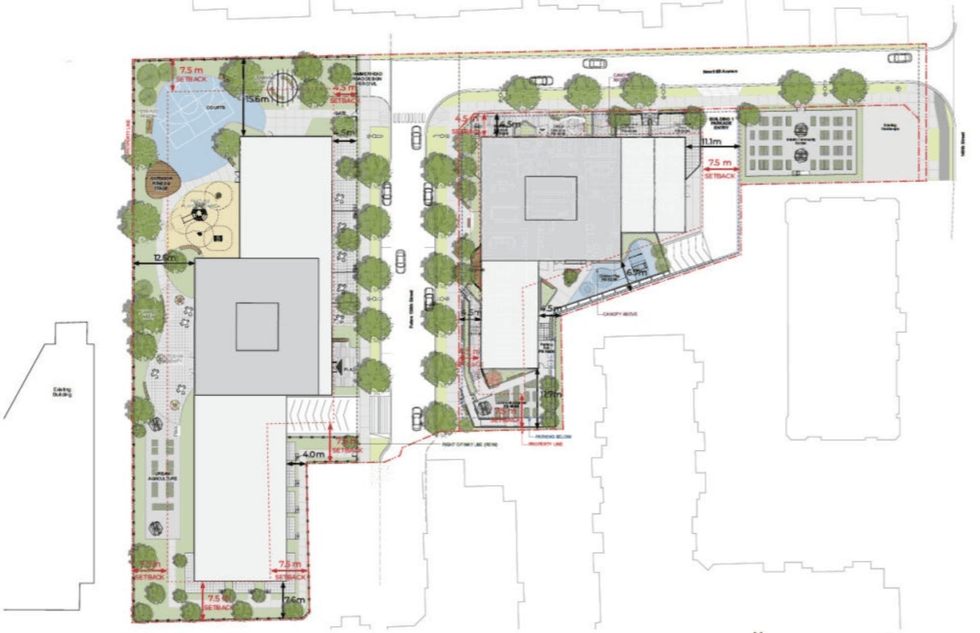
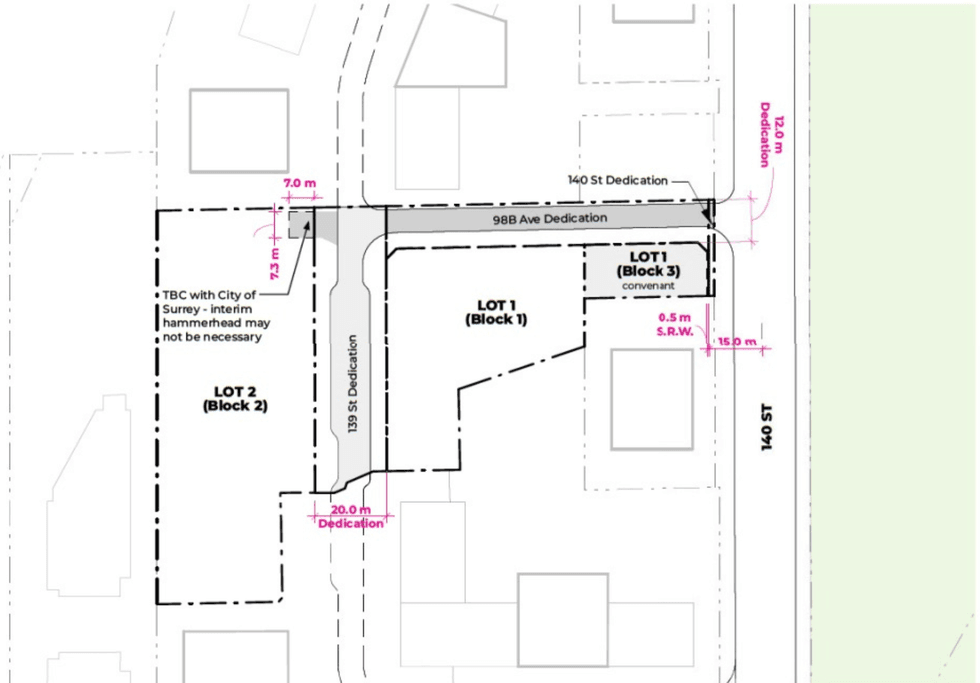 9883 140 Street and the proposed road dedications. (WW+P Architects, Entre Nous Femmes Housing Society)
 The
 One of the towers proposed for 9883 140 Street. (Entres Nous Femmes Housing Society)

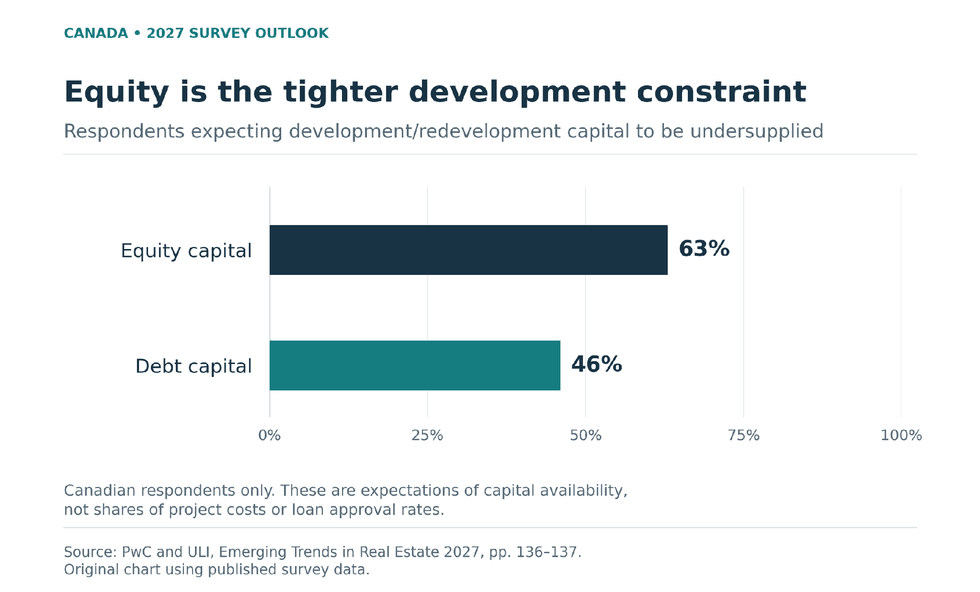 Canadian respondents were more likely to expect an undersupply of development/redevelopment equity capital (63%) than debt capital (46%) in 2027. These are survey expectations, not measured financing volumes. Source: PwC and ULI, Emerging Trends in Real Estate 2027, pp. 136–137. Original chart.
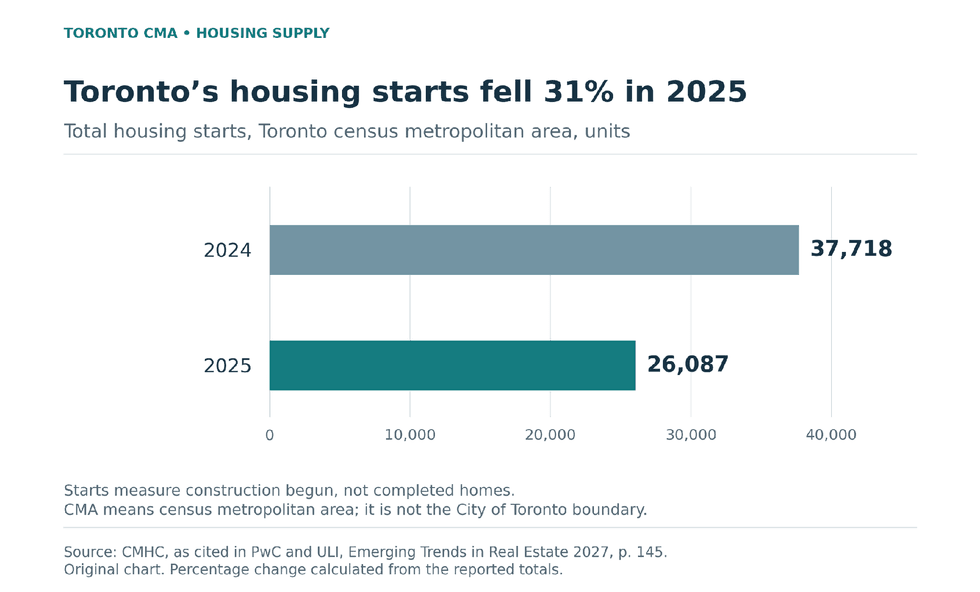 Toronto census metropolitan area housing starts fell from 37,718 units in 2024 to 26,087 in 2025, a 30.8% decline (rounded to 31%). Starts measure construction begun, not completed homes. Source: CMHC, as cited in PwC and ULI, Emerging Trends in Real Estate 2027, p. 145. Original chart.



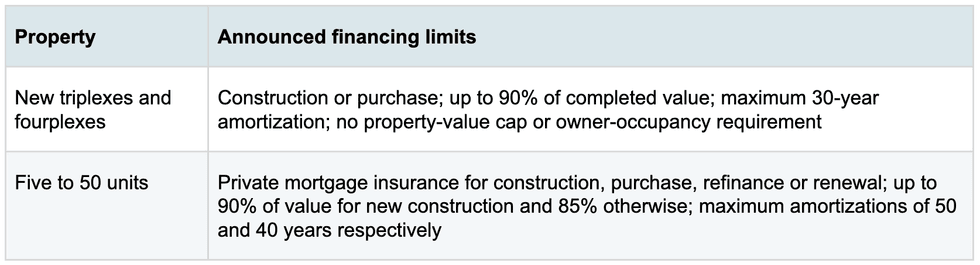
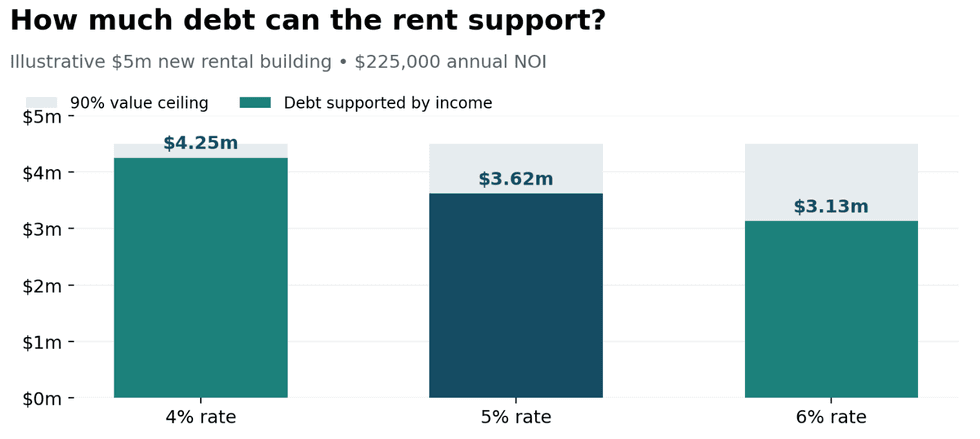 Illustrative calculation: a $4.5-million value ceiling versus income-based capacity of about $4.25 million at 4%, $3.62 million at 5% and $3.13 million at 6%. Assumes 50-year amortization and 1.15 debt coverage.
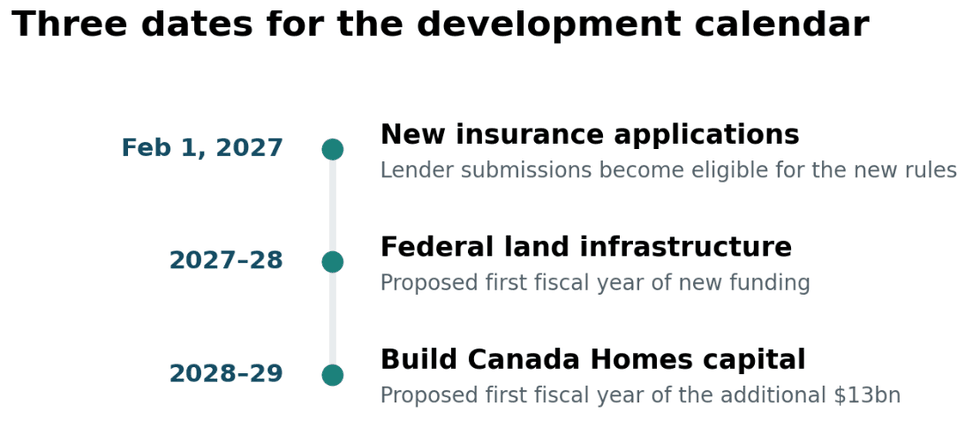 Source: Department of Finance missing-middle backgrounder and Budget 2026 Chapter 3, November 5, 2026. Fiscal-year funding starts are not home-completion dates.