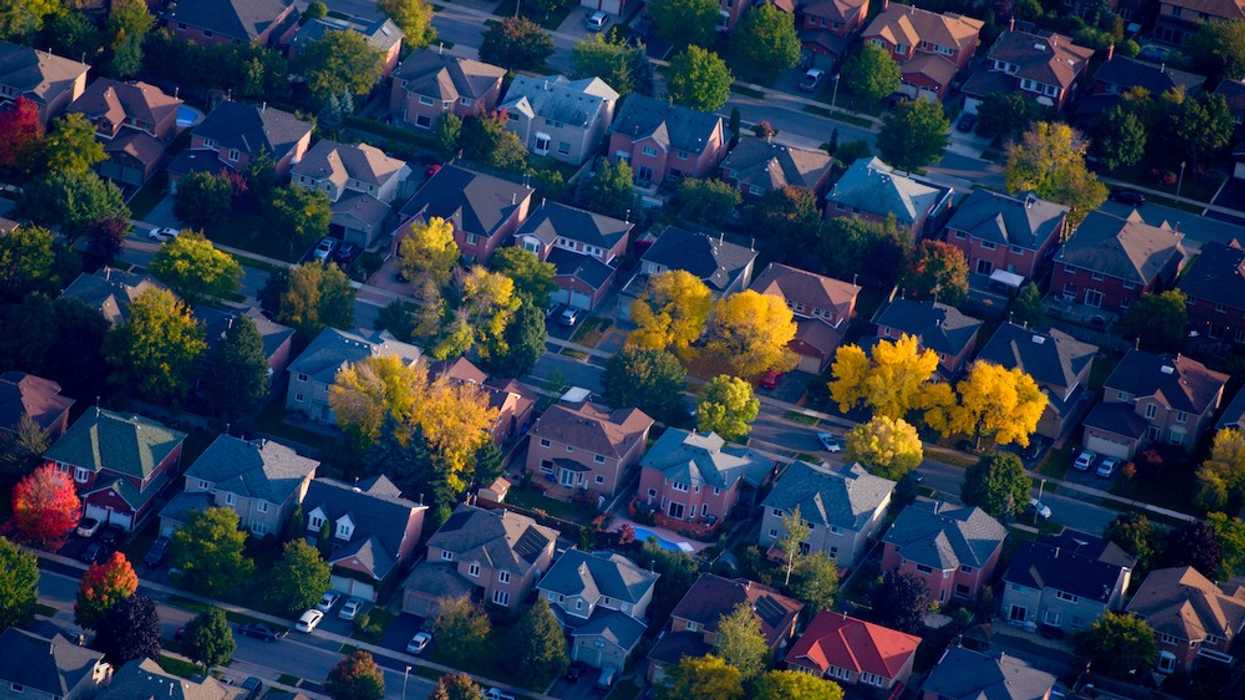
Fair Housing Compliance
Fair housing compliance ensures adherence to anti-discrimination laws in housing, protecting tenants and landlords while promoting equity.

September 30, 2025
What is Fair Housing Compliance?
Fair housing compliance is adherence to laws prohibiting discrimination in housing transactions based on protected characteristics such as race, religion, sex, disability, familial status, or national origin. Compliance applies to advertising, screening, leasing, lending, and property management practices.
Why Fair Housing Compliance Matters in Real Estate
Fair housing compliance matters in real estate because non-compliance can lead to lawsuits, financial penalties, and reputational damage. It ensures equitable access to housing and builds trust with consumers. Landlords and agents must implement policies, staff training, and auditing practices to ensure compliance with federal, provincial, and municipal laws.
Example of Fair Housing Compliance in Action
A property manager revises screening procedures to focus on objective factors like credit and income, avoiding criteria that could be discriminatory. They also update marketing to remove biased language and create a policy for accommodating tenant requests.
Key Takeaways
- Ensures equal housing opportunity for all groups.
- Prevents lawsuits and financial penalties.
- Requires ongoing staff training and policies.
- Applies to advertising, leasing, and property management.
- Promotes fairness and inclusivity in housing markets.
Related Terms
- Advertising Standards
- Screening Criteria
- Accommodation
- Human Rights Code
- Universal Design

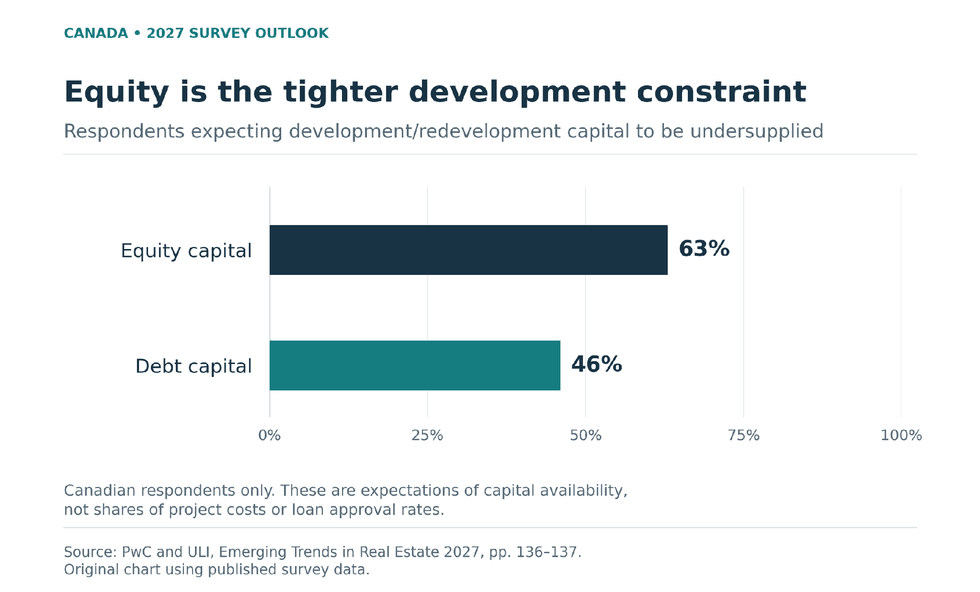 Canadian respondents were more likely to expect an undersupply of development/redevelopment equity capital (63%) than debt capital (46%) in 2027. These are survey expectations, not measured financing volumes. Source: PwC and ULI, Emerging Trends in Real Estate 2027, pp. 136–137. Original chart.
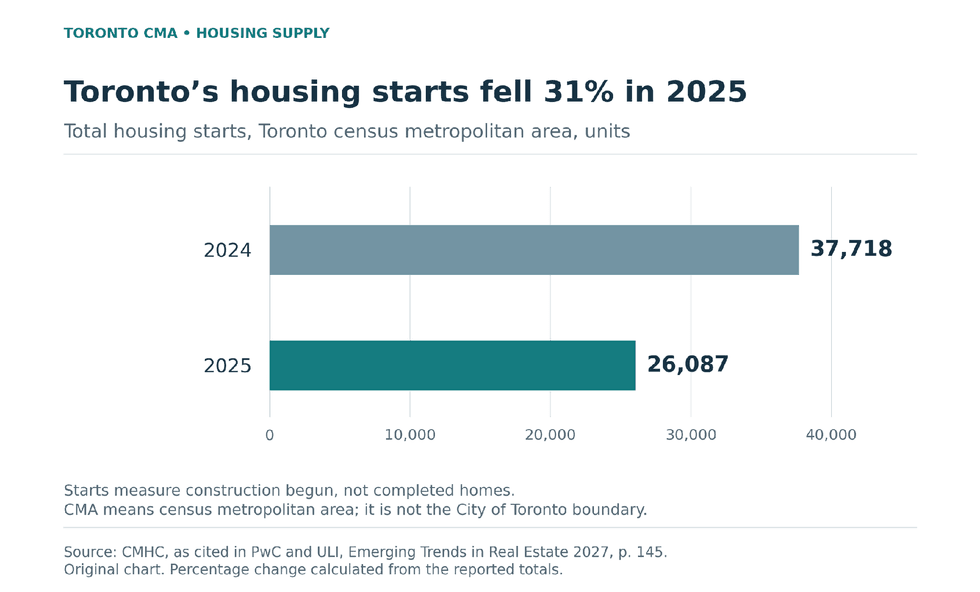 Toronto census metropolitan area housing starts fell from 37,718 units in 2024 to 26,087 in 2025, a 30.8% decline (rounded to 31%). Starts measure construction begun, not completed homes. Source: CMHC, as cited in PwC and ULI, Emerging Trends in Real Estate 2027, p. 145. Original chart.








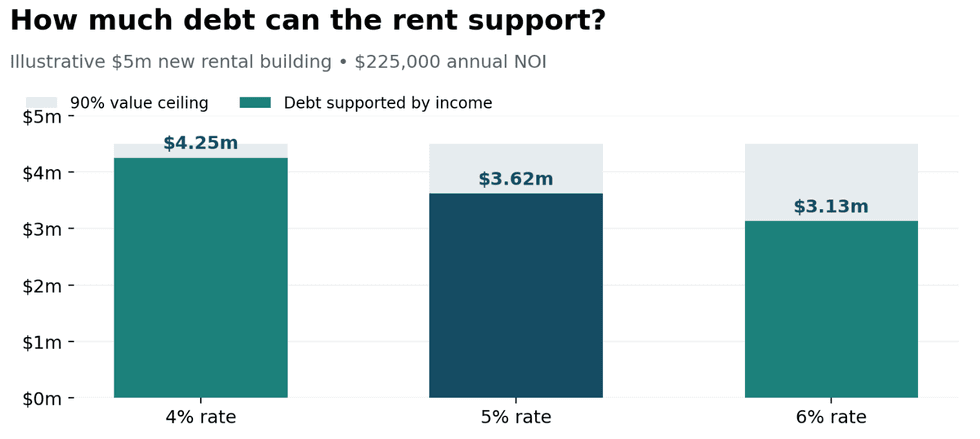 Illustrative calculation: a $4.5-million value ceiling versus income-based capacity of about $4.25 million at 4%, $3.62 million at 5% and $3.13 million at 6%. Assumes 50-year amortization and 1.15 debt coverage.
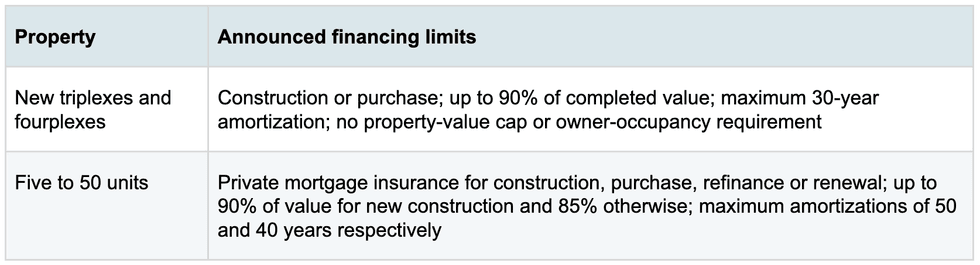
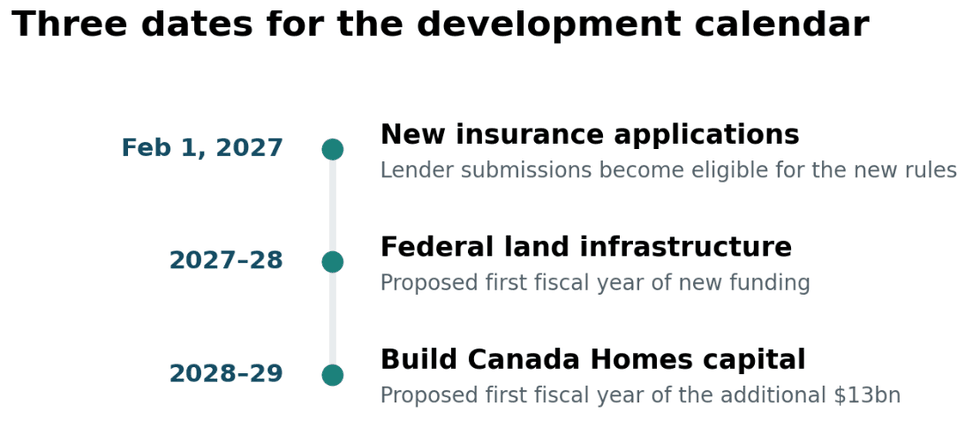 Source: Department of Finance missing-middle backgrounder and Budget 2026 Chapter 3, November 5, 2026. Fiscal-year funding starts are not home-completion dates.