Encumbrance
Explore encumbrances in Canadian real estate — what they are, how they affect property, and why title searches are vital.

July 27, 2025
What is Encumbrance?
An encumbrance is a legal claim, liability, or restriction on a property’s title that may affect its use, transfer, or value.
Why Encumbrance Matters in Real Estate
In Canadian real estate, encumbrances must be identified and addressed in transactions to ensure clear title and minimize risk.
Types include:
- Liens (e.g., unpaid taxes, mortgages)
- Easements
- Covenants and restrictions
- Leases or rights of way
Title searches and insurance help protect buyers from unknown encumbrances.
Example of Encumbrance in Action
The title search uncovered an encumbrance: an unpaid tax lien that had to be cleared before closing.
Key Takeaways
- Legal claim or restriction on property
- May limit use or affect value
- Includes liens, easements, covenants
- Identified through title search
- Can delay or block transfer
Related Terms
- Title Search
- Easement
- Covenant
- Lien
- Title Insurance

 The Mason Suite Interior (Infinity Properties)
 The Mason Suite Interior (Infinity Properties)
 Rail District aerial (Infinity Properties)
 Versant (Infinity Properties)








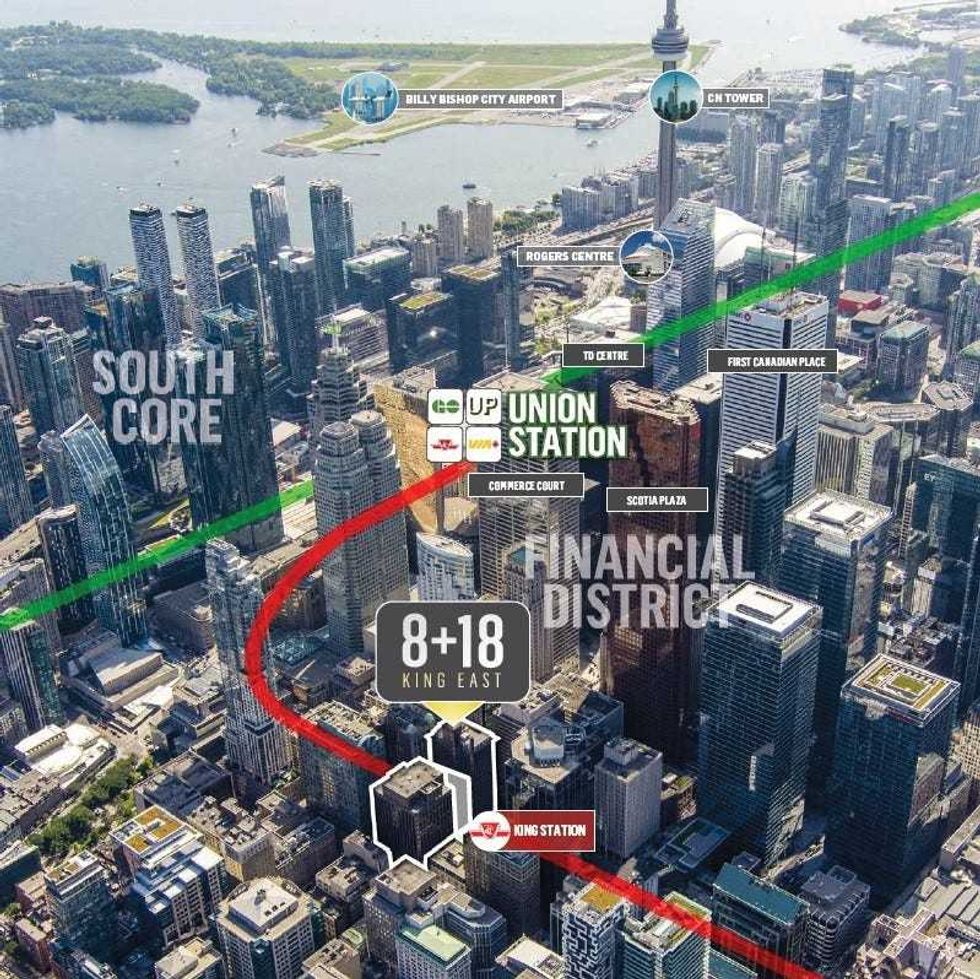 8 and 18 King Street East in Toronto. (RBC Capital Markets Realty)
 Interior photos of 8 and 18 King Street East. (RBC Capital Markets Realty)

 Narrow Fourplex (City of Toronto)
 Wide Sixplex - Side View (City of Toronto)