Covenant (Real Estate)
Explore covenants in Canadian real estate — what they are, how they affect property use, and why they’re important for land control.

July 27, 2025
What is a Covenant?
A covenant in real estate is a legally binding promise or restriction placed on a property’s use, typically recorded on title and enforceable by law or contract.
Why a Covenant Matters in Real Estate
In Canadian property law, covenants help regulate land use, protect property value, and maintain community standards.
Types of covenants:
- Restrictive covenant: limits property use (e.g., no further subdivision)
- Affirmative covenant: obligates action (e.g., maintain fence)
Covenants run with the land, meaning they bind future owners until removed or modified legally.
Example of a Covenant in Action
The title search revealed a restrictive covenant prohibiting the construction of additional dwellings on the lot.
Key Takeaways
- Legal promise tied to property use
- Can restrict or require certain actions
- Binds current and future owners
- Recorded on property title
- May require legal process to change


























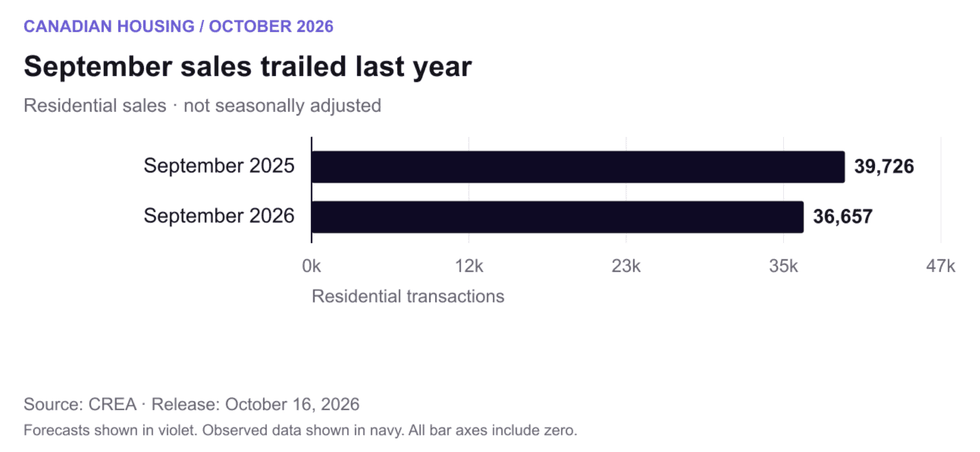 September residential sales, not seasonally adjusted; the annual comparison uses CREA’s revised figures. Chart:
 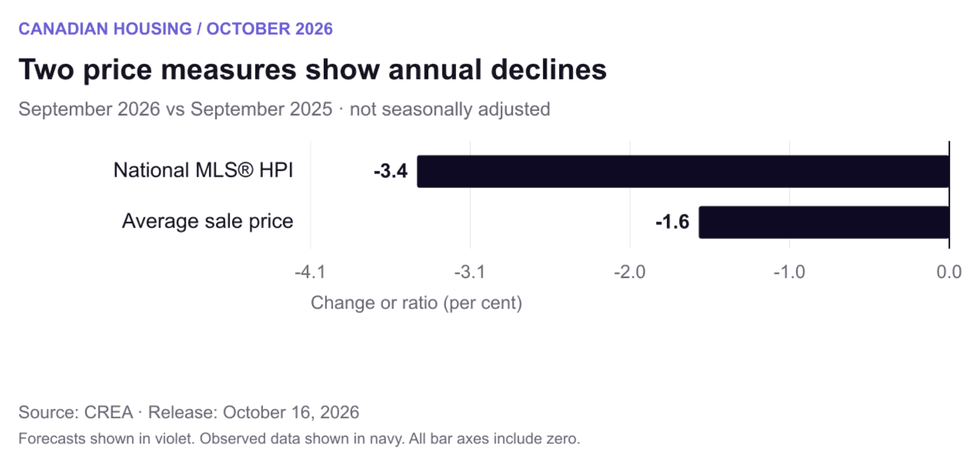 Annual changes in the unadjusted national MLS® HPI and average sale price. The average is affected by the mix of transactions. Chart:
 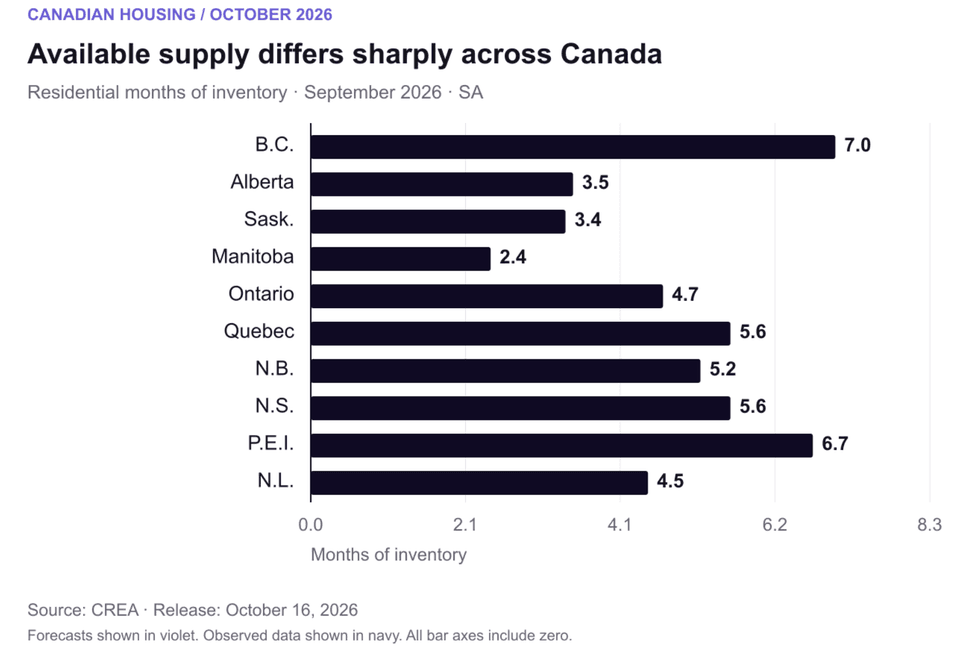 Seasonally adjusted residential months of inventory by province. Local property types can differ substantially. Chart:
 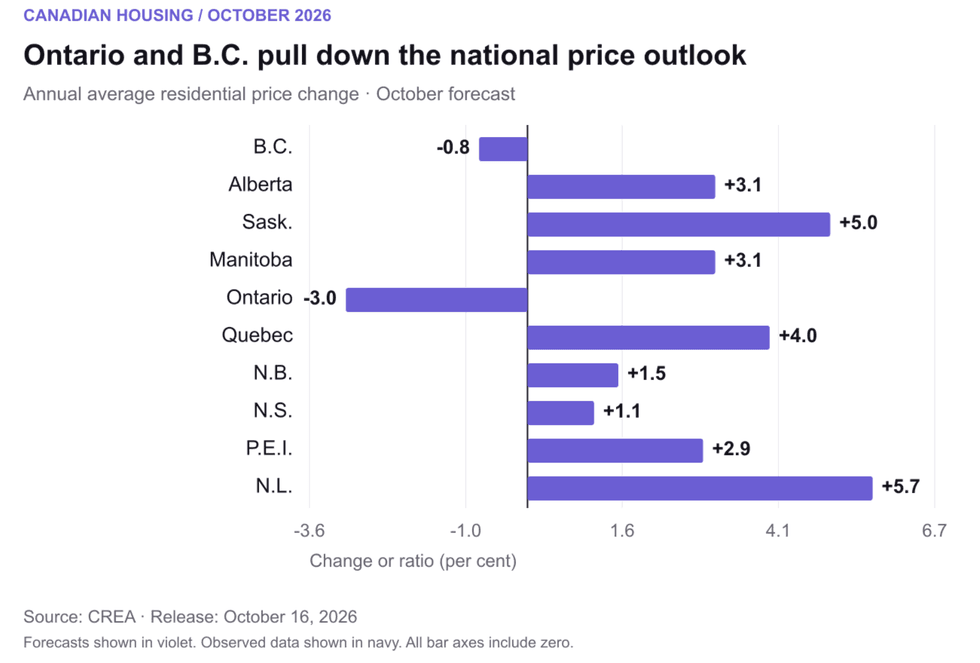 Ontario and B.C. are the two provinces with forecast annual average-price declines in 2026. Chart:
 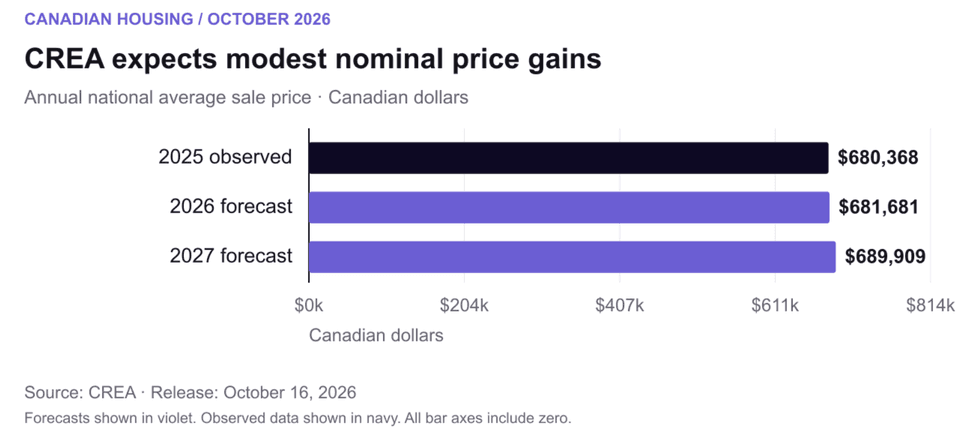 Annual average transaction prices in Canadian dollars. Forecast values are not December price targets. Chart:
 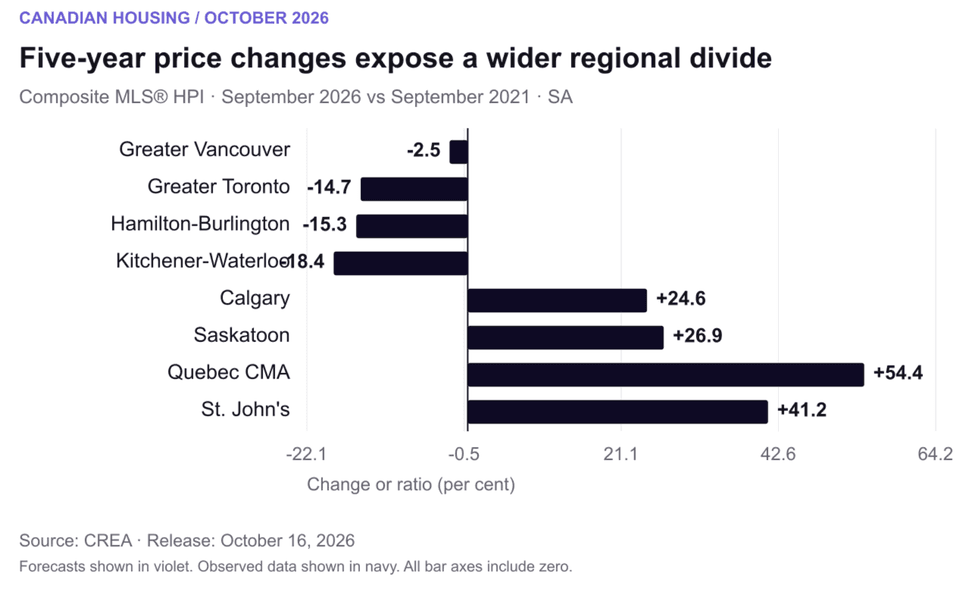 Five-year changes in seasonally adjusted composite MLS® HPI benchmarks, September 2021 to September 2026. Chart: