A new mixed-use development is now under construction in Vancouver’s Downtown Eastside, thanks in large part to funding and contributions from four different governments in conjunction with those from several other parties.
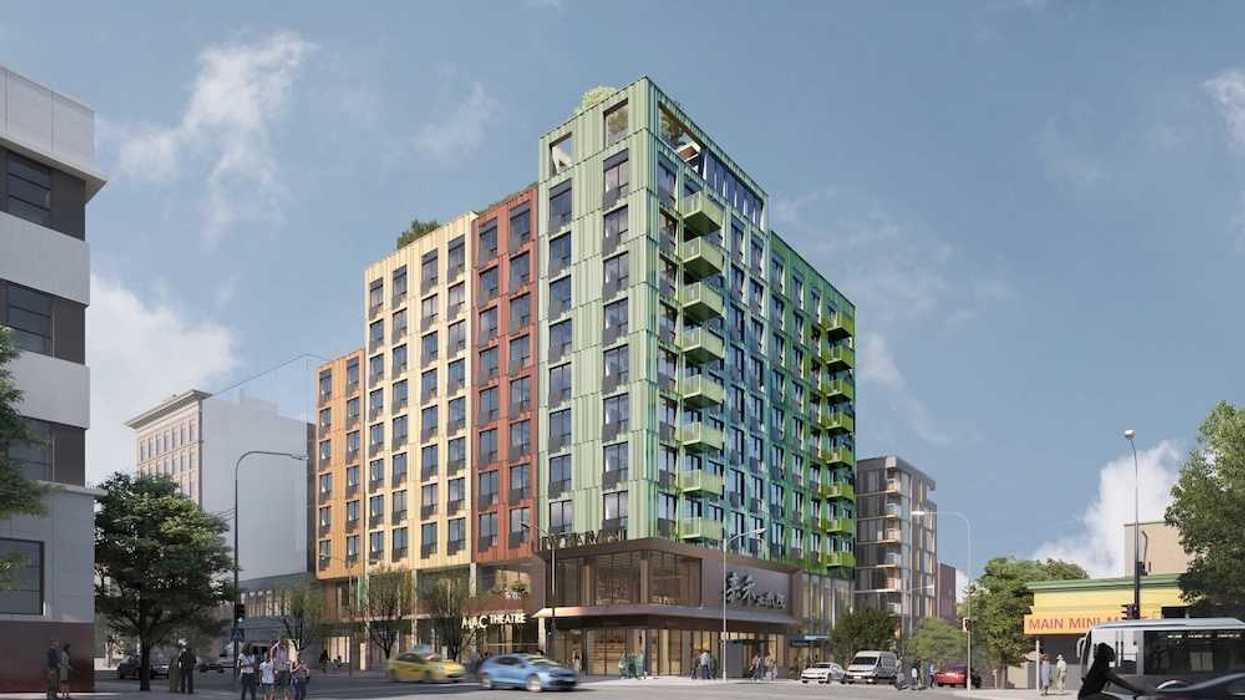
The project is set for 315 Main Street (also known as 172 East Cordova Street), a corner lot located at the southwest corner of the intersection of Main Street and East Cordova Street.
The site was previously occupied by a low-rise commercial building constructed in 1974, and was sold in July 2024 for $14,500,000 in a transaction brokered by Corbel Commercial.
The project is being led by MAC Development and Housing Society, a partnership between Lu’ma Native Housing Society, Frog Hollow Neighbourhood House, and the Affordable Housing Non-Profit Rental Association.
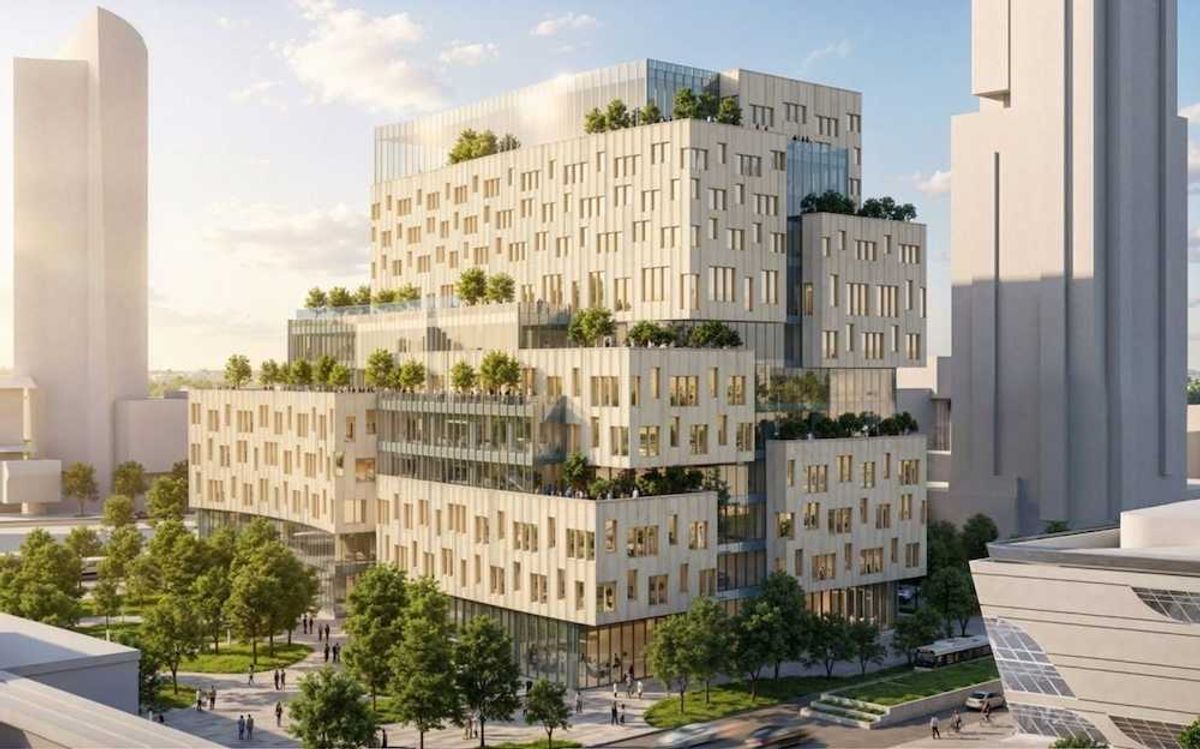
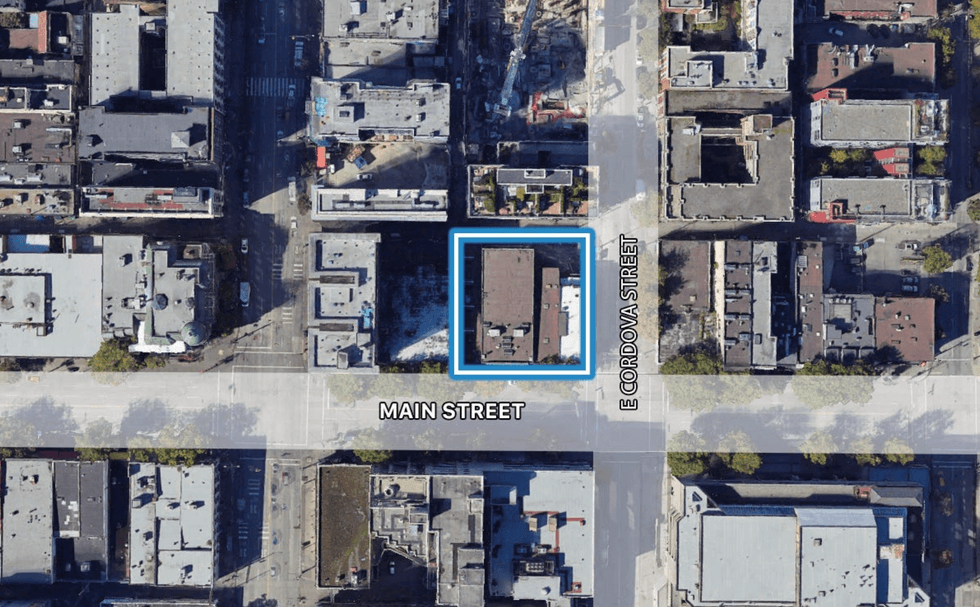 315 Main Street (172 East Cordova Street) in Vancouver. (Corbel Commercial)
A development application for the site has been in progress since 2021, with a proposal for a multi-coloured 11-storey mixed-use building with 118 social housing units, office space, retail space, theatre space, as well as educational space. The development permit was issued earlier this year, in February.
Earlier this month, construction commenced with a groundbreaking ceremony, where $96 million in funding for the project was also announced.
The Government of Canada is contributing $41.9 million through the Affordable Housing Fund, BC Housing — through BC Builds — is contributing $17.7 million, and the University of British Columbia — which will be relocating its UBC Learning Exchange from its current home at 612 Main Street — is contributing $12.5 million. The Province is also contributing an additional $403,750 through the Mass Timber Demonstration Program.
City of Vancouver records indicate that the City owns the site, and a press release from earlier this month notes that the City is providing $14.5 million in land lease contributions, plus $2.7 million in waivers, to MAC Development and Housing Society, which is contributing $2.4 million. The Metro Vancouver Regional District is providing $1.2 million in waivers, and TransLink is providing $258,900 in waivers.
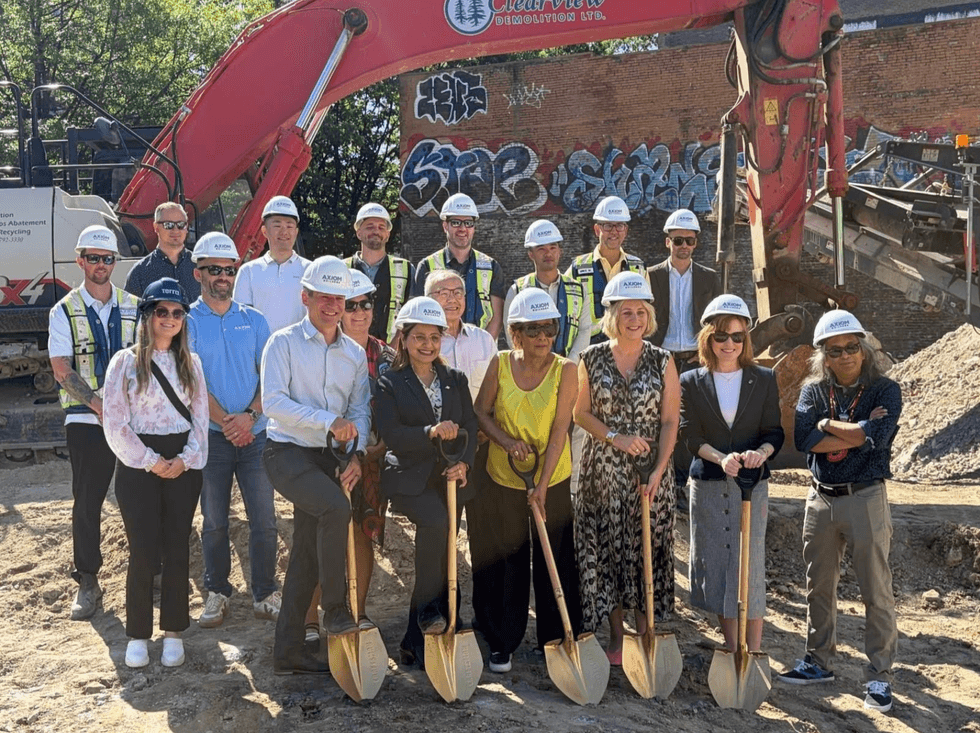 Ground broke on the project on August 11. (Sunita Dhir - MLA Vancouver-Langara, Facebook)
As the project is proceeding with funding from BC Builds, the 118 units will be provided at affordable rates. In their own press release, the Province said that 79 units will be provided for middle-income households — a focus of BC Builds — with nearly 50% of the units provided at 20% below market rates. The remaining 39 units will be “deeply affordable” and provided to people on income assistance.
The Province says “The target tenant group includes people with a range of low and middle incomes, particularly multigenerational families, seniors, Indigenous Elders, and people with disabilities” and says the function and appearance of the building “aim to celebrate the histories of Indigenous, Chinese-Canadian, Japanese-Canadian and other communities that have long called the Downtown Eastside home and are expected to be reflected among the future residents of the building.”
The Province’s press release also notes that UBC has “bought” the 10,000 sq. ft on the ground floor and second floor. The UBC Learning Exchange offers free educational programs and leadership opportunities, such as English conversation sessions and digital literacy workshops that members can train to lead. The community theatre planned for the ground floor is then “intended to be leased by a non-profit society to provide space for use by local community arts groups.”
“Through consultation with residents and local groups, this new housing has been designed in partnership to meet the unique needs of the community it serves,” said Minister of Housing and Municipal Affairs Christine Boyle. “By taking a heritage-conservation approach that prioritizes continuity and connection, this project honours the neighbourhood’s rich history, celebrates the diverse communities that have shaped the Downtown Eastside and builds on the community-based resources already in place.”