Caveat Emptor
Learn what caveat emptor means in Canadian real estate, how it affects buyer responsibility, and why inspections are critical under this principle.

May 22, 2025
What is Caveat Emptor?
Caveat emptor is a Latin phrase meaning 'let the buyer beware,' which places the responsibility on buyers to perform due diligence before completing a purchase.
Why Caveat Emptor Matters in Real Estate
In Canadian real estate, caveat emptor applies to property transactions, particularly resale homes. Unless fraud or misrepresentation occurs, sellers are not obligated to disclose all defects, especially visible ones.
Implications include:
- Buyers must inspect the property carefully
- Sellers must disclose only latent (hidden) material defects
- Home inspections are essential to minimize risk
While consumer protection laws have evolved, caveat emptor still plays a legal role. Buyers who waive inspection conditions may face greater exposure to post-sale issues.
Understanding caveat emptor emphasizes the importance of due diligence and professional inspections before finalizing a real estate purchase.
Example of Caveat Emptor
A buyer later discovers a leaky basement that was visible but not disclosed. Under caveat emptor, the responsibility lies with the buyer, not the seller.
Key Takeaways
- 'Let the buyer beware' principle.
- Buyers must inspect and investigate.
- Sellers only disclose hidden material issues.
- Still legally relevant in resale homes.
- Risk increases if inspection is waived.
Related Terms
- Home Inspection
- Material Defect
- Latent Defect
- Conditional Offer
- Buyer Risk








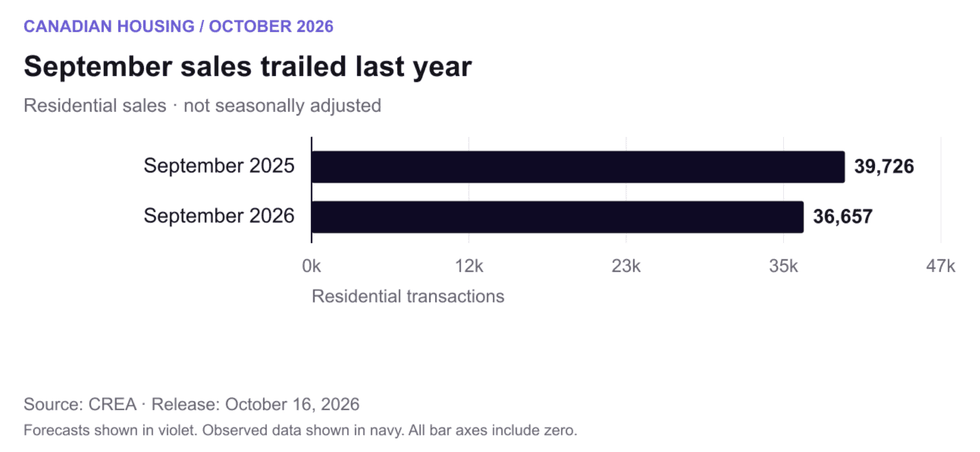 September residential sales, not seasonally adjusted; the annual comparison uses CREA’s revised figures. Chart:
 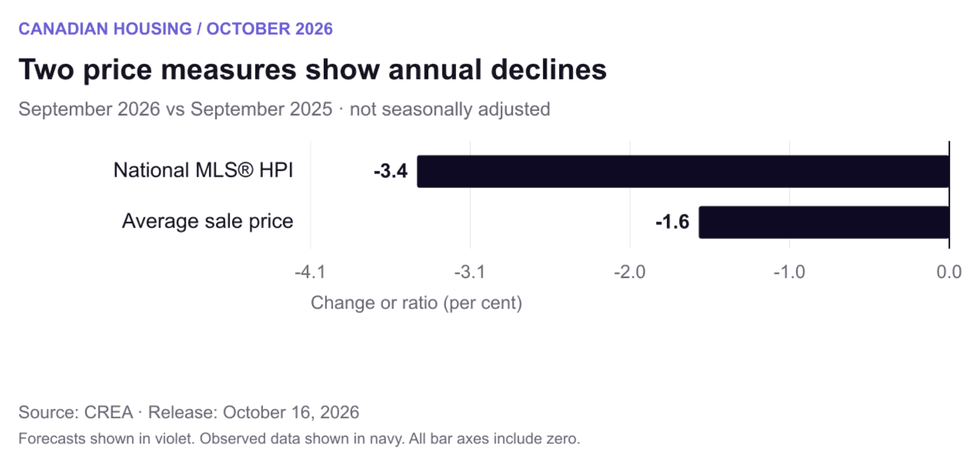 Annual changes in the unadjusted national MLS® HPI and average sale price. The average is affected by the mix of transactions. Chart:
 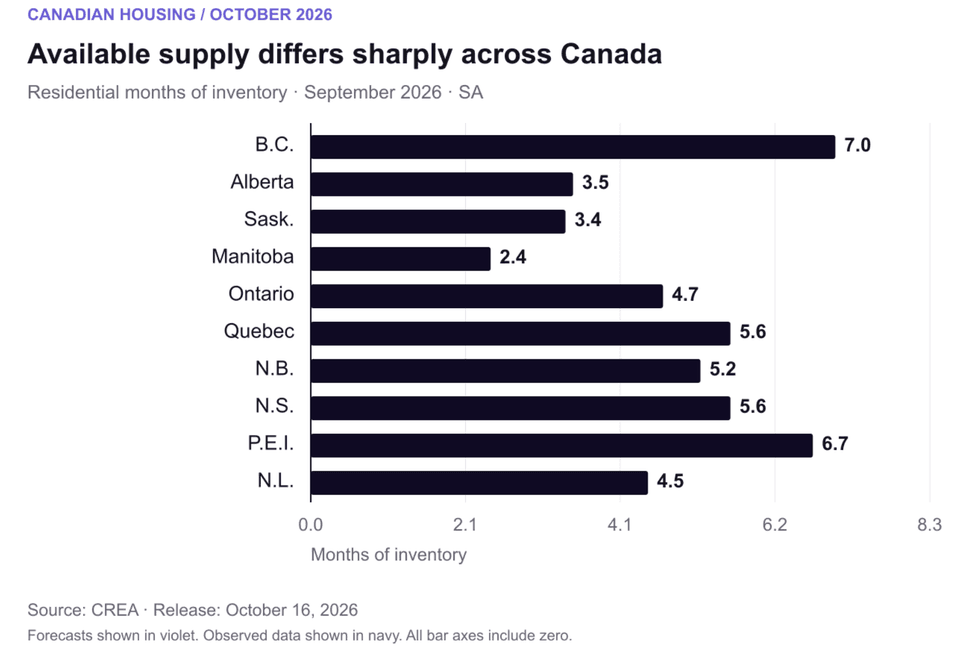 Seasonally adjusted residential months of inventory by province. Local property types can differ substantially. Chart:
 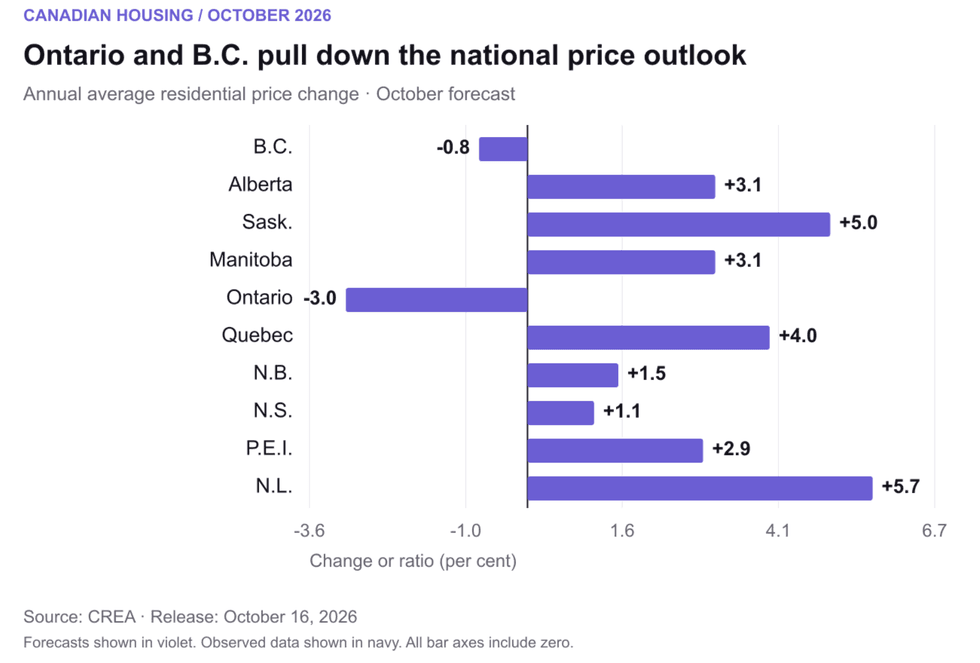 Ontario and B.C. are the two provinces with forecast annual average-price declines in 2026. Chart:
 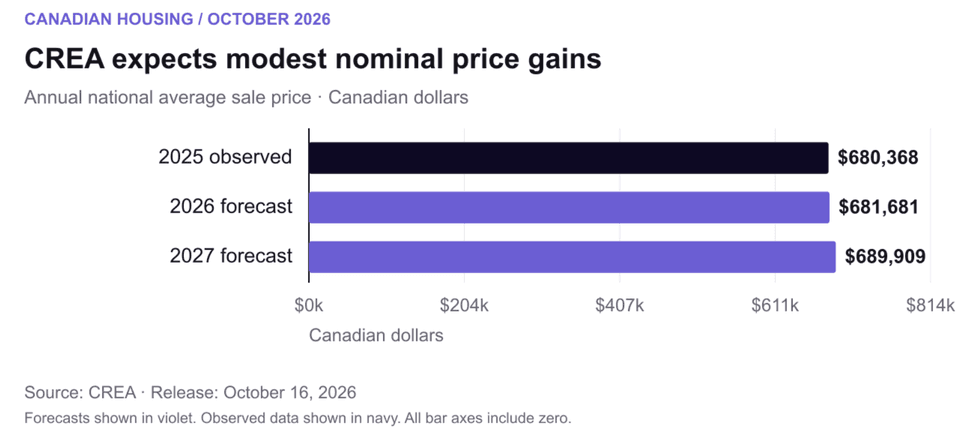 Annual average transaction prices in Canadian dollars. Forecast values are not December price targets. Chart:
 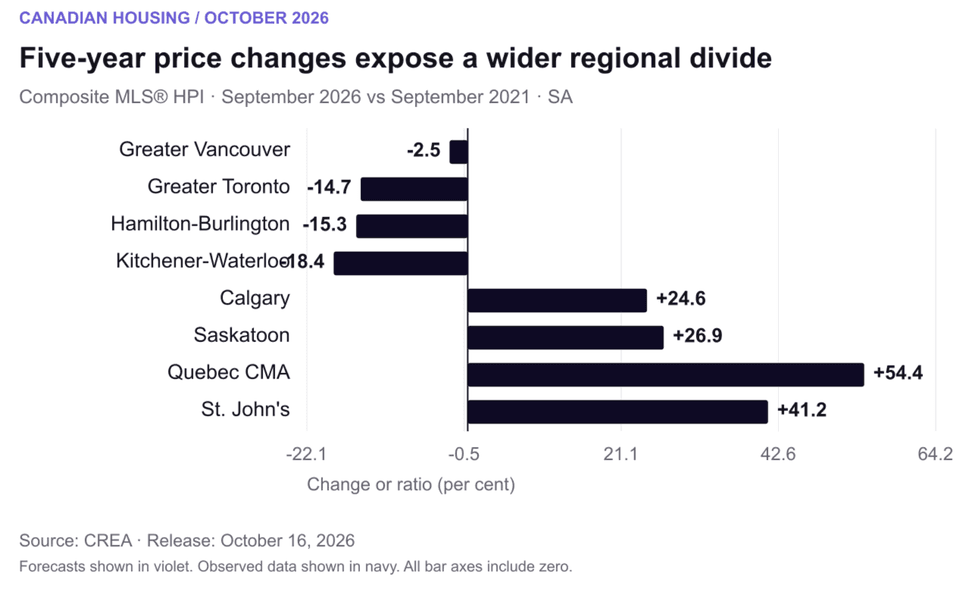 Five-year changes in seasonally adjusted composite MLS® HPI benchmarks, September 2021 to September 2026. Chart:





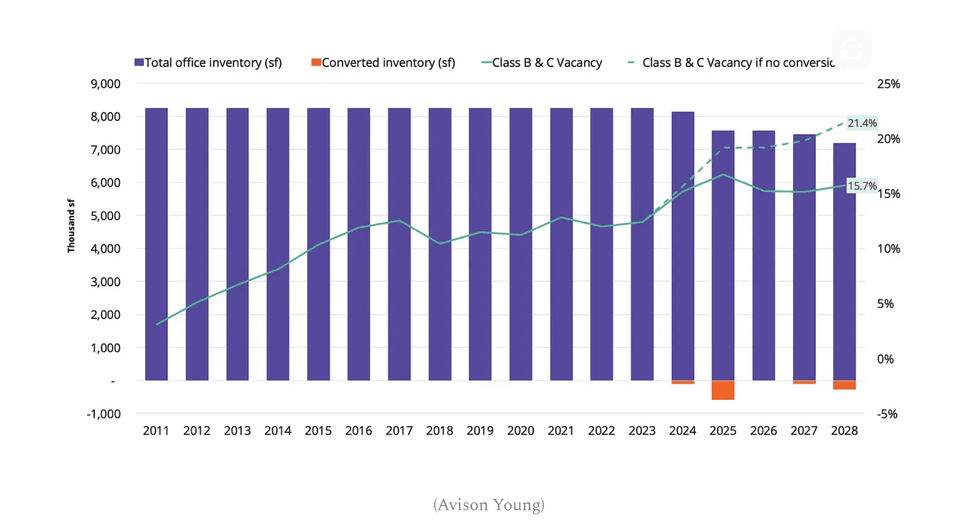 (Avison Young)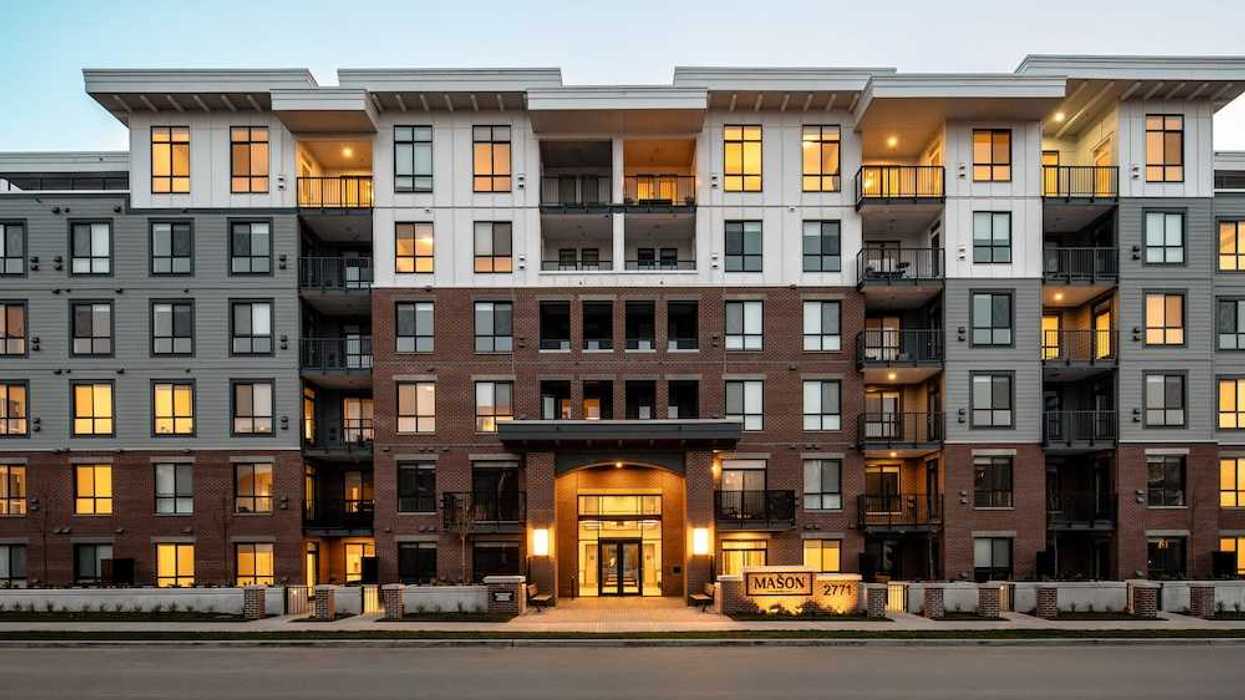
 The Mason Suite Interior (Infinity Properties)
 The Mason Suite Interior (Infinity Properties)
 Rail District aerial (Infinity Properties)
 Versant (Infinity Properties)