Blend-and-Extend (Mortgage)
A blend-and-extend mortgage lets borrowers combine old and new rates to lower payments and extend terms without penalties.

September 30, 2025
What is Blend-and-Extend?
A blend-and-extend mortgage is a refinancing option where a borrower combines their current mortgage rate with a new, typically lower, rate and extends the mortgage term. The new blended rate is a weighted average of the old and new rates.
Why Blend-and-Extend Matters in Real Estate
Blend-and-extend matters in real estate because it allows borrowers to take advantage of lower interest rates without breaking their existing mortgage contract, which would otherwise trigger penalties. It can help reduce payments and extend loan stability.
Example of Blend-and-Extend in Action
A homeowner with a mortgage at 6% blends it with a new 4% rate offered by the lender. The resulting blended rate is 5%, and the mortgage term is extended, lowering monthly payments without penalty.
Key Takeaways
- Combines old and new mortgage rates into a blended rate.
- Extends the mortgage term under revised conditions.
- Helps borrowers benefit from lower interest rates.
- Avoids penalties from breaking a closed mortgage.
- Reduces monthly payments and stabilizes finances.
Related Terms
- Refinancing
- Interest Rate
- Mortgage Term
- Closed Mortgage
- Mortgage Penalty

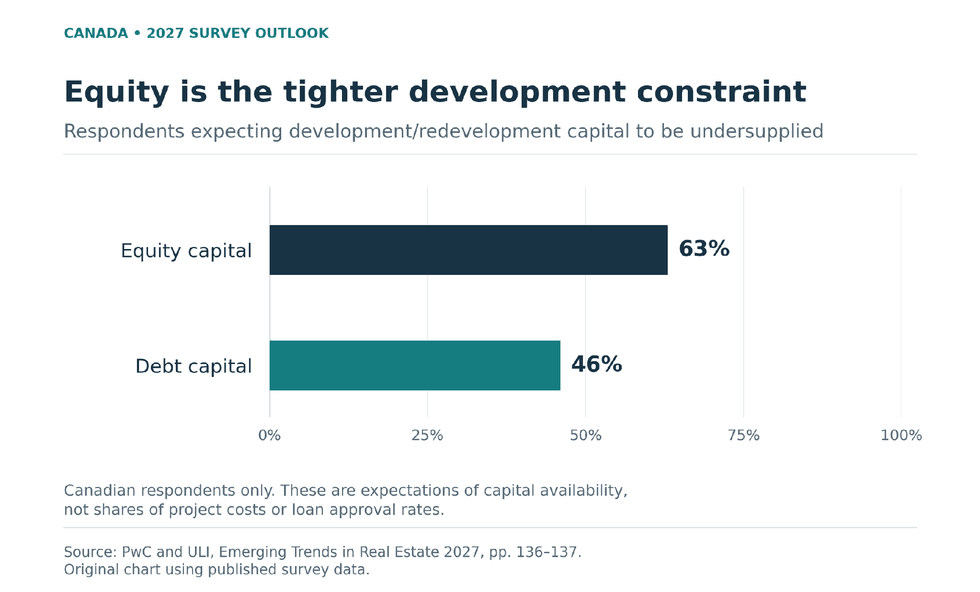 Canadian respondents were more likely to expect an undersupply of development/redevelopment equity capital (63%) than debt capital (46%) in 2027. These are survey expectations, not measured financing volumes. Source: PwC and ULI, Emerging Trends in Real Estate 2027, pp. 136–137. Original chart.
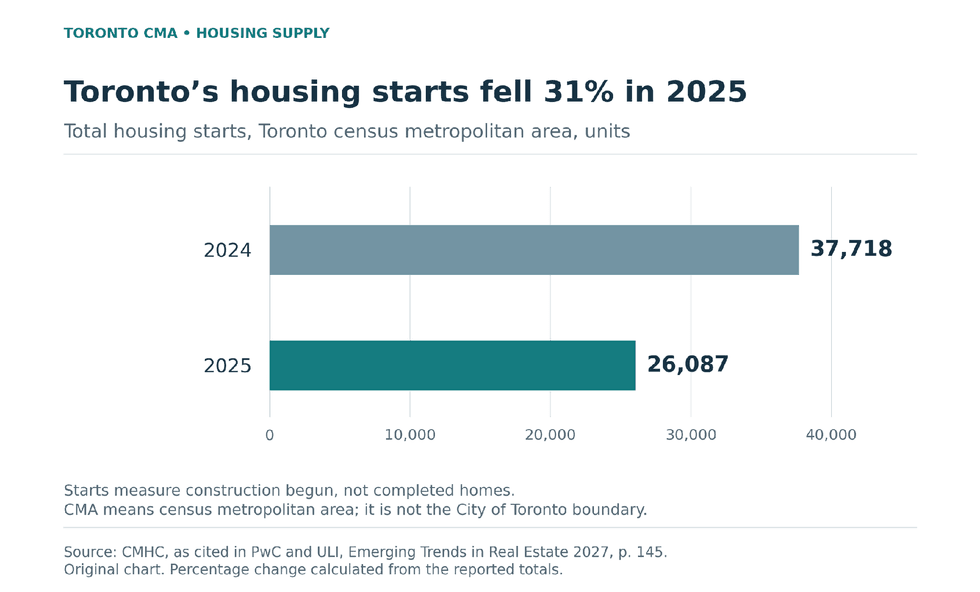 Toronto census metropolitan area housing starts fell from 37,718 units in 2024 to 26,087 in 2025, a 30.8% decline (rounded to 31%). Starts measure construction begun, not completed homes. Source: CMHC, as cited in PwC and ULI, Emerging Trends in Real Estate 2027, p. 145. Original chart.



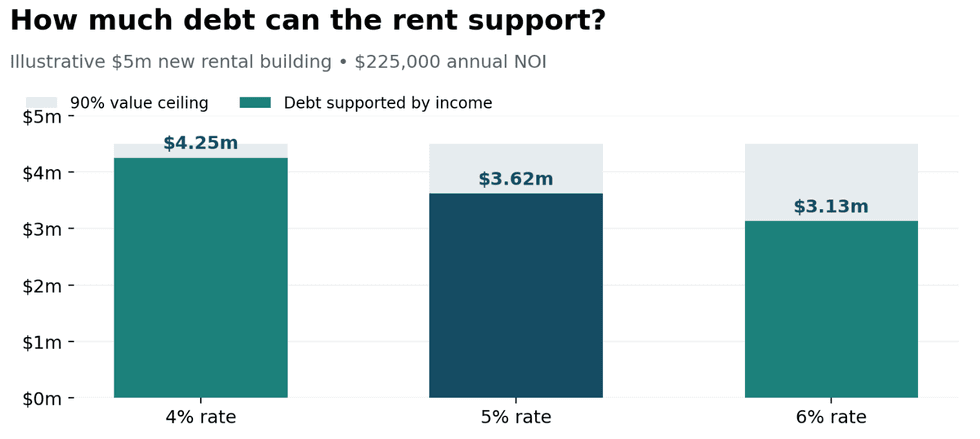 Illustrative calculation: a $4.5-million value ceiling versus income-based capacity of about $4.25 million at 4%, $3.62 million at 5% and $3.13 million at 6%. Assumes 50-year amortization and 1.15 debt coverage.
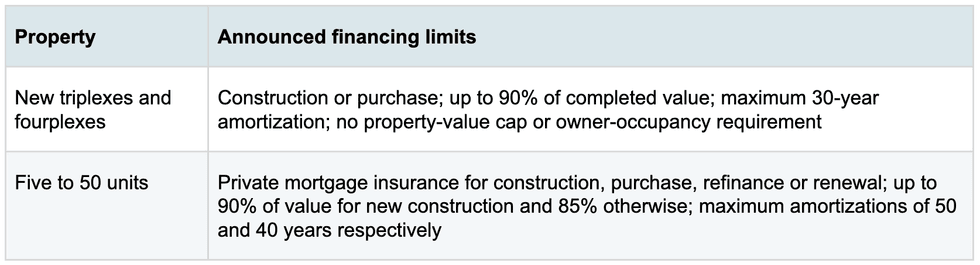
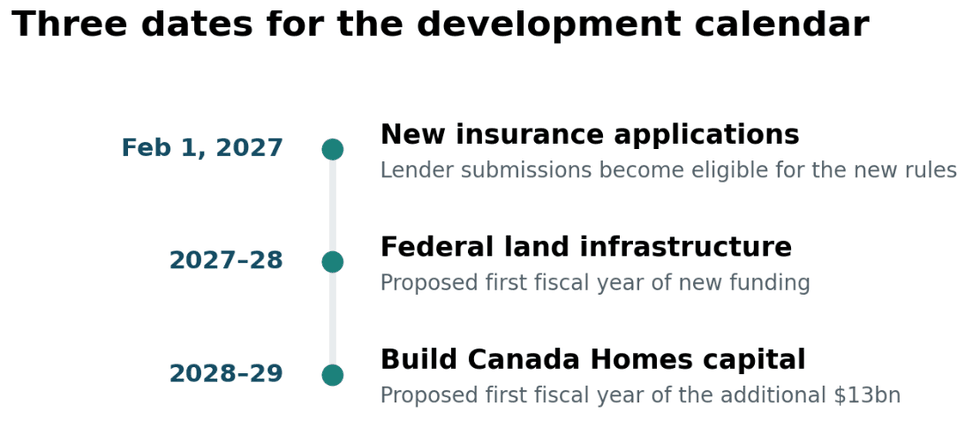 Source: Department of Finance missing-middle backgrounder and Budget 2026 Chapter 3, November 5, 2026. Fiscal-year funding starts are not home-completion dates.