Non-Resident Speculation Tax
The Non-Resident Speculation Tax (NRST) is an Ontario tax on foreign buyers of residential properties to curb speculation and support affordability.

September 30, 2025
What is the Non-Resident Speculation Tax?
The Non-Resident Speculation Tax (NRST) is a provincial tax in Ontario applied to the purchase of residential properties by foreign buyers. Initially introduced in the Greater Golden Horseshoe region, it has since been expanded province-wide. The NRST is an additional percentage of the purchase price, charged on top of land transfer taxes.
Why the Non-Resident Speculation Tax Matters in Real Estate
The NRST matters in real estate because it is designed to curb foreign speculation and stabilize housing markets by discouraging non-resident ownership. It raises government revenue while aiming to improve affordability for local buyers.
Example of the Non-Resident Speculation Tax in Action
A non-resident investor purchases a $1,000,000 home in Toronto. They must pay the standard land transfer tax plus the NRST at the applicable rate, adding tens of thousands to closing costs.
Key Takeaways
- Applies to foreign buyers of Ontario residential property.
- Charged as a percentage of the purchase price.
- Aims to reduce speculation and increase affordability.
- Introduced in GGH region, expanded province-wide.
- Significant additional cost for non-resident buyers.
Related Terms
- Underused Housing Tax
- Speculation and Vacancy Tax
- Vacant Home Tax
- Land Transfer Tax
- Housing Affordability

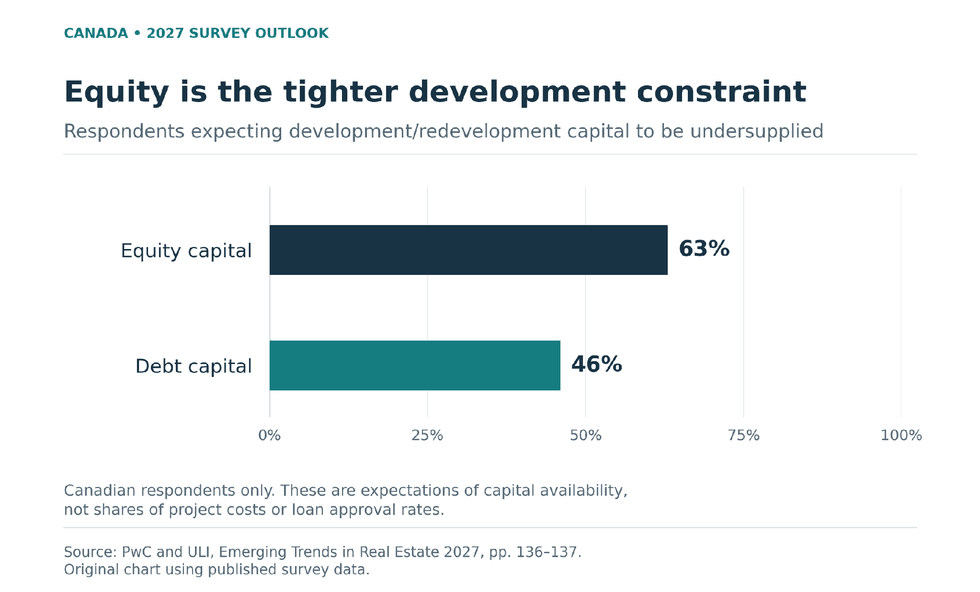 Canadian respondents were more likely to expect an undersupply of development/redevelopment equity capital (63%) than debt capital (46%) in 2027. These are survey expectations, not measured financing volumes. Source: PwC and ULI, Emerging Trends in Real Estate 2027, pp. 136–137. Original chart.
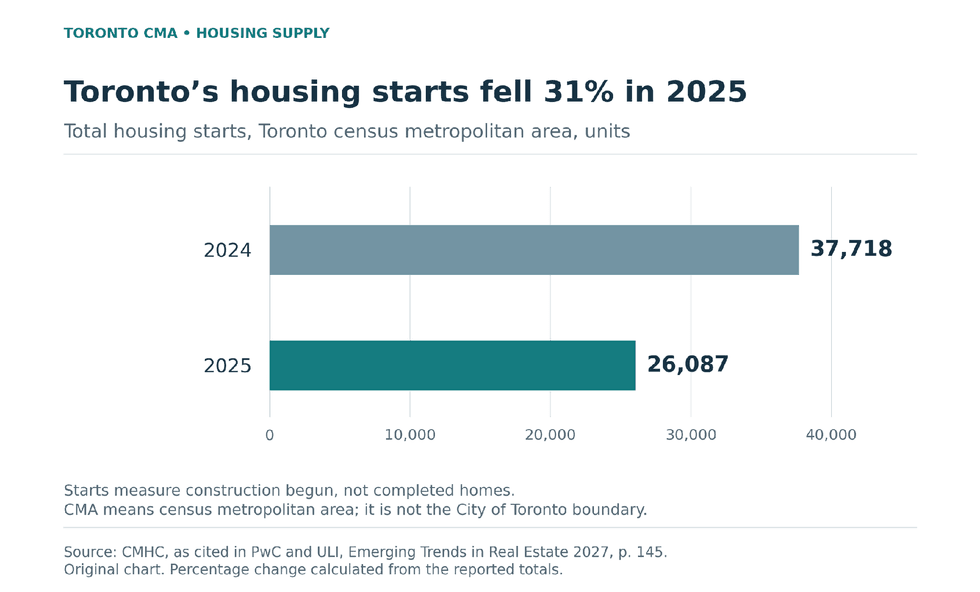 Toronto census metropolitan area housing starts fell from 37,718 units in 2024 to 26,087 in 2025, a 30.8% decline (rounded to 31%). Starts measure construction begun, not completed homes. Source: CMHC, as cited in PwC and ULI, Emerging Trends in Real Estate 2027, p. 145. Original chart.





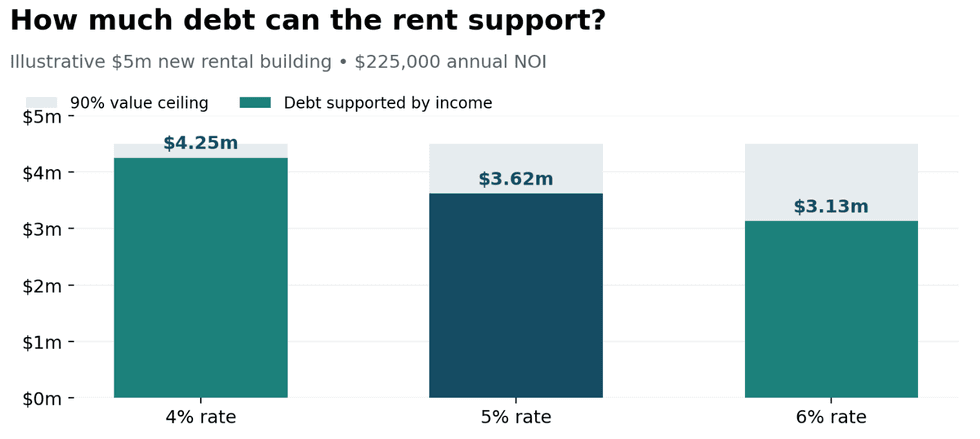 Illustrative calculation: a $4.5-million value ceiling versus income-based capacity of about $4.25 million at 4%, $3.62 million at 5% and $3.13 million at 6%. Assumes 50-year amortization and 1.15 debt coverage.
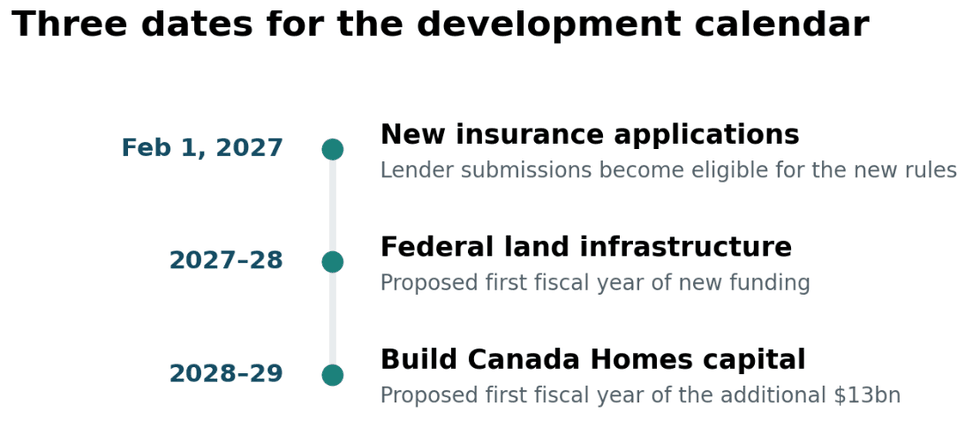 Source: Department of Finance missing-middle backgrounder and Budget 2026 Chapter 3, November 5, 2026. Fiscal-year funding starts are not home-completion dates.