Carbon Offset Credits
Carbon offset credits are earned by real estate projects reducing emissions, providing financial and sustainability benefits.

September 29, 2025
What are Carbon Offset Credits?
Carbon offset credits in real estate are tradable credits earned by properties or developments that reduce greenhouse gas emissions through sustainable practices. Credits may be sold in carbon markets or used to offset a project’s emissions footprint.
Why Carbon Offset Credits Matter in Real Estate
Carbon offset credits matter in real estate because they incentivize sustainable building practices, improve ESG performance, and provide financial returns for green projects. They also align with government climate targets and corporate responsibility goals.
Example of Carbon Offset Credits in Action
A commercial developer installs a large solar array on a new office tower, earning carbon credits that can be sold to corporations seeking to offset their emissions.
Key Takeaways
- Tradable credits earned by reducing emissions.
- Provide financial and reputational benefits for projects.
- Encourage sustainable real estate development.
- Align with climate policy and ESG reporting.
- May be sold or retained to offset emissions footprint.
Related Terms
- Green Building Certification
- Energy Benchmarking
- Sustainability
- ESG (Environmental, Social, Governance)
- Renewable Energy

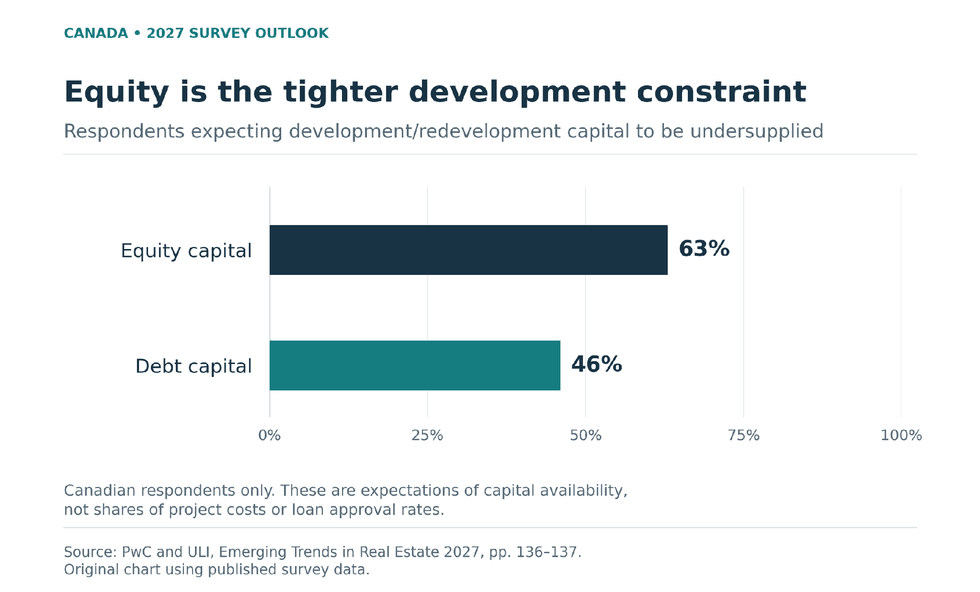 Canadian respondents were more likely to expect an undersupply of development/redevelopment equity capital (63%) than debt capital (46%) in 2027. These are survey expectations, not measured financing volumes. Source: PwC and ULI, Emerging Trends in Real Estate 2027, pp. 136–137. Original chart.
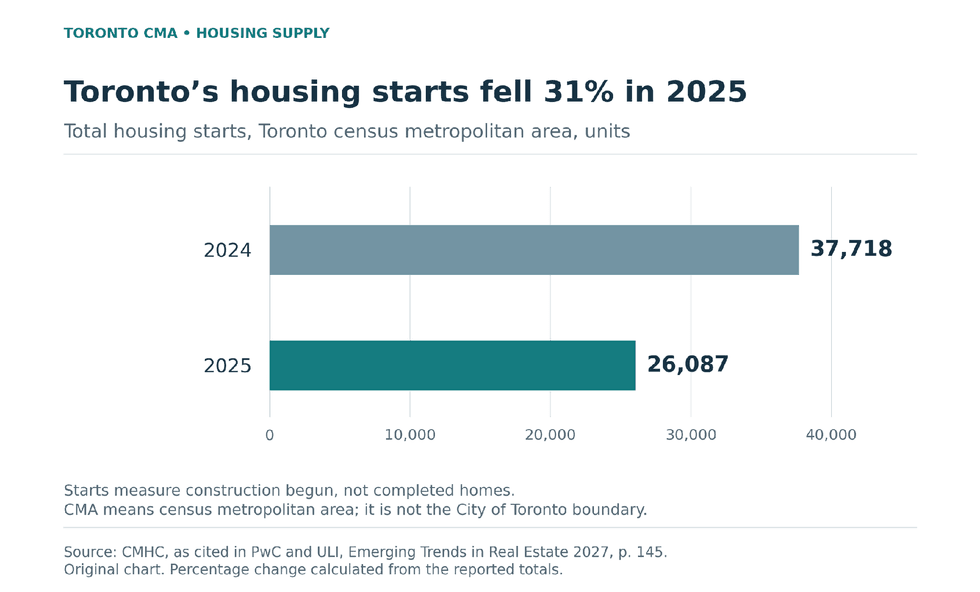 Toronto census metropolitan area housing starts fell from 37,718 units in 2024 to 26,087 in 2025, a 30.8% decline (rounded to 31%). Starts measure construction begun, not completed homes. Source: CMHC, as cited in PwC and ULI, Emerging Trends in Real Estate 2027, p. 145. Original chart.



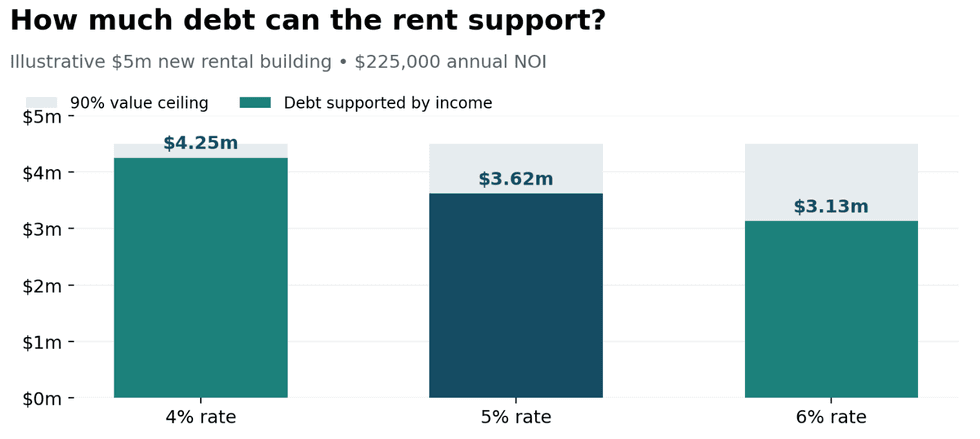 Illustrative calculation: a $4.5-million value ceiling versus income-based capacity of about $4.25 million at 4%, $3.62 million at 5% and $3.13 million at 6%. Assumes 50-year amortization and 1.15 debt coverage.
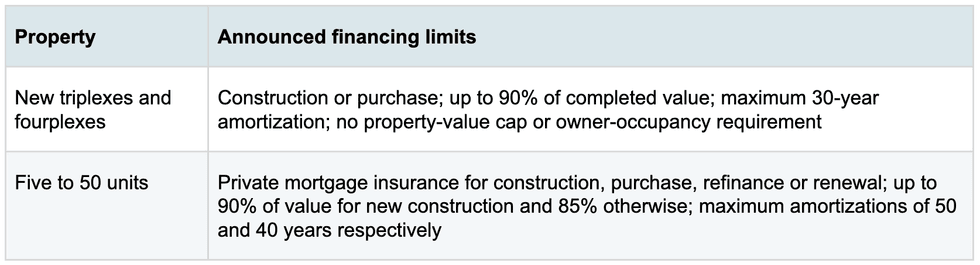
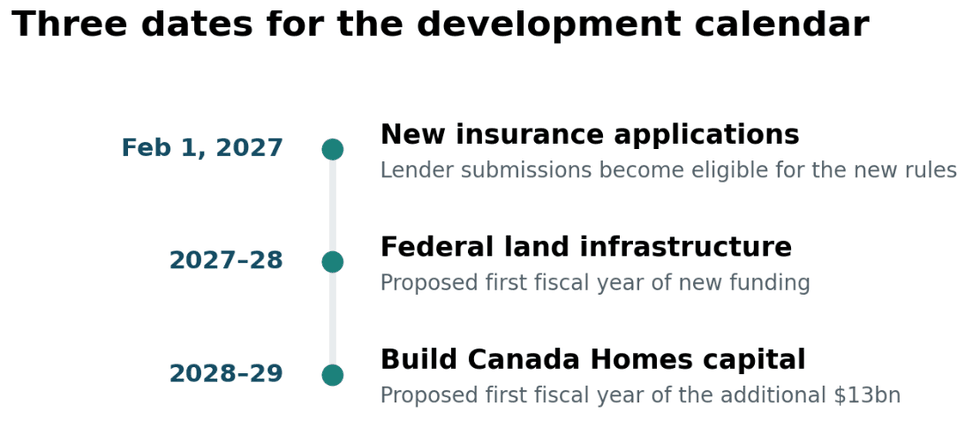 Source: Department of Finance missing-middle backgrounder and Budget 2026 Chapter 3, November 5, 2026. Fiscal-year funding starts are not home-completion dates.