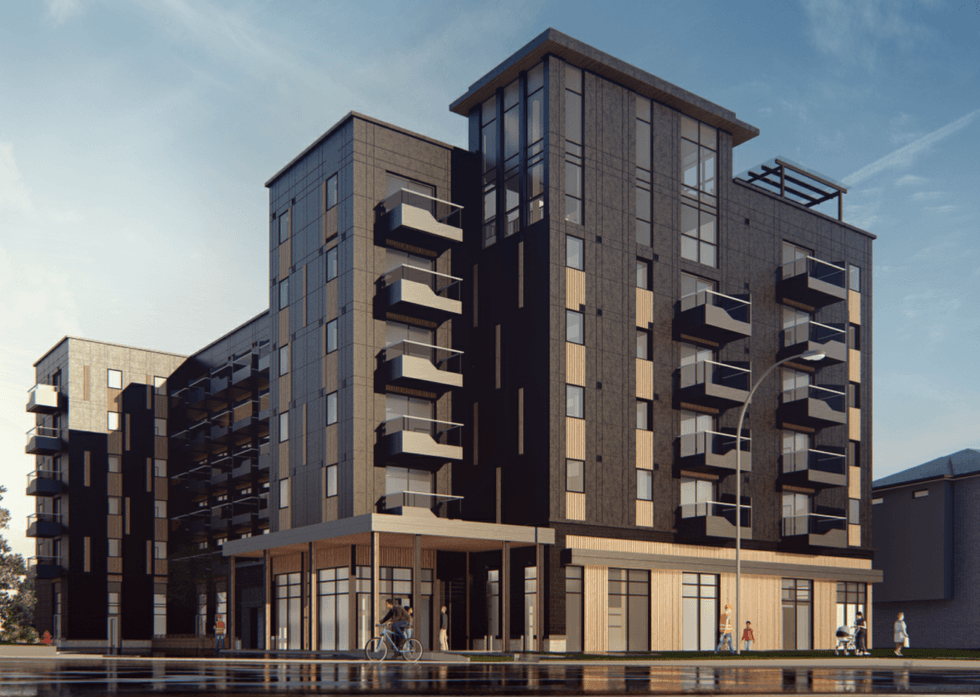
Building Maintenance
Learn what building maintenance involves in Canadian real estate and why regular upkeep is essential for safety, compliance, and value retention.

June 06, 2025
What is Building Maintenance?
Building maintenance refers to the routine upkeep, repair, and inspection of a property’s systems and structure to preserve functionality, safety, and value.
Why Building Maintenance Matters in Real Estate
In Canadian real estate, building maintenance is essential for property management, tenant satisfaction, and asset longevity.
Maintenance responsibilities include:
- HVAC, plumbing, and electrical upkeep
- Roof and exterior repairs
- Common area cleanliness and lighting
- Seasonal maintenance (e.g., snow removal, landscaping)
In condominiums, maintenance is funded through reserve funds and outlined in bylaws. In rental housing, landlords are legally required to maintain livable conditions.
Understanding building maintenance helps owners plan budgets, avoid code violations, and ensure occupant well-being.
Example of Building Maintenance in Action
The property manager schedules quarterly HVAC inspections and exterior pressure washing as part of a proactive building maintenance plan.
Key Takeaways
- Ensures safety, functionality, and value
- Required in rentals and condos
- Covers structural, systems, and aesthetic upkeep
- Prevents costly repairs and code issues
- Critical for long-term asset performance
Related Terms
- Reserve Fund
- Landlord Responsibilities
- Property Maintenance
- Common Elements
- Condominium Bylaws







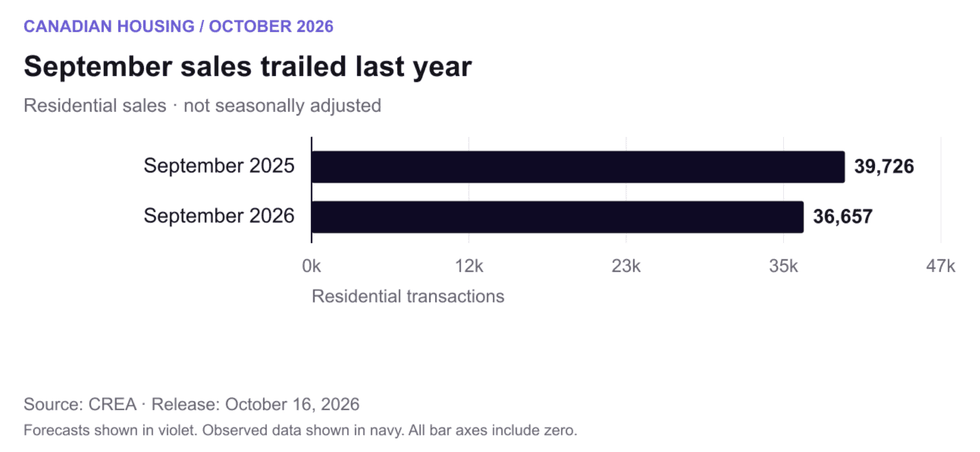 September residential sales, not seasonally adjusted; the annual comparison uses CREA’s revised figures. Chart:
 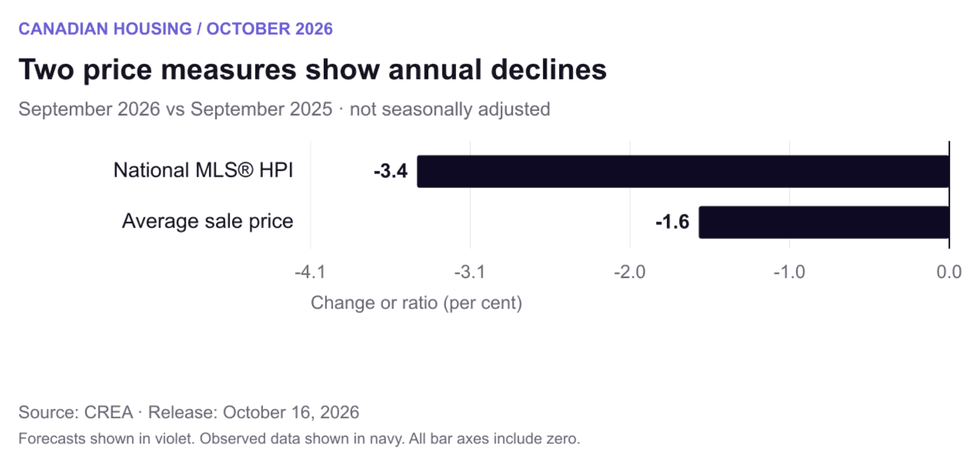 Annual changes in the unadjusted national MLS® HPI and average sale price. The average is affected by the mix of transactions. Chart:
 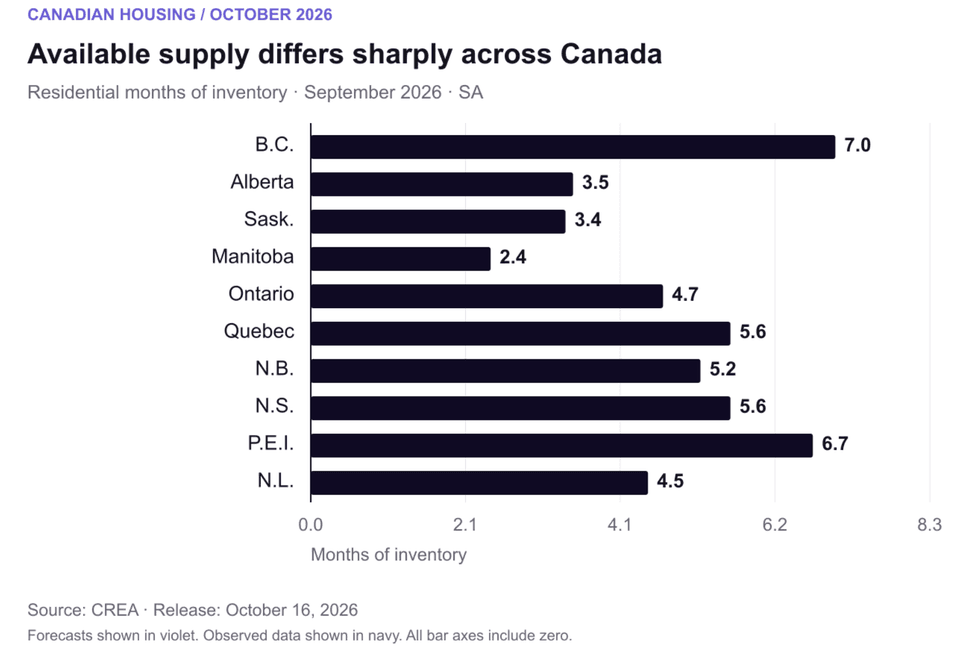 Seasonally adjusted residential months of inventory by province. Local property types can differ substantially. Chart:
 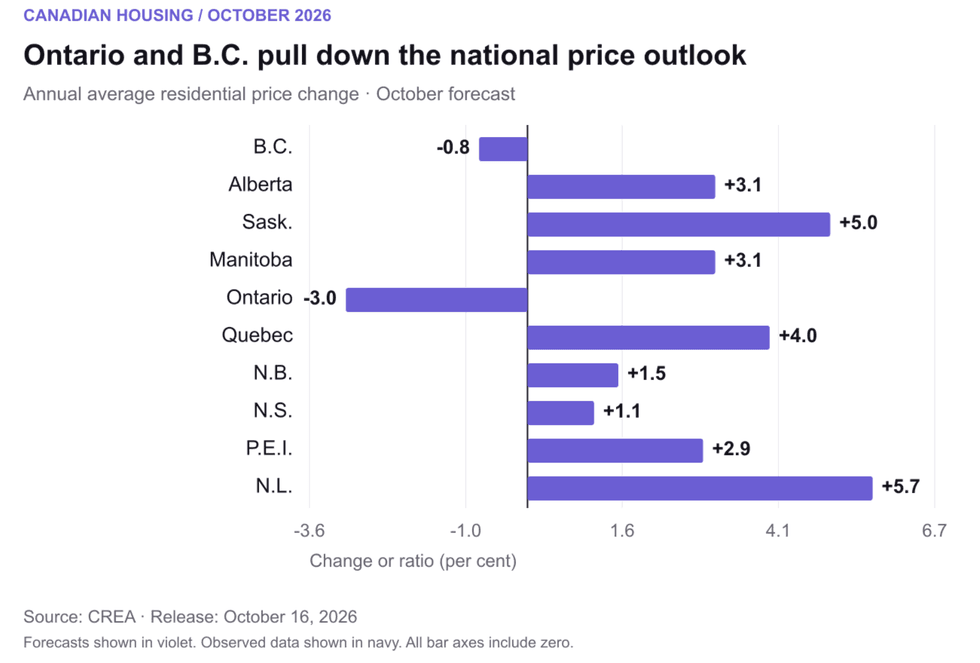 Ontario and B.C. are the two provinces with forecast annual average-price declines in 2026. Chart:
 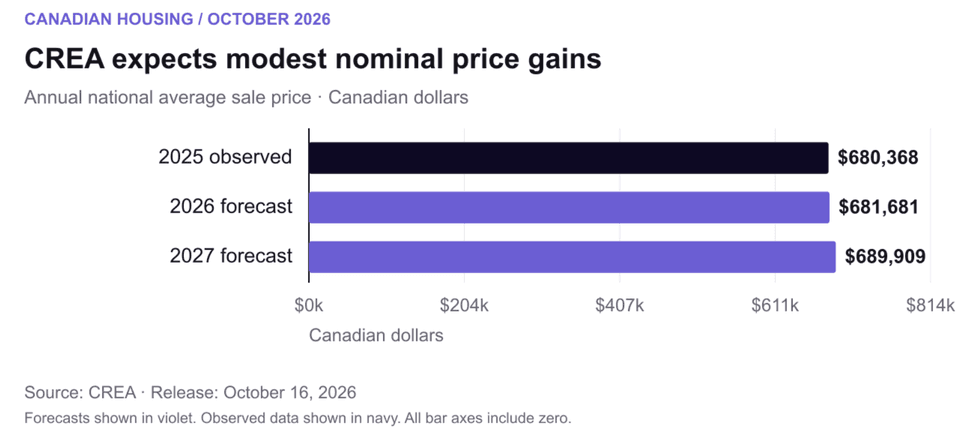 Annual average transaction prices in Canadian dollars. Forecast values are not December price targets. Chart:
 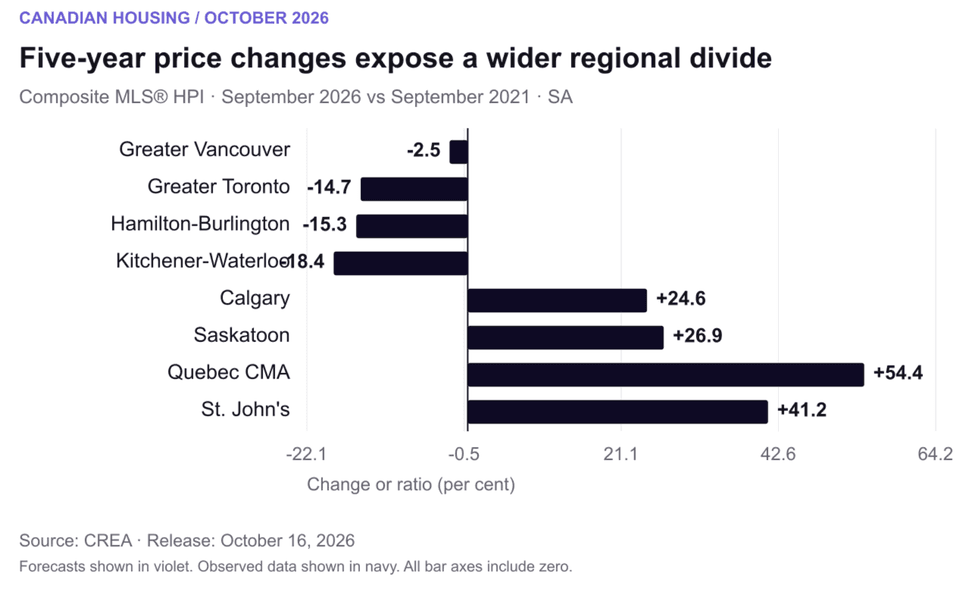 Five-year changes in seasonally adjusted composite MLS® HPI benchmarks, September 2021 to September 2026. Chart: