Assessment Appeal
Learn how to file an assessment appeal in Canada, when it's worth doing, and how it can lower your property tax bill.

May 22, 2025
What is an Assessment Appeal?
An assessment appeal is the formal process by which a property owner challenges the assessed value of their property as determined by a municipal or provincial authority.
Why Assessment Appeals Matter in Real Estate
In Canada, assessed values are used to calculate property taxes. If a homeowner believes their assessed value is too high or based on incorrect information, they may file an appeal.
Assessment appeals may be filed when:
- The assessed value exceeds the home’s market value
- There are factual errors (e.g., wrong square footage)
- Comparable properties are assessed lower
The process typically involves:
- Reviewing the assessment notice
- Filing a formal appeal by the deadline
- Presenting evidence (e.g., sales data, appraisals)
- Attending a hearing or review board meeting
Example of an Assessment Appeal in Action
A homeowner in Ottawa files an assessment appeal after discovering nearby homes with similar features are assessed $50,000 lower.
Key Takeaways
- Challenges a property’s assessed value.
- Filed through municipal or provincial authorities.
- Requires evidence and a formal process.
- Can lead to reduced property taxes.
- Must be submitted before deadlines.
Related Terms
- Assessed Value
- Property Assessment
- Mill Rate
- Property Tax
- Market Value

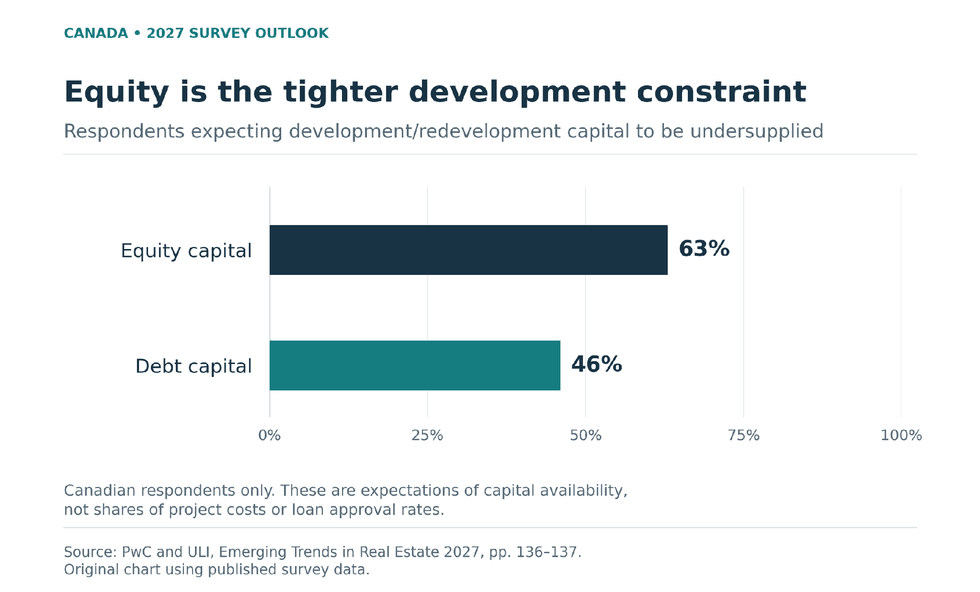 Canadian respondents were more likely to expect an undersupply of development/redevelopment equity capital (63%) than debt capital (46%) in 2027. These are survey expectations, not measured financing volumes. Source: PwC and ULI, Emerging Trends in Real Estate 2027, pp. 136–137. Original chart.
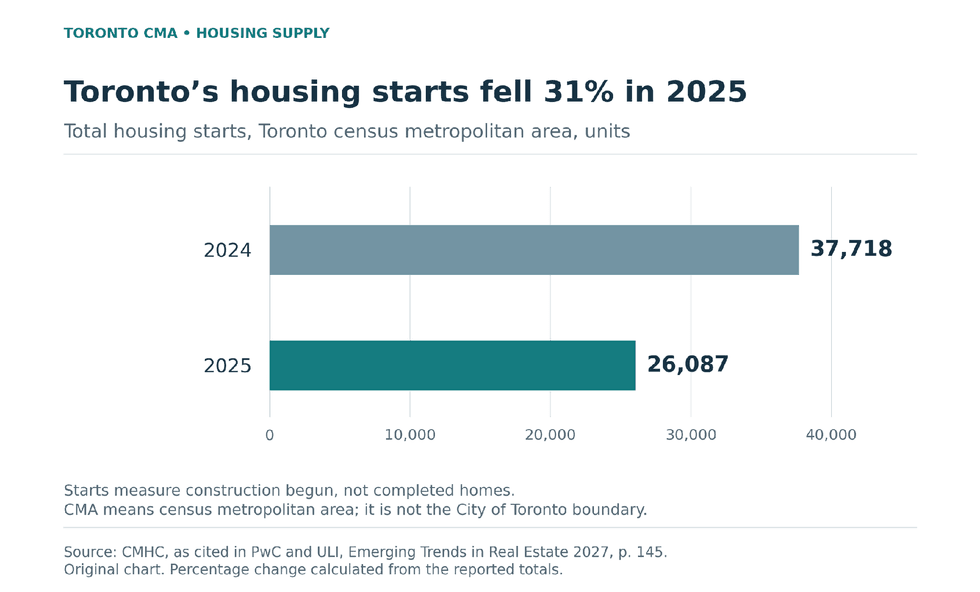 Toronto census metropolitan area housing starts fell from 37,718 units in 2024 to 26,087 in 2025, a 30.8% decline (rounded to 31%). Starts measure construction begun, not completed homes. Source: CMHC, as cited in PwC and ULI, Emerging Trends in Real Estate 2027, p. 145. Original chart.










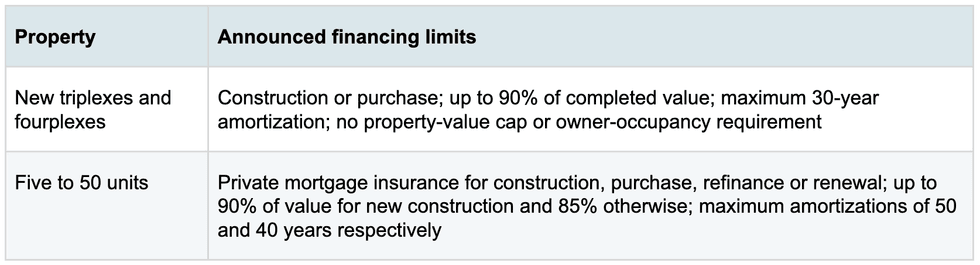
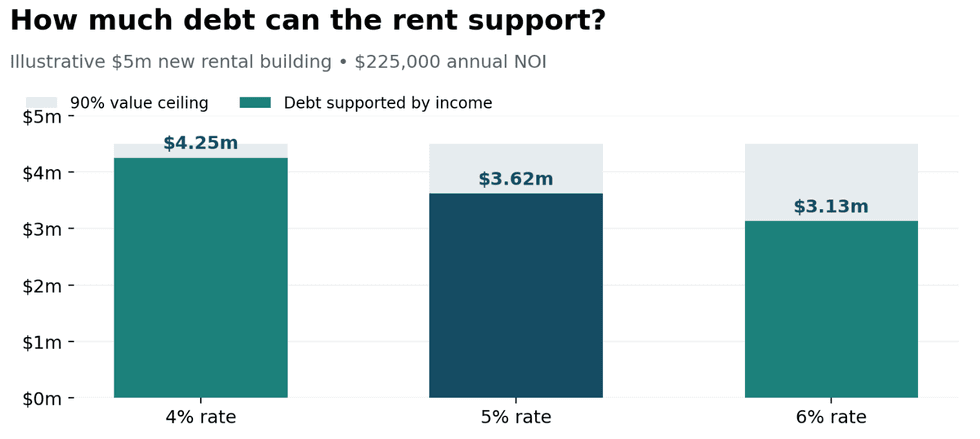 Illustrative calculation: a $4.5-million value ceiling versus income-based capacity of about $4.25 million at 4%, $3.62 million at 5% and $3.13 million at 6%. Assumes 50-year amortization and 1.15 debt coverage.
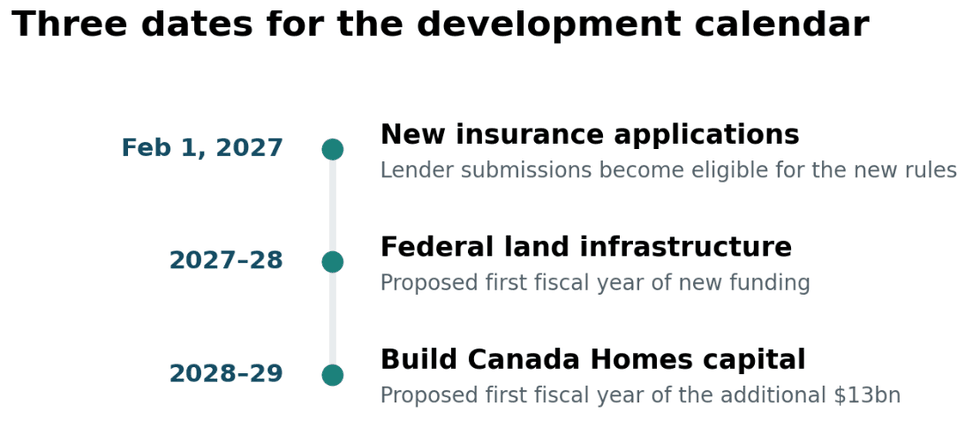 Source: Department of Finance missing-middle backgrounder and Budget 2026 Chapter 3, November 5, 2026. Fiscal-year funding starts are not home-completion dates.