Water Table
Understand the water table in Canadian real estate — how it affects construction, drainage, and property risk in flood-prone or rural areas.
May 22, 2025
What is the Water Table?
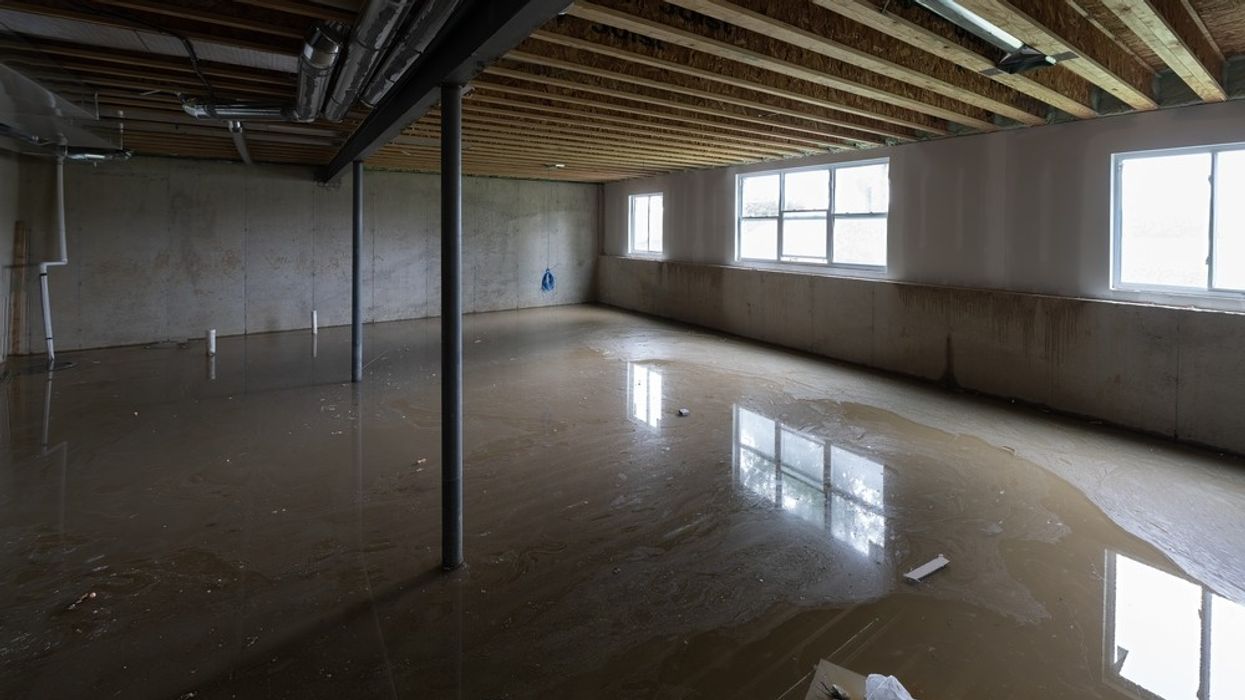
The water table is the level below the surface of the ground where soil and rock are fully saturated with water.
Why the Water Table Matters in Real Estate
In Canadian real estate, a high water table can affect drainage, basement flooding risk, foundation design, and the long-term integrity of a property.
Key implications include:
- May require sump pumps or drainage systems
- Affects location of septic systems and wells
- Can increase risk of water infiltration in basements
Builders and buyers should assess the local water table before constructing or purchasing homes in areas with poor drainage.
Understanding the water table is essential for site planning, flood prevention, and long-term home maintenance.
Example of the Water Table in Action
A buyer building a rural home orders a geotechnical report to confirm the water table is low enough for a standard basement and septic system.
Key Takeaways
- Subsurface level where ground is saturated.
- Impacts basements, foundations, and drainage.
- May influence construction and maintenance.
- Essential for rural or flood-prone areas.
- Requires proper mitigation if high.
Related Terms
- Floodplain
- Drainage System
- Foundation
- Geotechnical Survey
- Sump Pump
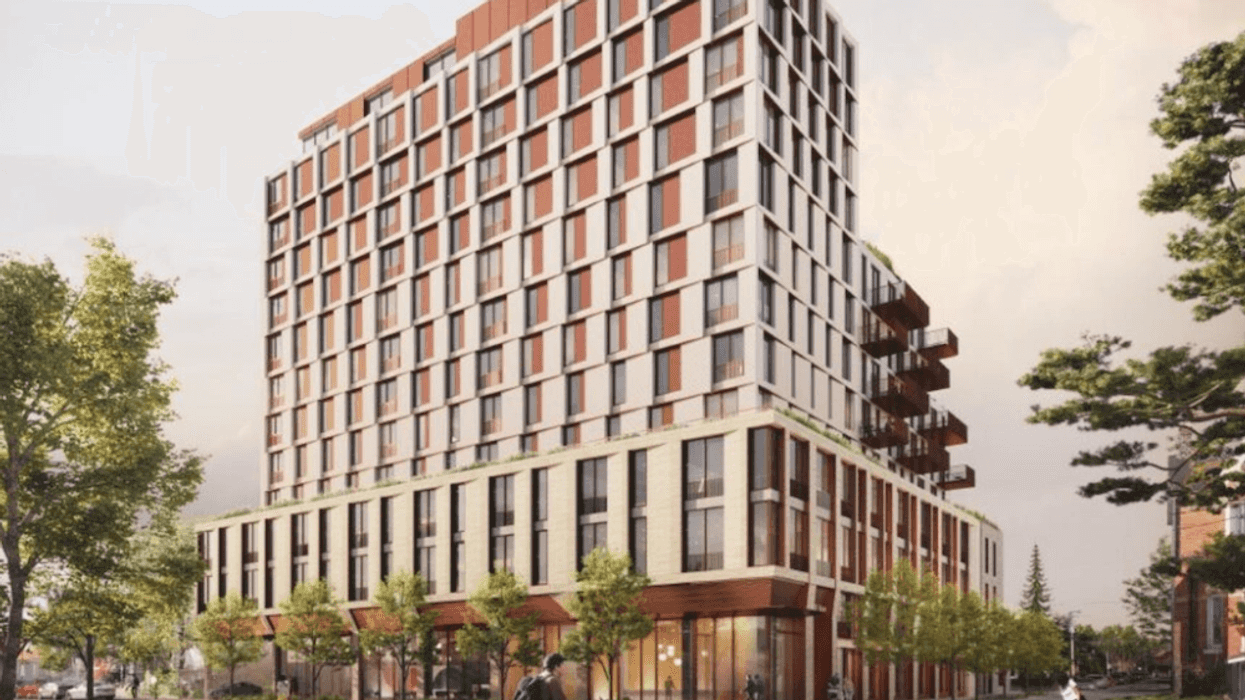
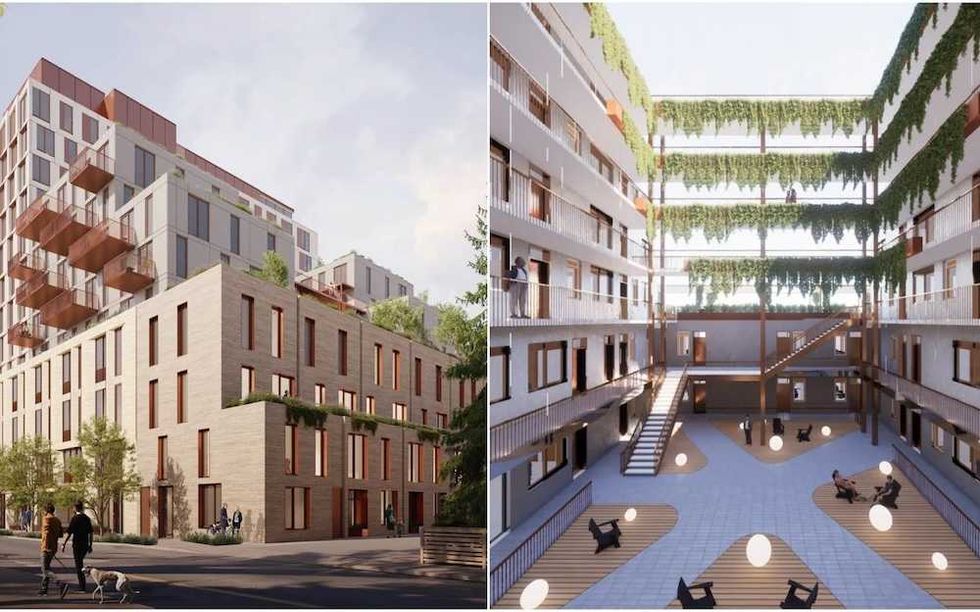 The project approved for 880 Eastern Avenue and 80 Knox Avenue. (SvN Architects, TAS)




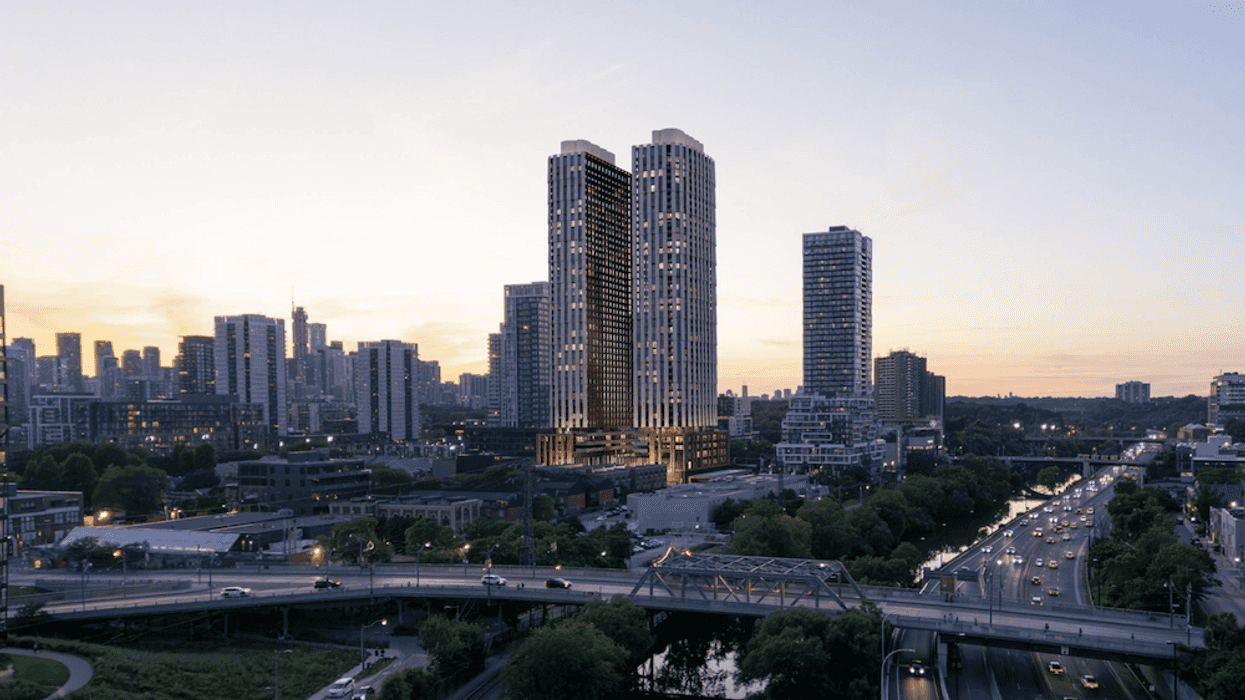
 Rendering of 86 and 100-108 Lombard St and 103 Richmond St E/WZMH Architects
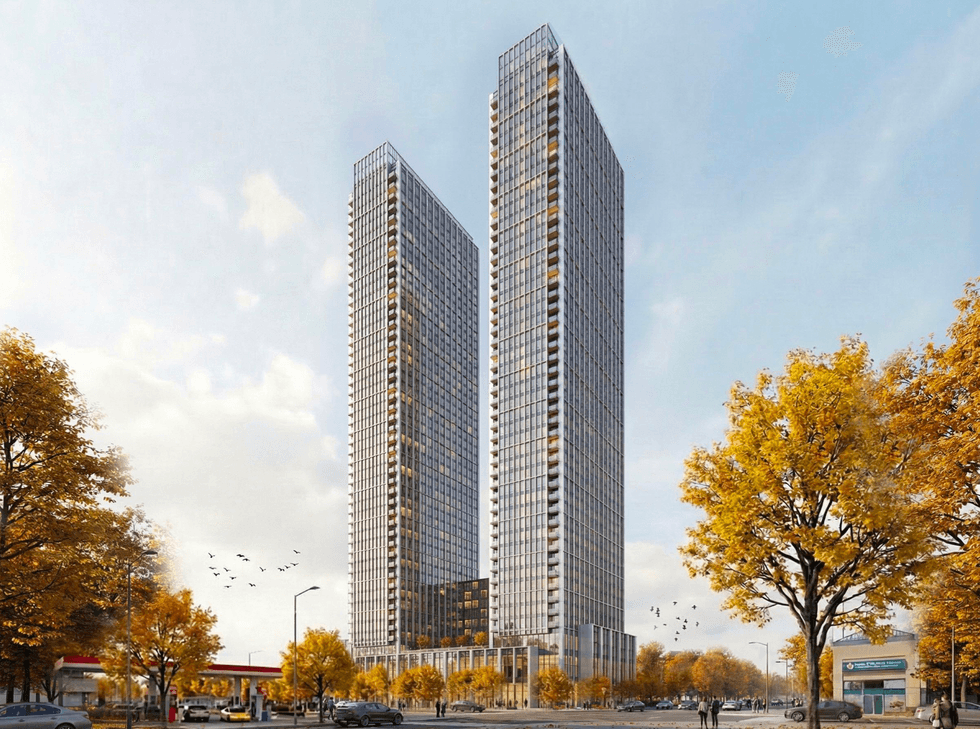 Rendering of 60 Overlea Blvd/Sweeny&Co Architects
 Rendering of 7 Labatt Ave and 77 River St/Giannone Petricone Associates
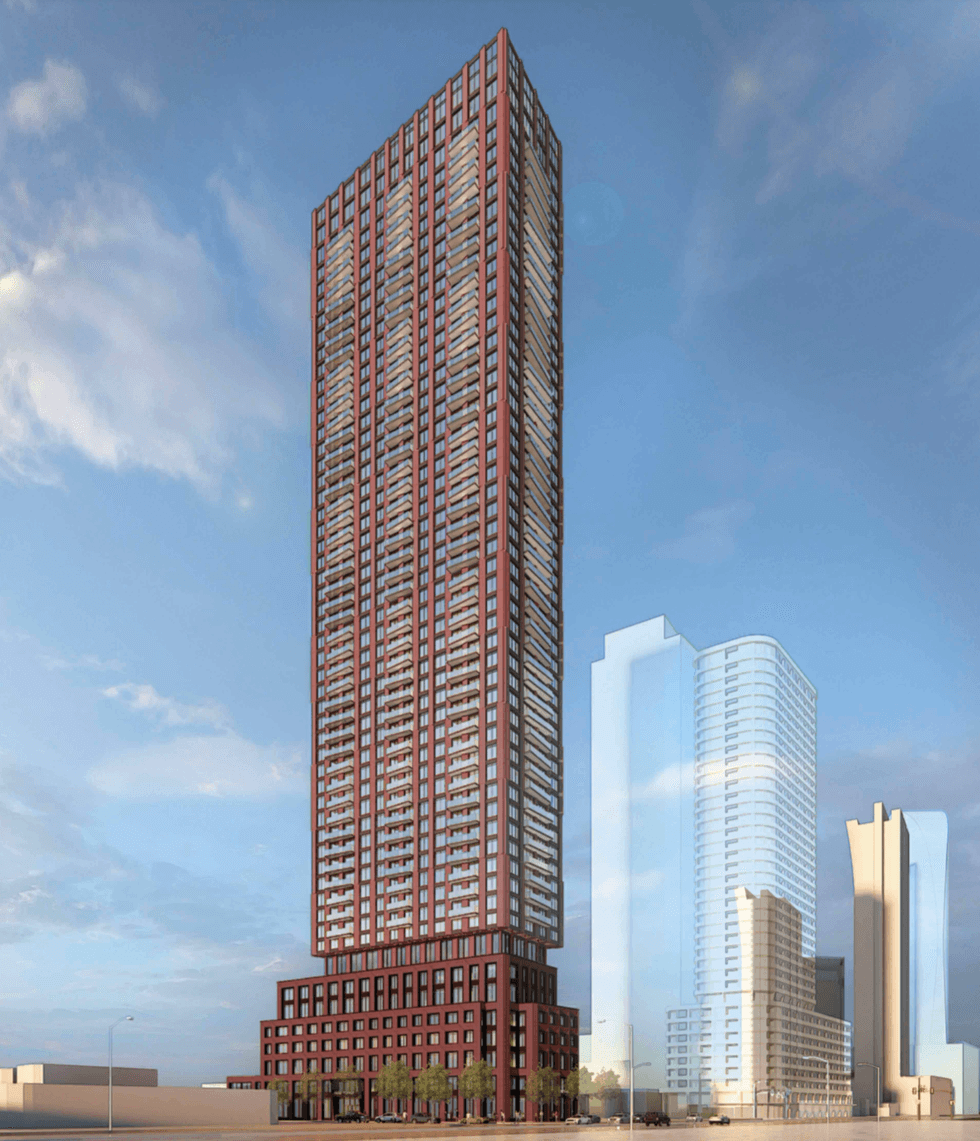 Rendering of 4632-4648 Yonge St and 16-18 Cameron Ave/Arcadis
 Rendering of 1234 Islington Ave/Sweeny&Co Architects
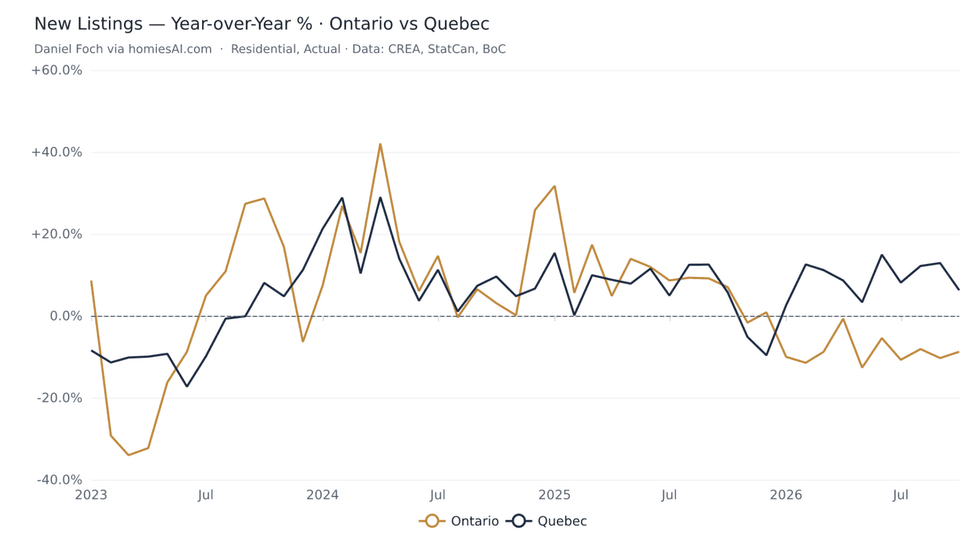 Chart: New listings, year-over-year %, Ontario vs Quebec. Daniel Foch via homiesai.com/stats. Data:
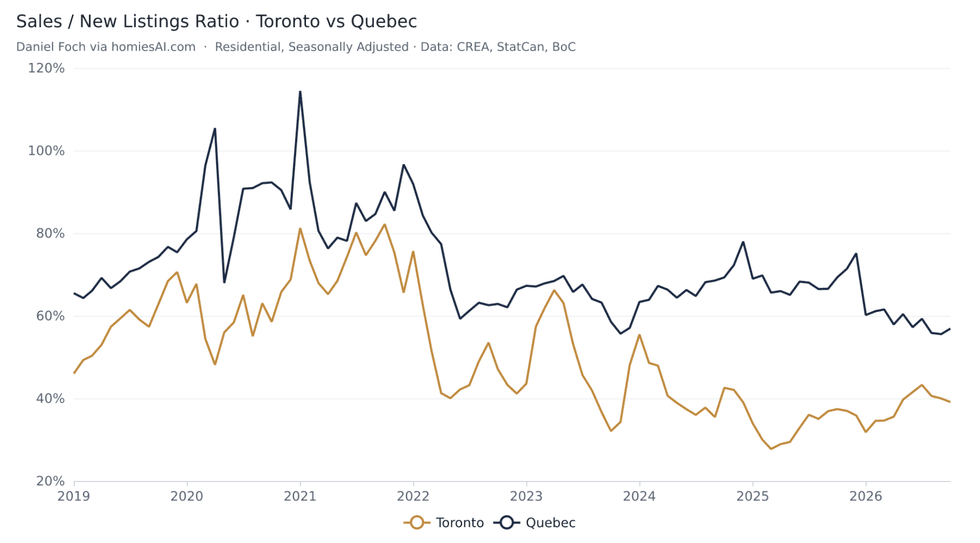 Chart: Sales-to-new-listings ratio, seasonally adjusted. Toronto vs Quebec. Daniel Foch via homiesai.com/stats. Data: CREA.
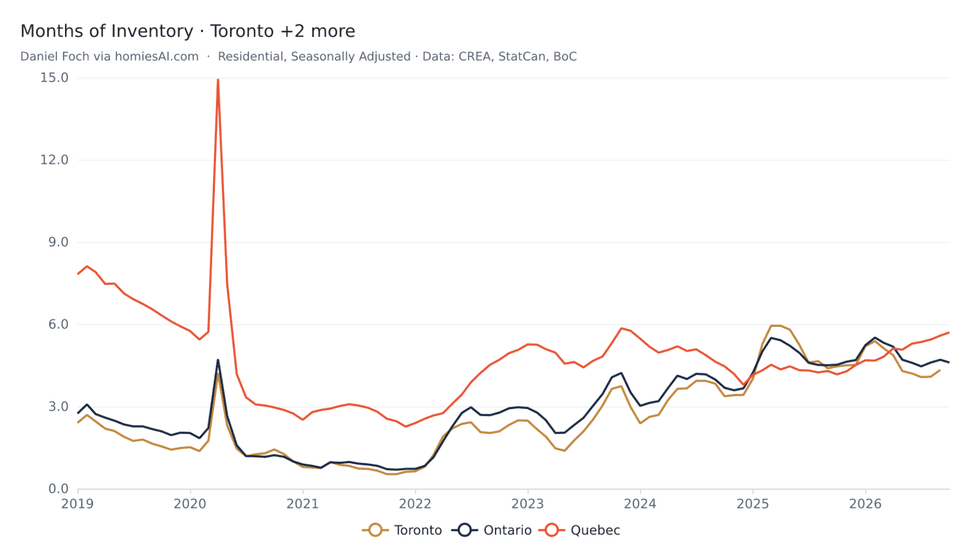 Chart: Months of inventory, seasonally adjusted. Daniel Foch via homiesai.com/stats. Data: CREA.
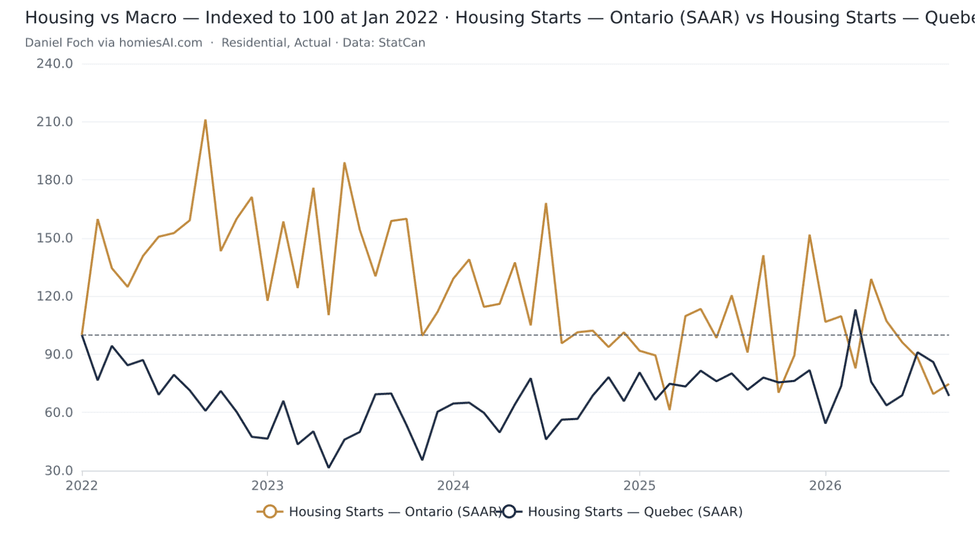 Chart: Housing starts, seasonally adjusted annual rate, Ontario vs Quebec, indexed to January 2022. Daniel Foch via homiesai.com/stats. Data: CMHC via Statistics Canada.
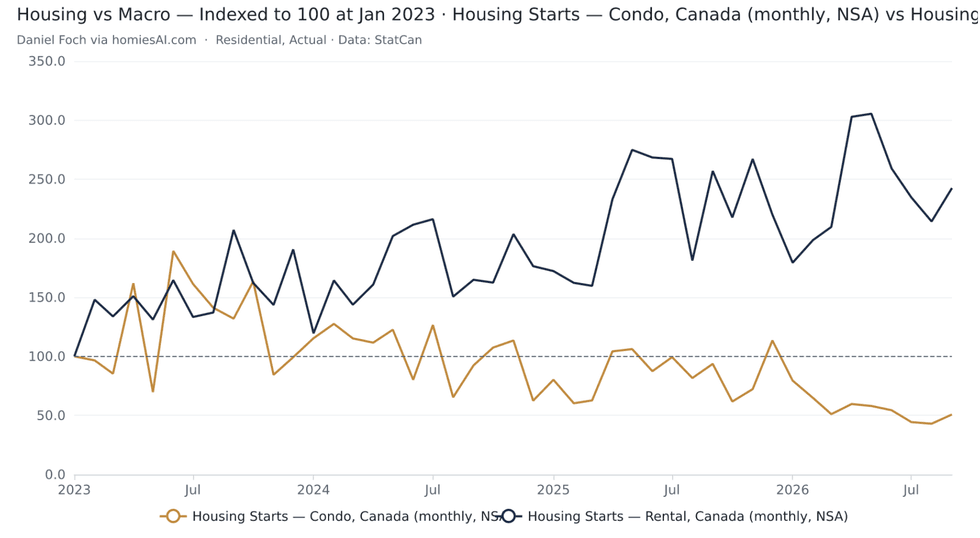 Chart: Condo vs rental housing starts, Canada, indexed to January 2023. Daniel Foch via homiesai.com/stats. Data: CMHC via Statistics Canada.
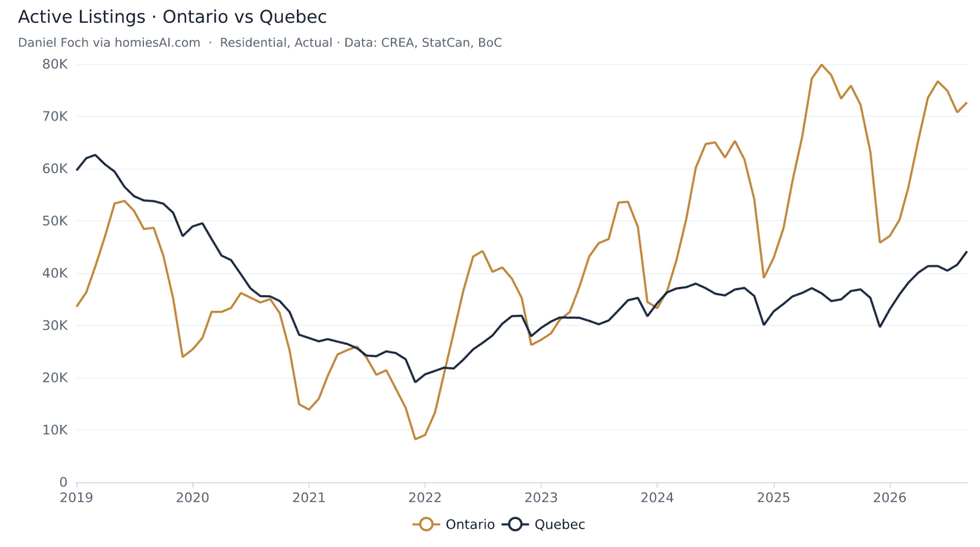 Chart: Active residential listings, Ontario vs Quebec. Daniel Foch via homiesai.com/stats. Data: CREA.

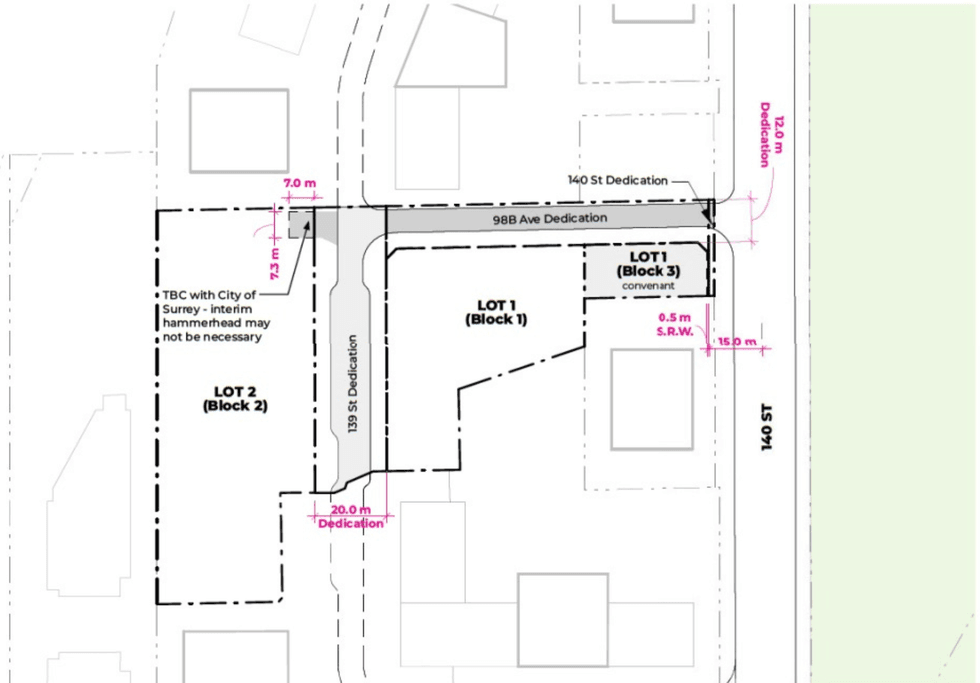 9883 140 Street and the proposed road dedications. (WW+P Architects, Entre Nous Femmes Housing Society)
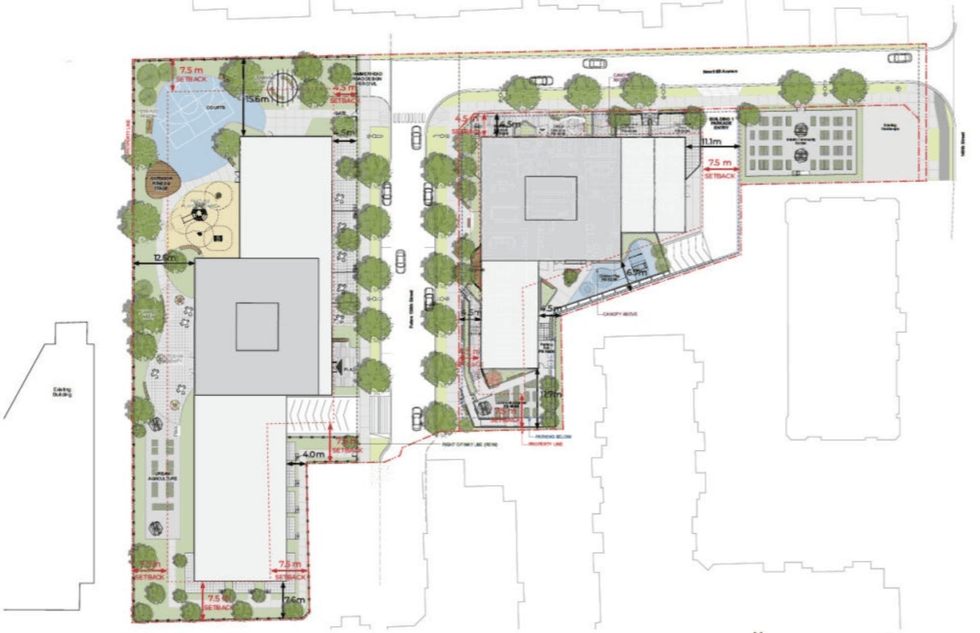 The
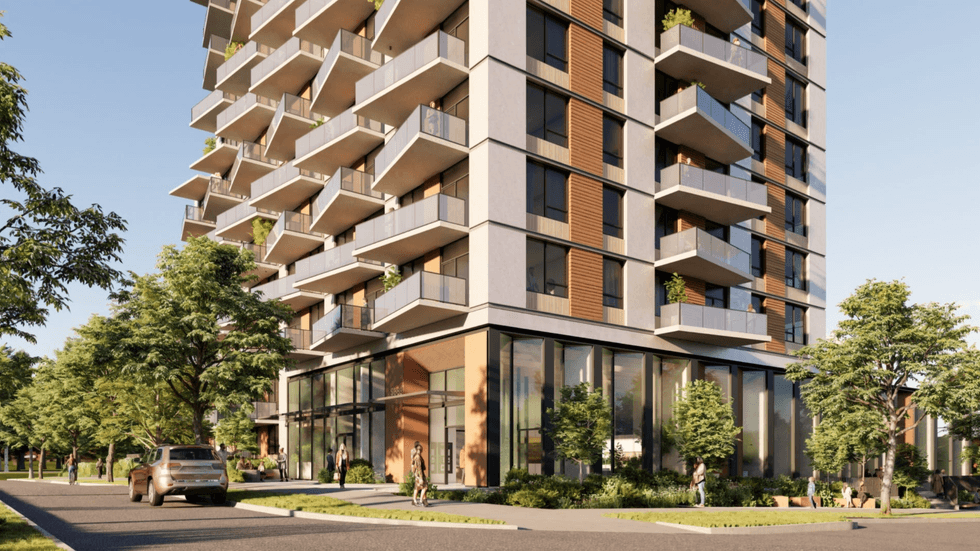 One of the towers proposed for 9883 140 Street. (Entres Nous Femmes Housing Society)

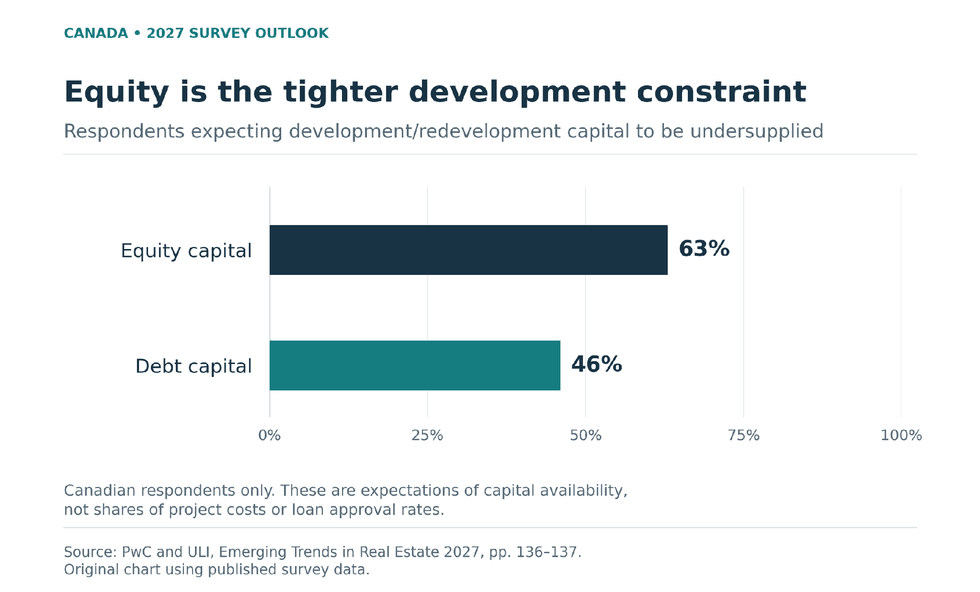 Canadian respondents were more likely to expect an undersupply of development/redevelopment equity capital (63%) than debt capital (46%) in 2027. These are survey expectations, not measured financing volumes. Source: PwC and ULI, Emerging Trends in Real Estate 2027, pp. 136–137. Original chart.
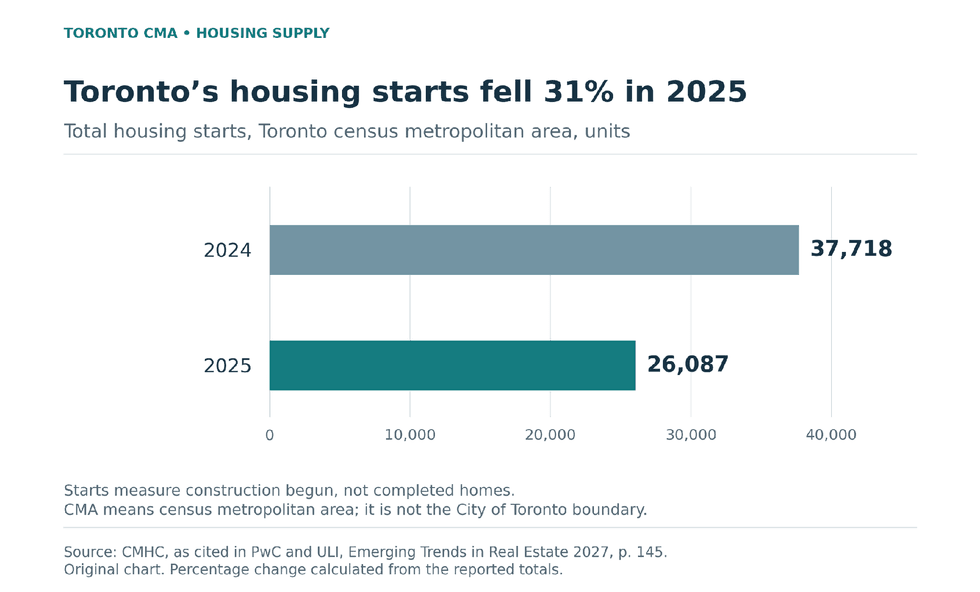 Toronto census metropolitan area housing starts fell from 37,718 units in 2024 to 26,087 in 2025, a 30.8% decline (rounded to 31%). Starts measure construction begun, not completed homes. Source: CMHC, as cited in PwC and ULI, Emerging Trends in Real Estate 2027, p. 145. Original chart.