Seller's Agent
Learn how a seller’s agent helps Canadian homeowners list and sell their property, from pricing to closing, and what fiduciary duties they owe.

May 22, 2025
What is a Seller's Agent?
A seller’s agent, also known as a listing agent, is a licensed real estate professional who represents the interests of the property seller in a real estate transaction.
Why Do Seller's Agents Matter in Real Estate
In Canadian real estate, the seller’s agent plays a key role in marketing the property, attracting buyers, and negotiating offers on behalf of the seller.
Responsibilities typically include:
- Pricing the home strategically using market analysis
- Listing the property on the MLS
- Hosting open houses and private showings
- Advising the seller on offers and counteroffers
- Coordinating legal and administrative steps toward closing
The seller’s agent owes fiduciary duties to their client, including loyalty, confidentiality, and full disclosure. Their commission is generally paid from the proceeds of the sale, typically shared with the buyer’s agent.
Understanding the role of the seller’s agent is essential for homeowners looking to sell, as the agent directly impacts sale price, timing, and ease of transaction.
Example of a Seller's Agent
A homeowner hires a seller’s agent to list their Toronto condo, who markets it across MLS and social media, leading to multiple offers above asking price.
Key Takeaways
- Represents the property seller.
- Provides pricing, marketing, and negotiation support.
- Paid through sale commission.
- Bound by fiduciary duties.
- Crucial to a smooth and profitable sale.
Related Terms
- Buyer’s Agent
- Dual Agency
- Listing Agreement
- Commission
- MLS

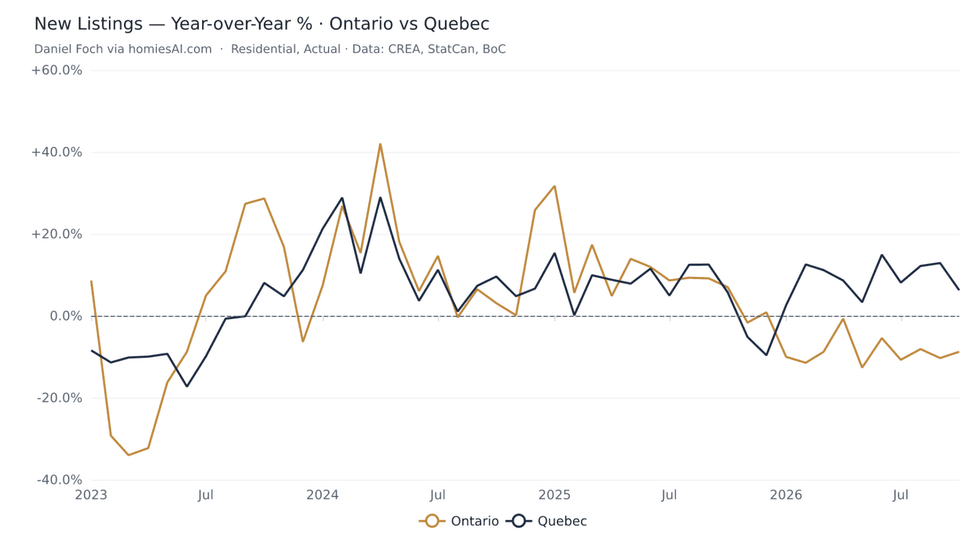 Chart: New listings, year-over-year %, Ontario vs Quebec. Daniel Foch via homiesai.com/stats. Data:
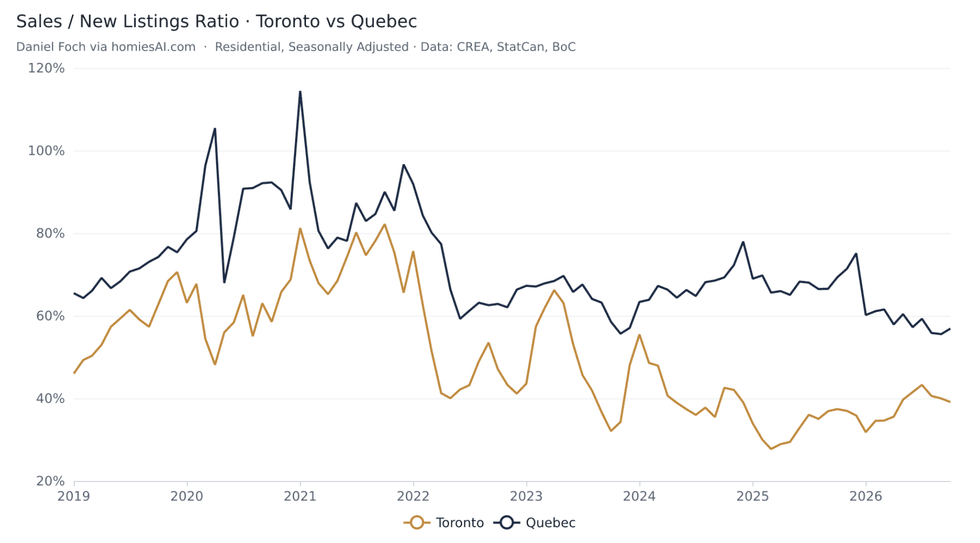 Chart: Sales-to-new-listings ratio, seasonally adjusted. Toronto vs Quebec. Daniel Foch via homiesai.com/stats. Data: CREA.
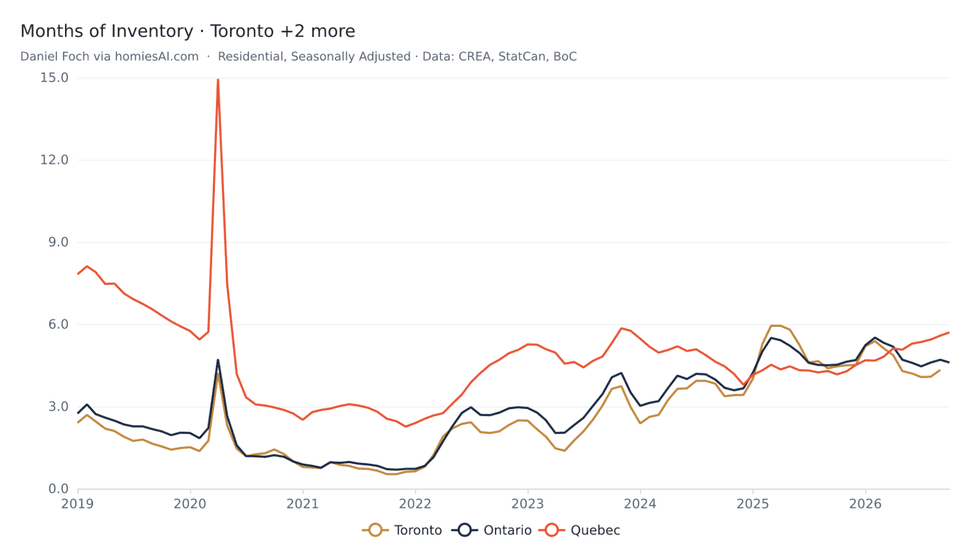 Chart: Months of inventory, seasonally adjusted. Daniel Foch via homiesai.com/stats. Data: CREA.
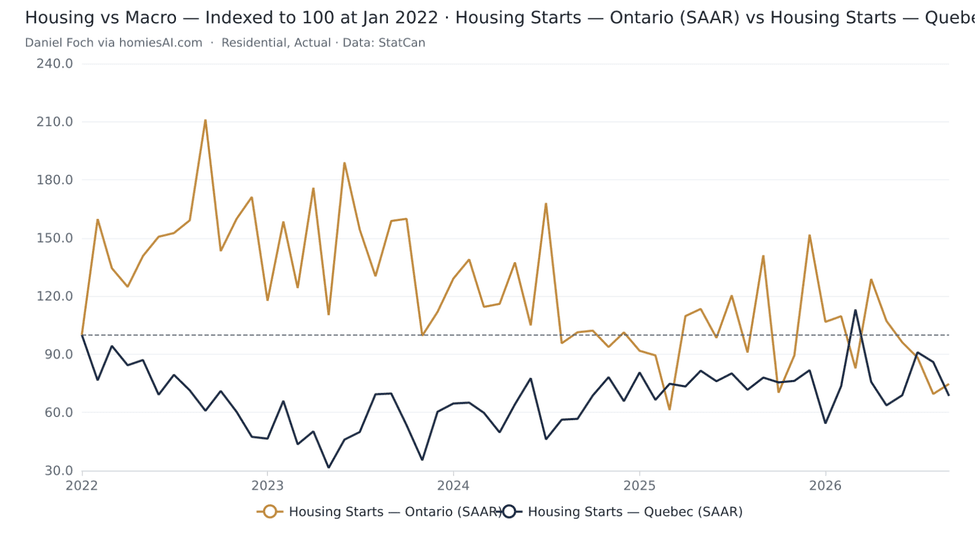 Chart: Housing starts, seasonally adjusted annual rate, Ontario vs Quebec, indexed to January 2022. Daniel Foch via homiesai.com/stats. Data: CMHC via Statistics Canada.
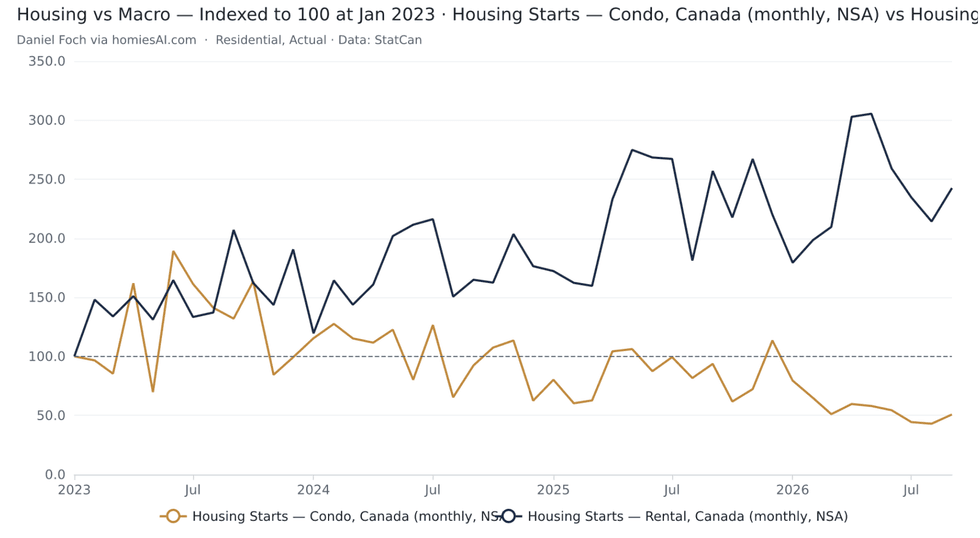 Chart: Condo vs rental housing starts, Canada, indexed to January 2023. Daniel Foch via homiesai.com/stats. Data: CMHC via Statistics Canada.
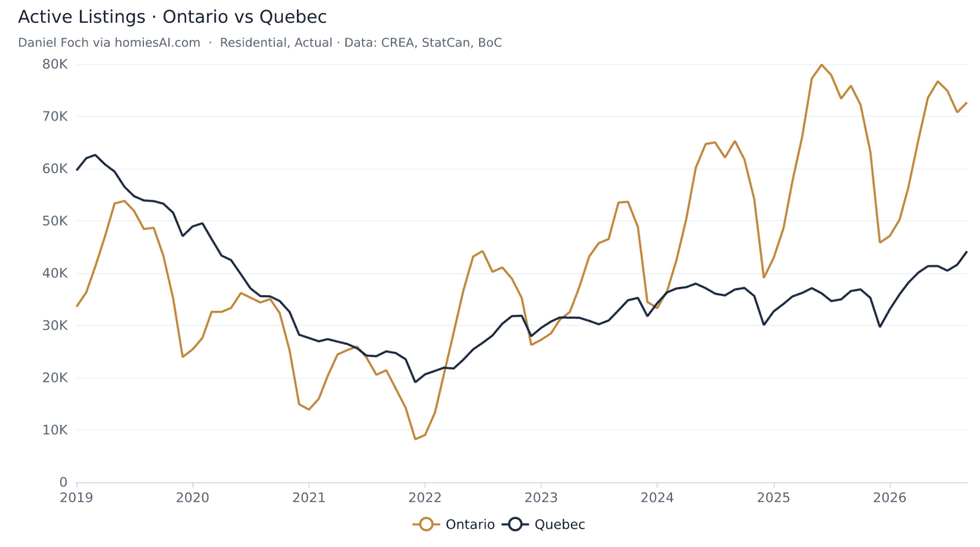 Chart: Active residential listings, Ontario vs Quebec. Daniel Foch via homiesai.com/stats. Data: CREA.







 The Highlight of Mississauga as of March 2026. (Grant Thornton)


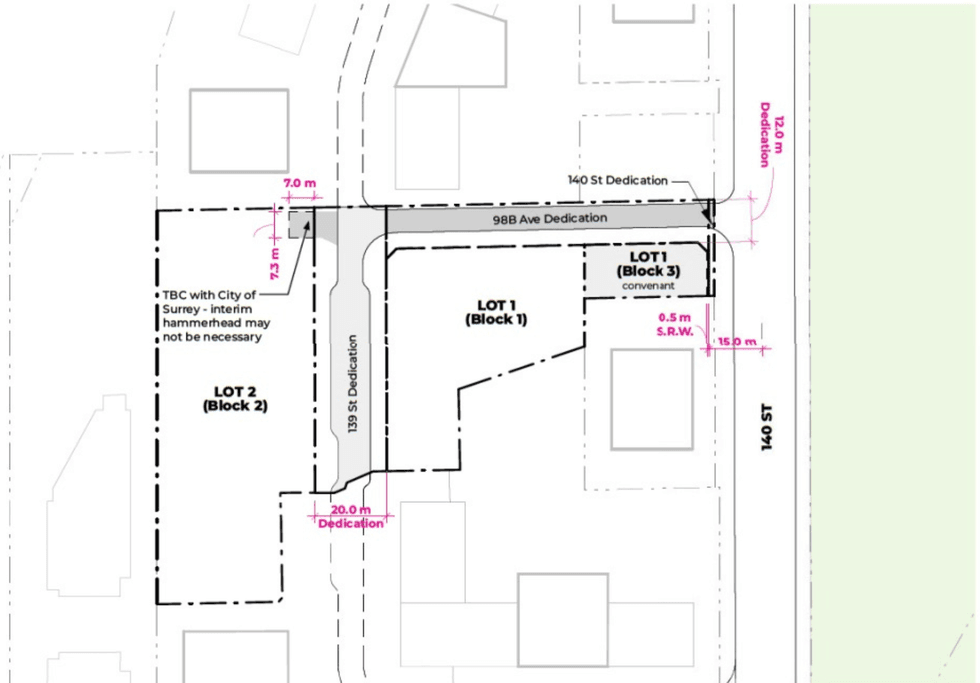 9883 140 Street and the proposed road dedications. (WW+P Architects, Entre Nous Femmes Housing Society)
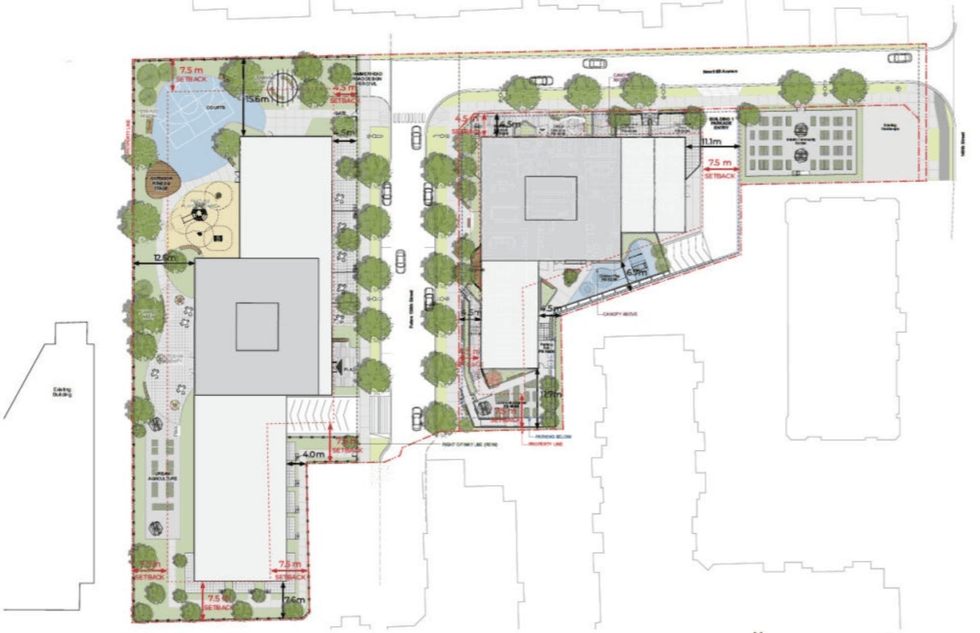 The
 One of the towers proposed for 9883 140 Street. (Entres Nous Femmes Housing Society)

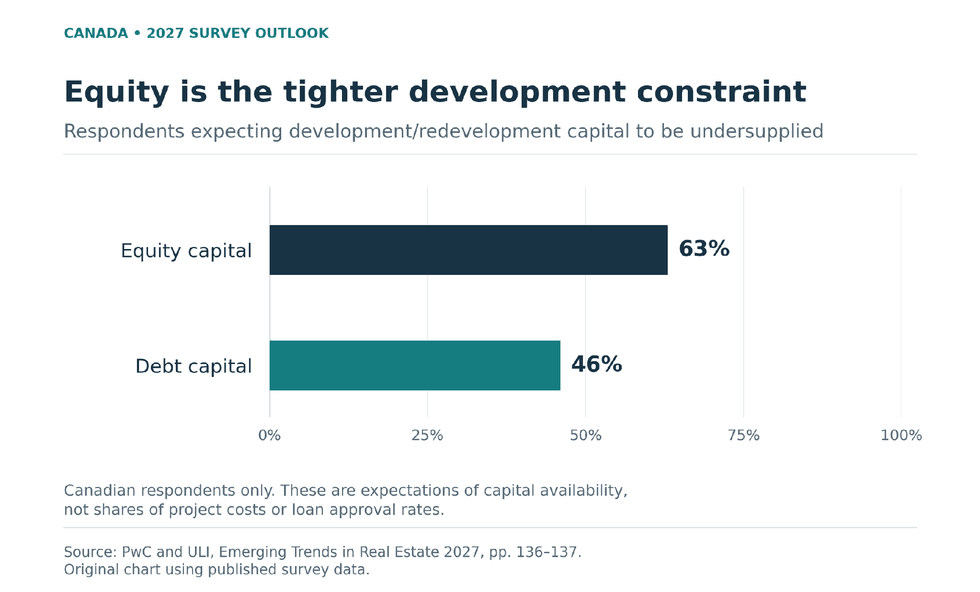 Canadian respondents were more likely to expect an undersupply of development/redevelopment equity capital (63%) than debt capital (46%) in 2027. These are survey expectations, not measured financing volumes. Source: PwC and ULI, Emerging Trends in Real Estate 2027, pp. 136–137. Original chart.
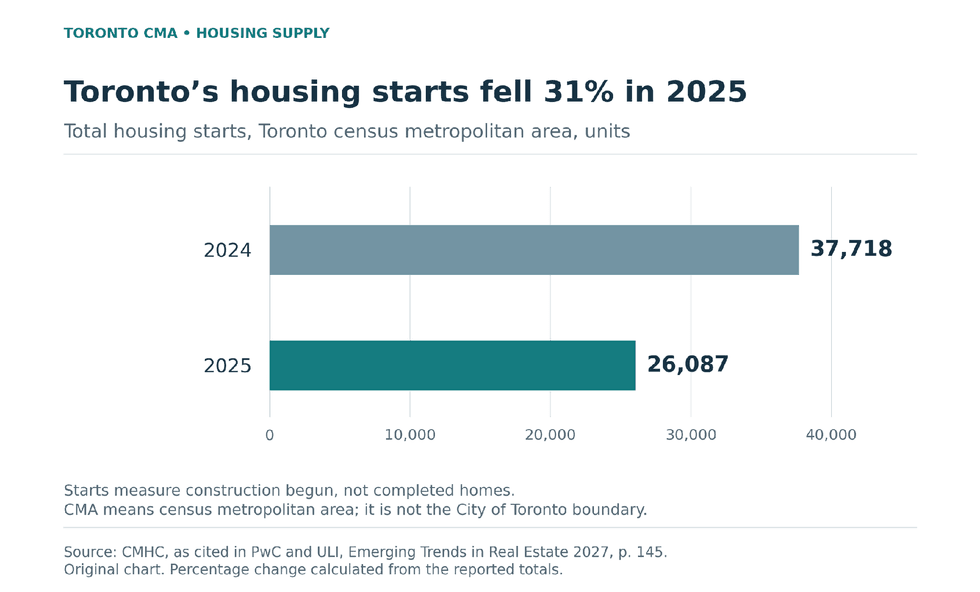 Toronto census metropolitan area housing starts fell from 37,718 units in 2024 to 26,087 in 2025, a 30.8% decline (rounded to 31%). Starts measure construction begun, not completed homes. Source: CMHC, as cited in PwC and ULI, Emerging Trends in Real Estate 2027, p. 145. Original chart.



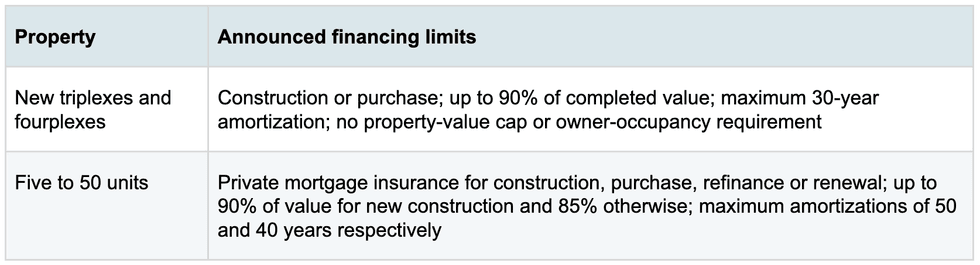
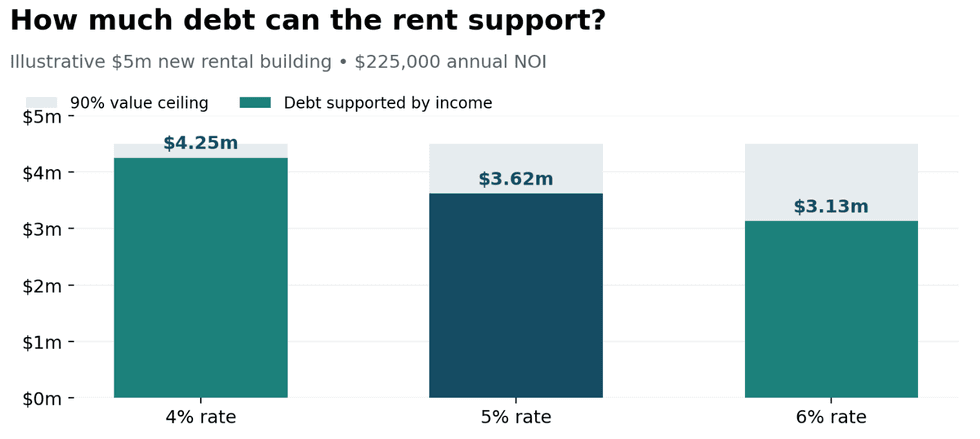 Illustrative calculation: a $4.5-million value ceiling versus income-based capacity of about $4.25 million at 4%, $3.62 million at 5% and $3.13 million at 6%. Assumes 50-year amortization and 1.15 debt coverage.
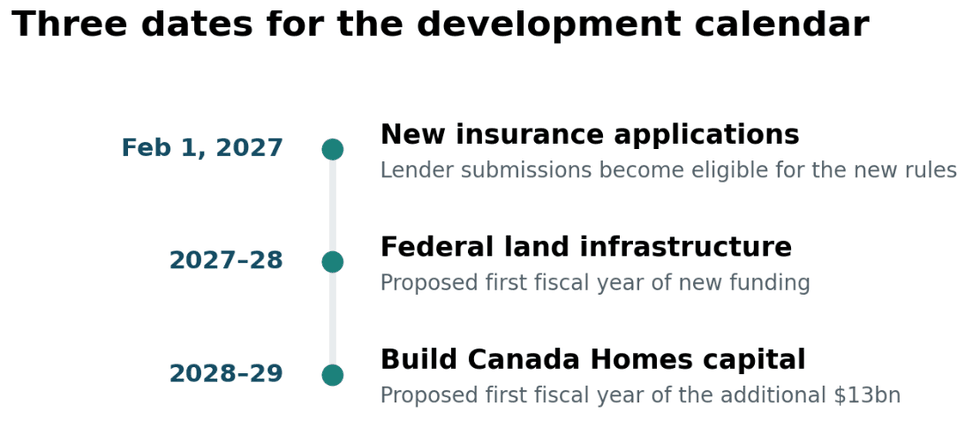 Source: Department of Finance missing-middle backgrounder and Budget 2026 Chapter 3, November 5, 2026. Fiscal-year funding starts are not home-completion dates.