Mortgage Portability
Explore mortgage portability in Canada, how it works, and how homeowners can transfer their mortgage to a new property while preserving favorable terms.

May 22, 2025
What is Mortgage Portability?
Mortgage portability is a feature that allows homeowners to transfer their existing mortgage to a new property without incurring prepayment penalties or renegotiating rates.
Why Mortgage Portability Matters in Real Estate
In Canadian real estate, mortgage portability helps homeowners retain favorable mortgage terms when moving to a new home. This is especially useful when interest rates have increased since the original mortgage was signed.
Key benefits:- Avoids early termination fees
- Maintains current interest rate and mortgage term
- May simplify the financing process on a new purchase
Most lenders offer portability for fixed-rate mortgages, but terms vary. Some allow partial porting (adding new funds to the existing mortgage), while others require the new home to close within a specific timeframe (usually 30–120 days).
Buyers should check with their lender about:- Eligibility requirements
- Applicable fees
- Time limits and new home criteria
Understanding mortgage portability allows homeowners to move with less financial disruption and preserves favorable loan terms in changing markets.
Example of Mortgage Portability
A homeowner sells their current home and uses mortgage portability to carry over their 2.8% rate to a new property, avoiding higher current market rates.
Key Takeaways
- Lets you transfer your mortgage to a new home.
- Avoids rate hikes and prepayment fees.
- May require lender approval and timing alignment.
- Common in fixed-rate mortgages.
- Helps maintain affordability when relocating.
Related Terms
- Mortgage Renewal
- Fixed Rate Mortgage
- Mortgage Term
- Prepayment Penalty
- Bridge Financing

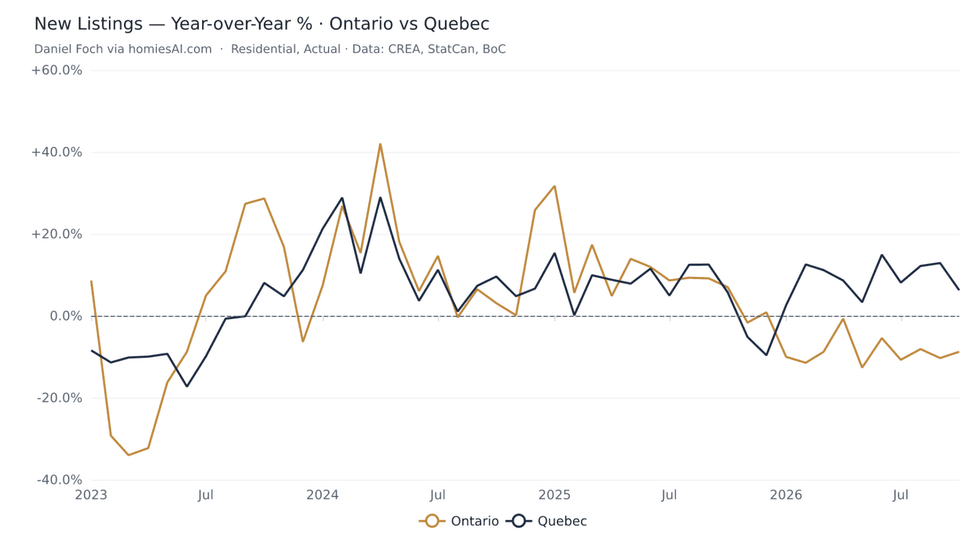 Chart: New listings, year-over-year %, Ontario vs Quebec. Daniel Foch via homiesai.com/stats. Data:
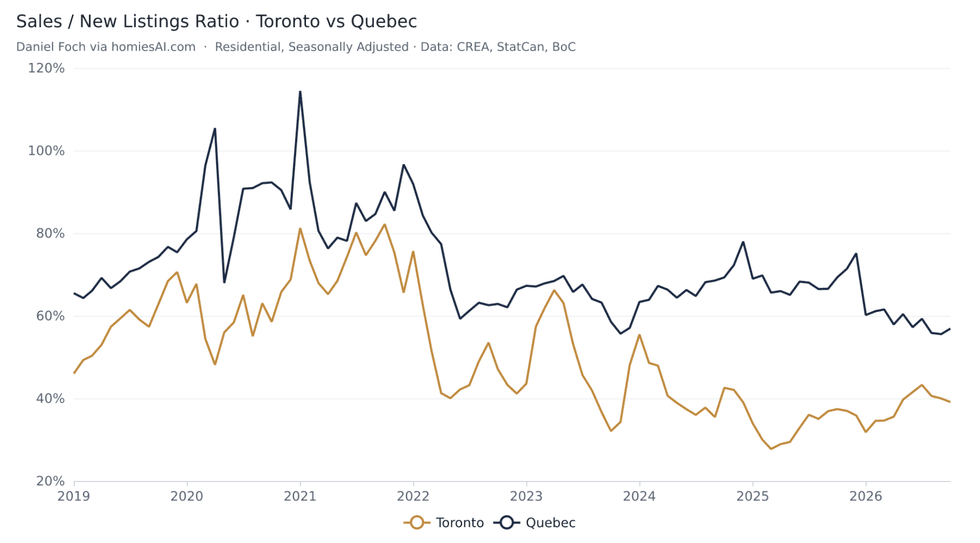 Chart: Sales-to-new-listings ratio, seasonally adjusted. Toronto vs Quebec. Daniel Foch via homiesai.com/stats. Data: CREA.
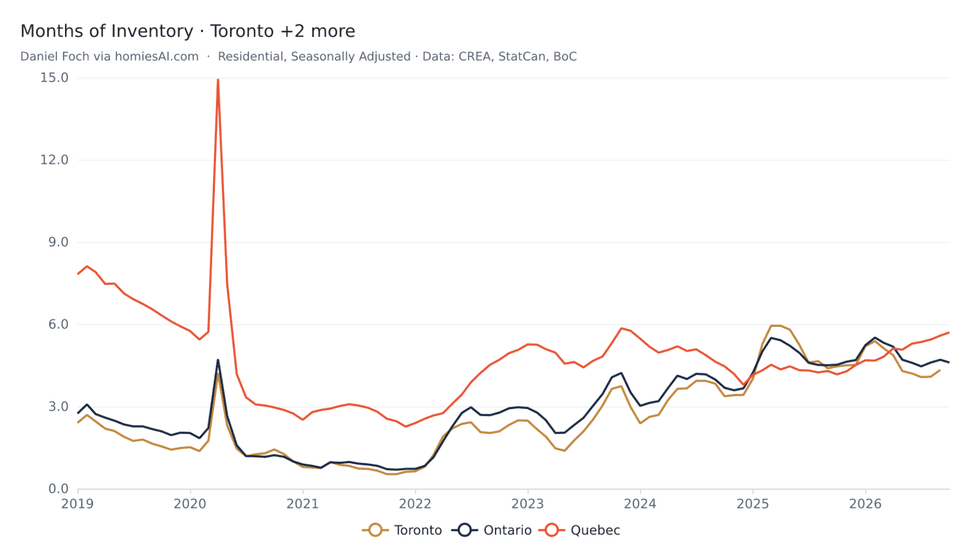 Chart: Months of inventory, seasonally adjusted. Daniel Foch via homiesai.com/stats. Data: CREA.
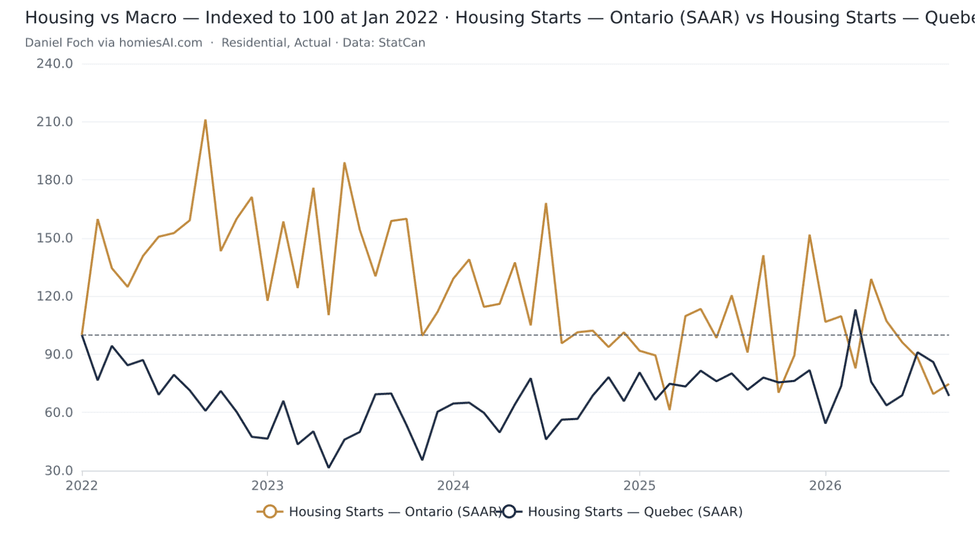 Chart: Housing starts, seasonally adjusted annual rate, Ontario vs Quebec, indexed to January 2022. Daniel Foch via homiesai.com/stats. Data: CMHC via Statistics Canada.
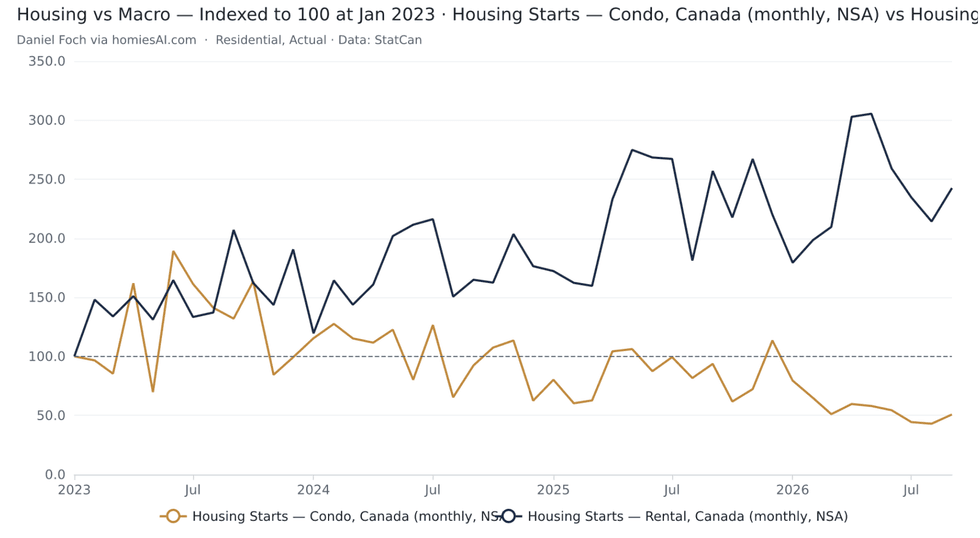 Chart: Condo vs rental housing starts, Canada, indexed to January 2023. Daniel Foch via homiesai.com/stats. Data: CMHC via Statistics Canada.
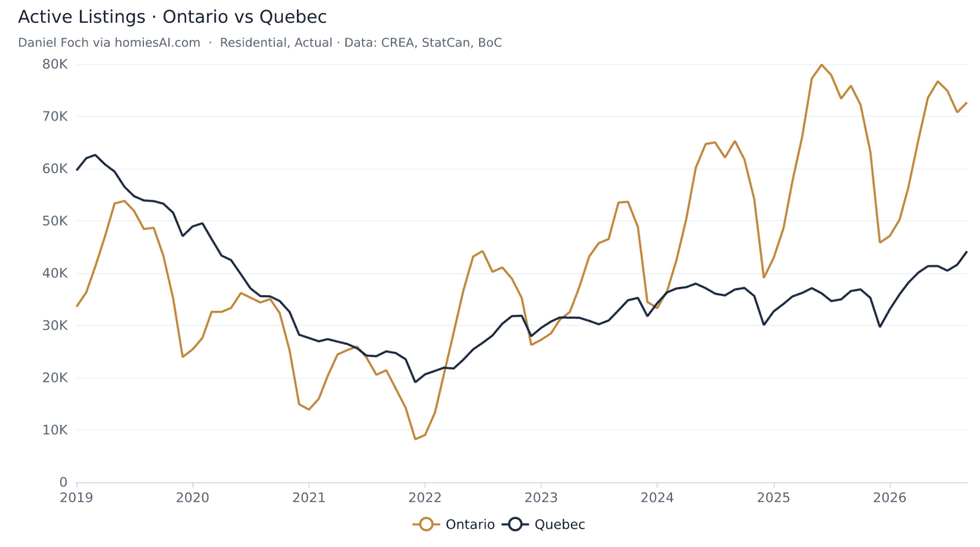 Chart: Active residential listings, Ontario vs Quebec. Daniel Foch via homiesai.com/stats. Data: CREA.







 The Highlight of Mississauga as of March 2026. (Grant Thornton)


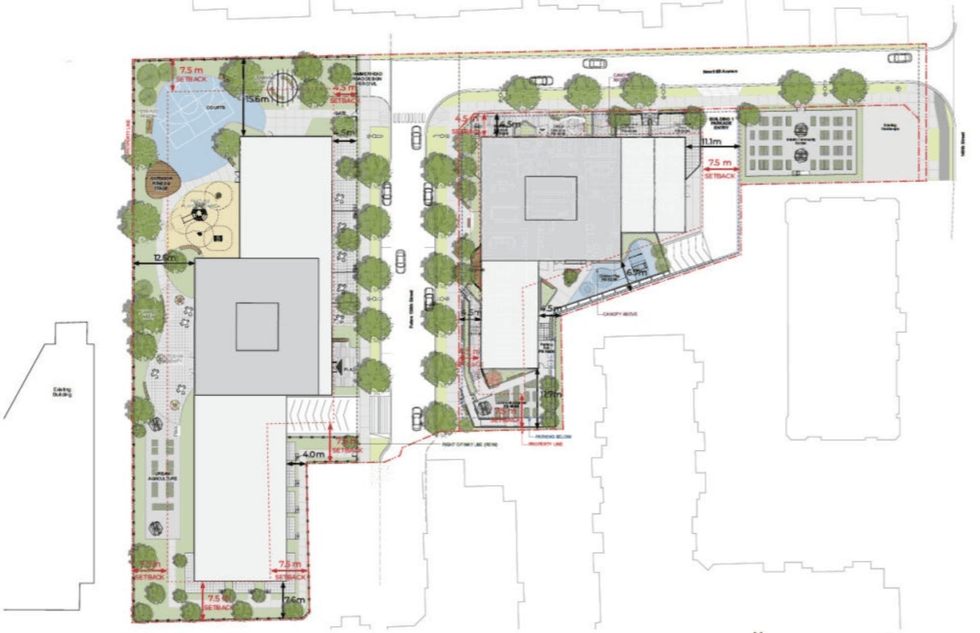
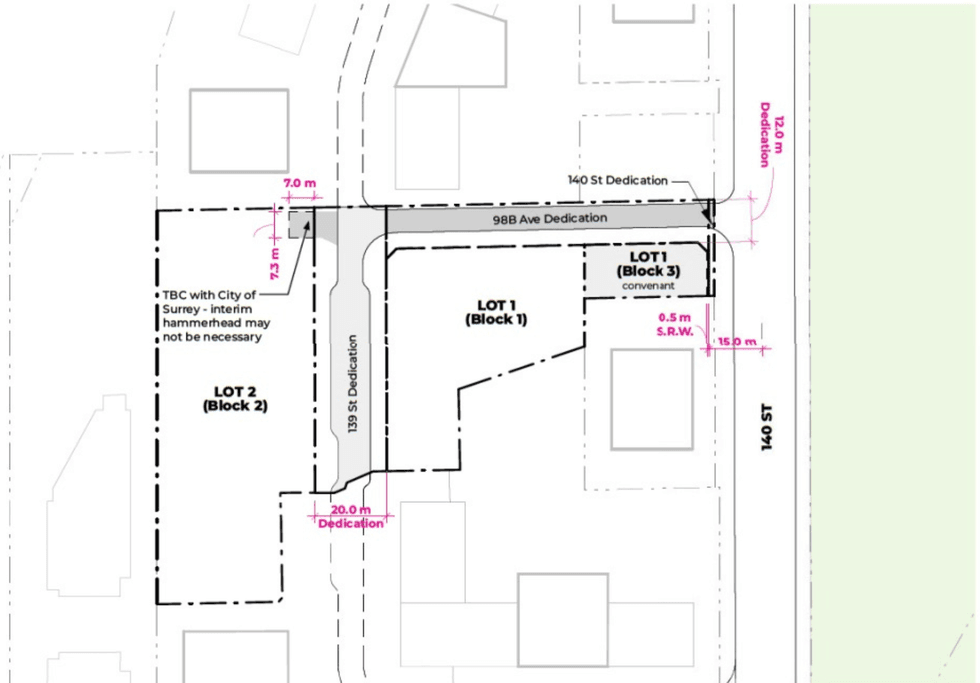 9883 140 Street and the proposed road dedications. (WW+P Architects, Entre Nous Femmes Housing Society)
 The
 One of the towers proposed for 9883 140 Street. (Entres Nous Femmes Housing Society)

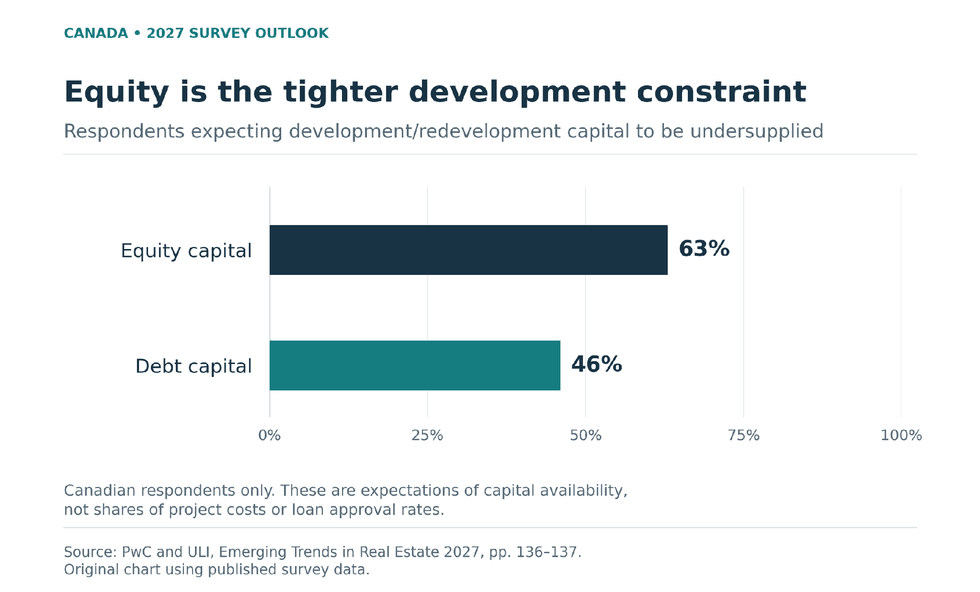 Canadian respondents were more likely to expect an undersupply of development/redevelopment equity capital (63%) than debt capital (46%) in 2027. These are survey expectations, not measured financing volumes. Source: PwC and ULI, Emerging Trends in Real Estate 2027, pp. 136–137. Original chart.
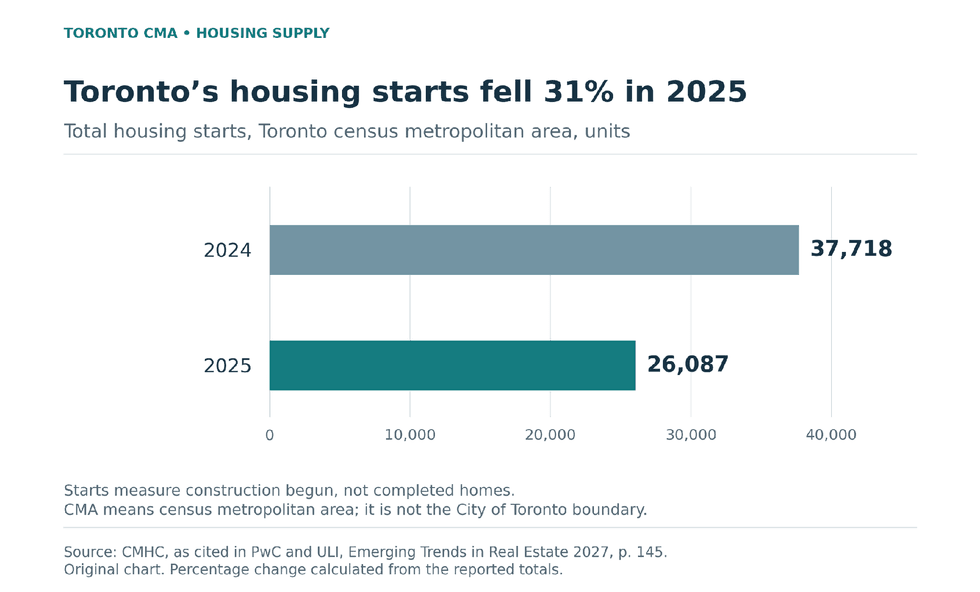 Toronto census metropolitan area housing starts fell from 37,718 units in 2024 to 26,087 in 2025, a 30.8% decline (rounded to 31%). Starts measure construction begun, not completed homes. Source: CMHC, as cited in PwC and ULI, Emerging Trends in Real Estate 2027, p. 145. Original chart.



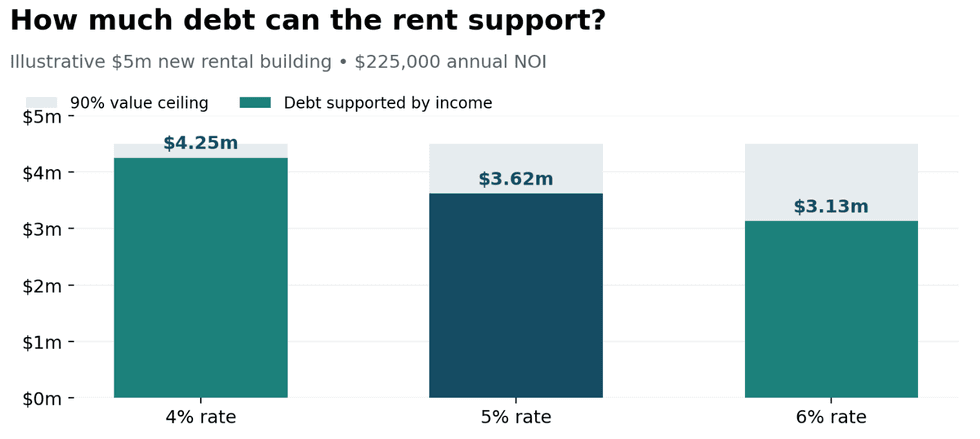 Illustrative calculation: a $4.5-million value ceiling versus income-based capacity of about $4.25 million at 4%, $3.62 million at 5% and $3.13 million at 6%. Assumes 50-year amortization and 1.15 debt coverage.
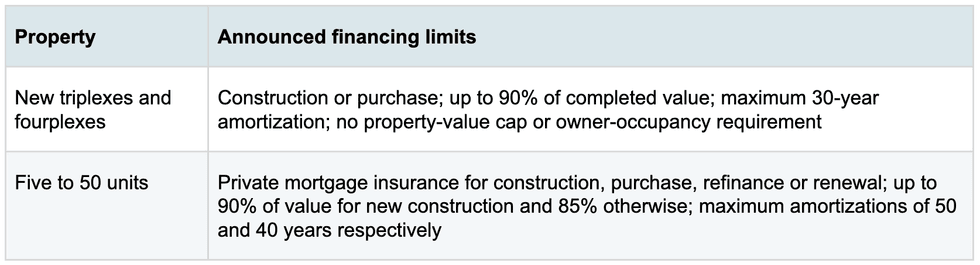
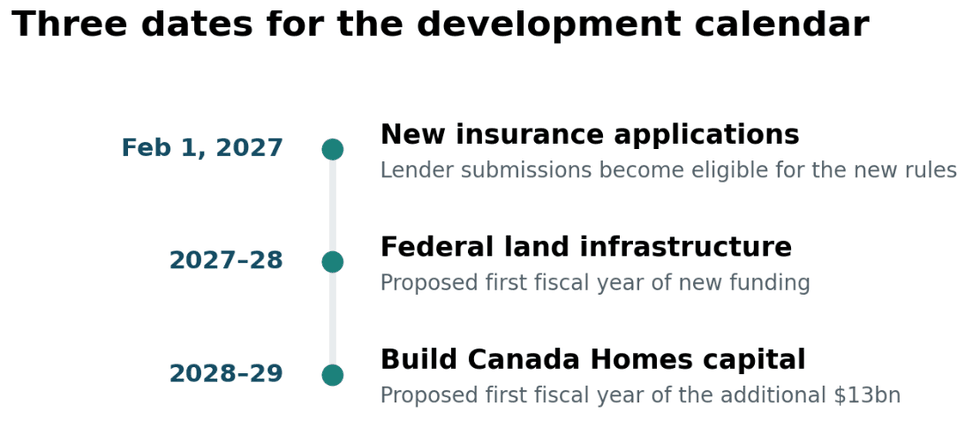 Source: Department of Finance missing-middle backgrounder and Budget 2026 Chapter 3, November 5, 2026. Fiscal-year funding starts are not home-completion dates.