Eligibility Criteria
Learn what eligibility criteria are in Canadian real estate, how they apply to rebates and incentives, and how to confirm qualification before applying.

May 22, 2025
What are Eligibility Criteria?
Eligibility criteria are the specific requirements a person must meet to qualify for government programs, rebates, mortgage products, or real estate incentives.
Why Eligibility Criteria Matter in Real Estate
In Canadian real estate, eligibility criteria apply to programs such as the First-Time Home Buyer Incentive, land transfer tax rebates, and mortgage insurance qualifications.
Common eligibility factors include:
- Age and residency status
- Income limits or debt thresholds
- Home purchase price and location
- Property type and occupancy (e.g., principal residence)
Failing to meet these requirements can disqualify applicants or result in a clawback of funds. Verifying eligibility before applying ensures smoother transactions and better financial planning.
Understanding eligibility criteria allows buyers to take advantage of cost-saving opportunities and secure the right financial tools.
Example of Eligibility Criteria in Action
A couple earning $170,000 is ineligible for the First-Time Home Buyer Incentive because they exceed the household income cap for their region.
Key Takeaways
- Sets the rules for accessing programs or rebates.
- May include income, citizenship, or residency.
- Varies by program and region.
- Must be verified before applying.
- Key to unlocking homebuying benefits.
Related Terms
- First-Time Homebuyer Rebate
- Principal Residence
- Mortgage Insurance
- Down Payment
- Government Incentive

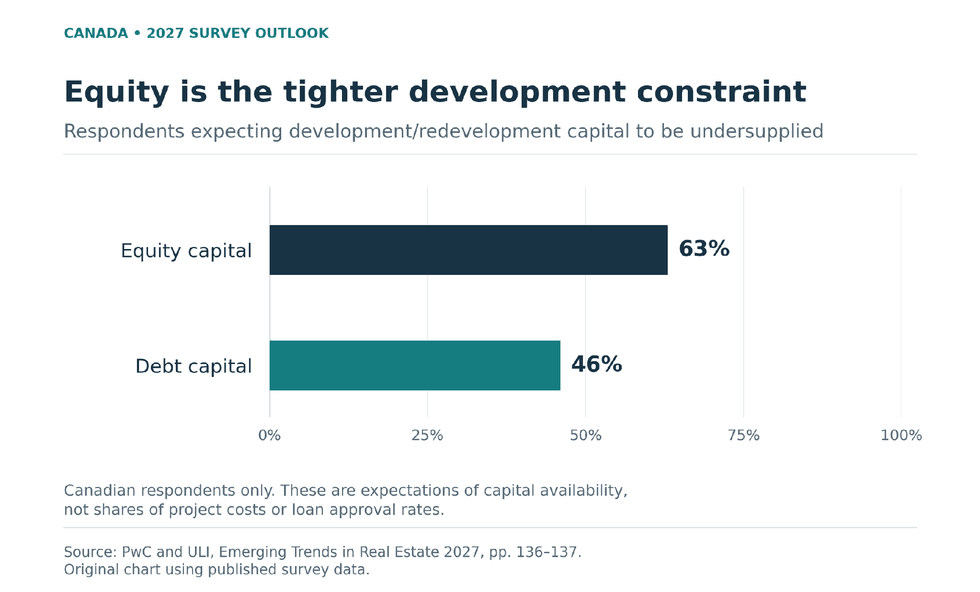 Canadian respondents were more likely to expect an undersupply of development/redevelopment equity capital (63%) than debt capital (46%) in 2027. These are survey expectations, not measured financing volumes. Source: PwC and ULI, Emerging Trends in Real Estate 2027, pp. 136–137. Original chart.
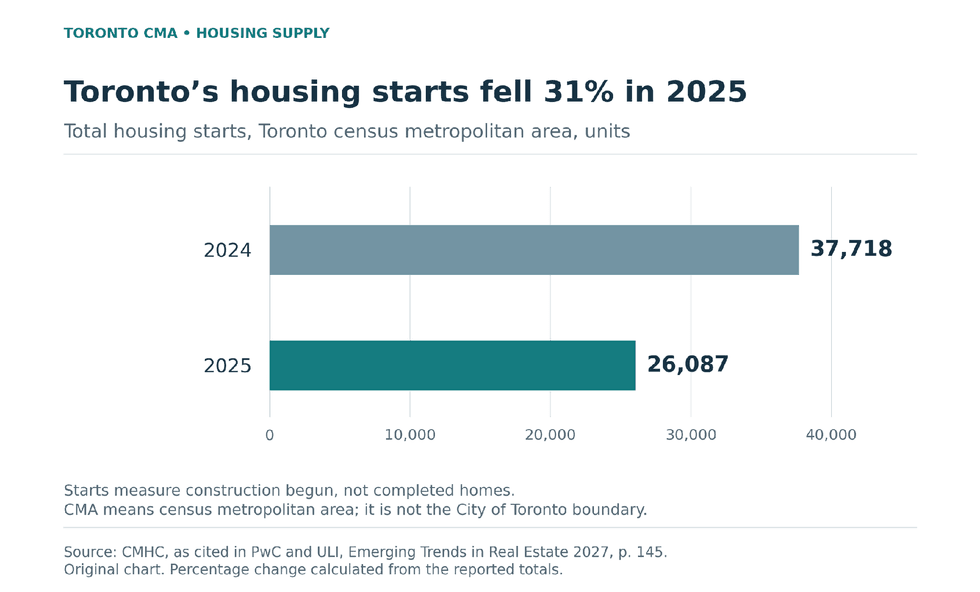 Toronto census metropolitan area housing starts fell from 37,718 units in 2024 to 26,087 in 2025, a 30.8% decline (rounded to 31%). Starts measure construction begun, not completed homes. Source: CMHC, as cited in PwC and ULI, Emerging Trends in Real Estate 2027, p. 145. Original chart.










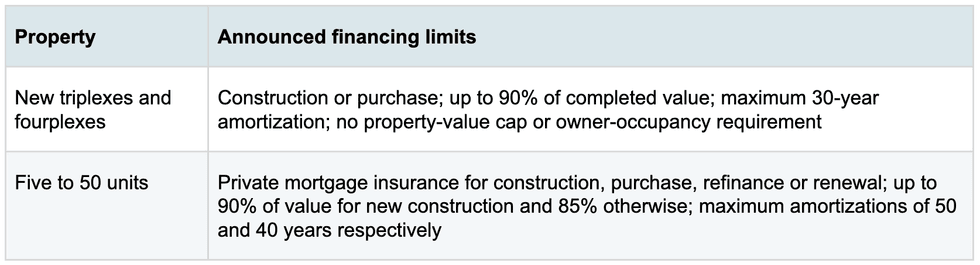
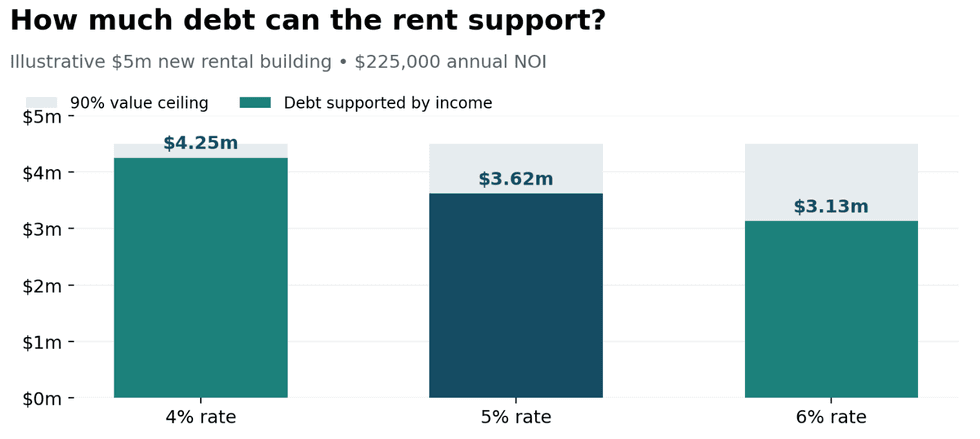 Illustrative calculation: a $4.5-million value ceiling versus income-based capacity of about $4.25 million at 4%, $3.62 million at 5% and $3.13 million at 6%. Assumes 50-year amortization and 1.15 debt coverage.
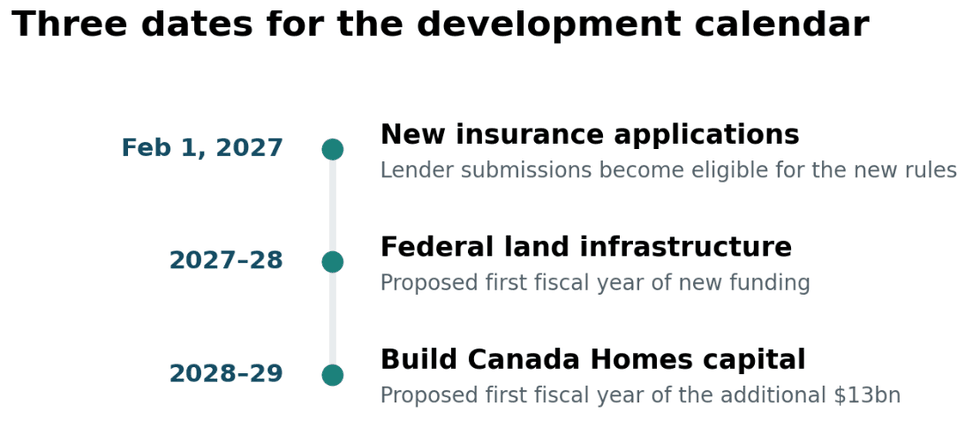 Source: Department of Finance missing-middle backgrounder and Budget 2026 Chapter 3, November 5, 2026. Fiscal-year funding starts are not home-completion dates.