Benchmark Interest Rate
A benchmark interest rate is the reference rate lenders use to qualify borrowers and set mortgage terms, impacting affordability.

September 29, 2025
What is a Benchmark Interest Rate?
A benchmark interest rate is a reference rate used by lenders to determine mortgage qualification and pricing. In Canada, the Bank of Canada’s policy rate and the federal mortgage stress test benchmark are common examples.
Why a Benchmark Interest Rate Matters in Real Estate
Benchmark interest rates matter in real estate because they directly affect borrowing costs, mortgage qualification, and housing affordability. Changes to benchmarks ripple through the market, influencing demand and pricing.
Example of a Benchmark Interest Rate in Action
When the federal government raises the benchmark qualifying rate, fewer buyers qualify for mortgages, slowing demand in overheated housing markets.
Key Takeaways
- Reference rate used for mortgage qualification and pricing.
- Impacts affordability and borrowing capacity.
- Changes influence demand and housing activity.
- Common examples include Bank of Canada rate and stress test benchmark.
- Key indicator for housing market performance.
Related Terms
- Mortgage Stress Test
- Bank of Canada Rate
- Prime Rate
- Fixed vs. Variable Rate
- Interest Rate


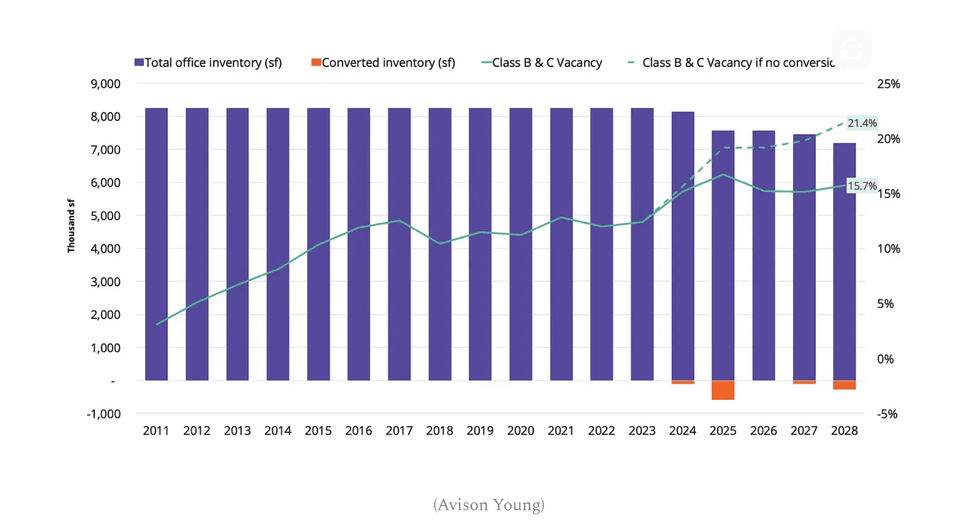 (Avison Young)






 The Mason Suite Interior (Infinity Properties)
 The Mason Suite Interior (Infinity Properties)
 Rail District aerial (Infinity Properties)
 Versant (Infinity Properties)


 Narrow Fourplex (City of Toronto)
 Wide Sixplex - Side View (City of Toronto)
 Centre Block and its surrounding context. (Stantec-Revery, SCDC)
 The 12-storey Phase One of Centre Block. (Stantec-Revery, SCDC)
 The 12-storey Phase One of Centre Block. (Stantec-Revery, SCDC)
 Mondria One, set for 1607 King Street East in Clarington, Ontario. (ICON Architects Inc., Monde Development Group)