Renoviction
Renoviction is tenant eviction under the pretense of renovations, often to raise rents, raising affordability and protection concerns.

September 30, 2025
What is Renoviction?
Renoviction is the practice of evicting tenants from rental properties under the pretense of major renovations, often with the intent of re-renting at higher rates. It is a controversial issue in jurisdictions facing housing affordability challenges.
Why Renoviction Matters in Real Estate
Renovictions matter in real estate because they directly affect tenant security, affordability, and community stability. Many provinces have tightened rules to prevent misuse while allowing legitimate renovations to proceed.
Example of Renoviction in Action
A landlord tells tenants they must vacate due to planned renovations. After evicting them, the landlord minimally renovates and relists the units at double the rent, a practice regulators may investigate as renoviction.
Key Takeaways
- Occurs when tenants are evicted under pretense of renovations.
- Often used to re-rent units at higher rates.
- Raises housing affordability and tenant protection concerns.
- Regulated in many provinces to prevent abuse.
- Legitimate renovations may still justify eviction if rules followed.
Related Terms
- Eviction
- Tenant Rights
- Rent Control
- Residential Tenancies Act
- Affordable Housing
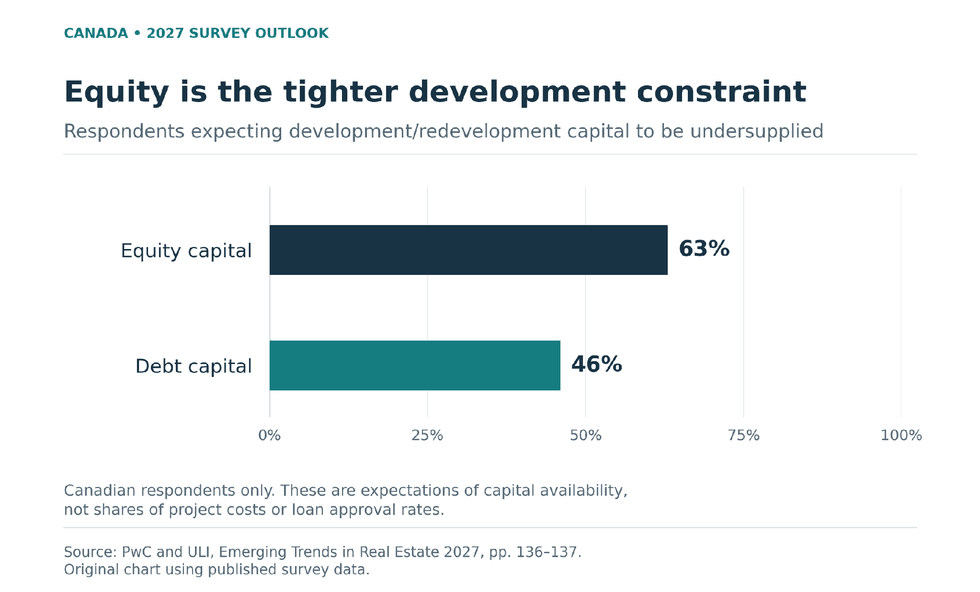 Canadian respondents were more likely to expect an undersupply of development/redevelopment equity capital (63%) than debt capital (46%) in 2027. These are survey expectations, not measured financing volumes. Source: PwC and ULI, Emerging Trends in Real Estate 2027, pp. 136–137. Original chart.
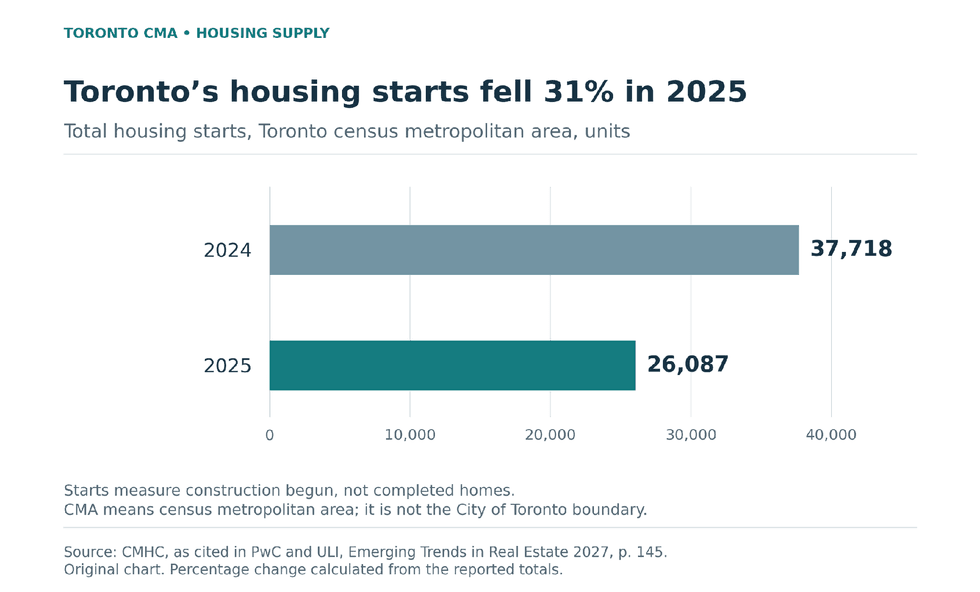 Toronto census metropolitan area housing starts fell from 37,718 units in 2024 to 26,087 in 2025, a 30.8% decline (rounded to 31%). Starts measure construction begun, not completed homes. Source: CMHC, as cited in PwC and ULI, Emerging Trends in Real Estate 2027, p. 145. Original chart.



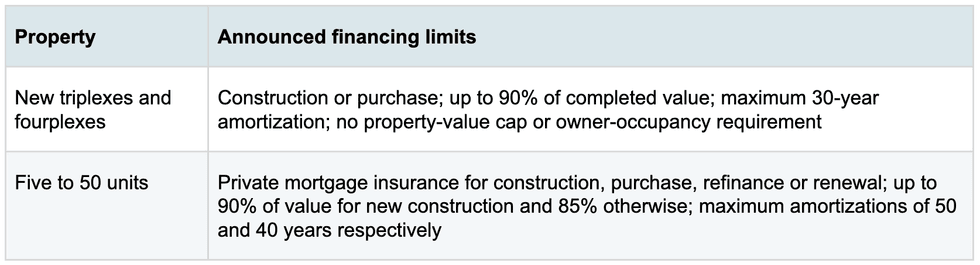
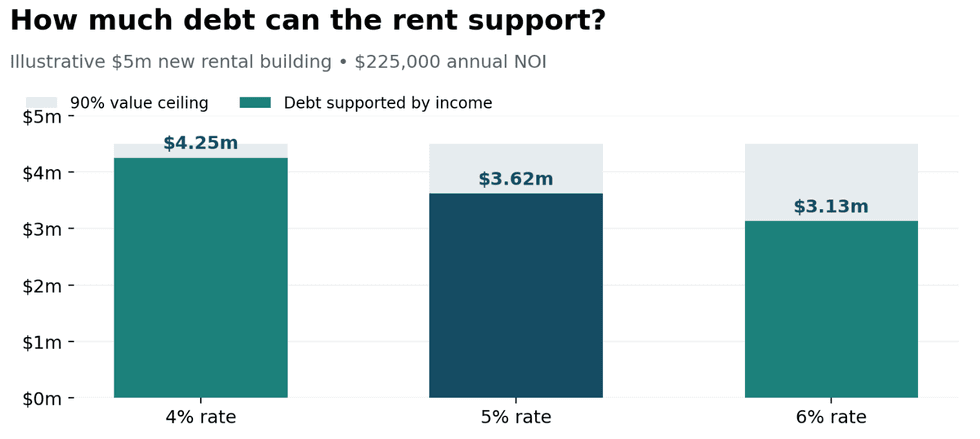 Illustrative calculation: a $4.5-million value ceiling versus income-based capacity of about $4.25 million at 4%, $3.62 million at 5% and $3.13 million at 6%. Assumes 50-year amortization and 1.15 debt coverage.
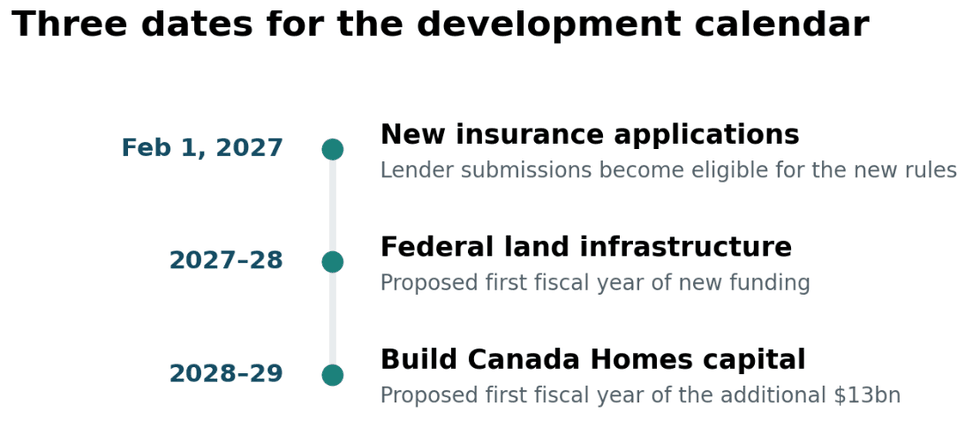 Source: Department of Finance missing-middle backgrounder and Budget 2026 Chapter 3, November 5, 2026. Fiscal-year funding starts are not home-completion dates.