Transfer of Ownership
Understand how transfer of ownership works in Canadian real estate — what’s involved in legally changing title from one party to another.

June 23, 2025
What is Transfer of Ownership?
Transfer of ownership is the legal process by which the title of a property is passed from one party to another, typically through sale, inheritance, or gift.
Why Transfer of Ownership Matters in Real Estate
In Canadian real estate, the transfer of ownership involves legal documentation, registration with the land registry, and often tax implications such as land transfer tax or capital gains.
The process includes:
- Agreement of purchase and sale
- Title search and due diligence
- Discharge of existing liens or mortgages
- Registration of new title with provincial authority
Transfers may also occur through divorce settlements, estate transfers, or corporate restructuring.
Understanding ownership transfer helps buyers, sellers, and professionals ensure a smooth and legally compliant transaction.
Example of Transfer of Ownership in Action
Upon closing, the lawyer completes the transfer of ownership by registering the buyer as the new title holder with the provincial land registry.
Key Takeaways
- Legally moves property title between parties
- Involves documentation and registration
- May include taxes and legal fees
- Can occur via sale, gift, or estate
- Requires title search and due diligence
Related Terms
- Title Transfer
- Legal Title
- Agreement of Purchase and Sale
- Land Transfer Tax
- Property Title Search


 Via STOREYS Editorial team







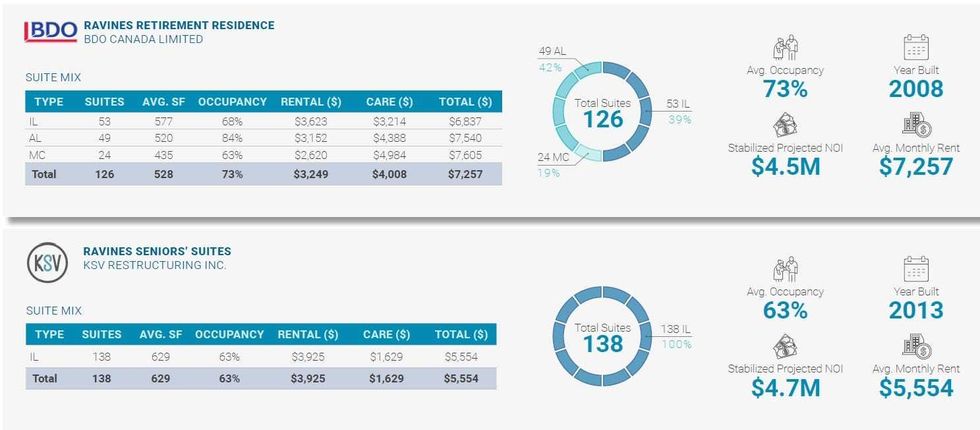 An overview of the two Ravine buildings. (Newmark)
 95 Clegg Road in Markham, Ontario. (Colliers)
 95 Clegg Road (centre) in Markham, Ontario. (Colliers)

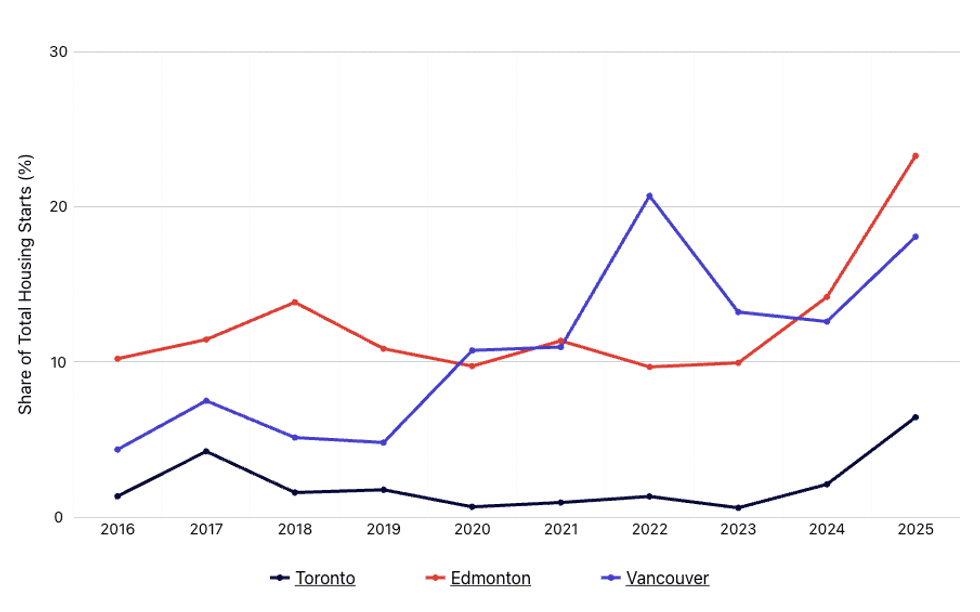 Small-scale infill share of housing starts in Toronto, Vancouver, and Edmonton/CMHC
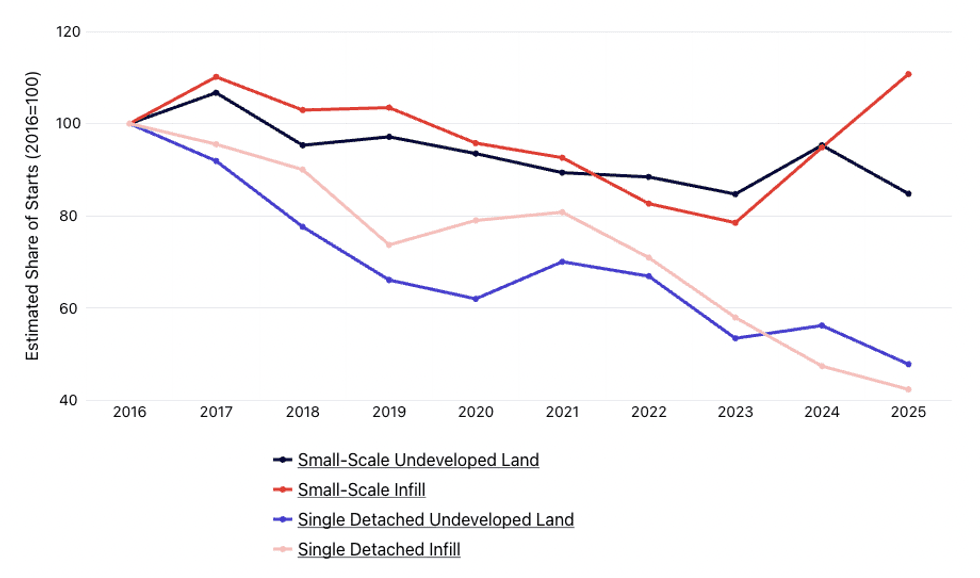 Housing starts for one to eight unit developments/CMHC