Mortgage Qualification
Explore how mortgage qualification works in Canada, what factors lenders evaluate, and how to improve your chances of approval for a home loan.

May 22, 2025
What is Mortgage Qualification?
Mortgage qualification is the process by which a lender evaluates a buyer’s ability to borrow money to purchase a property, based on income, credit, and debt levels.
Why Mortgage Qualification Matters in Real Estate
In Canada, mortgage qualification determines the maximum loan amount a buyer can receive and what interest rate they will pay. It involves reviewing:- Credit score and history
- Employment income and stability
- Monthly debt payments
- Down payment amount
- Property taxes and condo fees
Lenders use the Gross Debt Service (GDS) and Total Debt Service (TDS) ratios to assess affordability. Most borrowers must also pass the federal mortgage stress test, proving they can handle payments at a qualifying rate higher than their contract rate.
Failing to meet qualification criteria may require a larger down payment, finding a co-signer, or turning to alternative lenders. Mortgage pre-approval is often the first step in confirming qualification and improving bargaining power.
Understanding mortgage qualification is essential for budgeting, property shopping, and ensuring financing approval before making an offer.
Example of Mortgage Qualification
A buyer earning $90,000/year with minimal debt qualifies for a $550,000 mortgage after passing the stress test and submitting income verification.
Key Takeaways
- Determines loan amount and eligibility.
- Based on income, credit, and debts.
- Includes federal stress test.
- Required for pre-approval and offers.
- Affects rate, term, and lender options.
Related Terms
- Pre-Approval
- Debt Service Ratios
- Credit Score
- Stress Test
- Down Payment

 Rendering of 86 and 100-108 Lombard St and 103 Richmond St E/WZMH Architects
 Rendering of 60 Overlea Blvd/Sweeny&Co Architects
 Rendering of 7 Labatt Ave and 77 River St/Giannone Petricone Associates
 Rendering of 4632-4648 Yonge St and 16-18 Cameron Ave/Arcadis
 Rendering of 1234 Islington Ave/Sweeny&Co Architects






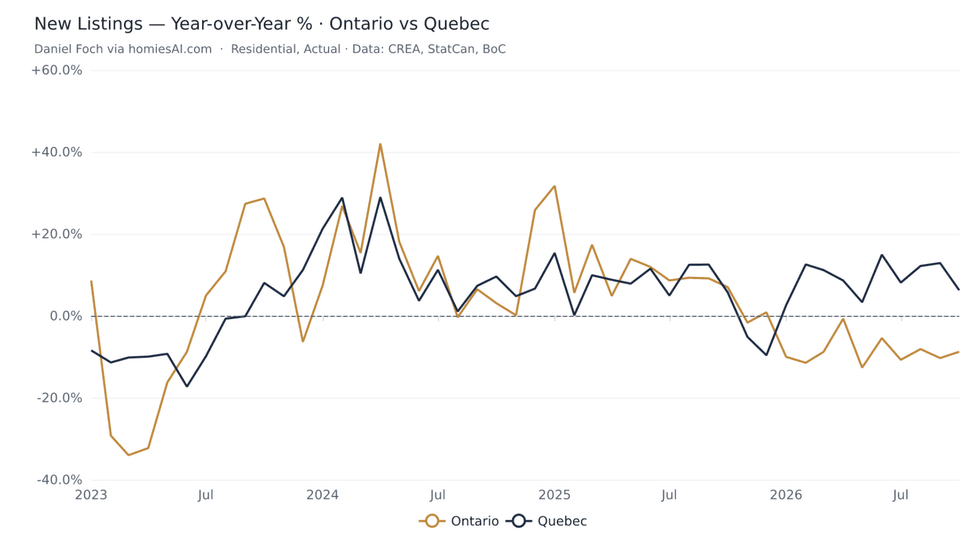 Chart: New listings, year-over-year %, Ontario vs Quebec. Daniel Foch via homiesai.com/stats. Data:
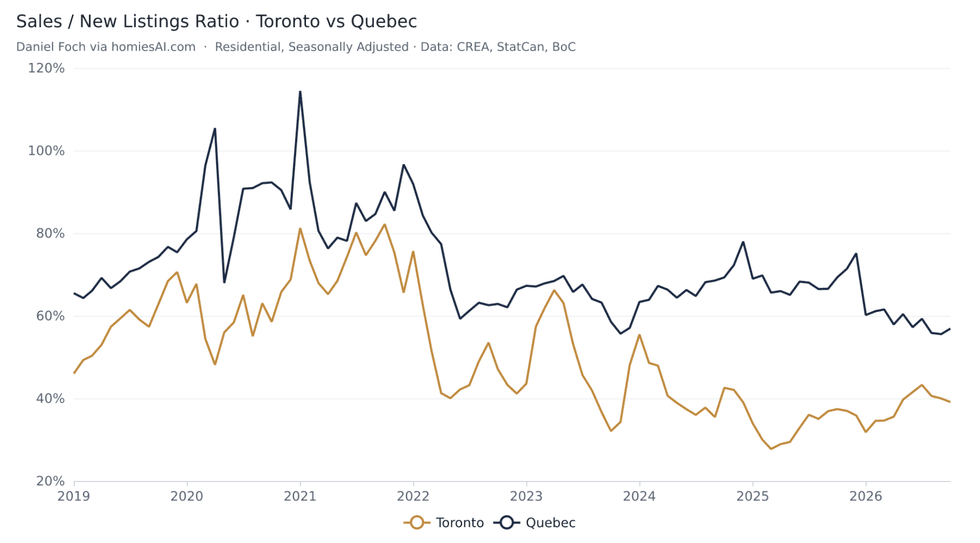 Chart: Sales-to-new-listings ratio, seasonally adjusted. Toronto vs Quebec. Daniel Foch via homiesai.com/stats. Data: CREA.
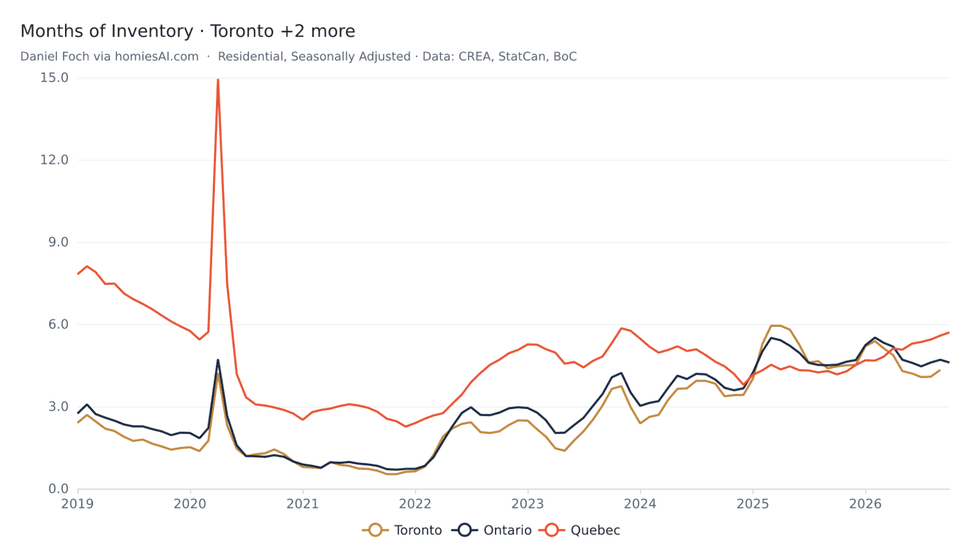 Chart: Months of inventory, seasonally adjusted. Daniel Foch via homiesai.com/stats. Data: CREA.
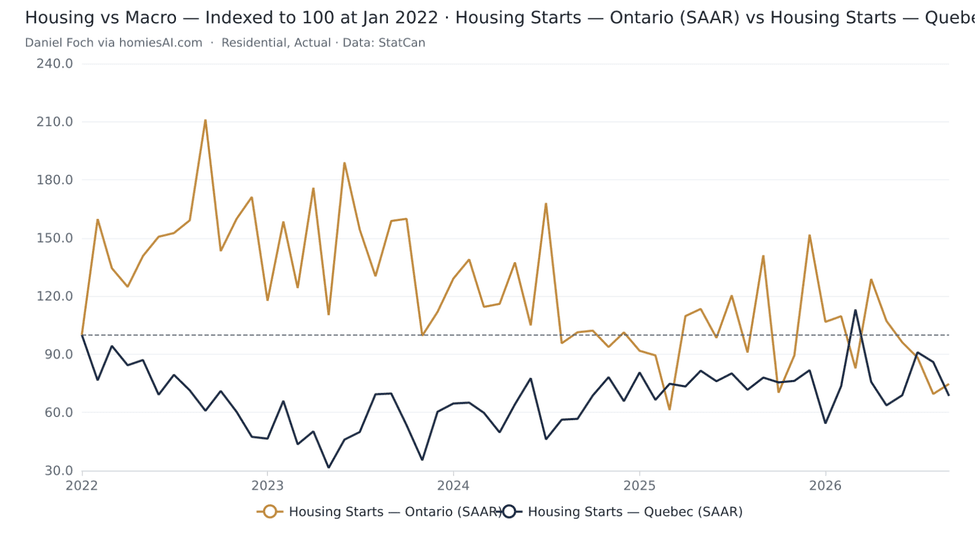 Chart: Housing starts, seasonally adjusted annual rate, Ontario vs Quebec, indexed to January 2022. Daniel Foch via homiesai.com/stats. Data: CMHC via Statistics Canada.
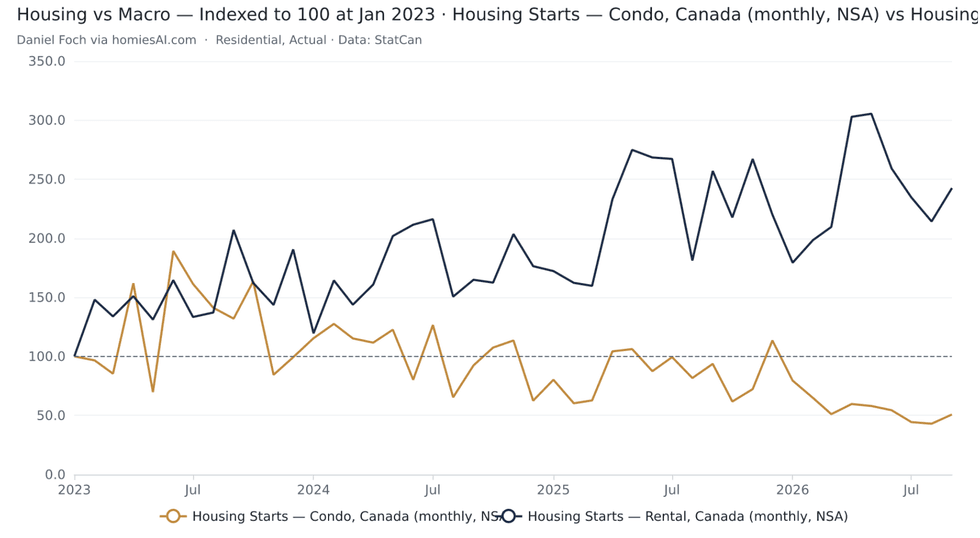 Chart: Condo vs rental housing starts, Canada, indexed to January 2023. Daniel Foch via homiesai.com/stats. Data: CMHC via Statistics Canada.
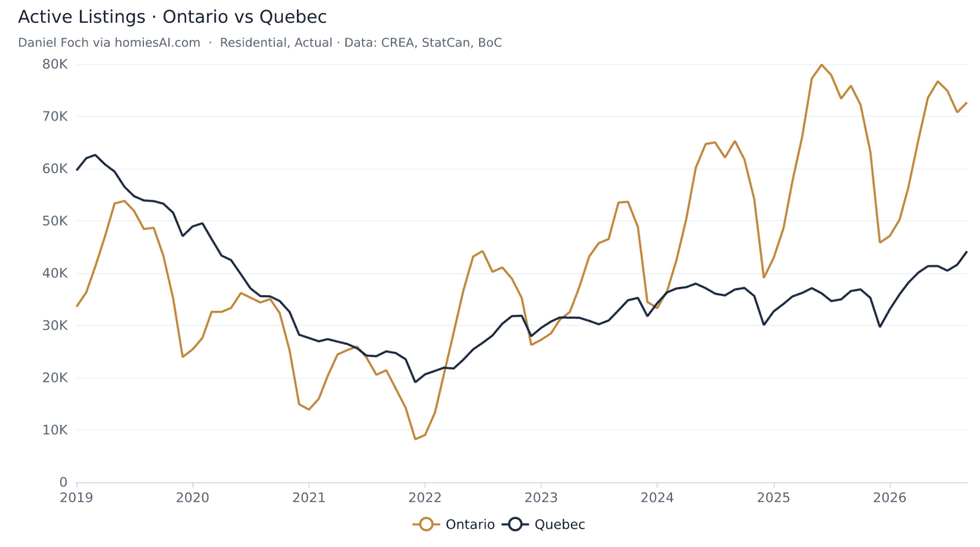 Chart: Active residential listings, Ontario vs Quebec. Daniel Foch via homiesai.com/stats. Data: CREA.

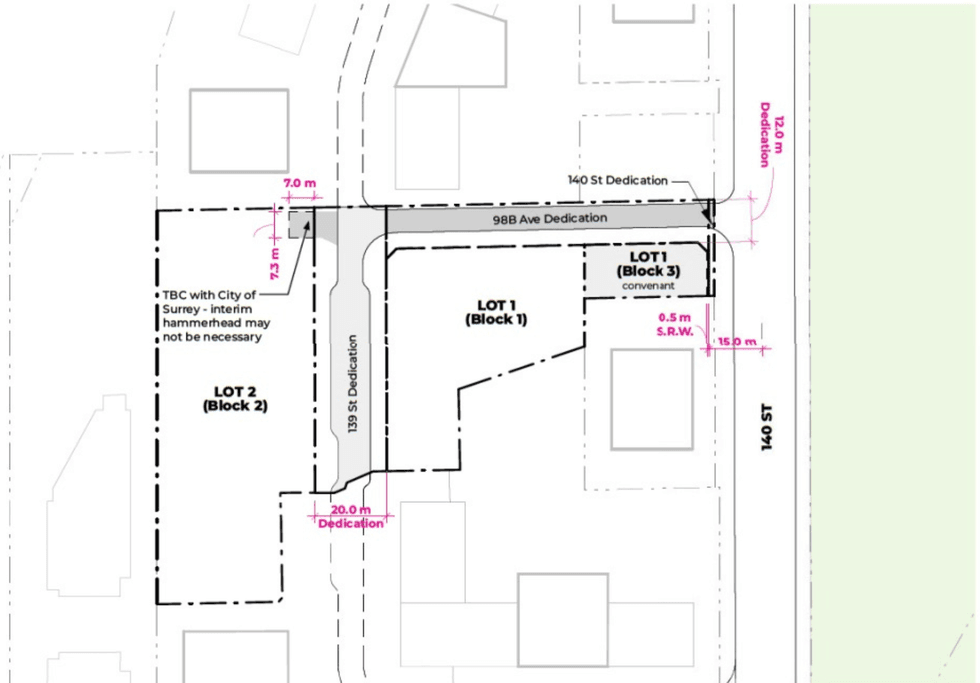 9883 140 Street and the proposed road dedications. (WW+P Architects, Entre Nous Femmes Housing Society)
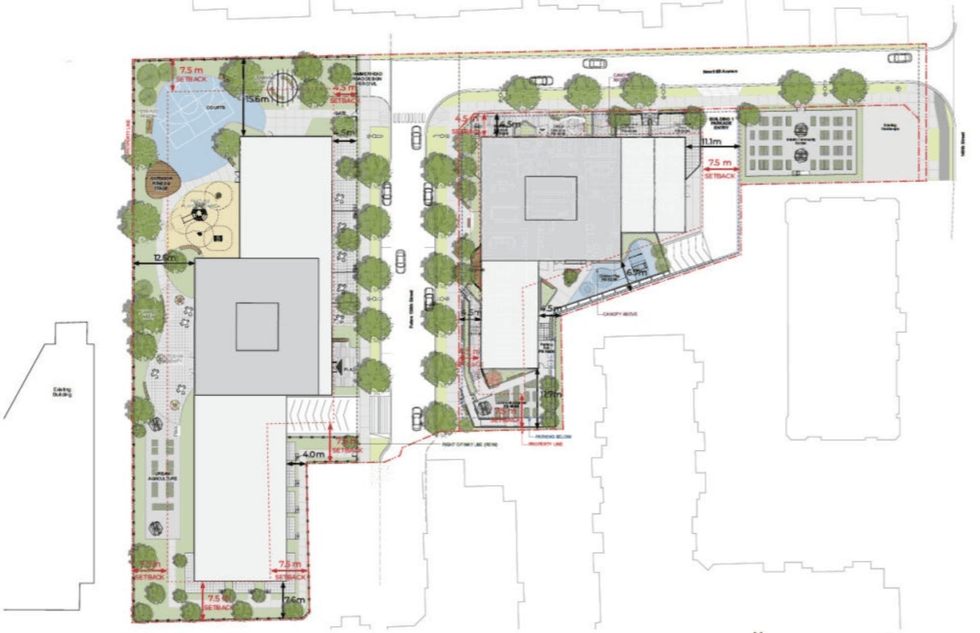 The
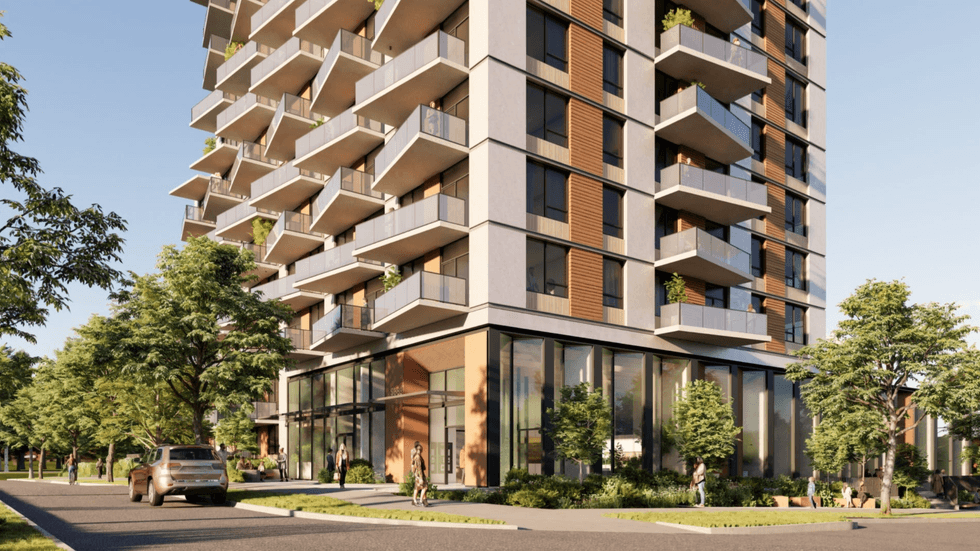 One of the towers proposed for 9883 140 Street. (Entres Nous Femmes Housing Society)

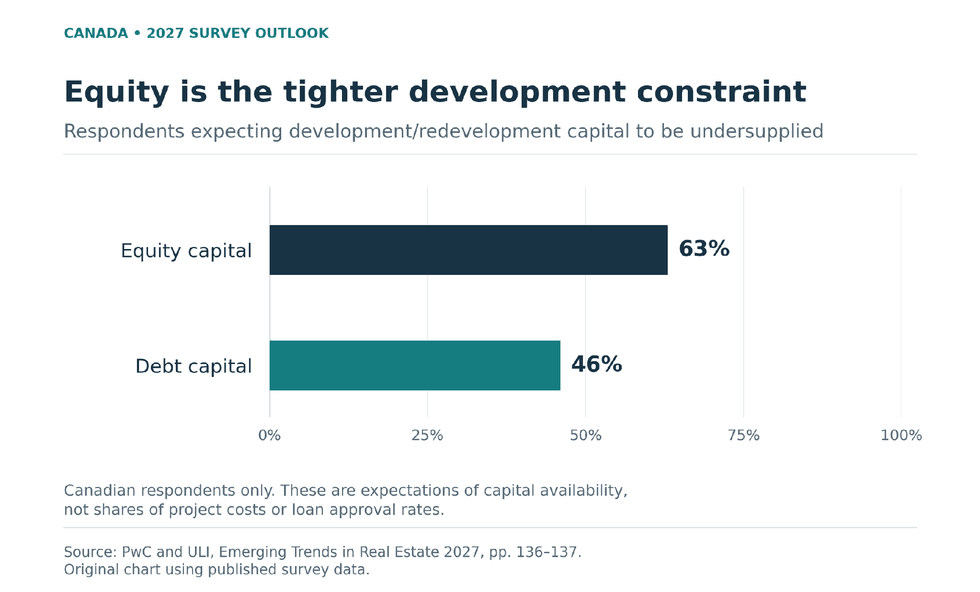 Canadian respondents were more likely to expect an undersupply of development/redevelopment equity capital (63%) than debt capital (46%) in 2027. These are survey expectations, not measured financing volumes. Source: PwC and ULI, Emerging Trends in Real Estate 2027, pp. 136–137. Original chart.
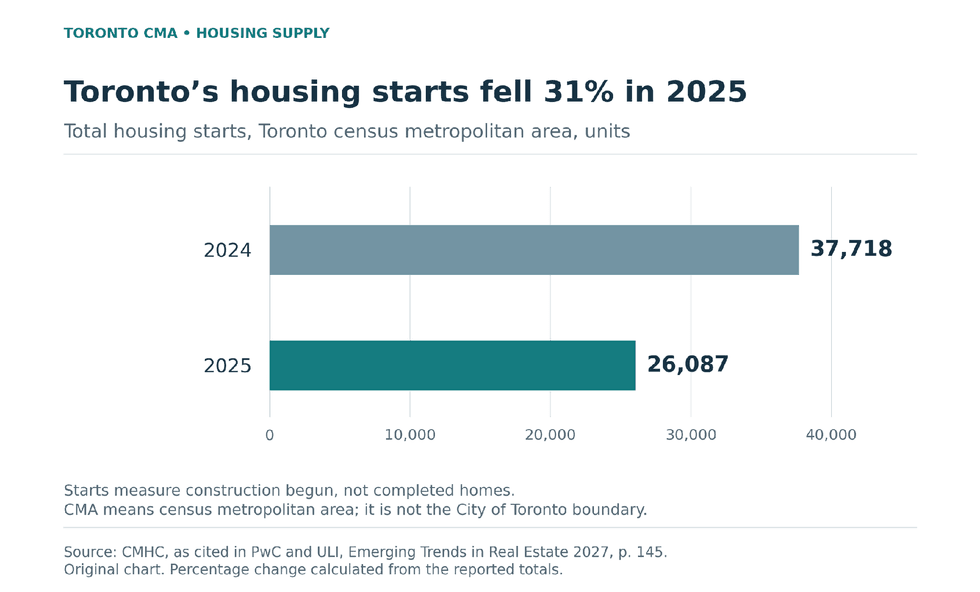 Toronto census metropolitan area housing starts fell from 37,718 units in 2024 to 26,087 in 2025, a 30.8% decline (rounded to 31%). Starts measure construction begun, not completed homes. Source: CMHC, as cited in PwC and ULI, Emerging Trends in Real Estate 2027, p. 145. Original chart.