Legal Title
Understand legal title in Canadian real estate—how it confirms ownership, differs from equitable title, and supports secure property transactions.

May 29, 2025
What is Legal Title?
Legal title is the formal ownership of property recognized by law, granting the holder the right to transfer, sell, or mortgage the asset.
Why Legal Title Matters in Real Estate
In Canadian real estate, legal title is recorded in the provincial land registry or land titles system. It represents official ownership and is required for property transactions, mortgage registration, and estate planning.
Legal title holders can:
Transfer or sell the property
Register mortgages or liens
Appear on title documents and tax records
Legal title is distinct from equitable title, which refers to a buyer’s interest under a purchase agreement before closing. Ensuring legal title is clear and undisputed is a key step in any transaction.
Example of Legal Title
After closing, the buyer’s lawyer registers the deed, transferring legal title from the seller and making the buyer the official owner.
Key Takeaways
- Grants full legal ownership of property.
- Required for transfer and registration.
- Distinct from equitable title.
- Verified through the land registry.
- Essential for all real estate transactions.
Related Terms
- Title Transfer
- Deed
- Equitable Title
- Ownership Rights
- Encumbrance Certificate
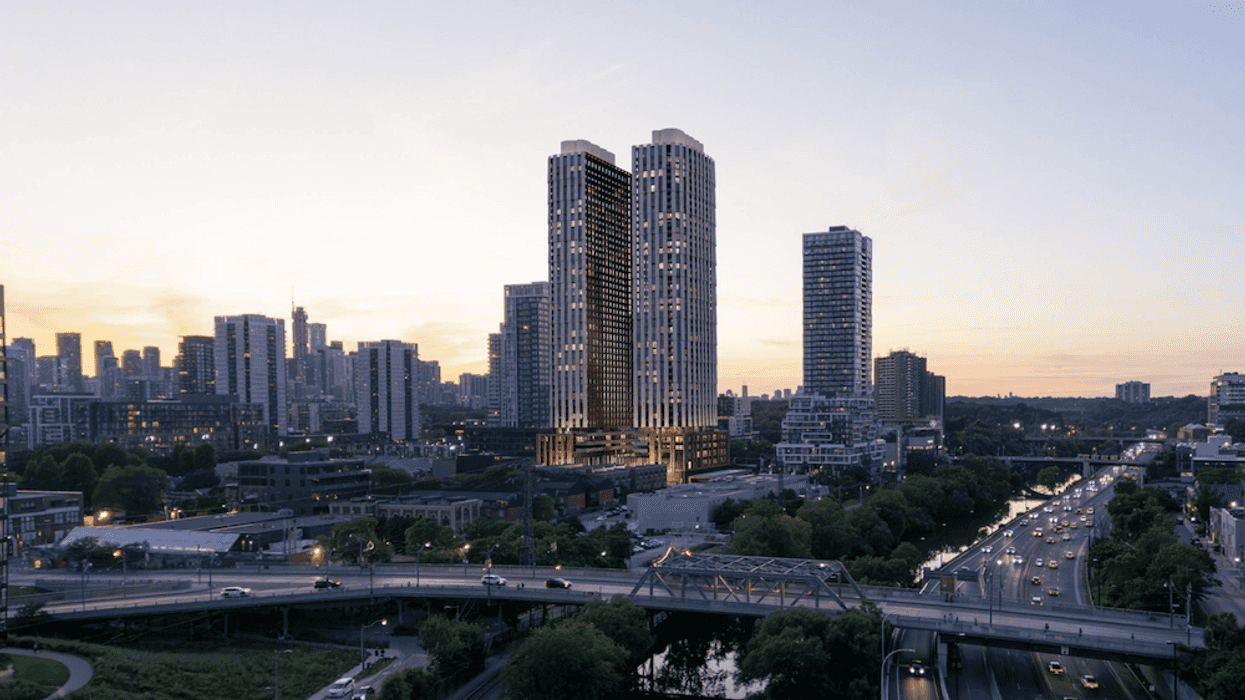
 Rendering of 86 and 100-108 Lombard St and 103 Richmond St E/WZMH Architects
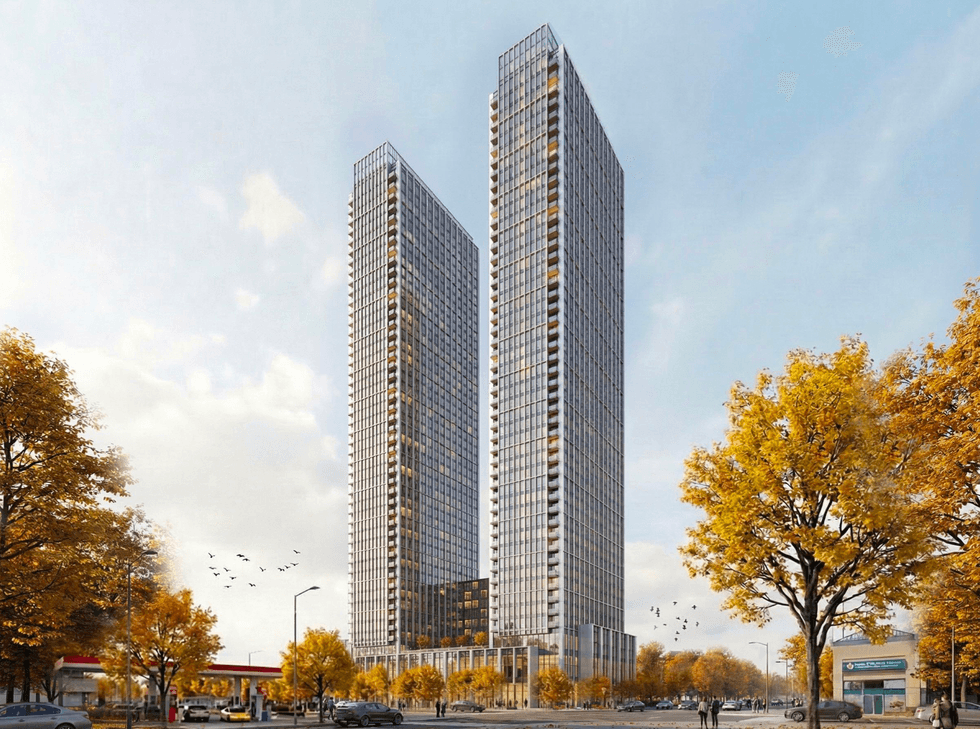 Rendering of 60 Overlea Blvd/Sweeny&Co Architects
 Rendering of 7 Labatt Ave and 77 River St/Giannone Petricone Associates
 Rendering of 4632-4648 Yonge St and 16-18 Cameron Ave/Arcadis
 Rendering of 1234 Islington Ave/Sweeny&Co Architects




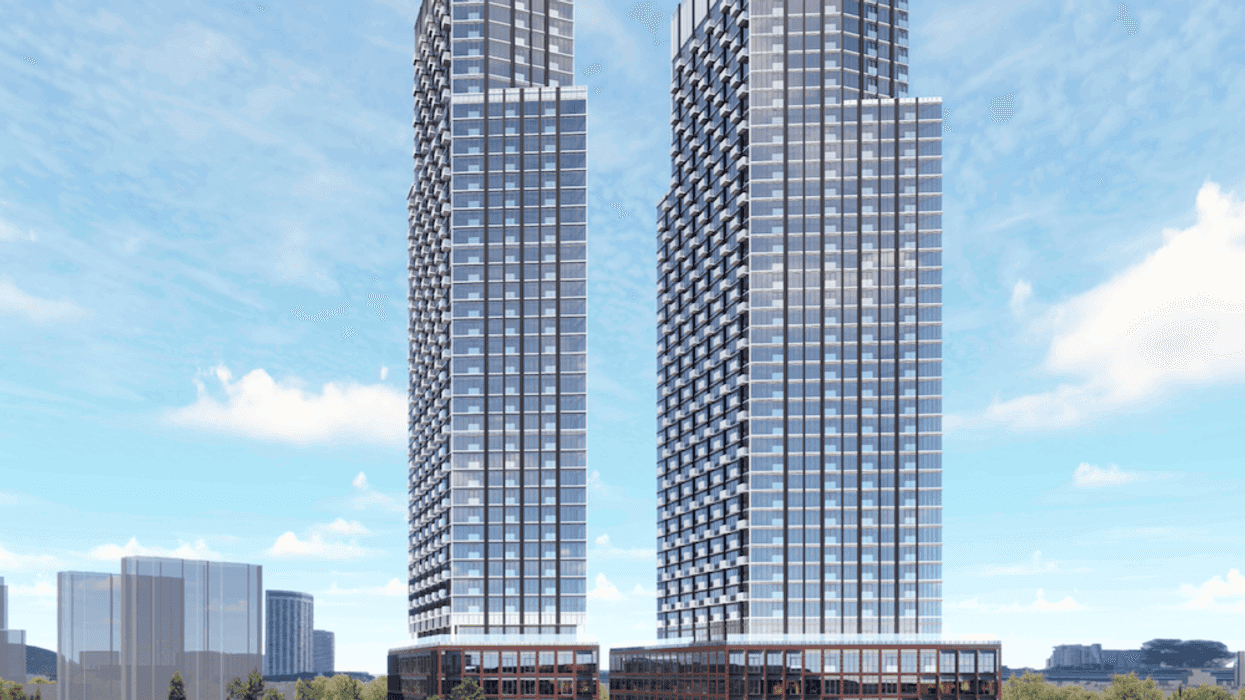

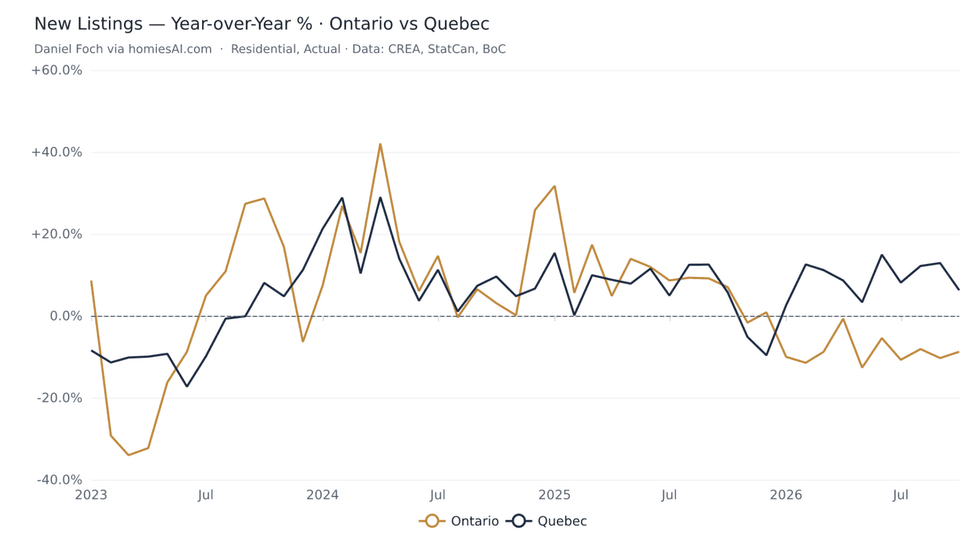 Chart: New listings, year-over-year %, Ontario vs Quebec. Daniel Foch via homiesai.com/stats. Data:
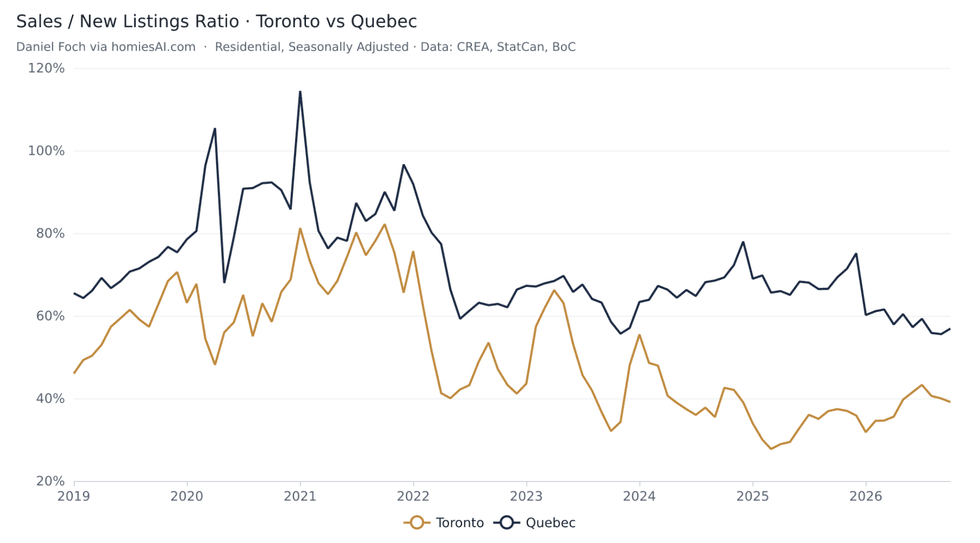 Chart: Sales-to-new-listings ratio, seasonally adjusted. Toronto vs Quebec. Daniel Foch via homiesai.com/stats. Data: CREA.
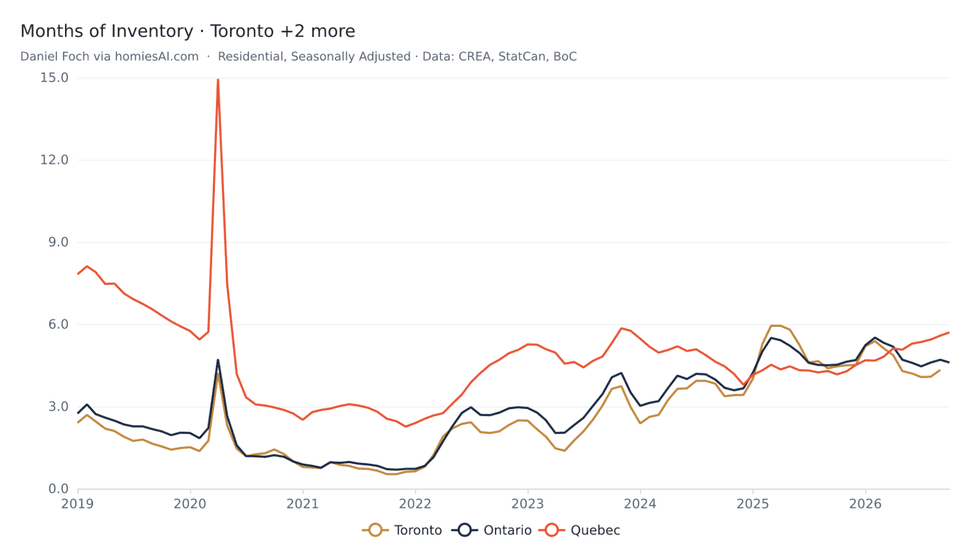 Chart: Months of inventory, seasonally adjusted. Daniel Foch via homiesai.com/stats. Data: CREA.
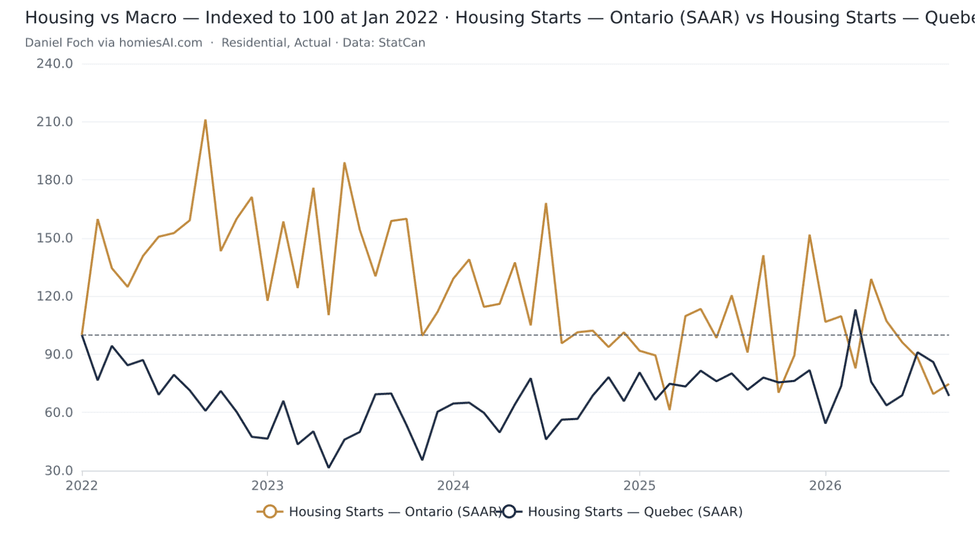 Chart: Housing starts, seasonally adjusted annual rate, Ontario vs Quebec, indexed to January 2022. Daniel Foch via homiesai.com/stats. Data: CMHC via Statistics Canada.
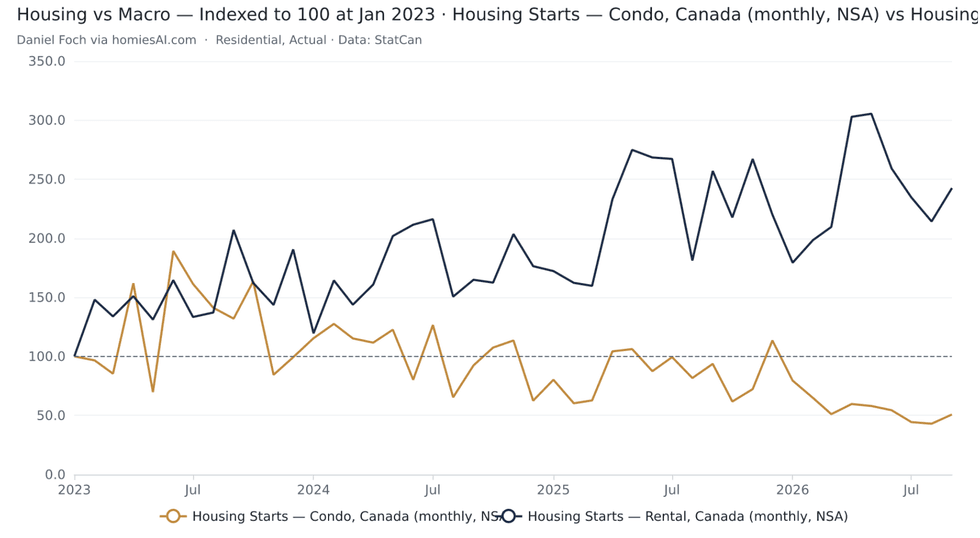 Chart: Condo vs rental housing starts, Canada, indexed to January 2023. Daniel Foch via homiesai.com/stats. Data: CMHC via Statistics Canada.
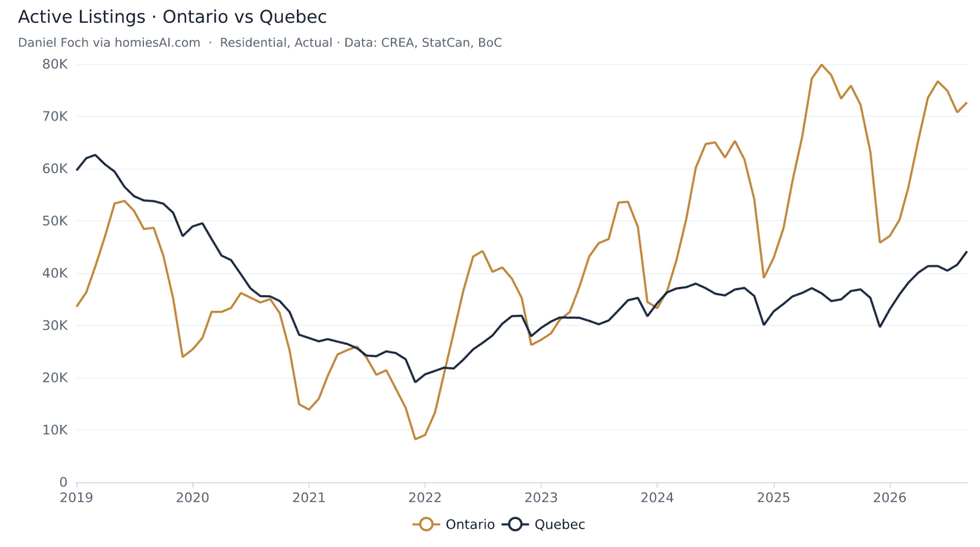 Chart: Active residential listings, Ontario vs Quebec. Daniel Foch via homiesai.com/stats. Data: CREA.

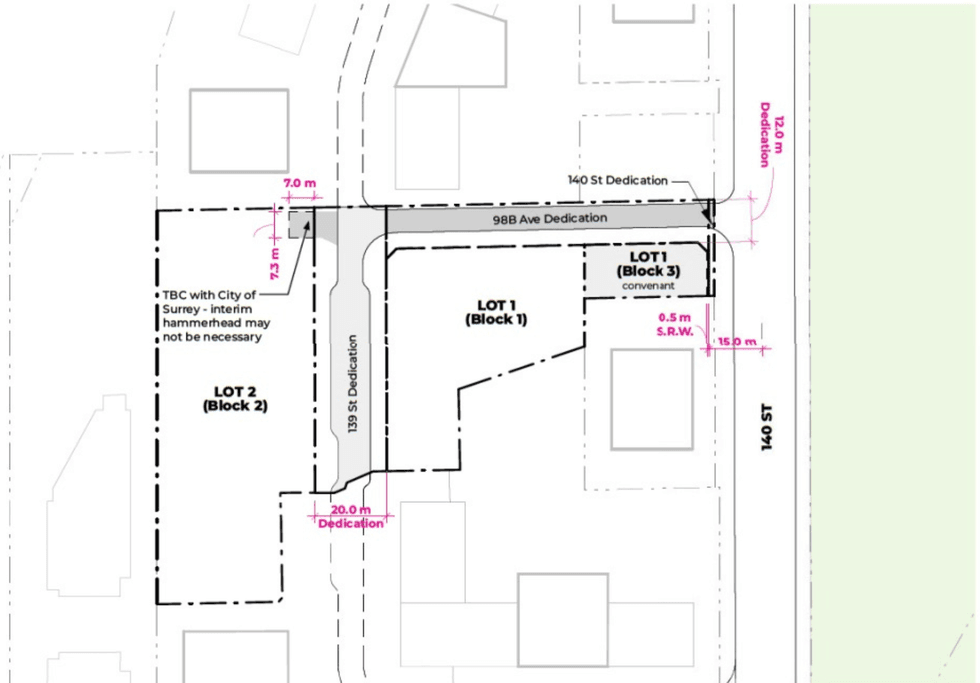 9883 140 Street and the proposed road dedications. (WW+P Architects, Entre Nous Femmes Housing Society)
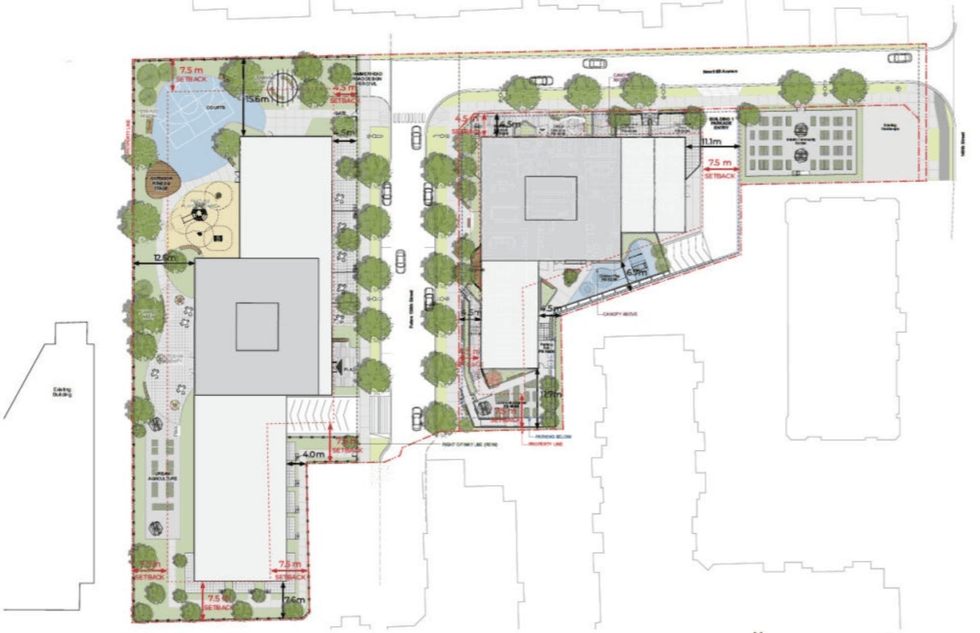 The
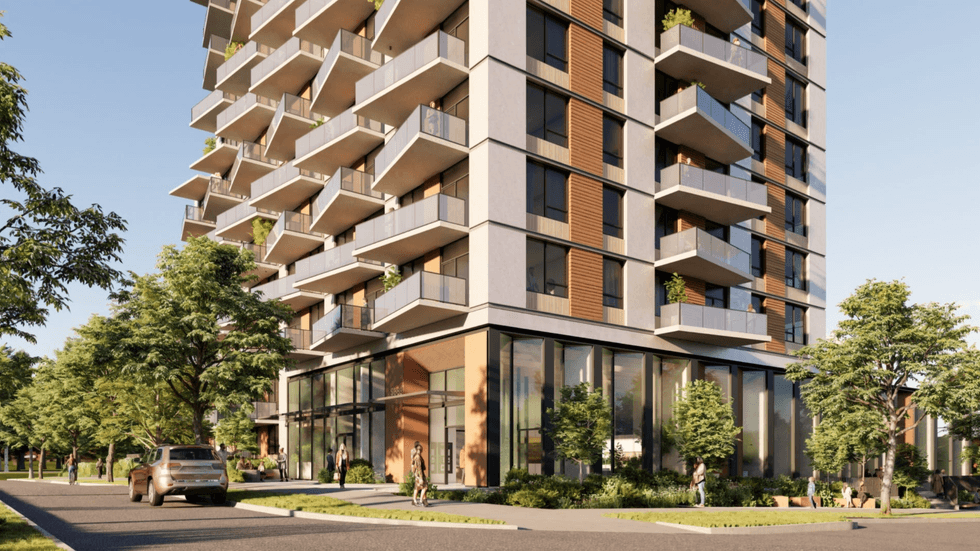 One of the towers proposed for 9883 140 Street. (Entres Nous Femmes Housing Society)

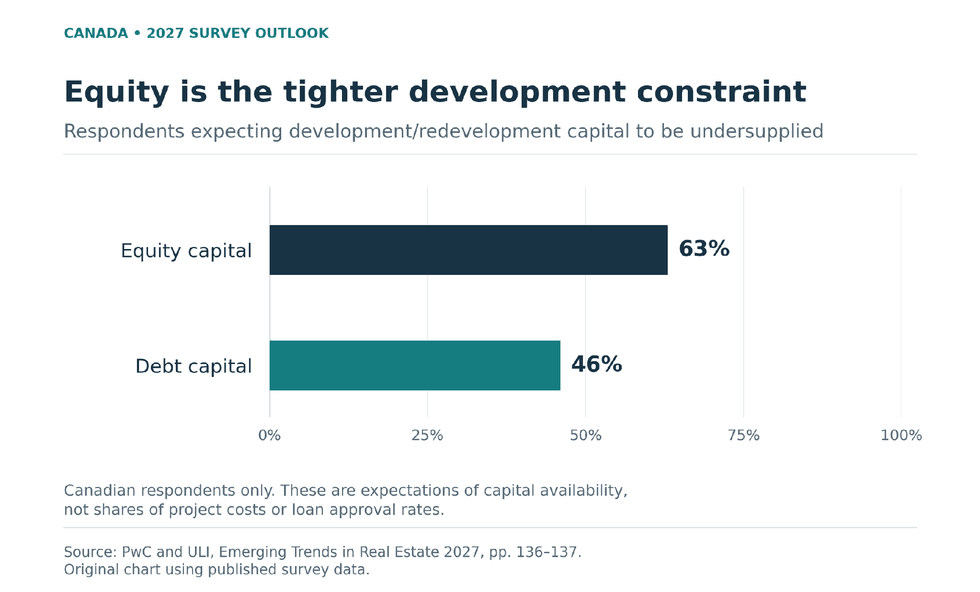 Canadian respondents were more likely to expect an undersupply of development/redevelopment equity capital (63%) than debt capital (46%) in 2027. These are survey expectations, not measured financing volumes. Source: PwC and ULI, Emerging Trends in Real Estate 2027, pp. 136–137. Original chart.
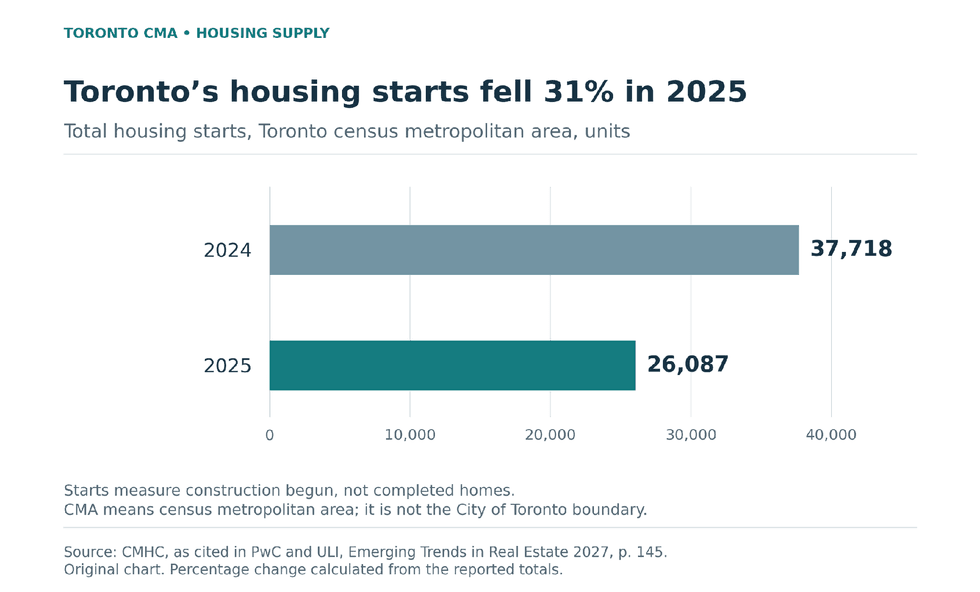 Toronto census metropolitan area housing starts fell from 37,718 units in 2024 to 26,087 in 2025, a 30.8% decline (rounded to 31%). Starts measure construction begun, not completed homes. Source: CMHC, as cited in PwC and ULI, Emerging Trends in Real Estate 2027, p. 145. Original chart.