Encumbrance Certificate
Learn what an encumbrance certificate is in Canadian real estate, how it protects buyers and lenders, and when it's used in property transactions.

May 22, 2025
What is an Encumbrance Certificate?
An encumbrance certificate is a legal document that confirms whether a property is free of debts, liens, mortgages, or other claims that may affect ownership or transfer.
Why an Encumbrance Certificate Matters in Real Estate
In Canadian real estate, an encumbrance certificate (or similar title search record) is used to verify that a property has a clear title before it is bought, sold, or mortgaged.
Encumbrances may include:- Mortgages
- Easements
- Tax liens or unpaid utilities
- Court orders or judgments
Buyers and lenders use the certificate to ensure the seller has legal authority to transfer the property without third-party claims. Lawyers often obtain this document during the due diligence phase.
Understanding encumbrance certificates helps buyers avoid hidden liabilities and ensures safe, uncontested property transfers.
Example of Encumbrance Certificate in Action
Before approving the mortgage, the lender requests an encumbrance certificate to confirm the property is free from prior liens.
Key Takeaways
- Confirms whether a property has legal claims.
- Used in title verification.
- Important for buyers and lenders.
- Reduces risk of disputed ownership.
- Obtained during legal due diligence.
Related Terms
- Title Transfer
- Title Search
- Lien
- Mortgage
- Real Estate Lawyer
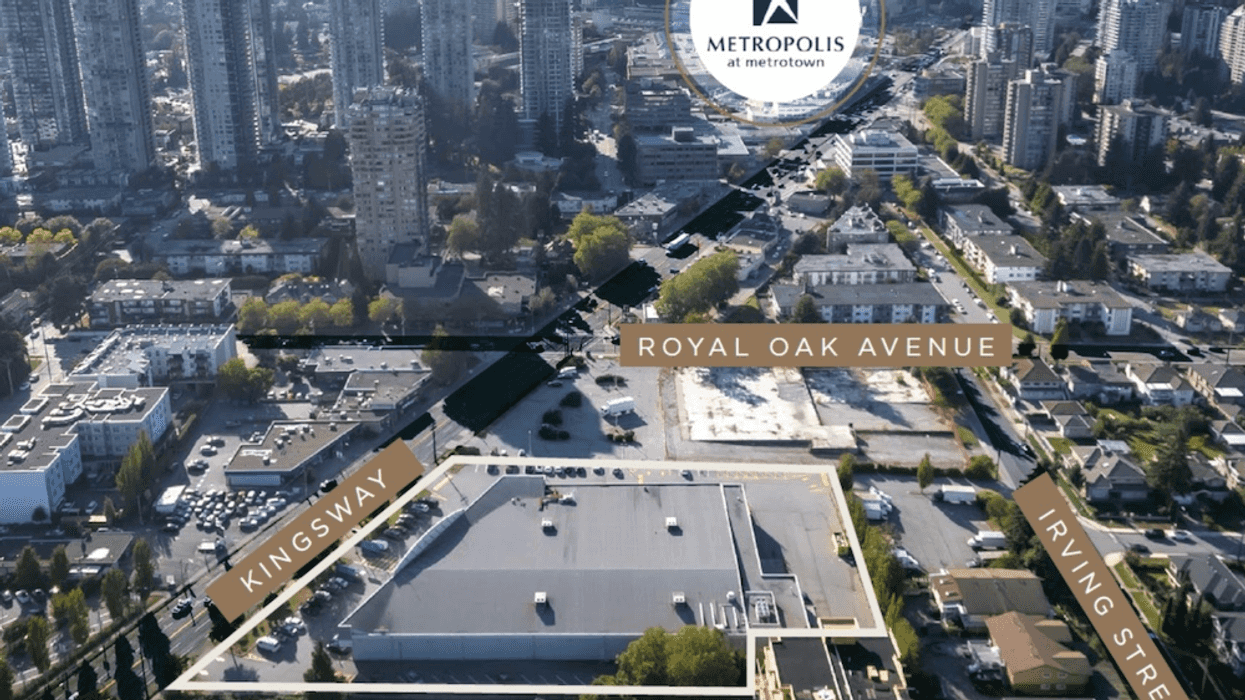
 A preliminary conceptual development for 5335 Kingsway in Burnaby. (Arcadis, JLL)







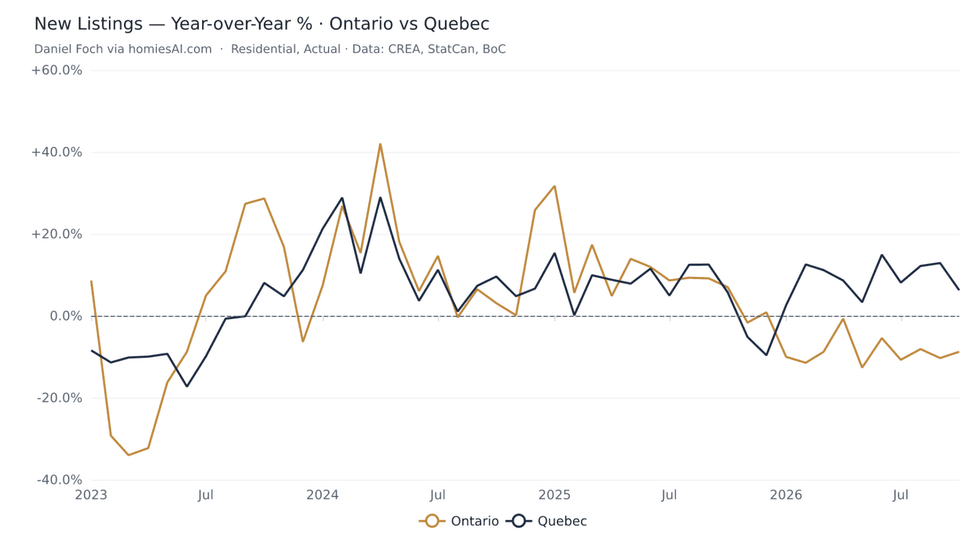 Chart: New listings, year-over-year %, Ontario vs Quebec. Daniel Foch via homiesai.com/stats. Data:
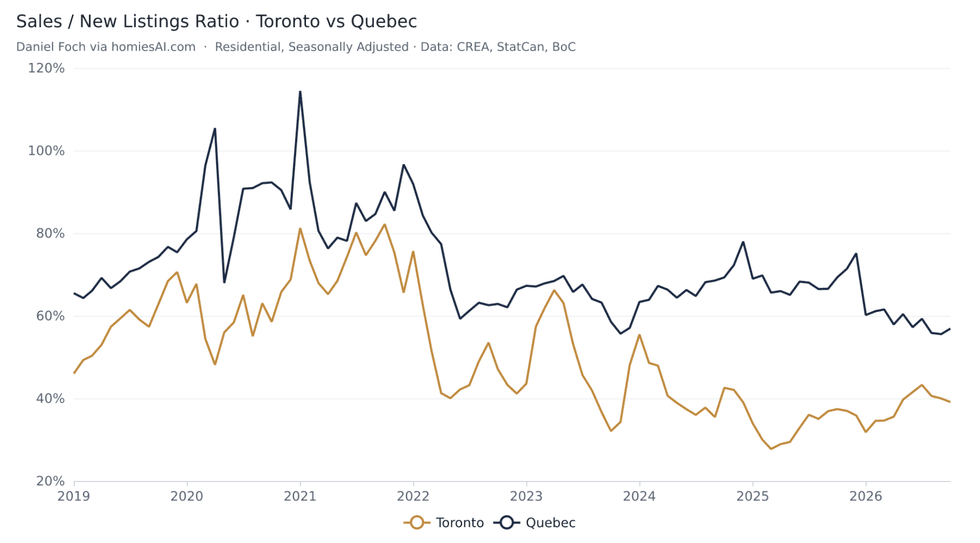 Chart: Sales-to-new-listings ratio, seasonally adjusted. Toronto vs Quebec. Daniel Foch via homiesai.com/stats. Data: CREA.
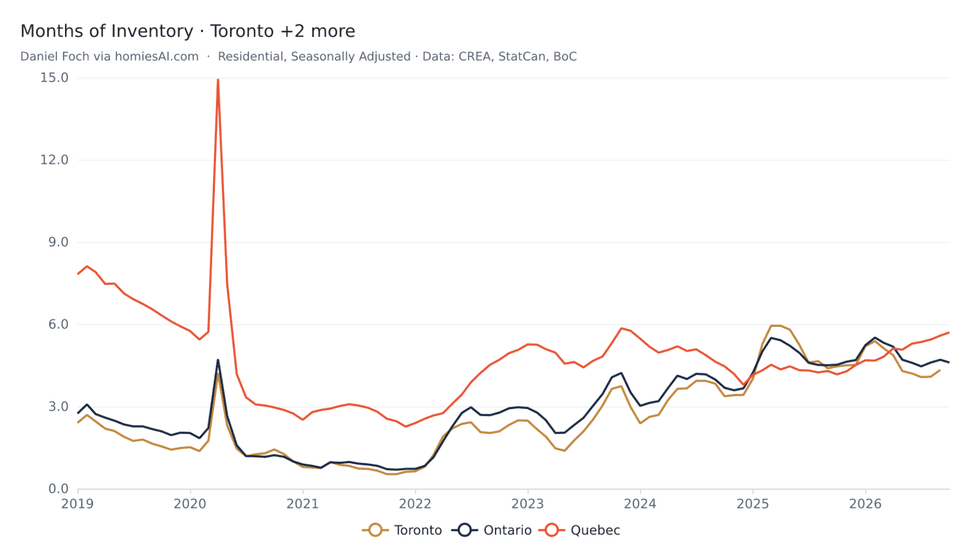 Chart: Months of inventory, seasonally adjusted. Daniel Foch via homiesai.com/stats. Data: CREA.
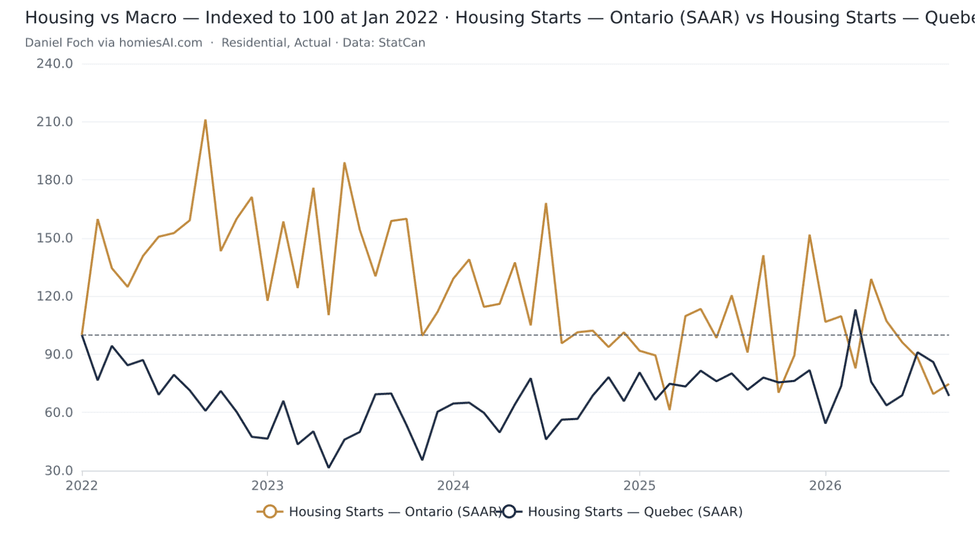 Chart: Housing starts, seasonally adjusted annual rate, Ontario vs Quebec, indexed to January 2022. Daniel Foch via homiesai.com/stats. Data: CMHC via Statistics Canada.
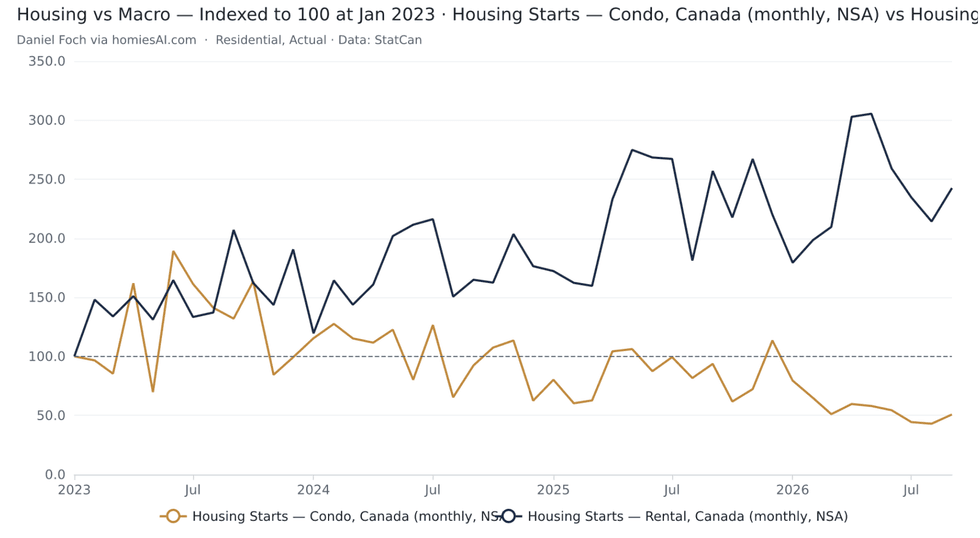 Chart: Condo vs rental housing starts, Canada, indexed to January 2023. Daniel Foch via homiesai.com/stats. Data: CMHC via Statistics Canada.
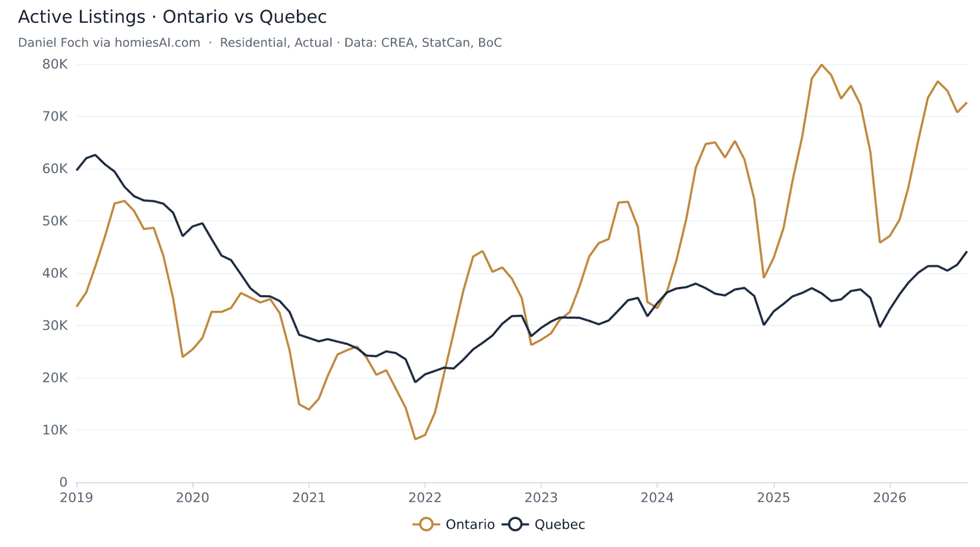 Chart: Active residential listings, Ontario vs Quebec. Daniel Foch via homiesai.com/stats. Data: CREA.

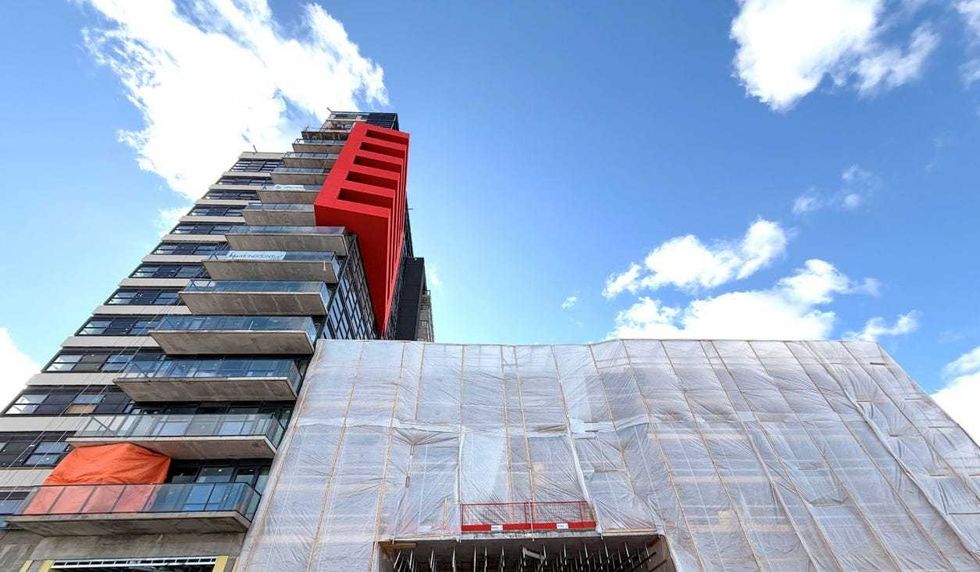 The Highlight of Mississauga as of March 2026. (Grant Thornton)

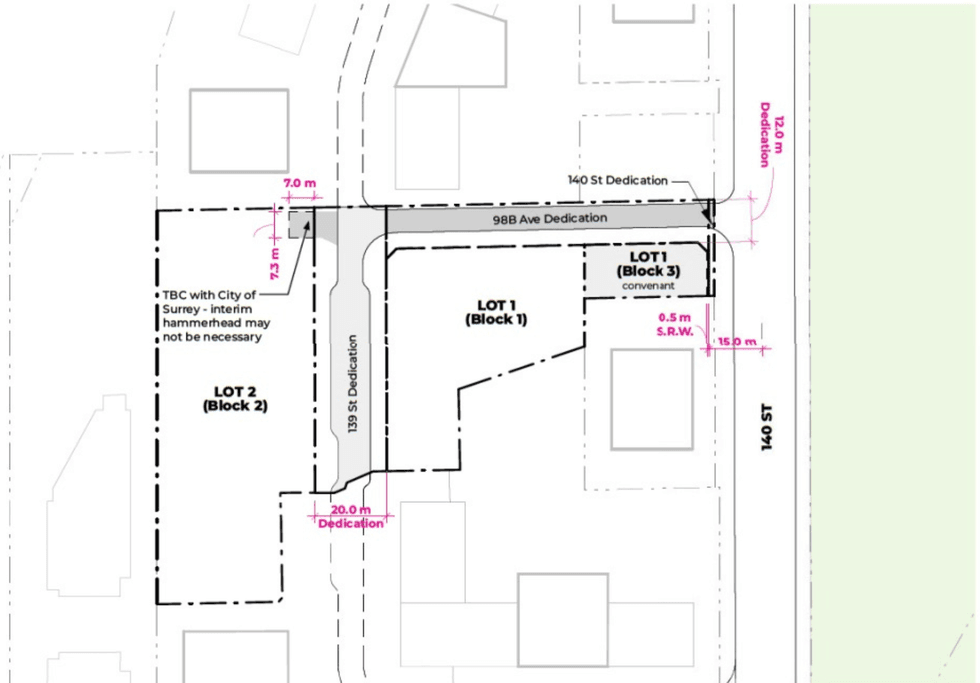 9883 140 Street and the proposed road dedications. (WW+P Architects, Entre Nous Femmes Housing Society)
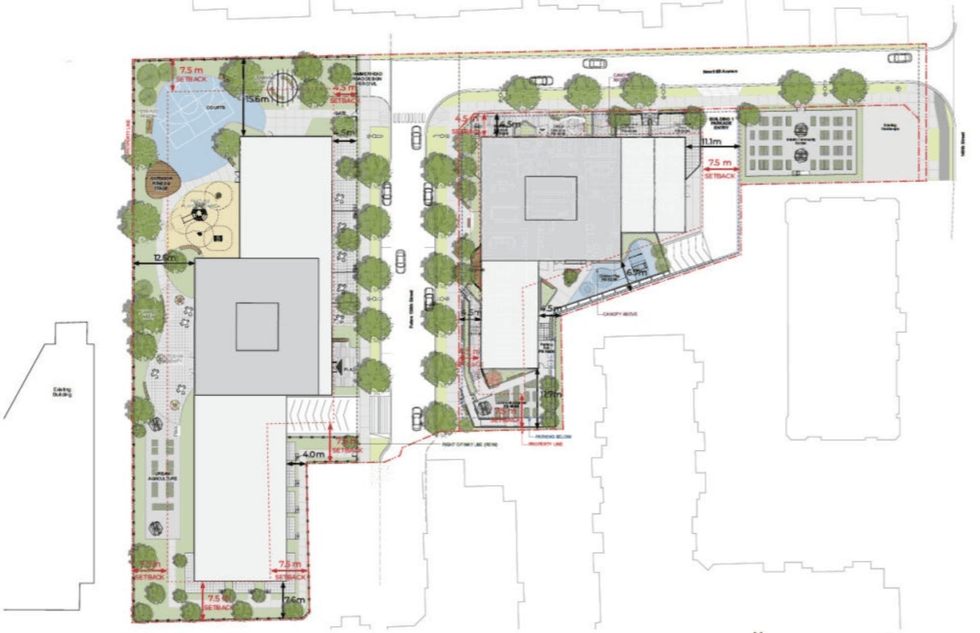 The
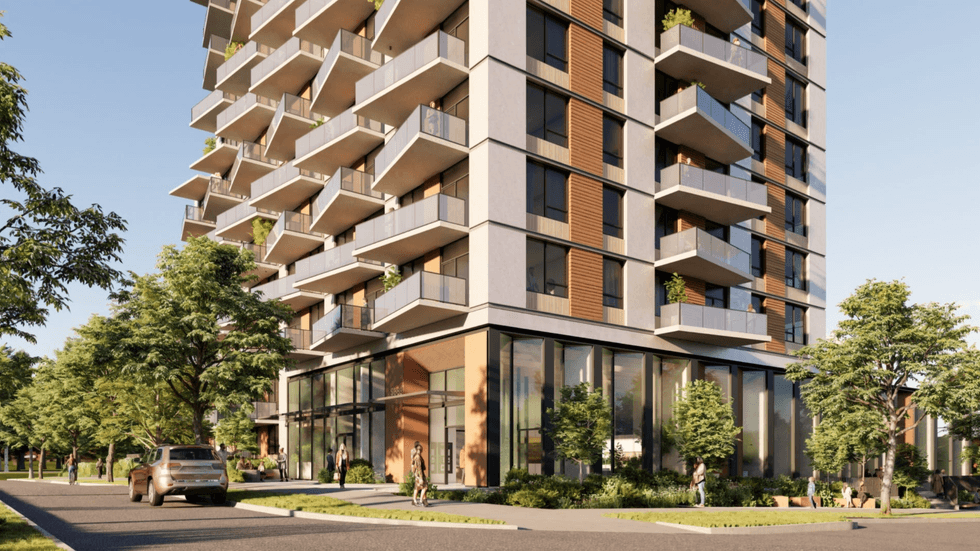 One of the towers proposed for 9883 140 Street. (Entres Nous Femmes Housing Society)

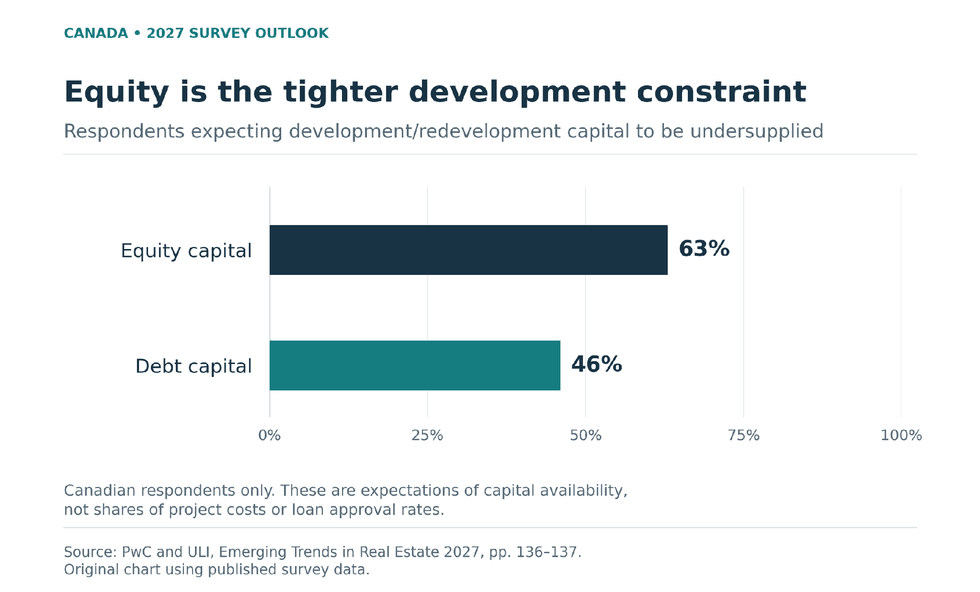 Canadian respondents were more likely to expect an undersupply of development/redevelopment equity capital (63%) than debt capital (46%) in 2027. These are survey expectations, not measured financing volumes. Source: PwC and ULI, Emerging Trends in Real Estate 2027, pp. 136–137. Original chart.
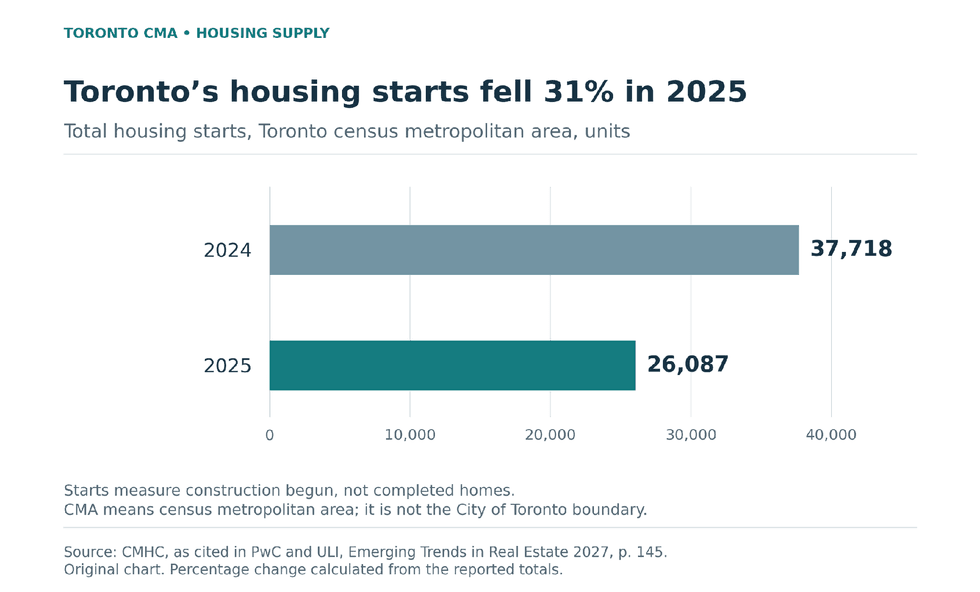 Toronto census metropolitan area housing starts fell from 37,718 units in 2024 to 26,087 in 2025, a 30.8% decline (rounded to 31%). Starts measure construction begun, not completed homes. Source: CMHC, as cited in PwC and ULI, Emerging Trends in Real Estate 2027, p. 145. Original chart.

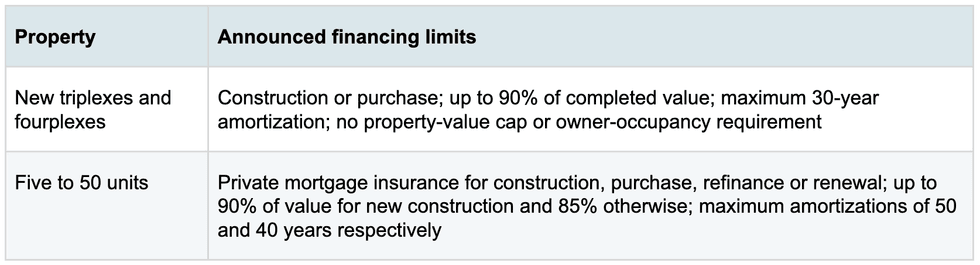
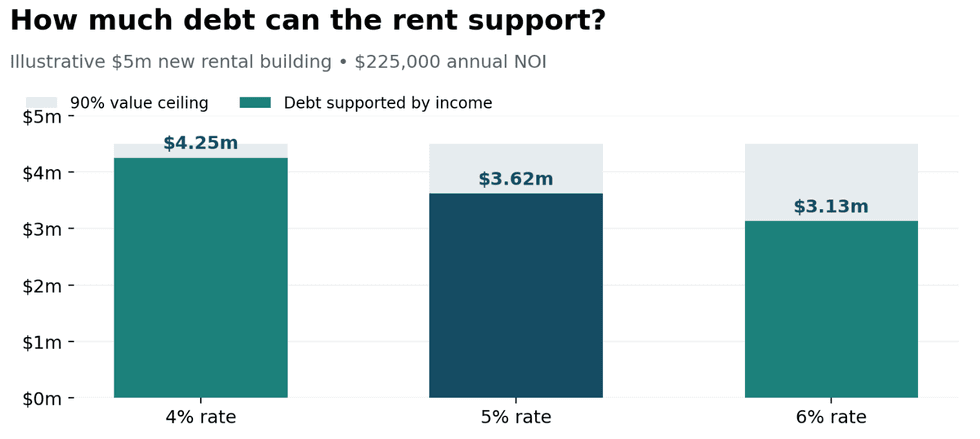 Illustrative calculation: a $4.5-million value ceiling versus income-based capacity of about $4.25 million at 4%, $3.62 million at 5% and $3.13 million at 6%. Assumes 50-year amortization and 1.15 debt coverage.
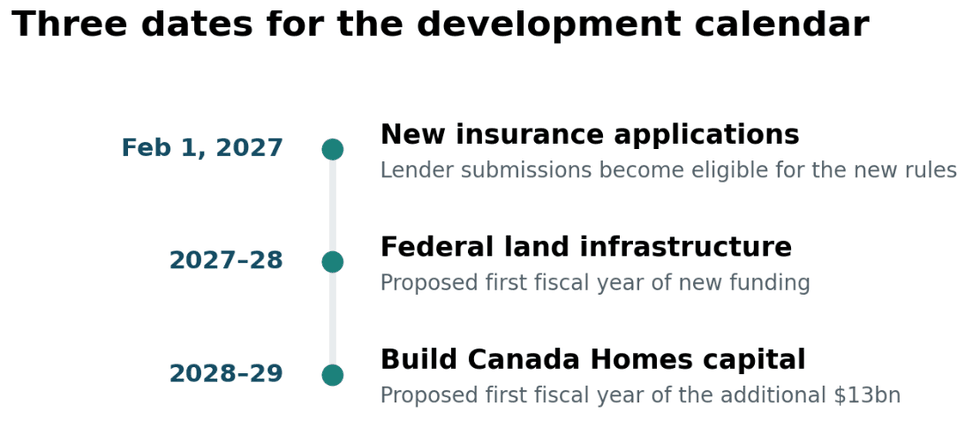 Source: Department of Finance missing-middle backgrounder and Budget 2026 Chapter 3, November 5, 2026. Fiscal-year funding starts are not home-completion dates.