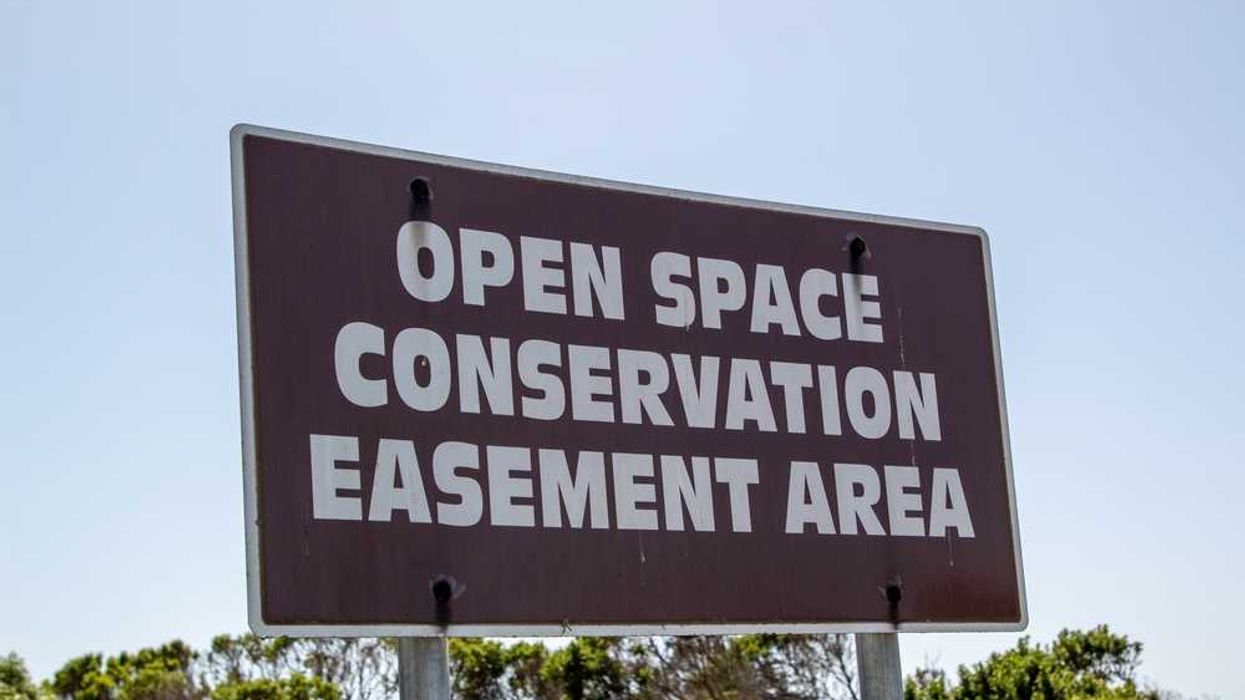
Conservation Easement
A conservation easement is a legal agreement restricting land development to preserve environmental or heritage values.
September 30, 2025
What is Conservation Easement?
A conservation easement is a voluntary legal agreement that restricts land use to protect environmental, agricultural, or heritage values. The land remains privately owned, but certain development rights are permanently limited or prohibited.
Why Conservation Easement Matters in Real Estate
Conservation easements matter in real estate because they preserve natural areas, farmland, or historic sites while allowing private ownership. They can affect property value, land use options, and tax implications for owners.
Example of Conservation Easement in Action
A farmer grants a conservation easement to a land trust, ensuring the land remains agricultural and cannot be developed into subdivisions, even if sold.
Key Takeaways
- Voluntary agreement restricting land development rights.
- Protects environmental, agricultural, or heritage values.
- Land remains privately owned but with restrictions.
- Can reduce property value while offering tax benefits.
- Often permanent and binding on future owners.
Related Terms
- Easement
- Heritage Designation
- Land Use Bylaws
- Environmental Assessment
- Crown Land
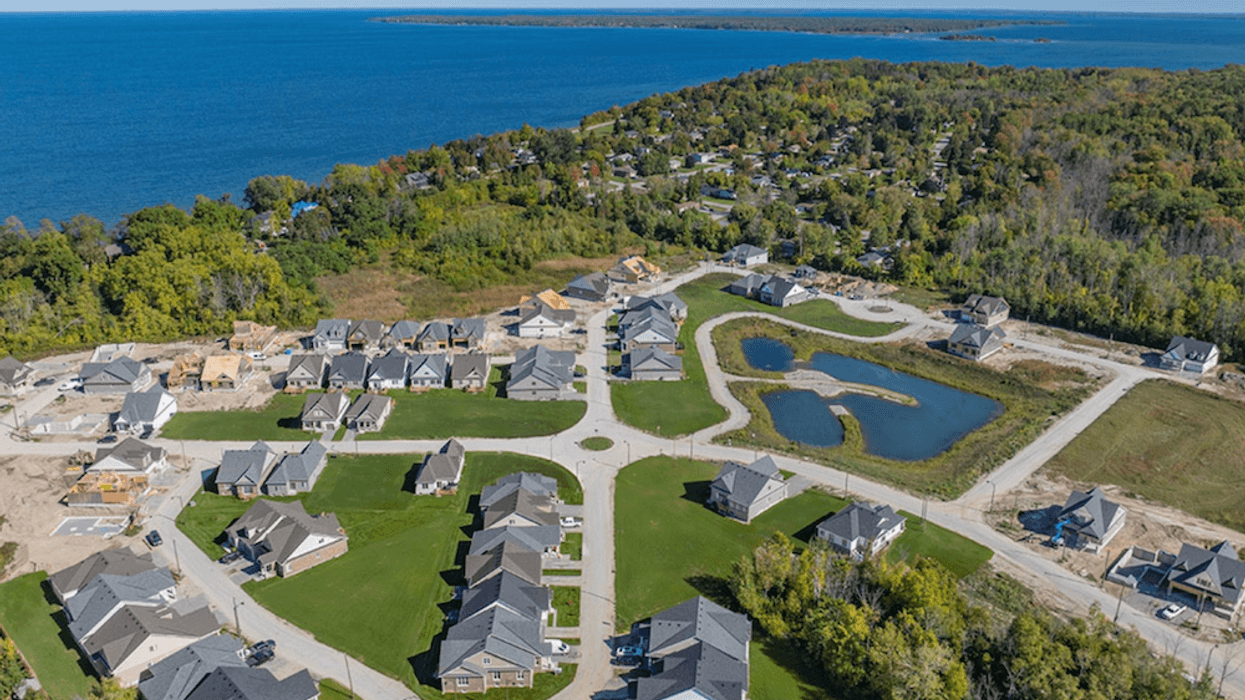
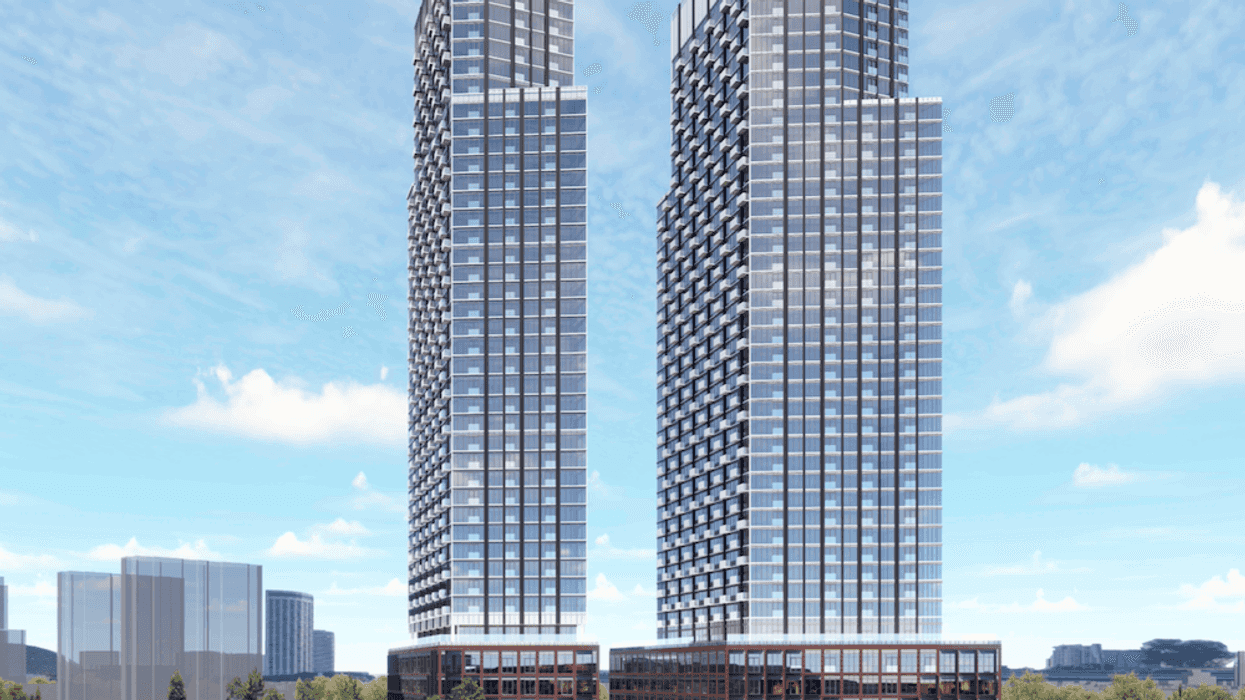
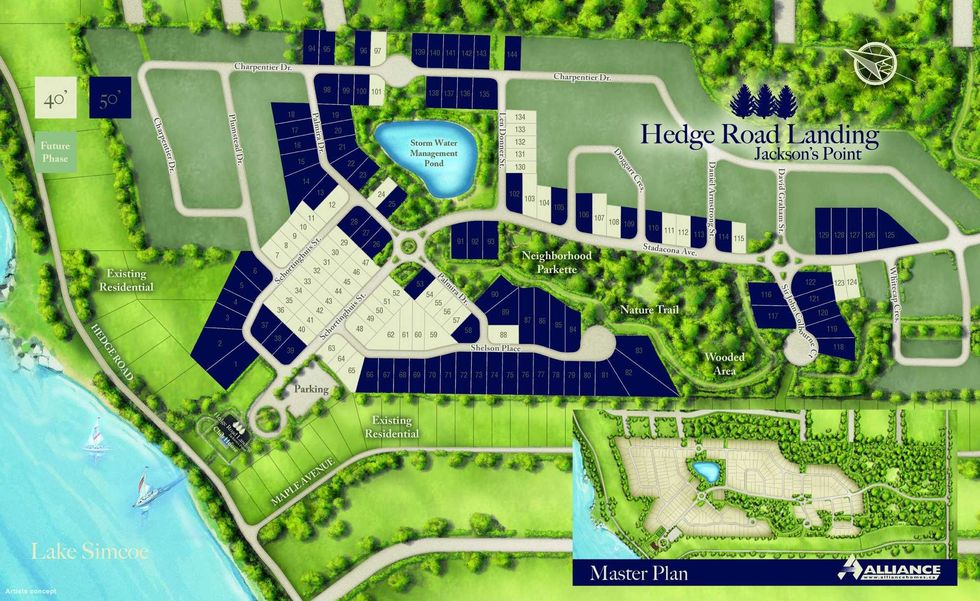 An overview of Hedge Road Landing. (Alliance Homes)
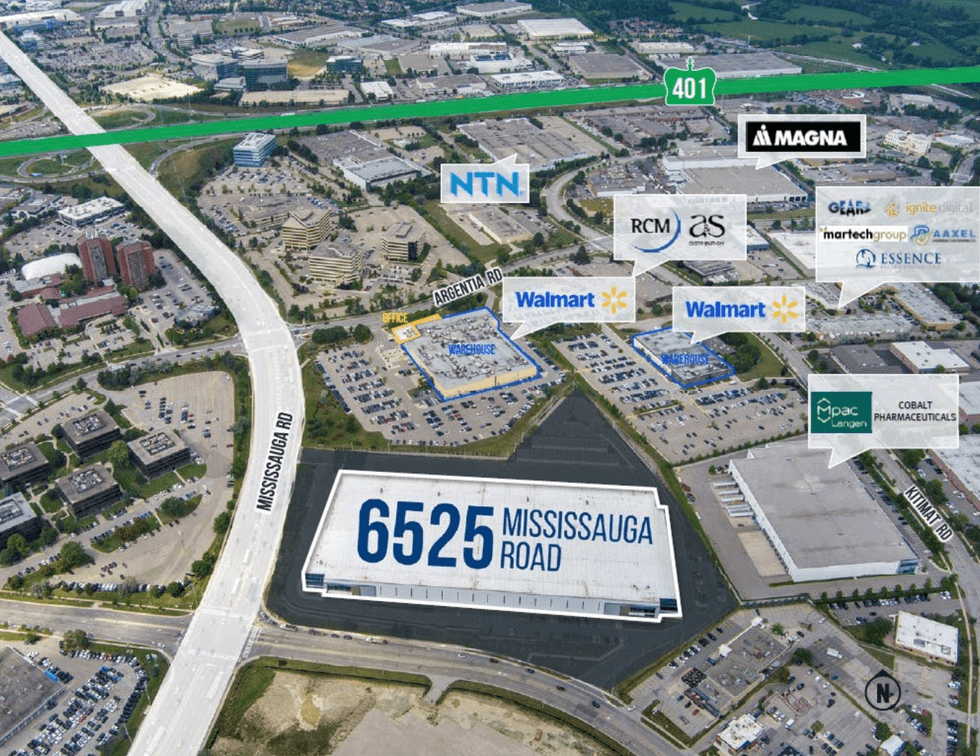 6525 Mississauga Road and its surrounding context. (RBC Capital Markets & CBRE)
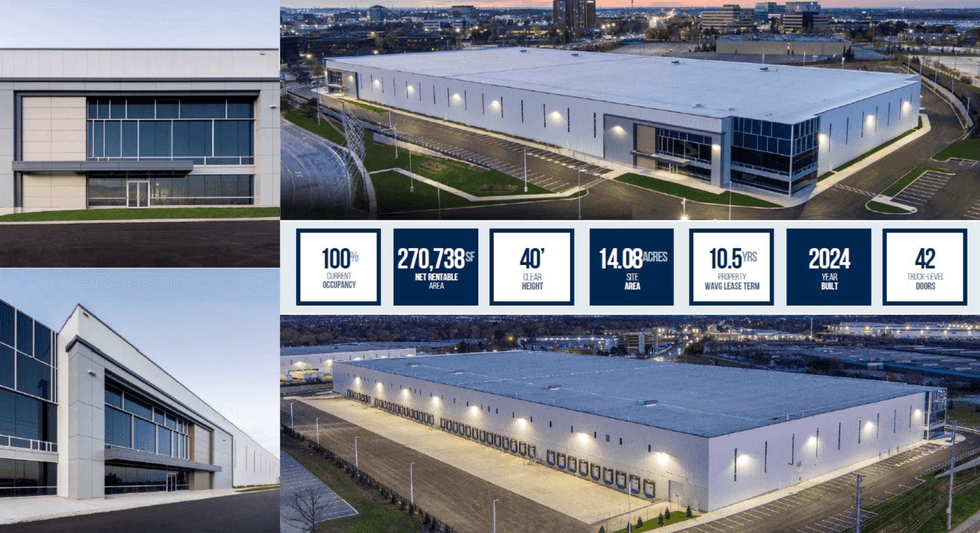 Property details for 6525 Mississauga Road. (RBC Capital Markets & CBRE)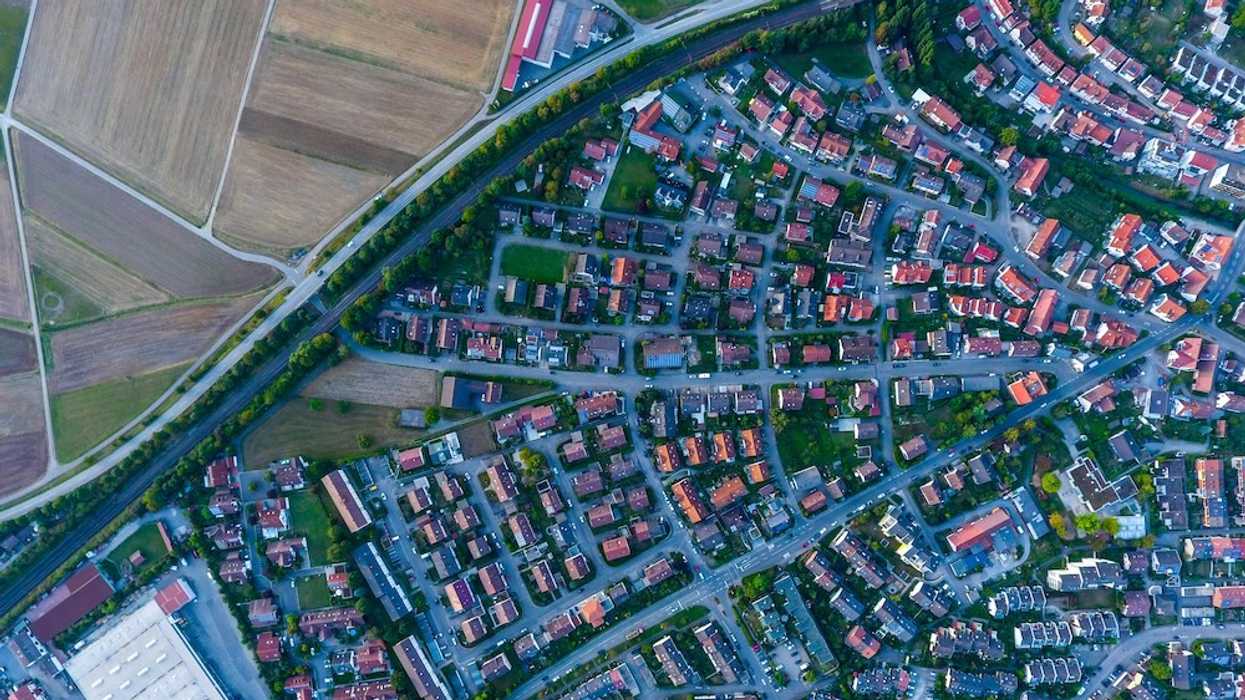


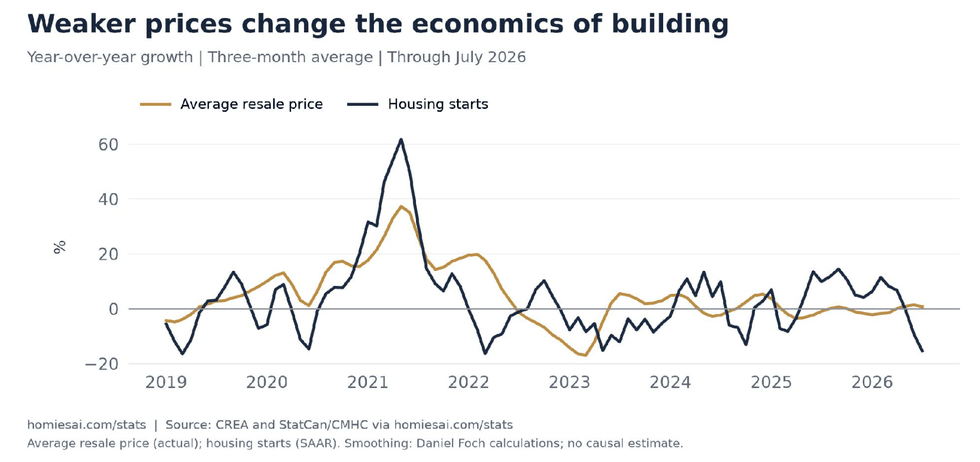 National average resale-price growth and housing-starts growth, smoothed over three months. The comparison illustrates the cycle; it does not establish how much a price change causes construction to change.
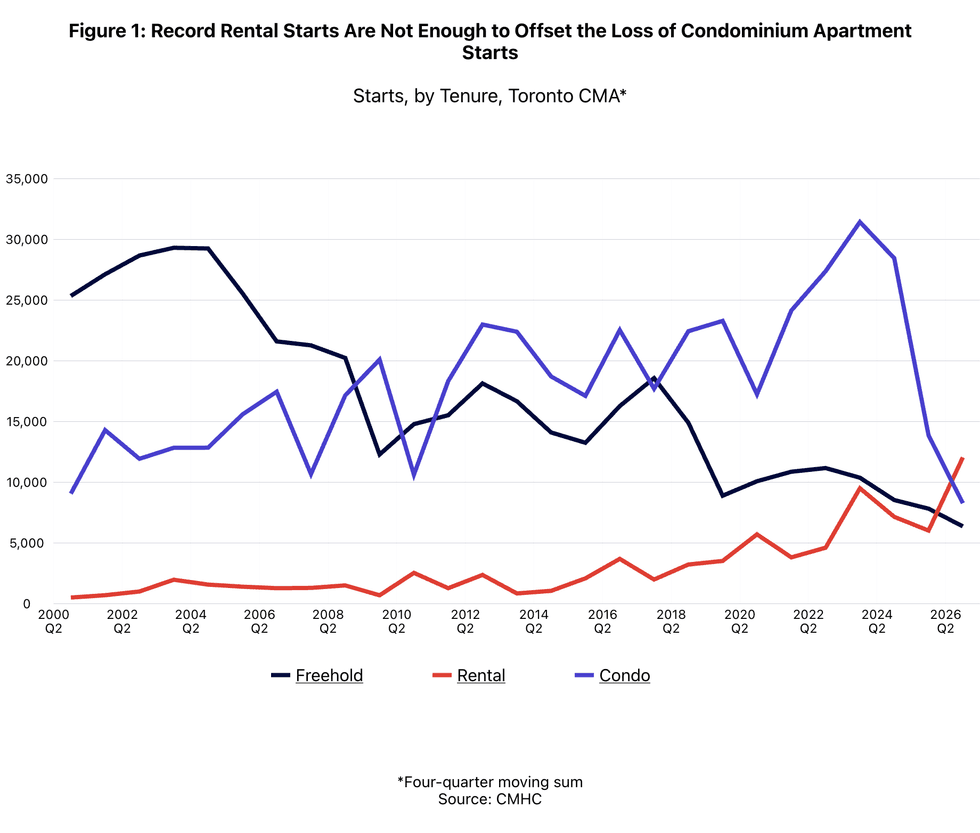
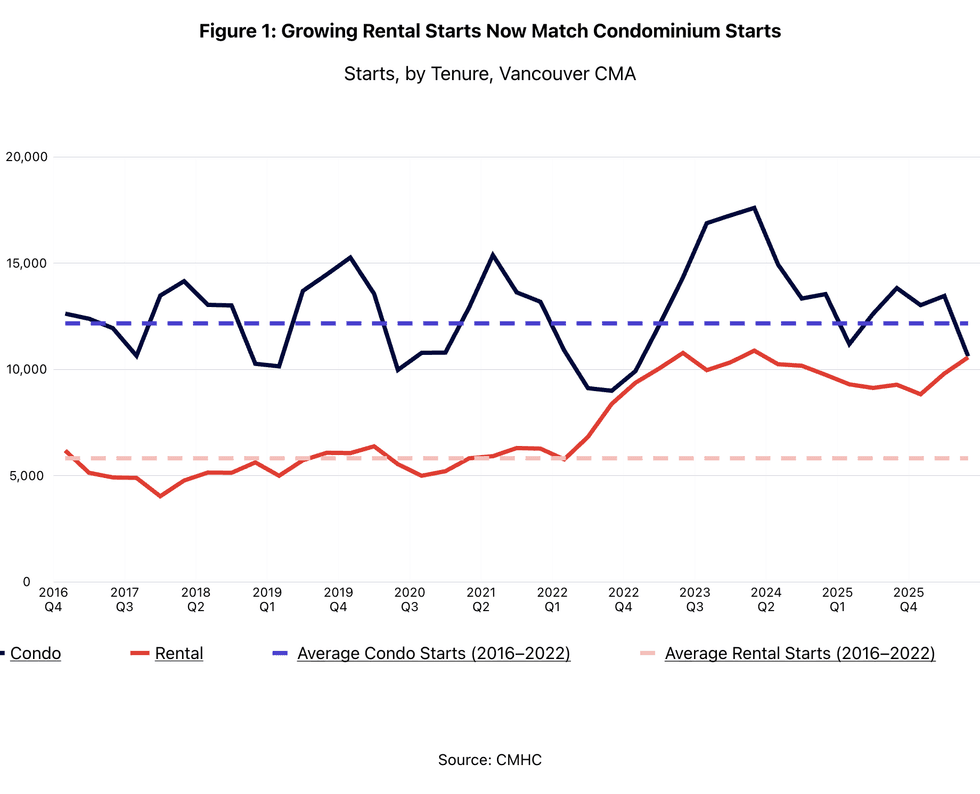
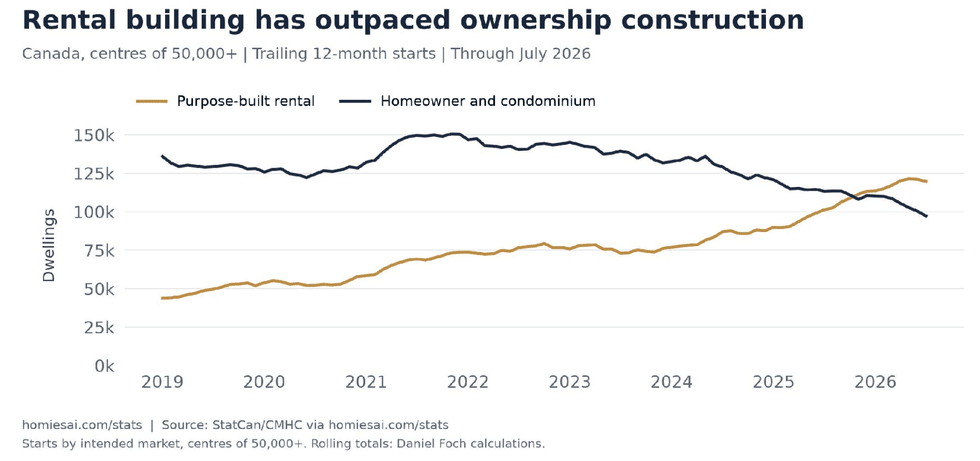 Trailing 12-month starts in centres of 50,000 or more remove the usual monthly seasonality. Ownership combines the homeowner and condominium categories; rental is shown separately.
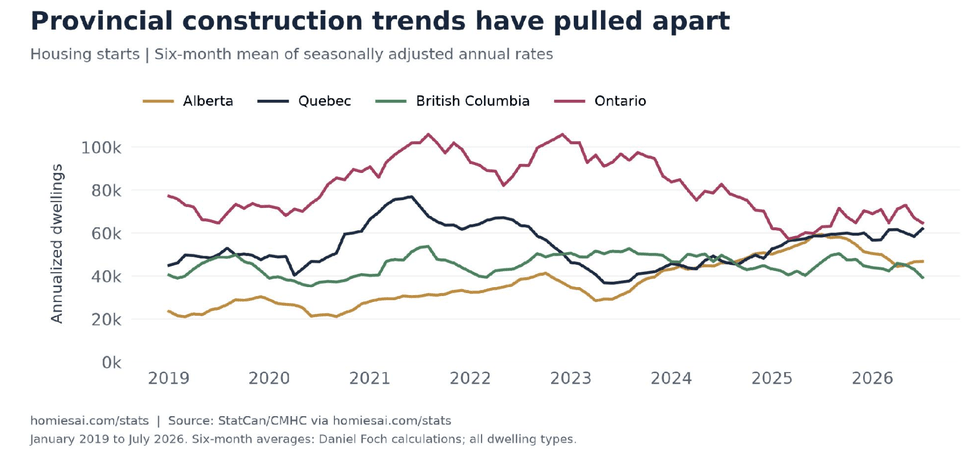 Six-month averages of provincial starts, expressed at annual rates. The smoothing reduces the influence of individual apartment projects.
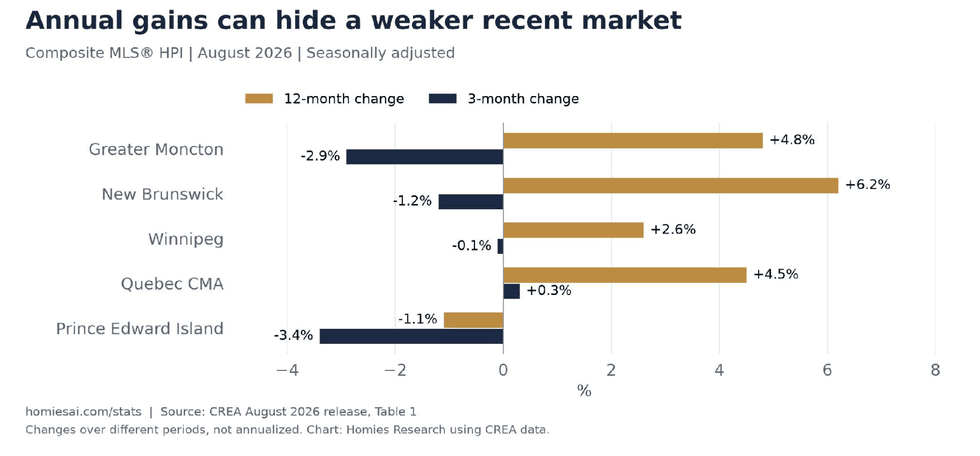 The same August benchmark compared with two different starting points. Three-month changes are not annualized.
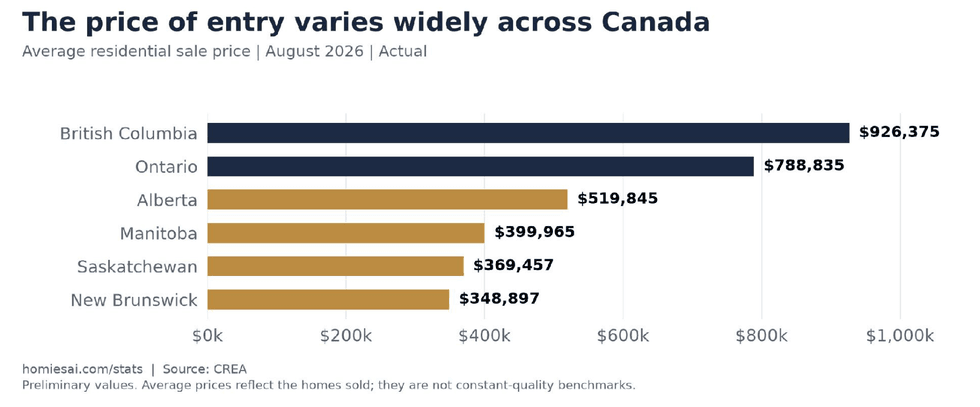 Average sale prices show the difference in purchase costs across markets. They do not measure affordability relative to local incomes or construction costs.
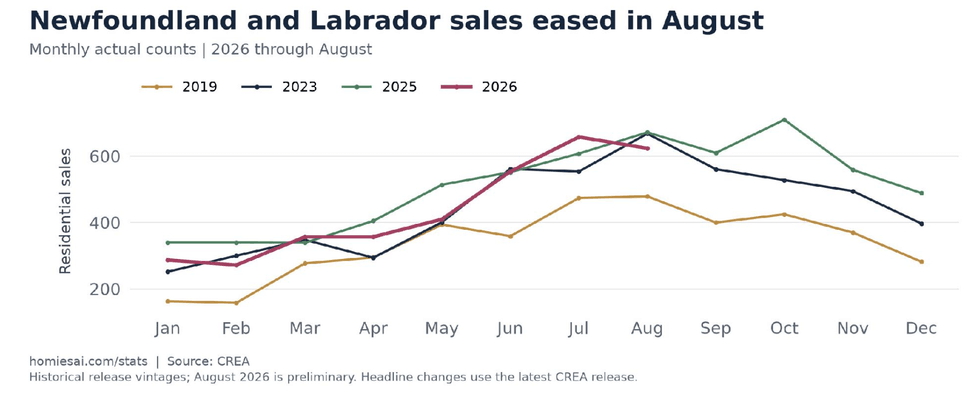 Newfoundland and Labrador remains above its pre-pandemic sales pattern, but August activity was below last year. Historical lines retain their original release vintages.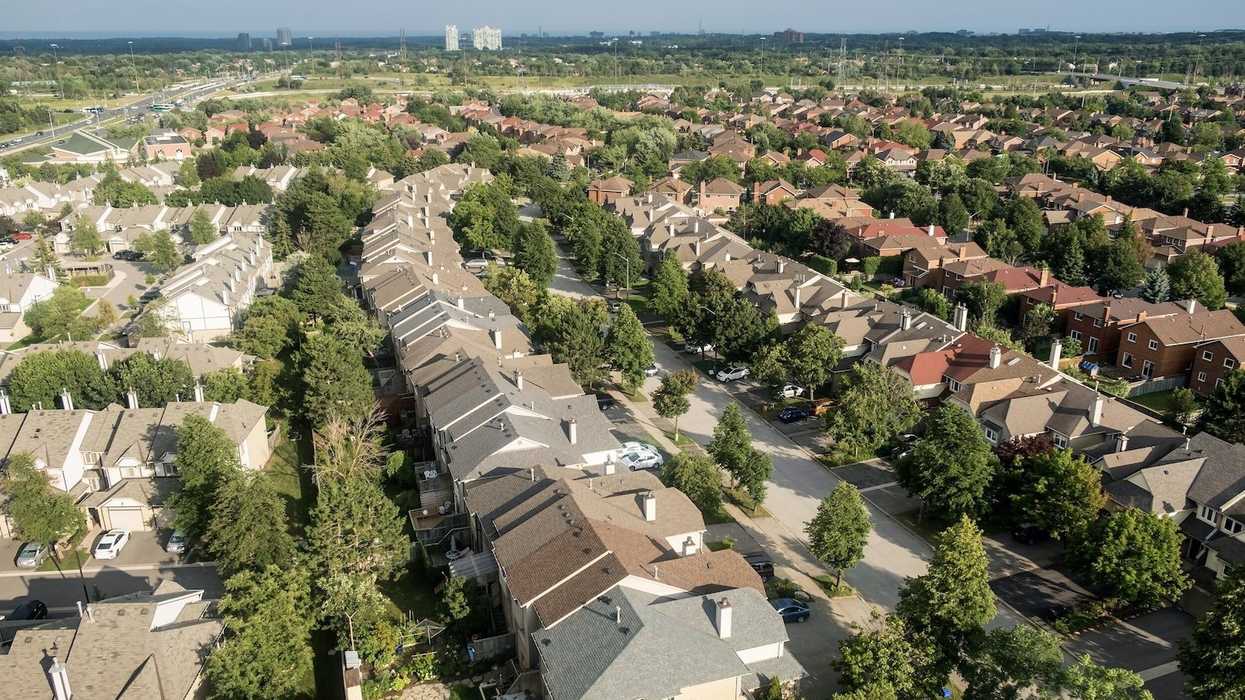




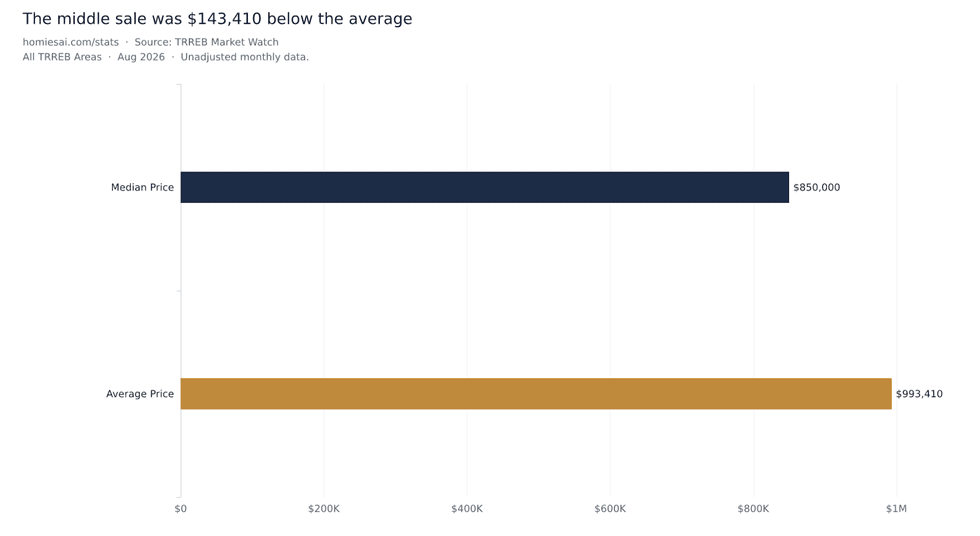 Average and median describe different aspects of the same month’s transactions. Both are affected by the mix of homes sold.
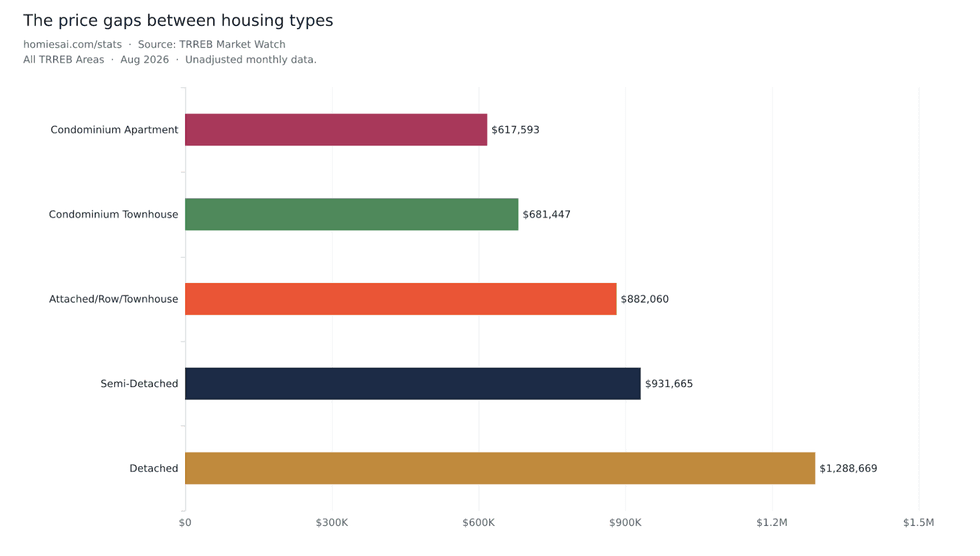 Category averages compare different homes and locations; the gaps are not estimates of the cost to upgrade an otherwise identical property.
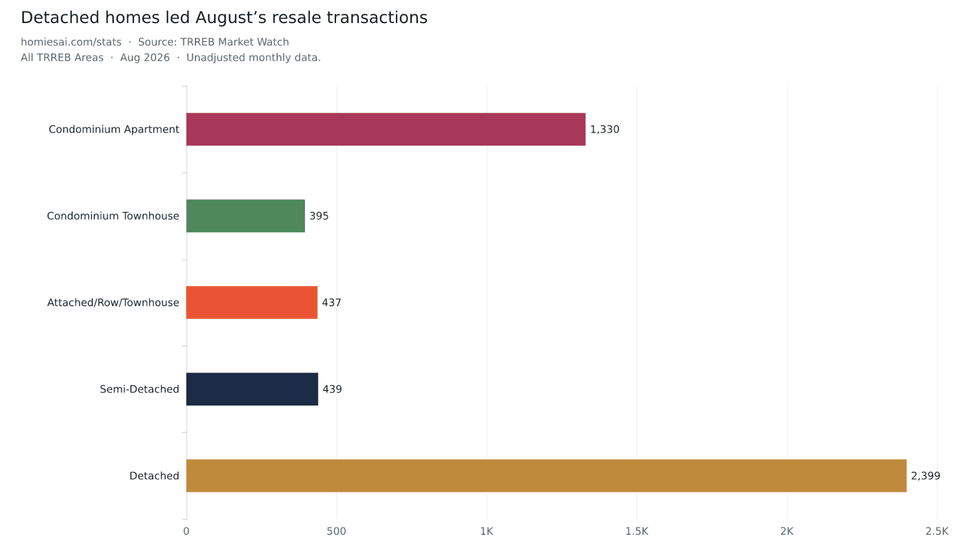 The five categories shown account for 5,000 of the board’s 5,057 sales. The remaining 57 transactions were in other housing categories.
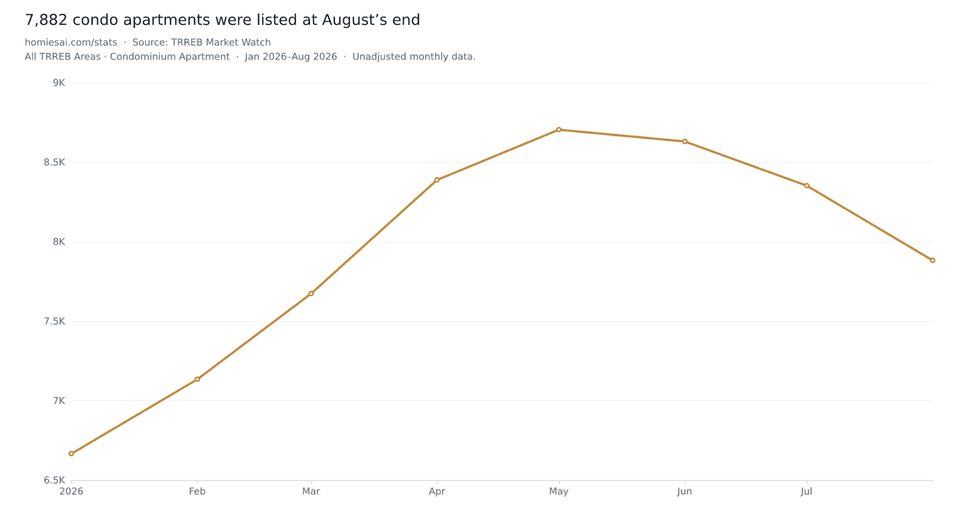 Monthly observations are not seasonally adjusted. Active listings count properties available at month-end; they are not construction inventory.
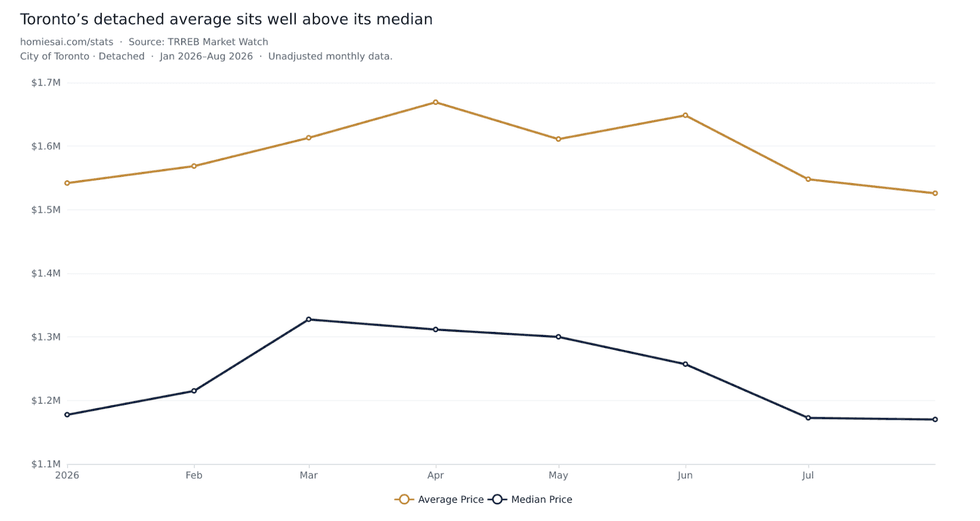 Average and median prices share one dollar axis. These unadjusted transaction measures do not control for changes in the homes sold.
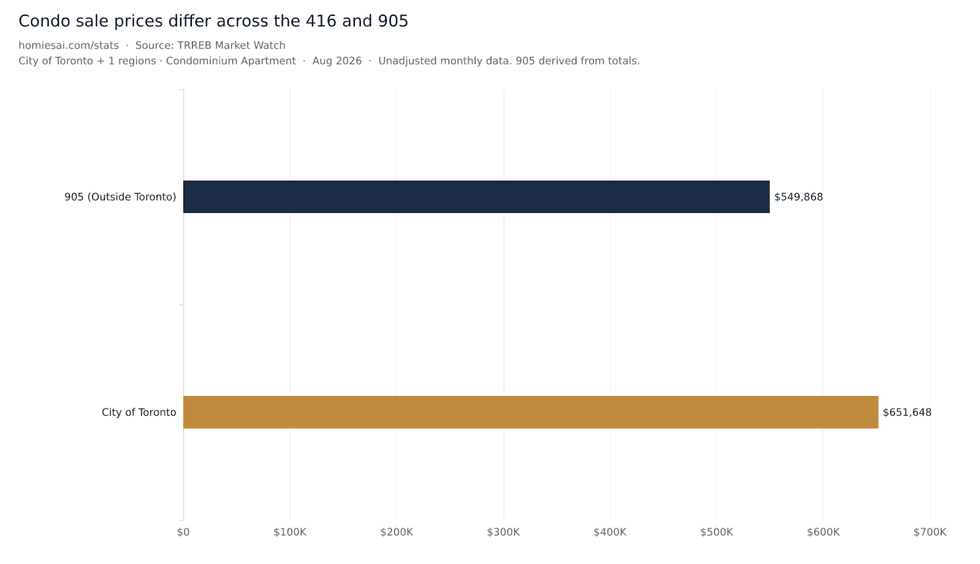 TRREB’s 416/905 categories compare the apartments sold in each area. The difference does not isolate a location premium for equivalent units.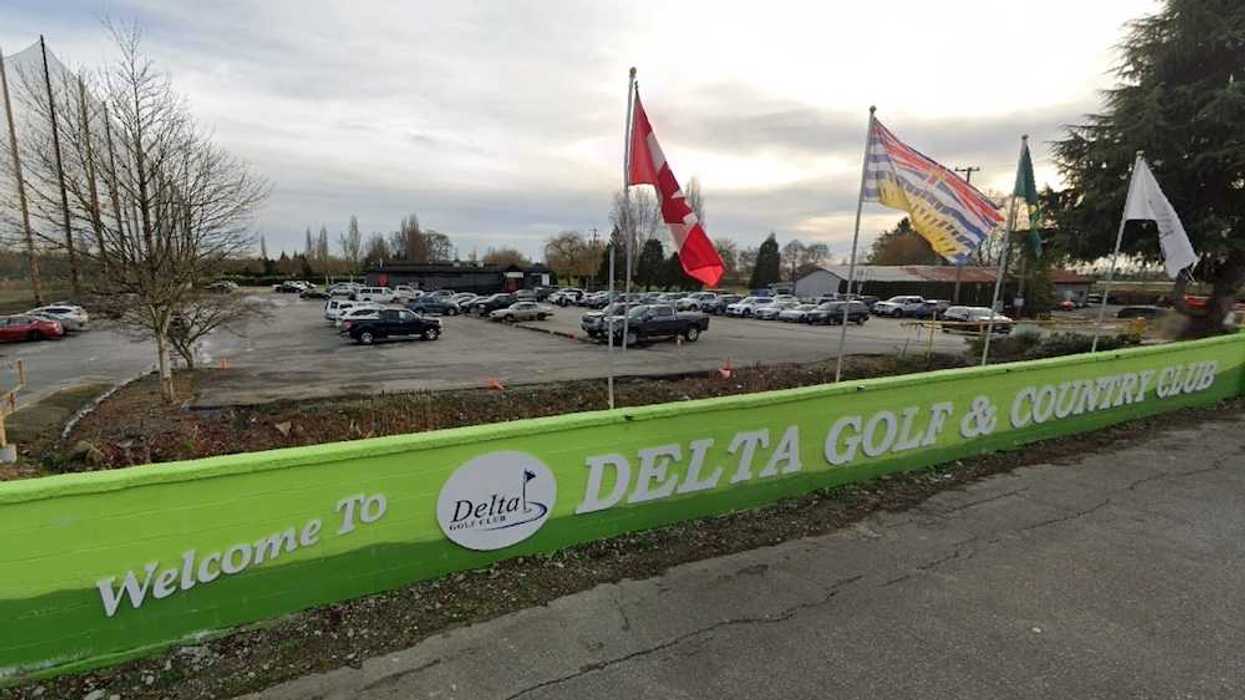
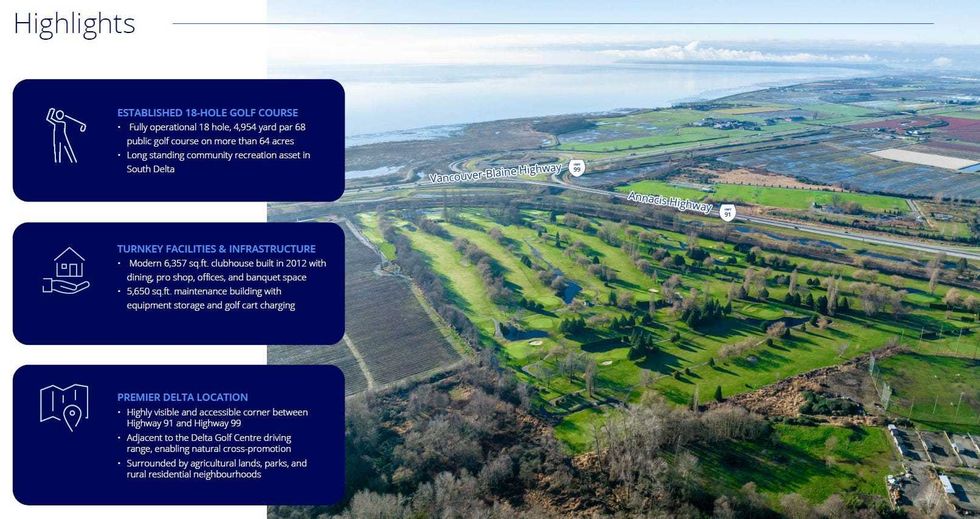 Highlights from the Delta Golf & Country Club listing brochure. (Colliers)