Conservation Easement
A conservation easement is a legal agreement restricting land development to preserve environmental or heritage values.
September 30, 2025
What is Conservation Easement?
A conservation easement is a voluntary legal agreement that restricts land use to protect environmental, agricultural, or heritage values. The land remains privately owned, but certain development rights are permanently limited or prohibited.
Why Conservation Easement Matters in Real Estate
Conservation easements matter in real estate because they preserve natural areas, farmland, or historic sites while allowing private ownership. They can affect property value, land use options, and tax implications for owners.
Example of Conservation Easement in Action
A farmer grants a conservation easement to a land trust, ensuring the land remains agricultural and cannot be developed into subdivisions, even if sold.
Key Takeaways
- Voluntary agreement restricting land development rights.
- Protects environmental, agricultural, or heritage values.
- Land remains privately owned but with restrictions.
- Can reduce property value while offering tax benefits.
- Often permanent and binding on future owners.
Related Terms
- Easement
- Heritage Designation
- Land Use Bylaws
- Environmental Assessment
- Crown Land

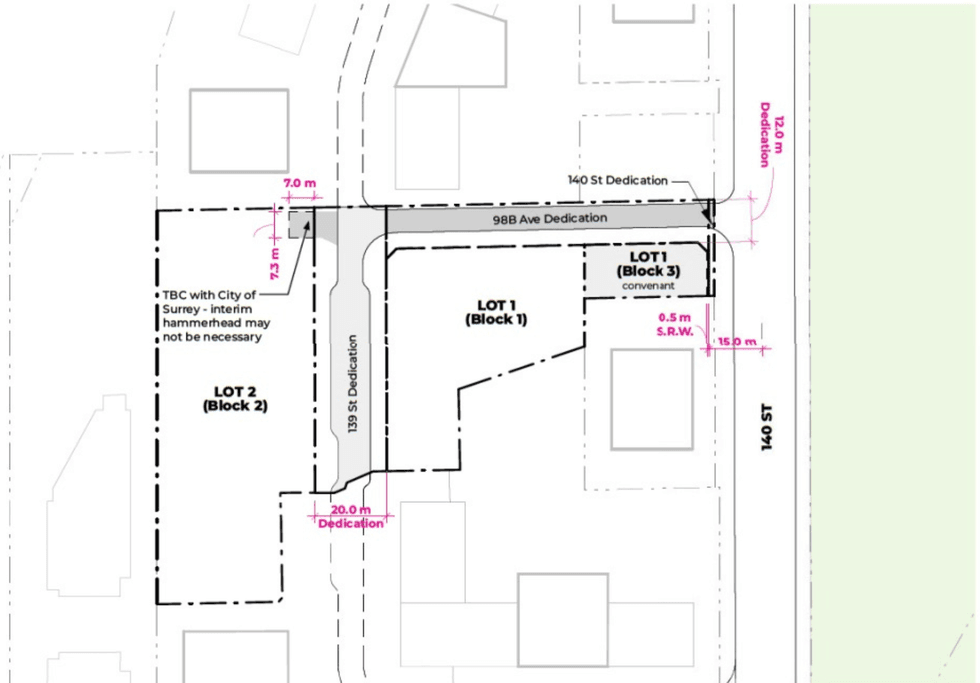 9883 140 Street and the proposed road dedications. (WW+P Architects, Entre Nous Femmes Housing Society)
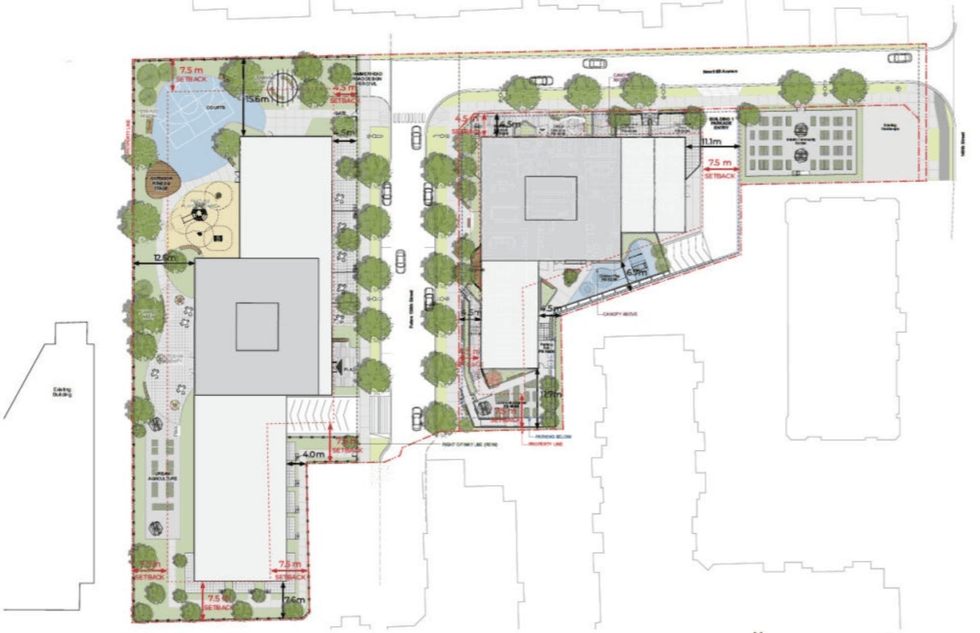 The
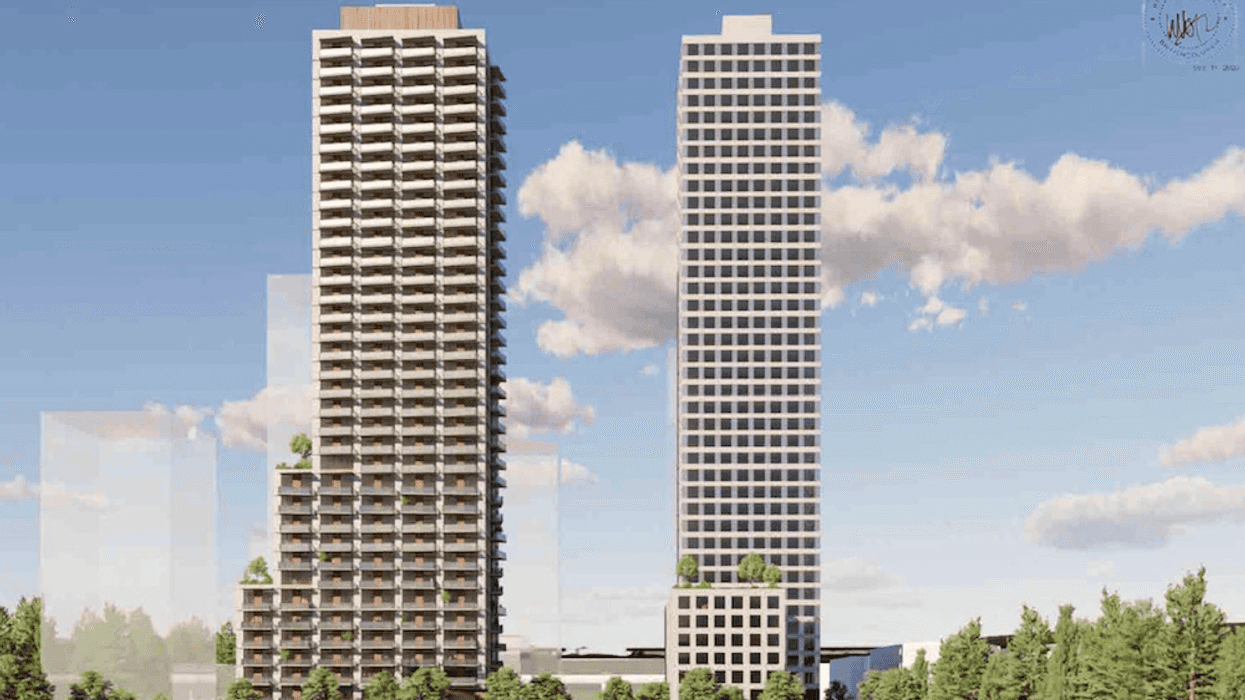
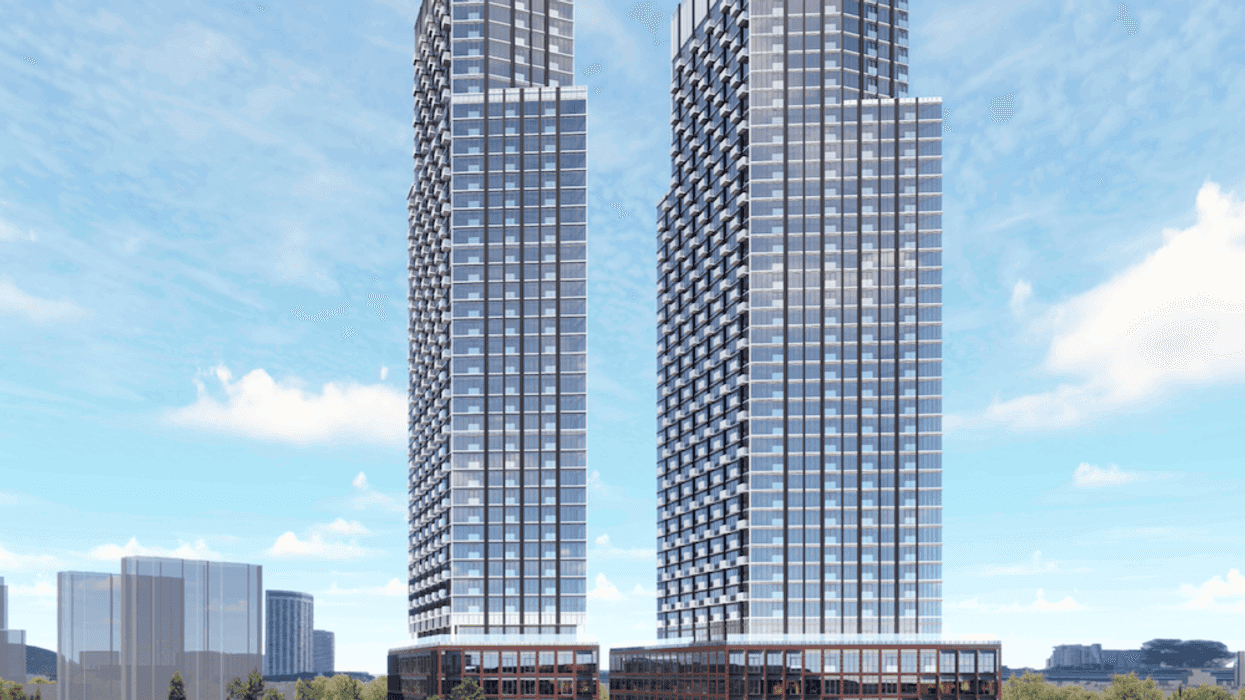
 One of the towers proposed for 9883 140 Street. (Entres Nous Femmes Housing Society)



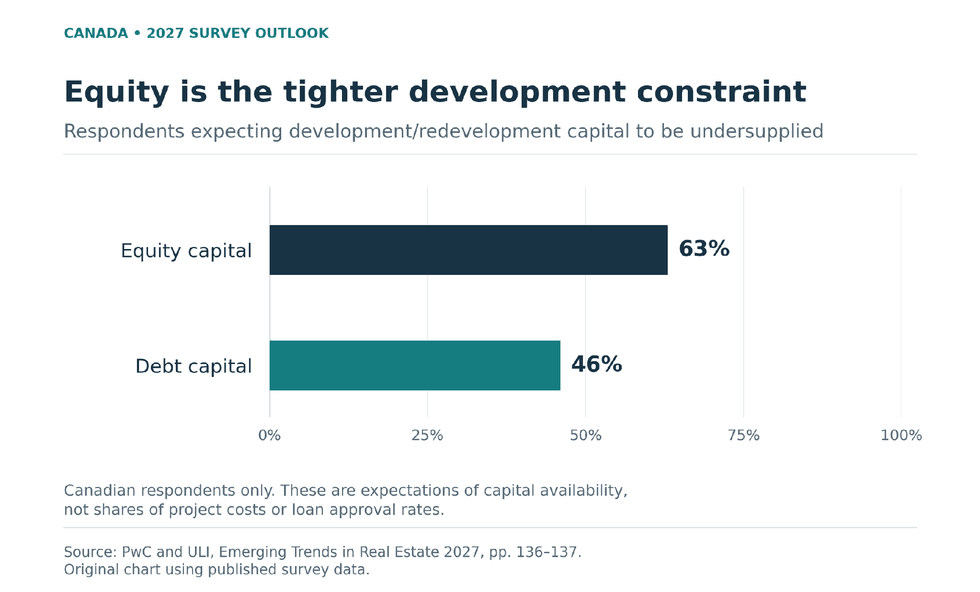 Canadian respondents were more likely to expect an undersupply of development/redevelopment equity capital (63%) than debt capital (46%) in 2027. These are survey expectations, not measured financing volumes. Source: PwC and ULI, Emerging Trends in Real Estate 2027, pp. 136–137. Original chart.
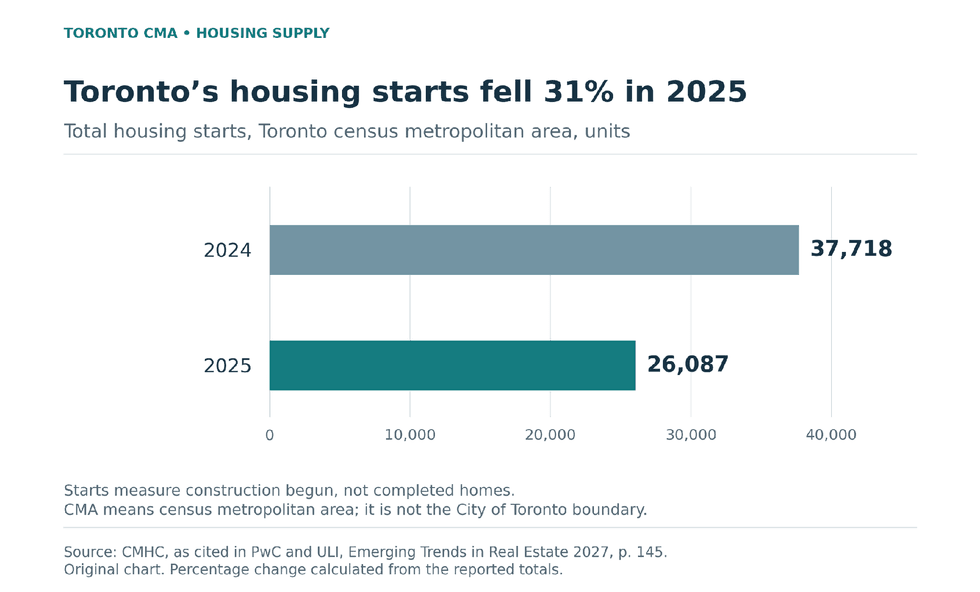 Toronto census metropolitan area housing starts fell from 37,718 units in 2024 to 26,087 in 2025, a 30.8% decline (rounded to 31%). Starts measure construction begun, not completed homes. Source: CMHC, as cited in PwC and ULI, Emerging Trends in Real Estate 2027, p. 145. Original chart.

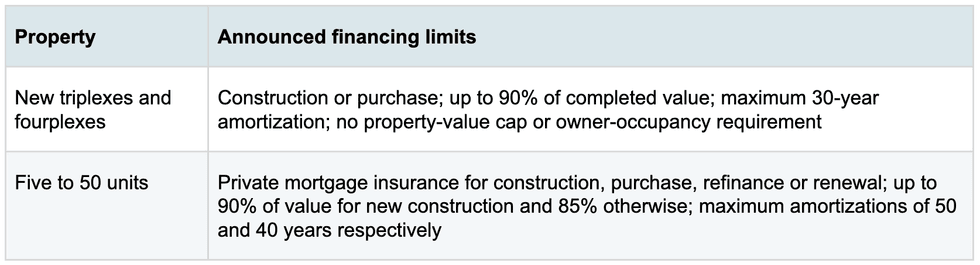
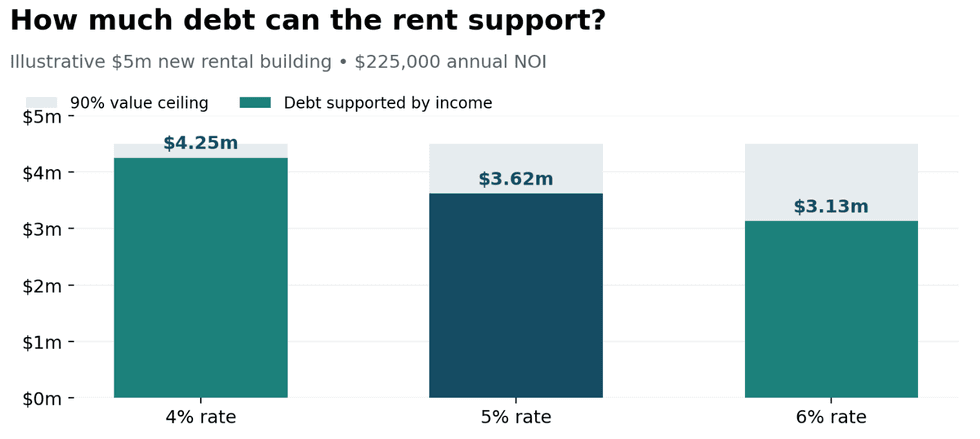 Illustrative calculation: a $4.5-million value ceiling versus income-based capacity of about $4.25 million at 4%, $3.62 million at 5% and $3.13 million at 6%. Assumes 50-year amortization and 1.15 debt coverage.
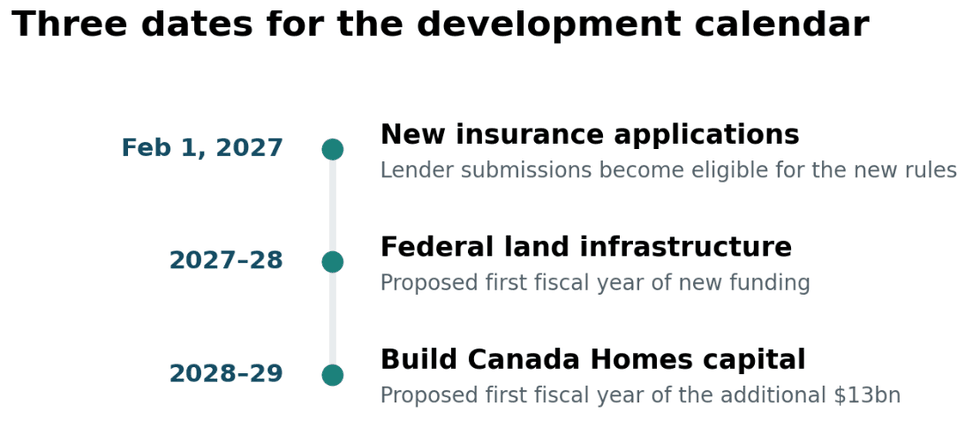 Source: Department of Finance missing-middle backgrounder and Budget 2026 Chapter 3, November 5, 2026. Fiscal-year funding starts are not home-completion dates.
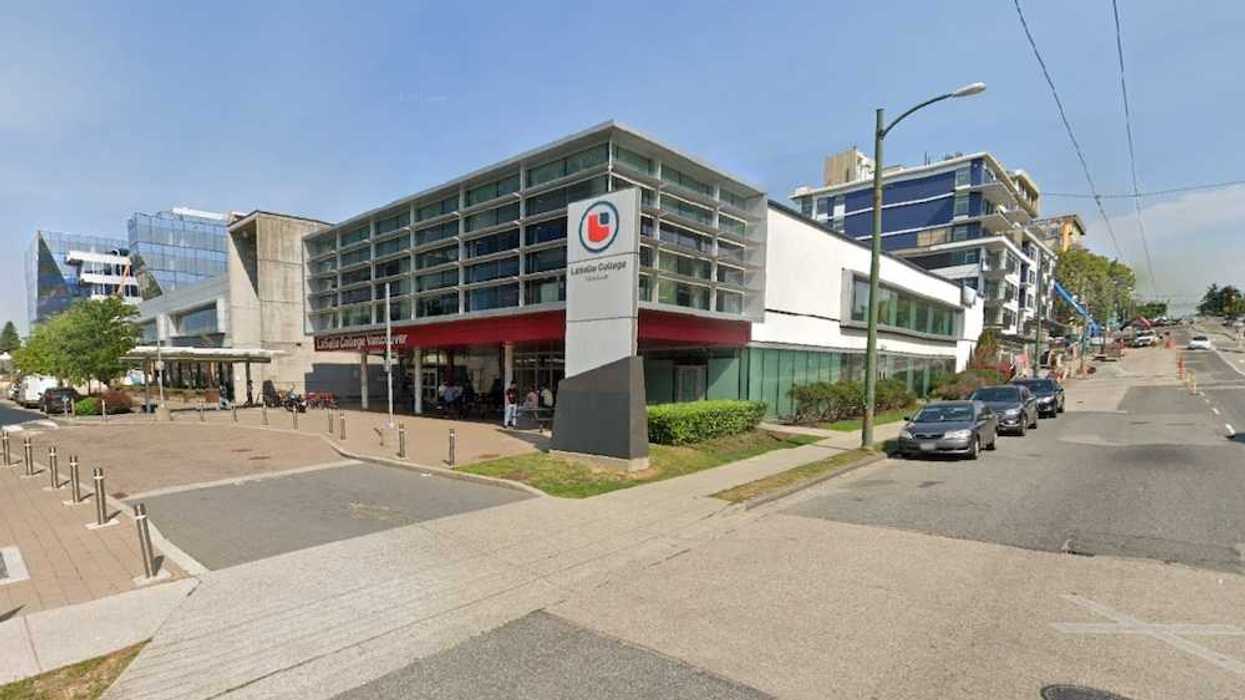
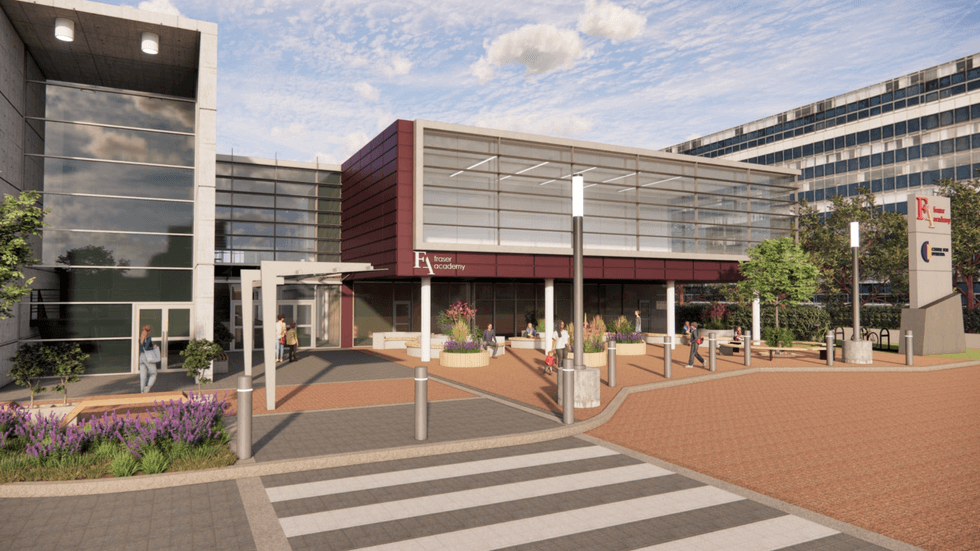 A rendering of Fraser Academy’s new campus. (Fraser Academy)

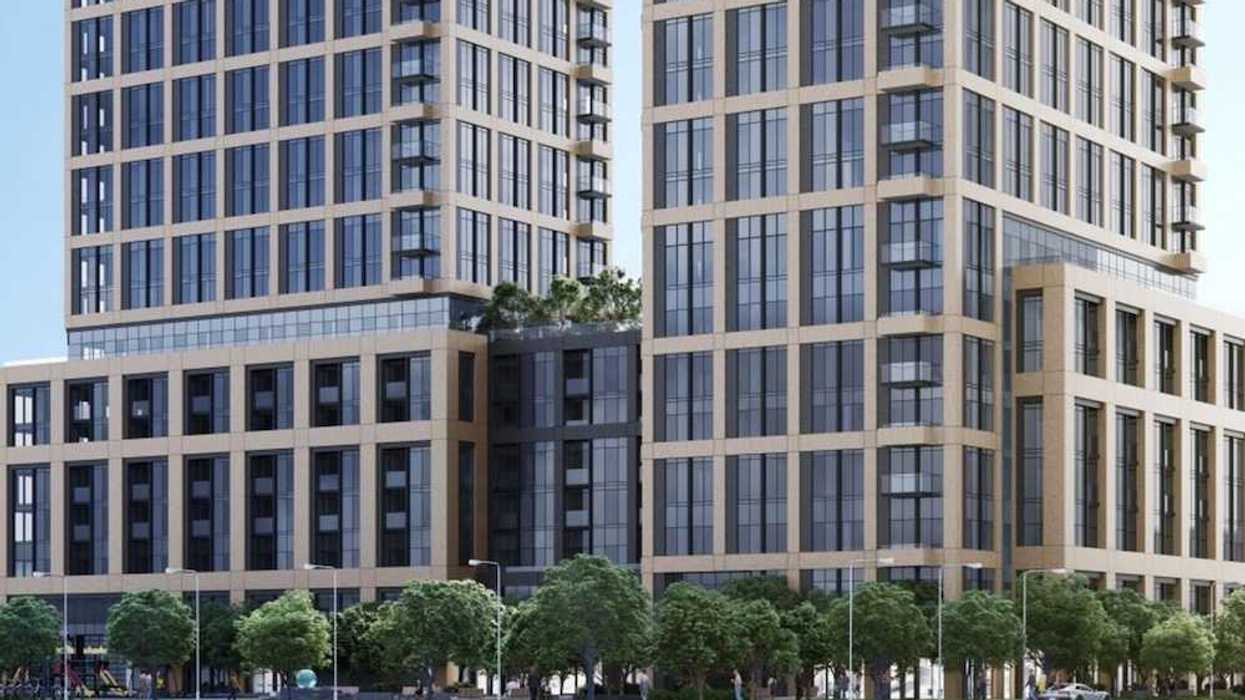
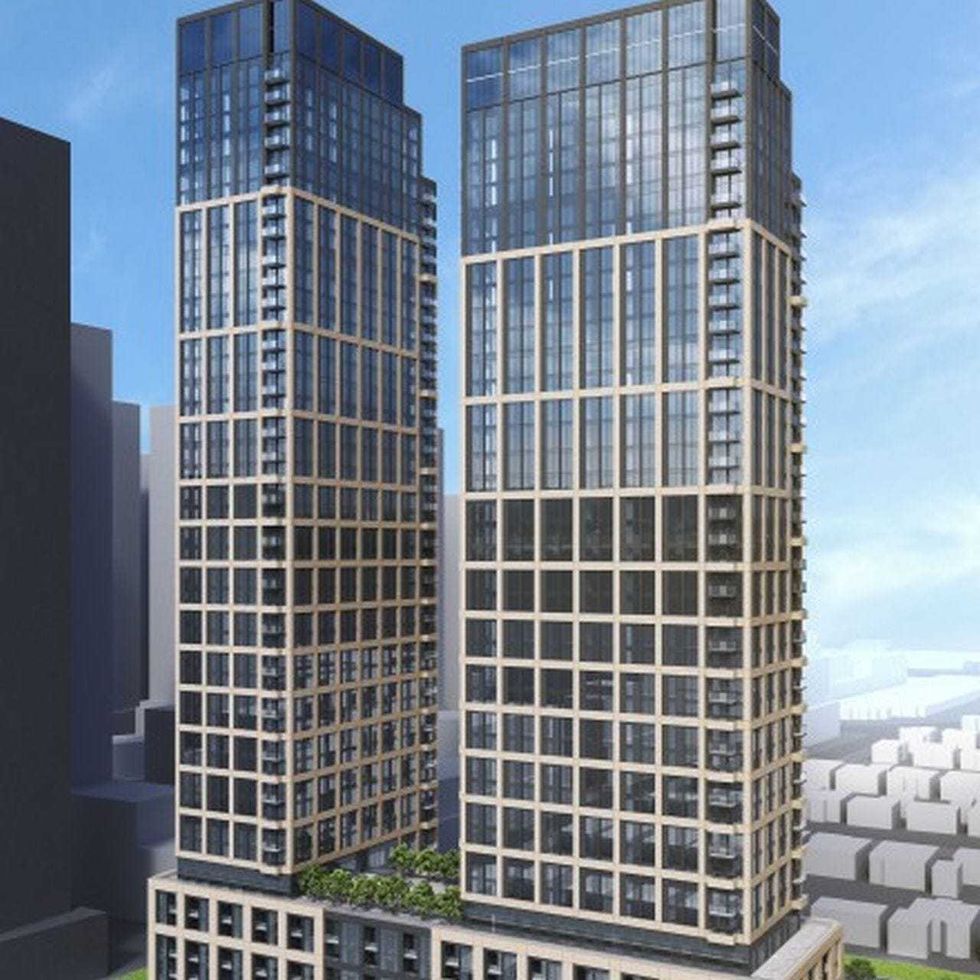 The project planned for 36-48 Steeles Avenue East and 37-49 Highland Park Boulevard in Markham. (Arcadis, Zonix Homes)