Assignment of Rents
An assignment of rents lets lenders collect tenant income directly if a borrower defaults, providing extra loan security.

September 30, 2025
What is an Assignment of Rents?
An assignment of rents is a legal provision in a mortgage or loan agreement that gives the lender the right to collect rental income directly from tenants if the borrower defaults. It serves as additional security for lenders.
Why an Assignment of Rents Matters in Real Estate
Assignments of rents matter in real estate because they protect lenders by ensuring income from investment properties can be redirected to cover loan payments in the event of borrower default.
Example of an Assignment of Rents in Action
A landlord defaults on their mortgage for an apartment building. The lender enforces the assignment of rents clause, collecting tenant rents directly to apply toward the mortgage balance.
Key Takeaways
- Gives lender rights to collect tenant rents on default.
- Provides additional security for mortgage lenders.
- Common in commercial and investment property loans.
- Triggered when borrower defaults on obligations.
- Helps lenders recover loan payments through rental income.
Related Terms
- Mortgage Default
- Foreclosure
- Receivership
- Security Interest
- Commercial Mortgage

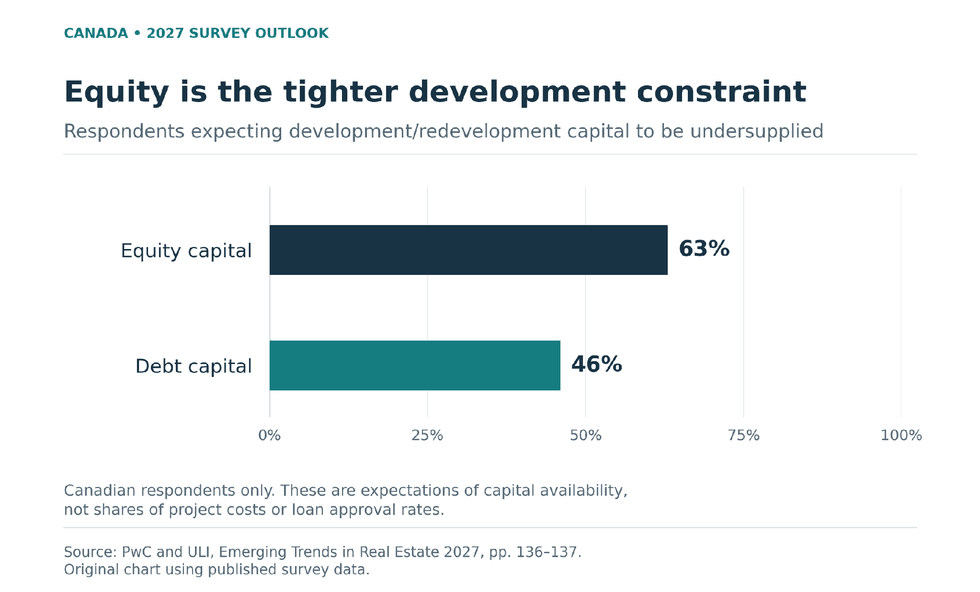 Canadian respondents were more likely to expect an undersupply of development/redevelopment equity capital (63%) than debt capital (46%) in 2027. These are survey expectations, not measured financing volumes. Source: PwC and ULI, Emerging Trends in Real Estate 2027, pp. 136–137. Original chart.
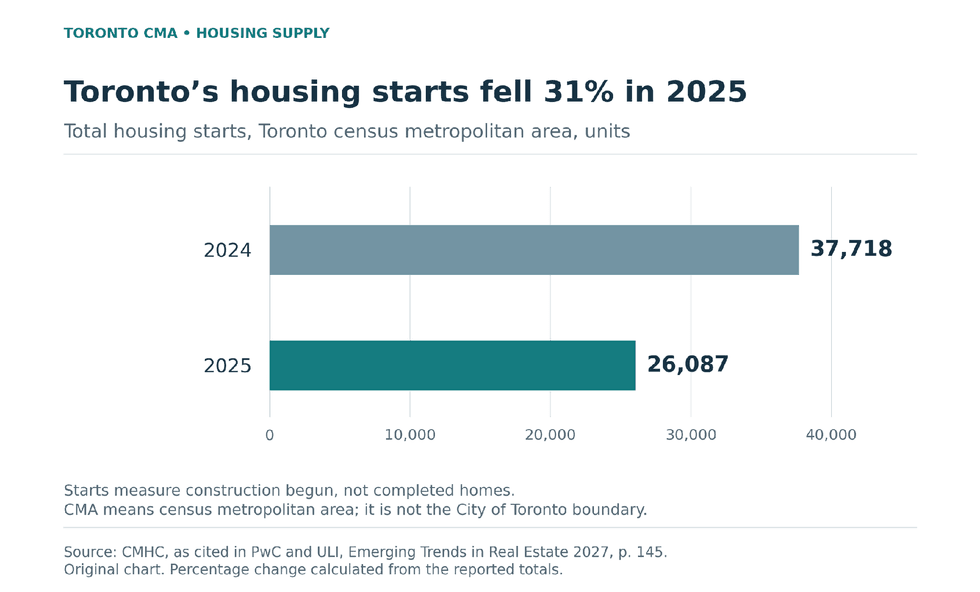 Toronto census metropolitan area housing starts fell from 37,718 units in 2024 to 26,087 in 2025, a 30.8% decline (rounded to 31%). Starts measure construction begun, not completed homes. Source: CMHC, as cited in PwC and ULI, Emerging Trends in Real Estate 2027, p. 145. Original chart.








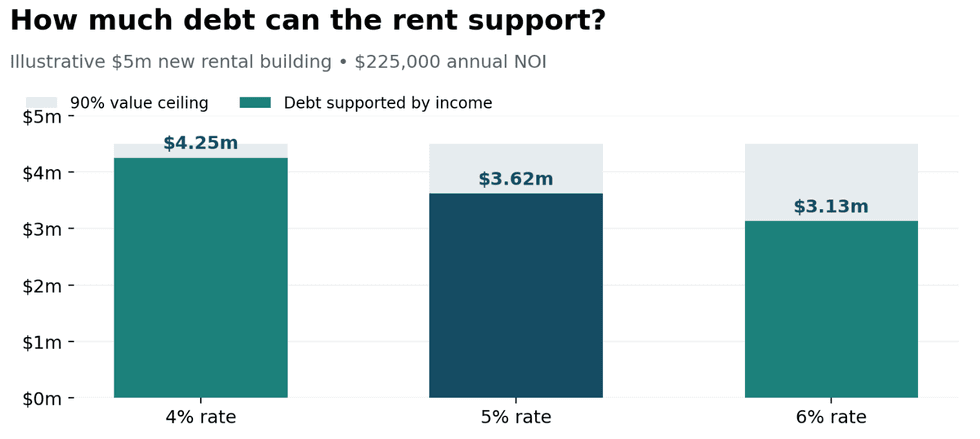 Illustrative calculation: a $4.5-million value ceiling versus income-based capacity of about $4.25 million at 4%, $3.62 million at 5% and $3.13 million at 6%. Assumes 50-year amortization and 1.15 debt coverage.
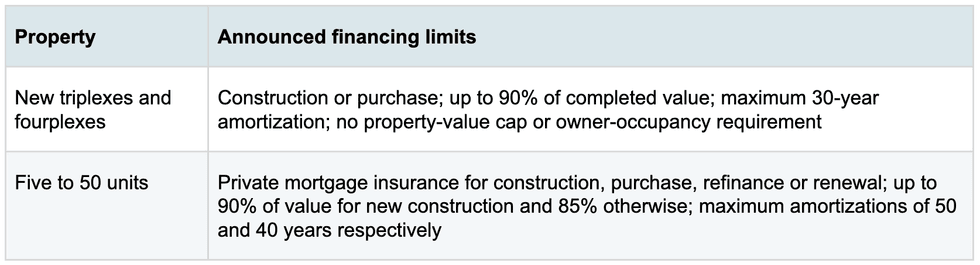
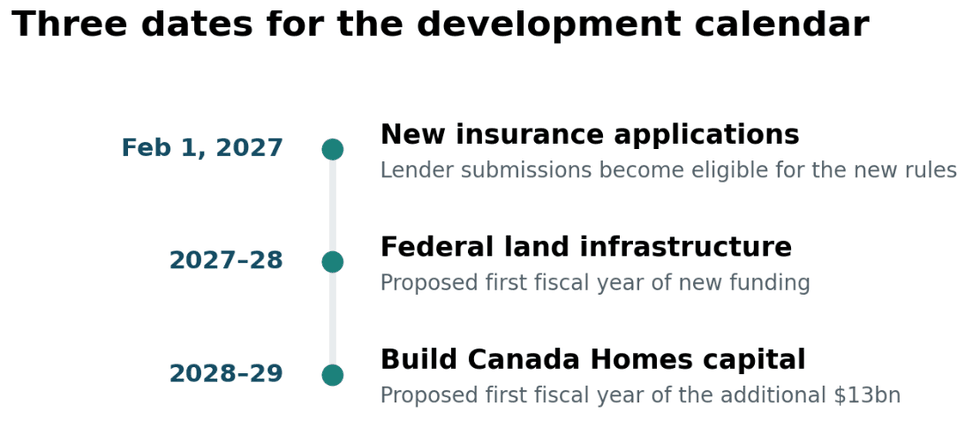 Source: Department of Finance missing-middle backgrounder and Budget 2026 Chapter 3, November 5, 2026. Fiscal-year funding starts are not home-completion dates.